FAOL has many articles, written by different people,
who have unique ideas for making fly tying easier.
Past “Tying Tips” articles, comments in the FAOL
Chat Room, messages on the Bulletin Board, and E-mails
I have received bring a few things to mind.
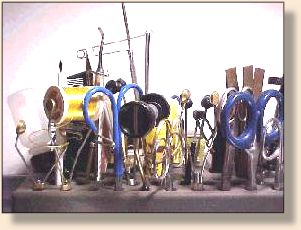
Bench Clutter: George E. Emanuel (muddler) wrote,
“If there is one thing that will really slow down and
reduce the quality of your time at the vice, it is
clutter.” Not only does it slow you down, it reduces
your skills at the vice. Hard enough to remember the
steps for the pattern you are tying, you also are
trying to remember where you put the materials and
tools you are using. It is better to have tool storage
away from the vise and just pick the tools you need to
tie the fly pattern. The only materials at the vise
are those you are using. Clutter is the start of the
slippery slope to chaos. After you are done tying
return all the tools and materials to their proper place.
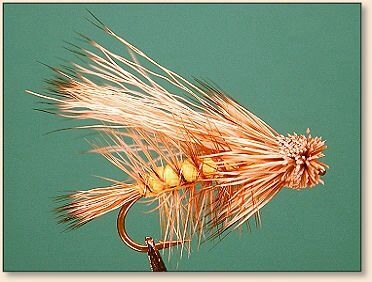
Lighting:
Al Campbell wrote in his Field Editor Column, about the
importance of “Good Lighting” for taking photos. A
camera has a lens is it’s eye, just as your eyes are
your camera! If you have good lighting on the subject,
your tying will be more accurate and easier. Lighting
also includes a background so your sight is not
distracted by clutter in you line of sight. The
right color also helps to better highlight the subject.
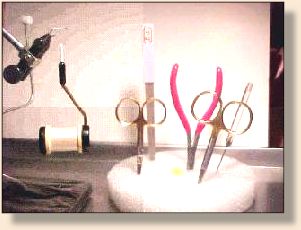
Tools: Too many tools can defeat your fly tying
and slow you down. If you are a beginner then Al Campbell’s
article in Beginning Fly Tying is for you.
If you are beyond the beginner level, Al has two more levels,
Intermediate and Advanced or Ronn Lucas’s articles on
Atlantic Salmon Tying may be better suited for your needs.
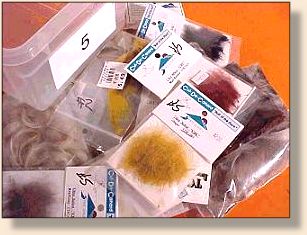
Materials: Others have written many times on
this site, that you should wherever possible, obtain
the best material for fly tying. I have also stated
that material that is inferior is not worth the money,
time or effort. It is important to buy the best you
can afford, and to insure that it remains that way
when not being used. Have containers for your thread,
floss, tinsel, and wire when they are not being used.
And sealed containers for your capes, furs, herls, tail
and wing material; and storage of hooks. On the front
page of FAOL there is a Search Engine, type in the word
“Storage” and see how many articles are on this site
covering that topic alone.
Here is one article that is about
Hook Storage.
This is one on Thread Storage.
Finally a series of articles that covers just about
everything else that needs proper storage,
.
Finally some E-Mail posts I received from various people,
who encountered difficulties tying flies:
One person stated that they have difficulties when
they first attempt tying a new pattern. That it takes
about 6 to 8 attempts before they tie a fly that is
acceptable to their expectations. My reply is I have
the same problem, but I don’t use those for fly swaps,
and I do not throw them away. I use them when I am
fishing alone…and they do catch fish.
Another wrote me saying that they have difficulties with
a given pattern, they find it hard to visualize from the
photos, how the fly should actually look, without an actual
model in front of them. If the pattern is of a fly that
is commonly available at most fly stores, then the answer
is go to the store and buy one to use as a model. Once
you get the perfect fly, whether you purchased it, received
it in a fly swap, or it took you 8 tries to get it right;
click here for what you should do with it.
I used the Search Engine on the Main Page of FAOL for
all the links mentioned in this article. Please submit
your “Tying Tips” ideas to the Publisher of FAOL. I
would rather read your ideas than my own, I already
know what I know, and would like to read something from you. ~Parnelli
~ Parnelli
Please check out the Fly Tying Section, on the Bulletin Board, here at FAOL too.
If you have any questions, tips, or techniques; send them to
[FAOL]
Originally published January 18, 1998 on Fly Anglers Online by Steven H. McGarthwaite.