Hi Everyone,
I have been working lately on tying some soft hackles using grouse and starling. I am finding I am having a really hard time working with the hackles. The hackle pliers I have are teardrop shaped and seem to just cut through the tips. I try using my fingers to wrap the hackle but things end up kind of messy and sometimes things still break. Is it worth getting some rubber tipped pliers?
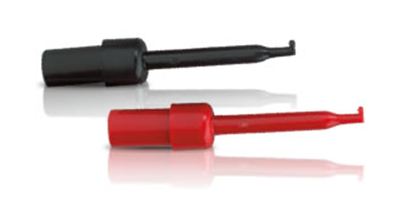
My best luck has been using a Radio Shack electrical test clip. Take some very fine sandpaper or emery cloth and smooth the edges or put on a small piece of shrink tubing.
Been there and done that… I never use the teardrop style hackle pliers anymore since I started using these. I have less hackle breakage and more control. Just my opinion and recommendation.
I have something similar to those radio shack things. These have two “jaws” but the same basic spring loaded idea. I might need to give them a try.
Warren does that version come with a rubber coating or will I need to modify them if I go that route?
I was very surprised the grouse was so brittle. The starling I kind of expected to be easy to break. Of course on top of that I was working with silk thread which I found was also very brittle.
I also hang one from my fishing vest off of a zinger. I use it to hold small flies by the bend of the hook while tying them to my tippet. WHEN and not IF ( I will eventually drop a fly) I drop the fly, the red clip with attached flyis easily found. I have even dropped them in the water and retrieved my fly rather than have it float away.
When I’m using something with a fragile stem, like starling, I’ll twist the tip of the feather barbs togather with my fingers. Makes things a bit tougher. I usually use Wasatch Tools Rotary Hackle Pliers. They do have a rubber tip. Even with English style pliers I get less breakage twisting the tip.
If your silk thread was brittle, there is a good chance it was old thread or possibly black. I tye almost exclusively with Pearsall’s silk and do not find it brittle at all. Black does seem to break once in a great while though.
Well, seems like the plier concept has been covered. Actually, my personal preference is the teardrop style. That aside, and the fact that those feathers are very fragile, have you tried tying the feather in by the tip and then wrapping it?
The ones I use were purchased from a fly shop and not Radio Shack and they did not have any rubber coating on the end and do not slip. As an experiment, I did use shrink tubing and put on the metal end and did not like the results and removed it. I could be wrong, but, I am thinking that the clips sold in fly shops do not have the sharp edges that the ones made for use as test clips do.
I use mine for all my hackle tying plus holding the end of material like chenille when I want to make a few more wraps and the material is too short for me to have room to hold it with my fingers. Let us know how they work for you…
Steam is your friend… If you have to use a hackle immediately, hold it over a steam kettle for a short bit. It will be far more pliable and less brittle. If you are going to tie at least a dozen (I never tie less than that of any fly) steam them all at once and put them on a damp paper towel until you use them. They will be far tougher.
If you know ahead of time that you will be tying just place between damp paper towels the night before.
With soft hackles I tie in by the tips. You need very little hackle on the fly and using the tips means you will only be using the best part of the feather.
For really stiff stems, as found on many grouse, soak the feathers well and peel the sides off the stem. You will get two hackles that are very easy to work with and produce virtually no bulk under the head. Just peel the sides off by pulling back as close to the stem as possible. It takes a little practice and you will ruin some feathers before you get the hang of it, but stick with it; it works.
art
Thanks for all the suggestions everyone. Hopefully I will have time tonight to try some more.
I have been tying in by the stem because I am following the lead of Dave Hughes in his Wet Flies book. For the grouse I am using the neck feathers so I am finding them to have a very small stem. When tying in with the tip do you wrap forwards or backwards?
I am going to start with the hydration/steam route and add suggestions until it gets easier.
The silk I have is pearsalls…but it is old…maybe it is time to buy some new stuff.
If you go with the electric clip …pay close attention to what UJ and Warren said about the sharp edges.
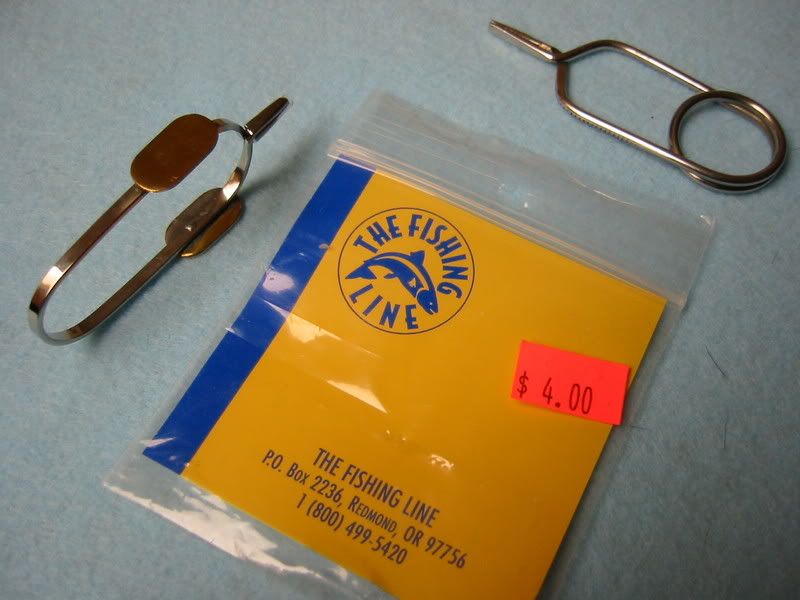
And just as a little aside…these have worked fairly well for me but I hate the ones on the top of the picture…the attached plates make a huge difference in how they handle…and I put shrink tube on mine…they hold better but it’s not magical.
Ok So I had a little more success tonight. I moved up from size 16 to size 14 to get the procedure down. I tied in by the tip. Things seemed to go a little better. I am going to look into steaming the feathers and new pliers too. Thanks everyone for the suggestions.
The traditional way to tie in game gird hackles for North Country Wets is by the tip. This lets you wrap the thinner section of the shaft. Another way (the one which Stuart used) is to tie in by the tip and twist the thread and hackle together before wrapping it.
Something else you might consider for your hackle pliers is to wrap one of the jaws in Micropore tape (the papery medical tape). This works well to improve the grip.
Now a challenge. If you have a really deft touch, try doubling the hackle. I do this rather than strip one side of the hackle, as some people do. The reason is that, compared to stripping one side you use 1/4 of the bulky stem. Gives you a nicer shaped hackle and a smaller head.
Alan
I am wondering if you misunderstood the notion of stripping the hackle and using it in stripped form? I understand your point on doubling, but fail to get the math for 1/4… The hackle stems are far from linear and vary across the whole of the skin…
art
What I mean is that some people recommend stripping the fibres from one side of the stem before tying the stem in. The idea is to create a sparse hackle. Far better to just wind less hackle.
Cheers,
A.
I guess I’m too lazy, so I fold the hackle and don’t bother stripping one of the sides. This also results in less breakage with the fine stem feathers. There is a drawback to this though. That is, when angled back, the ‘V’ shape created by the folded hackle causes the barbs to angle in slightly different directions, one down and one up. Now this can be controlled by a tight fold and using only a turn or two of hackle.