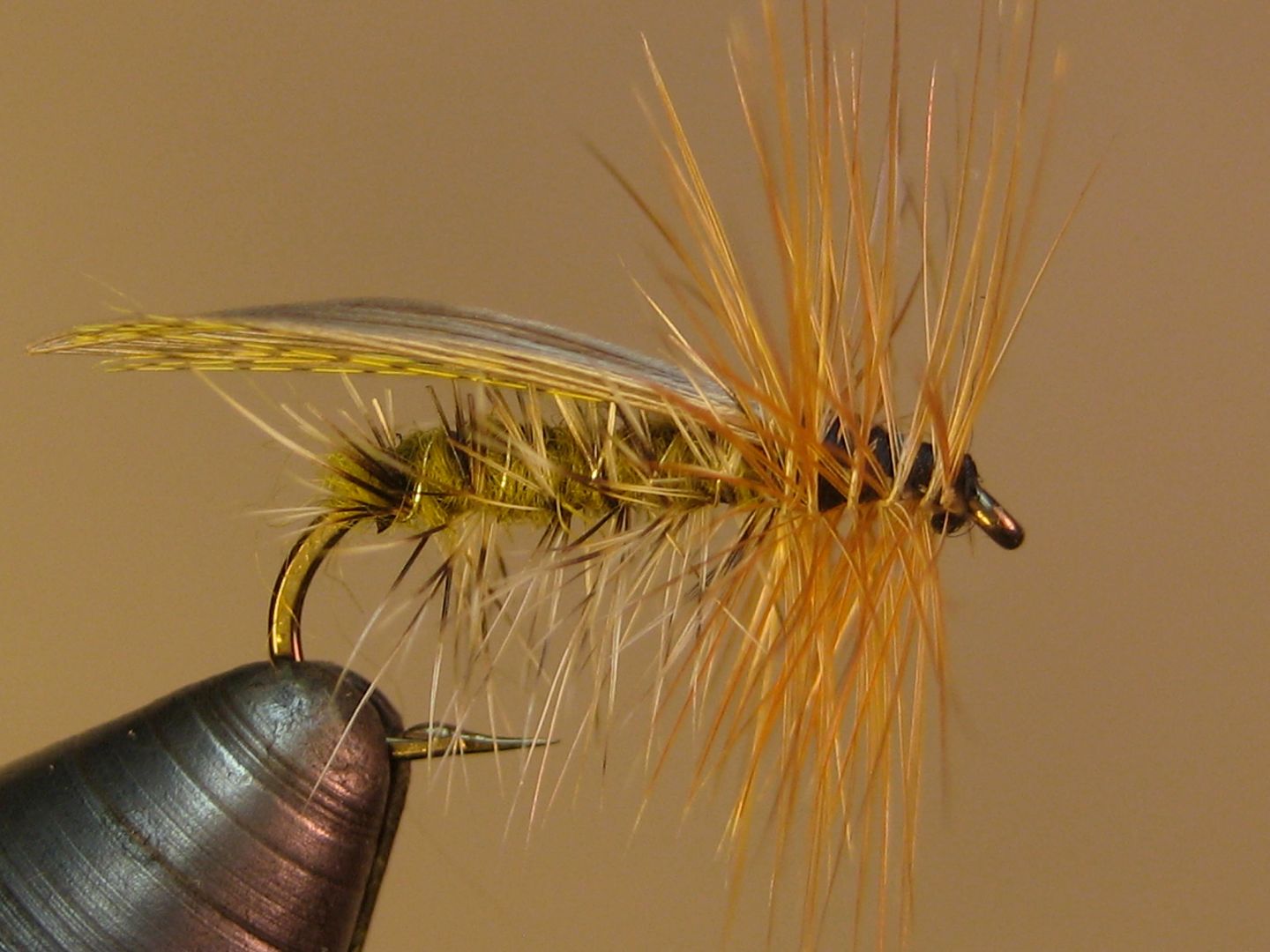
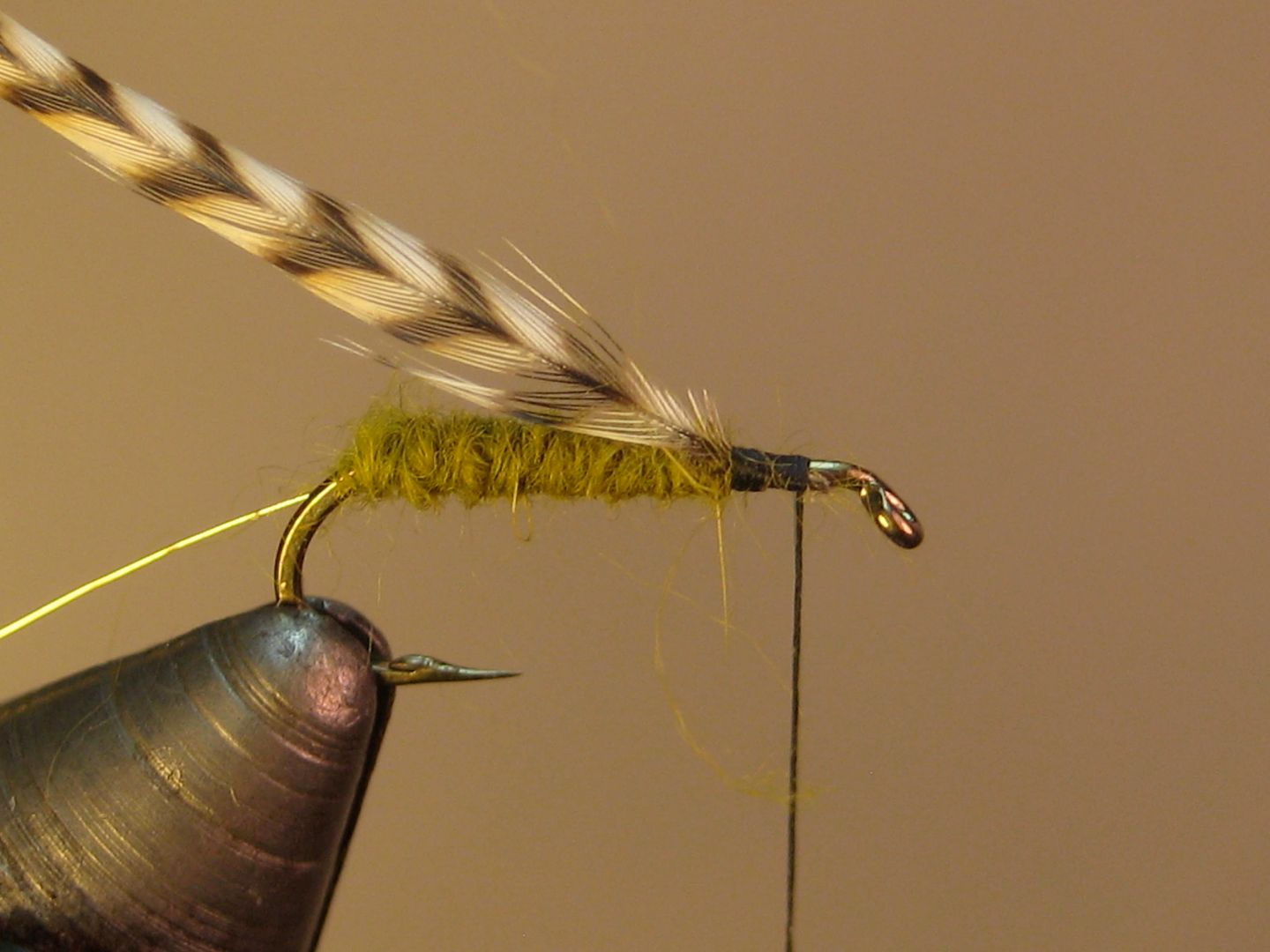
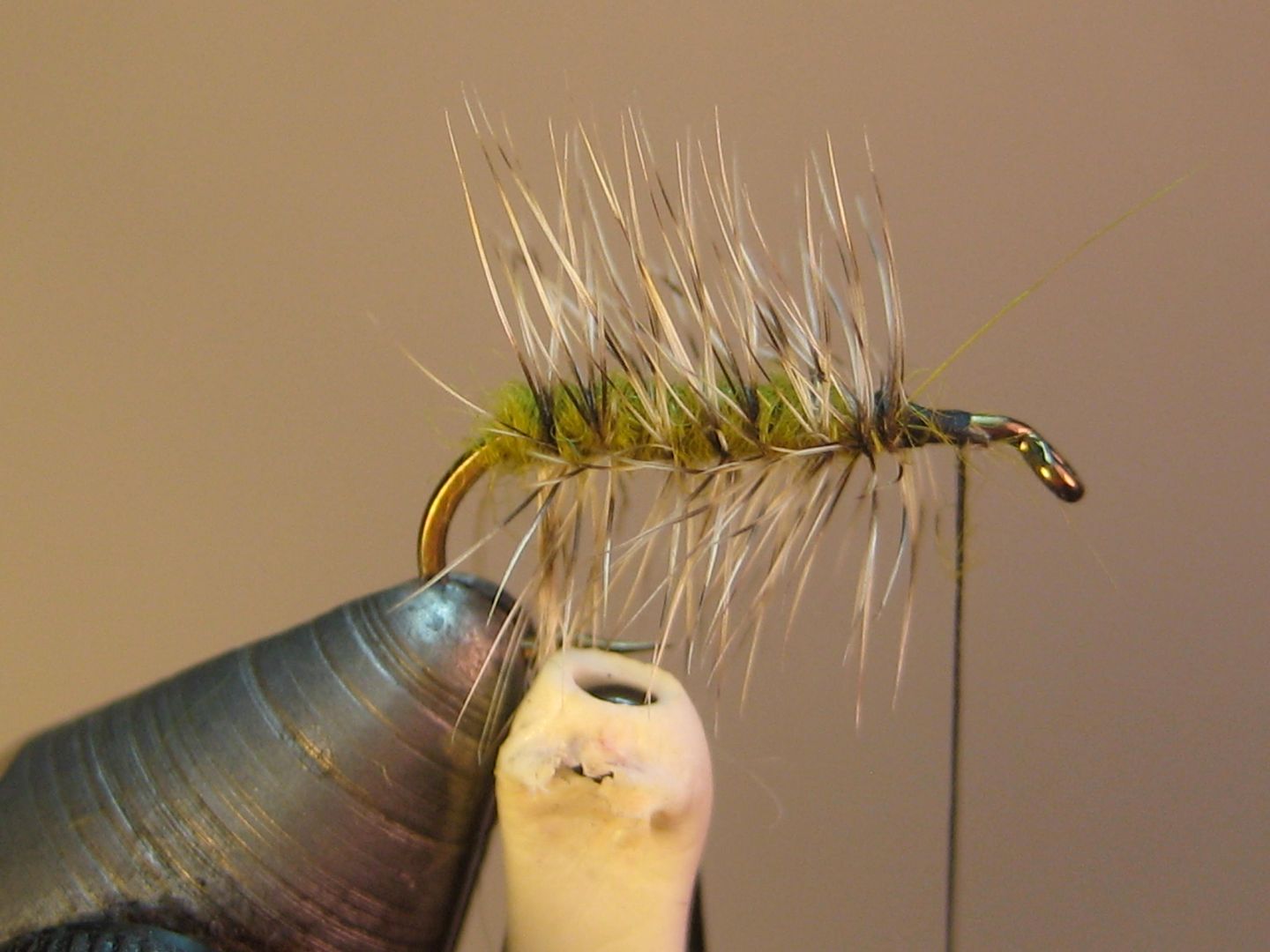
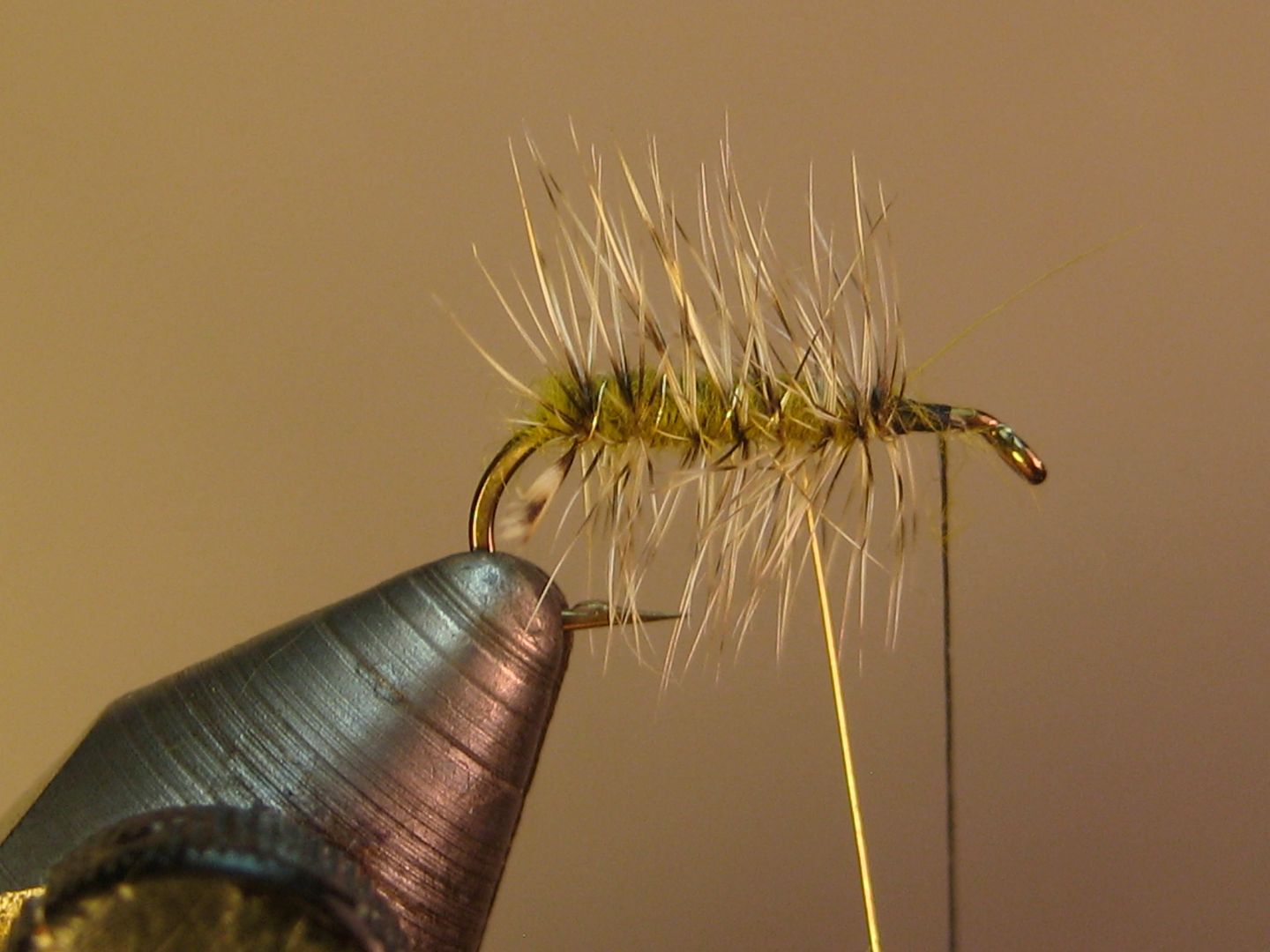
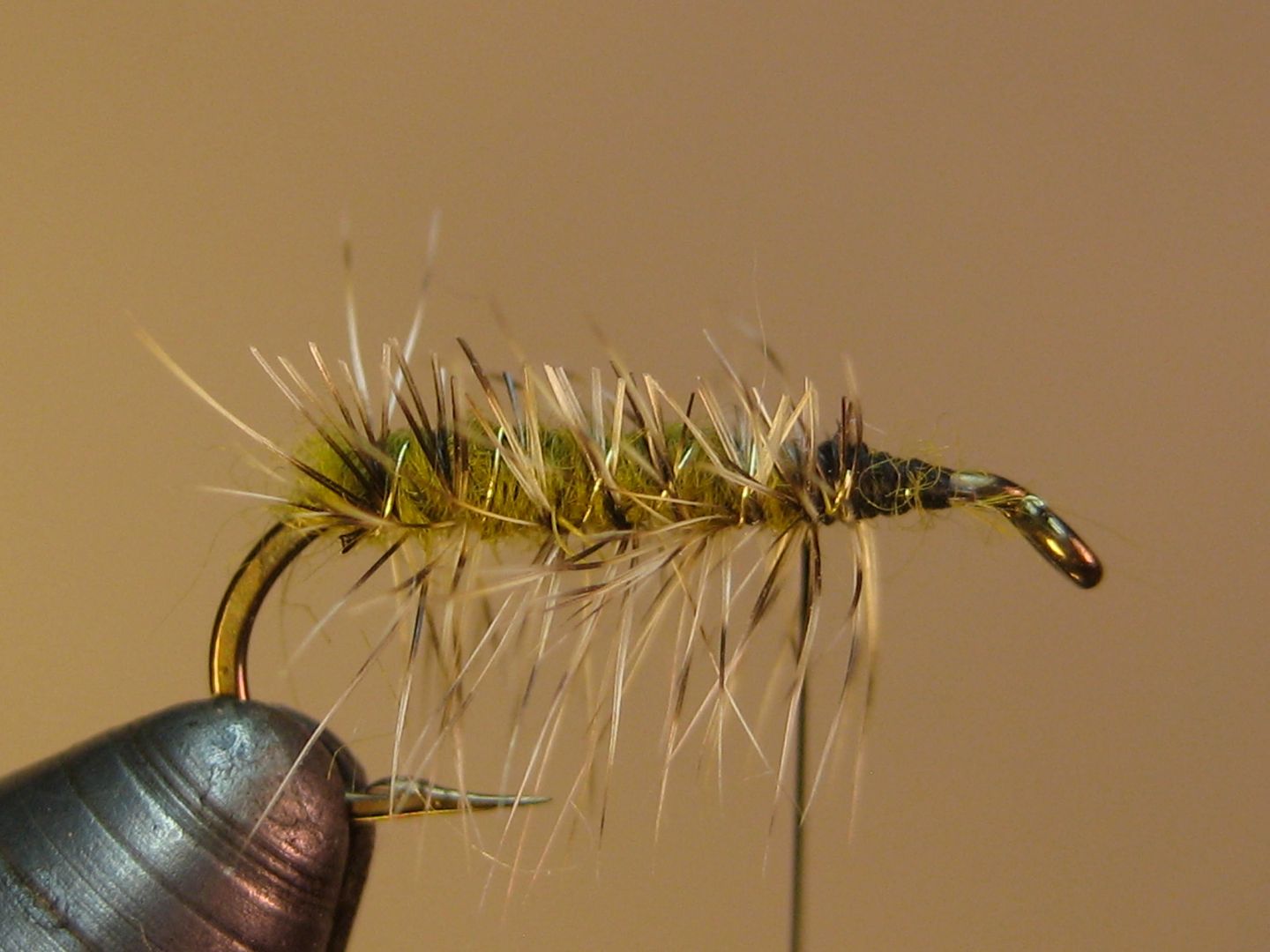
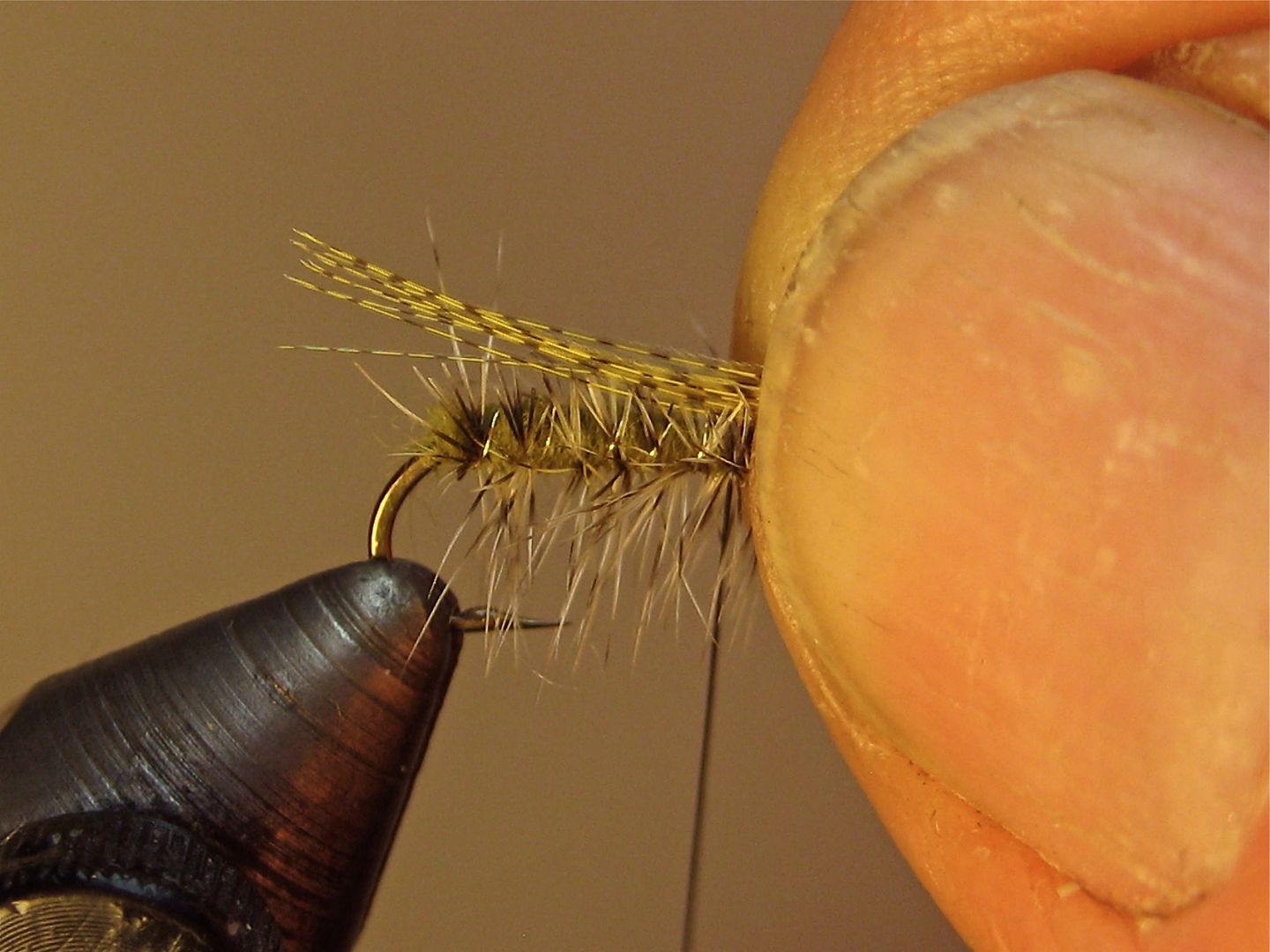
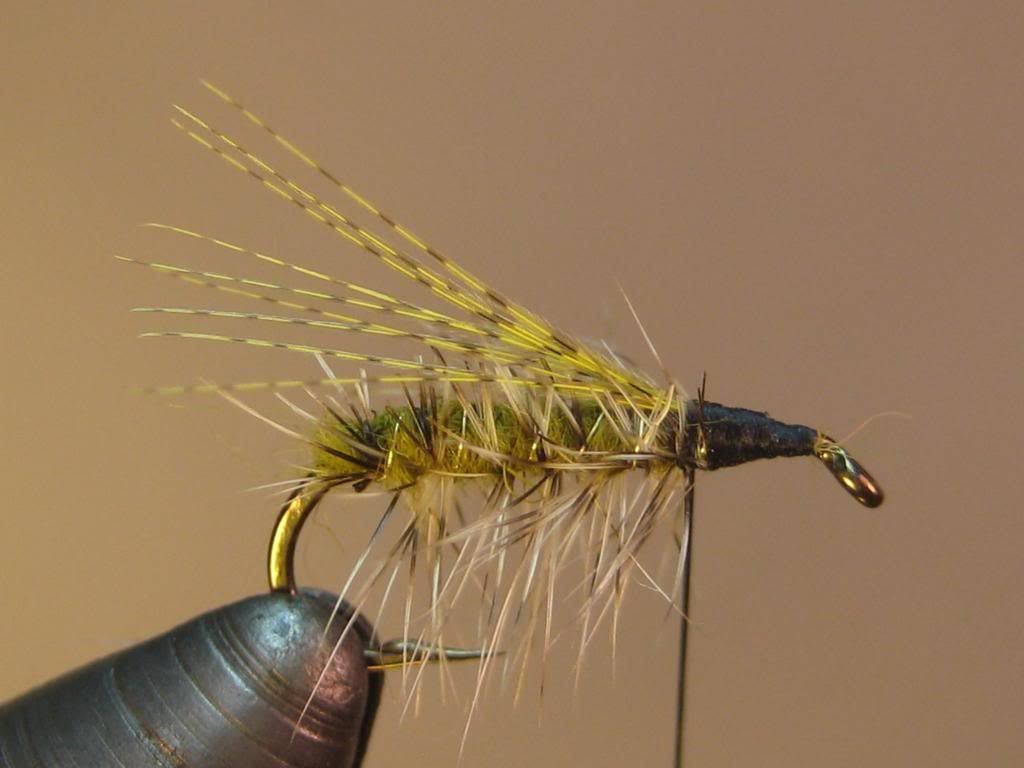
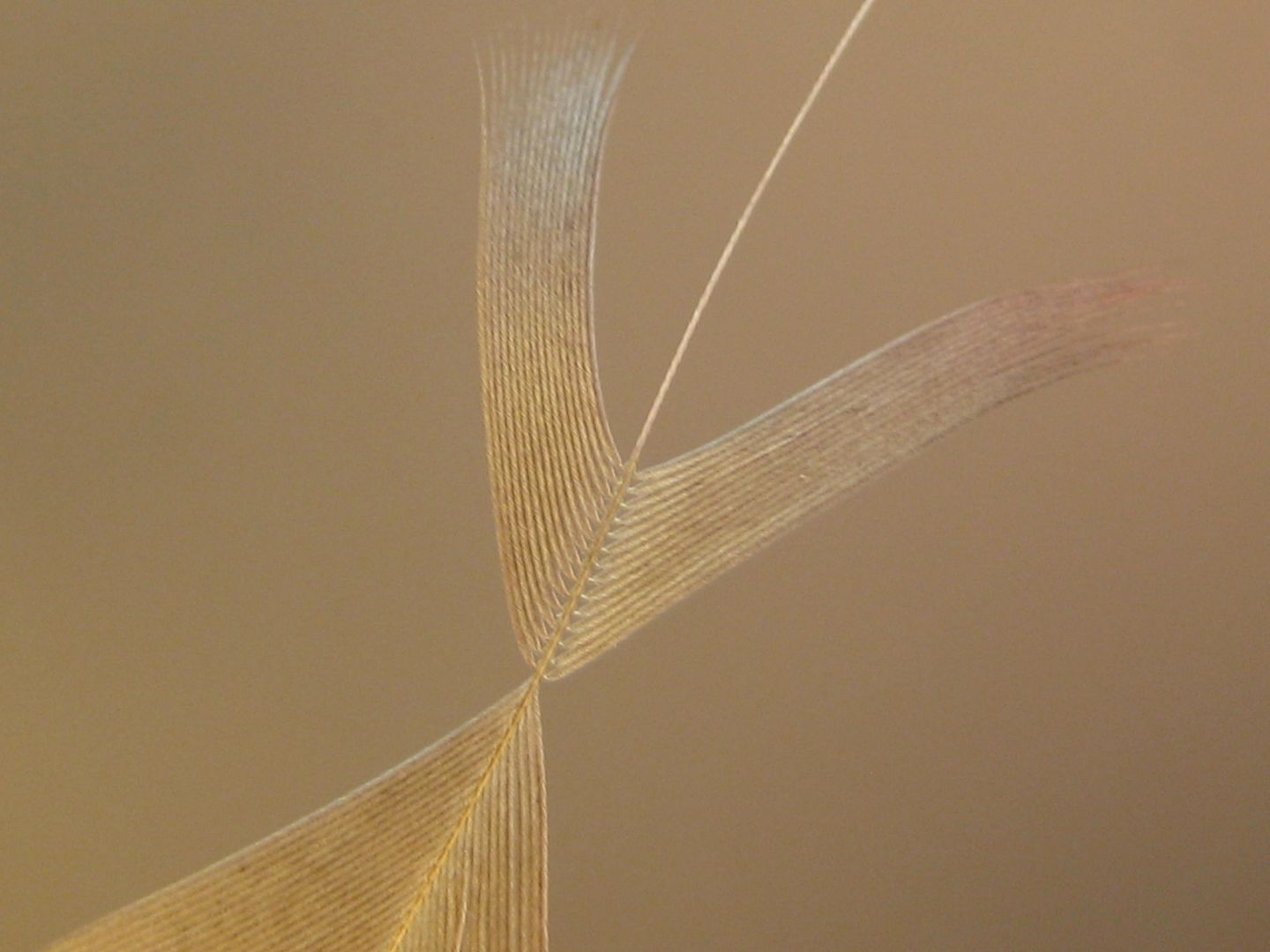
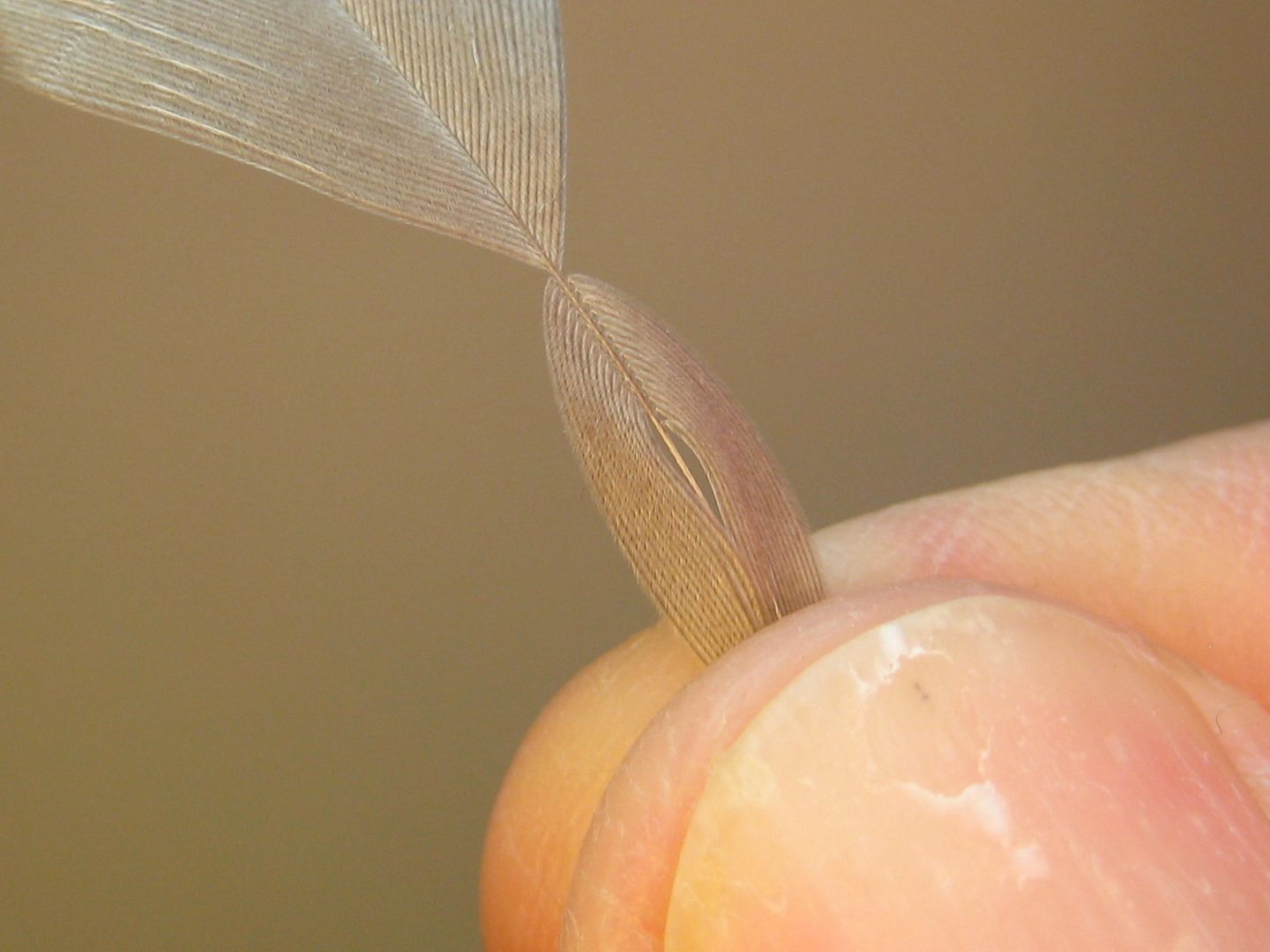
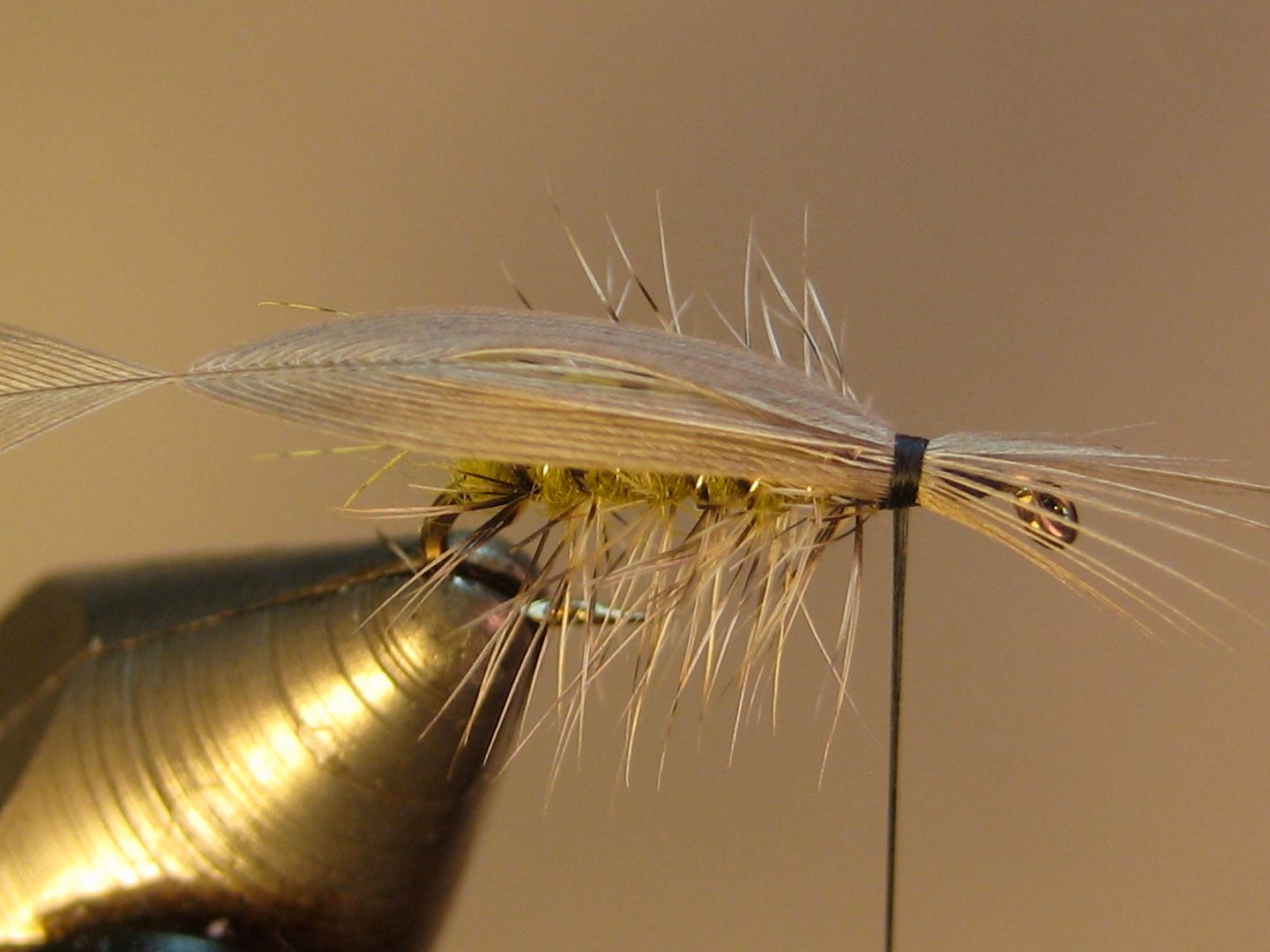
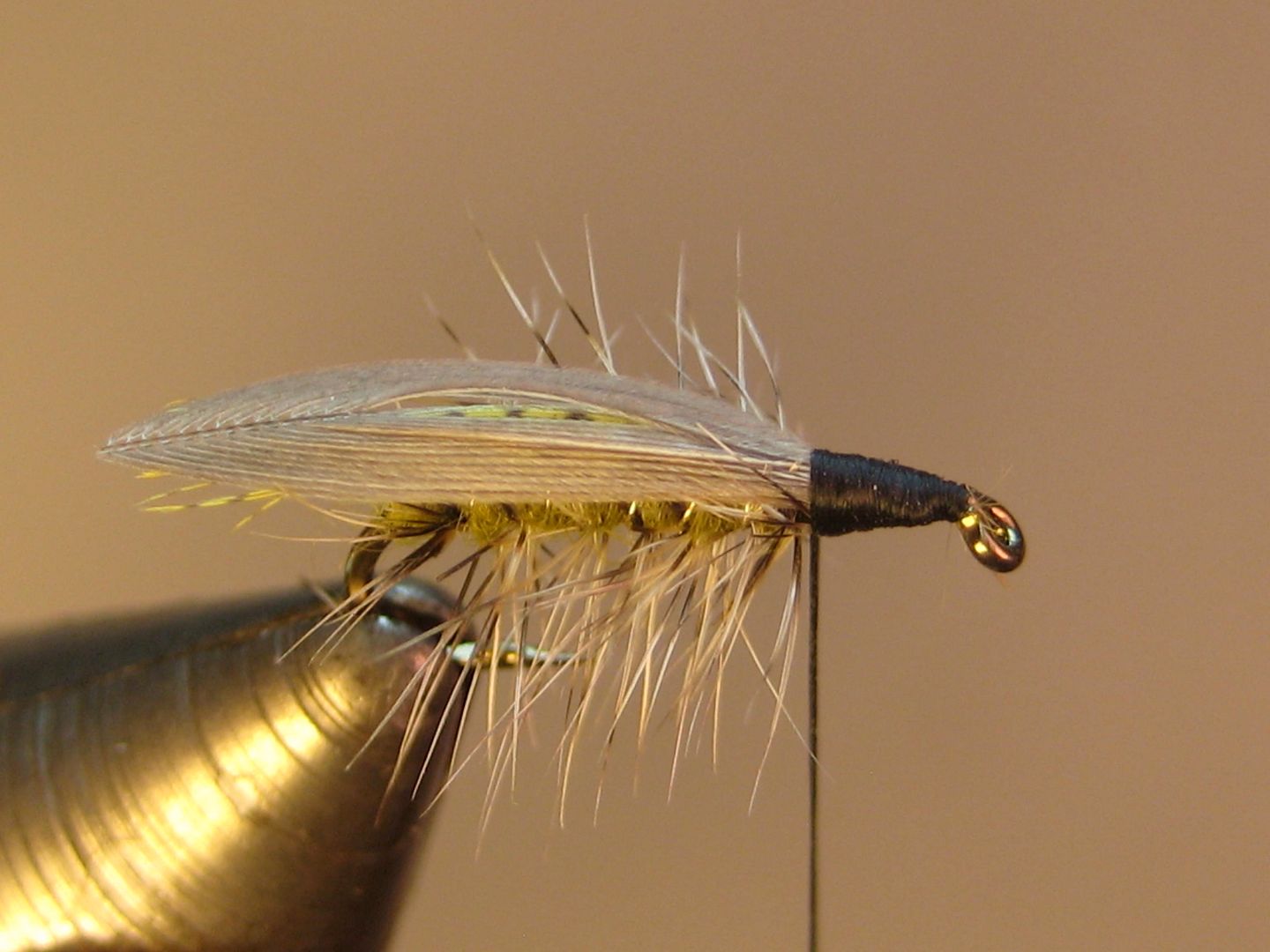
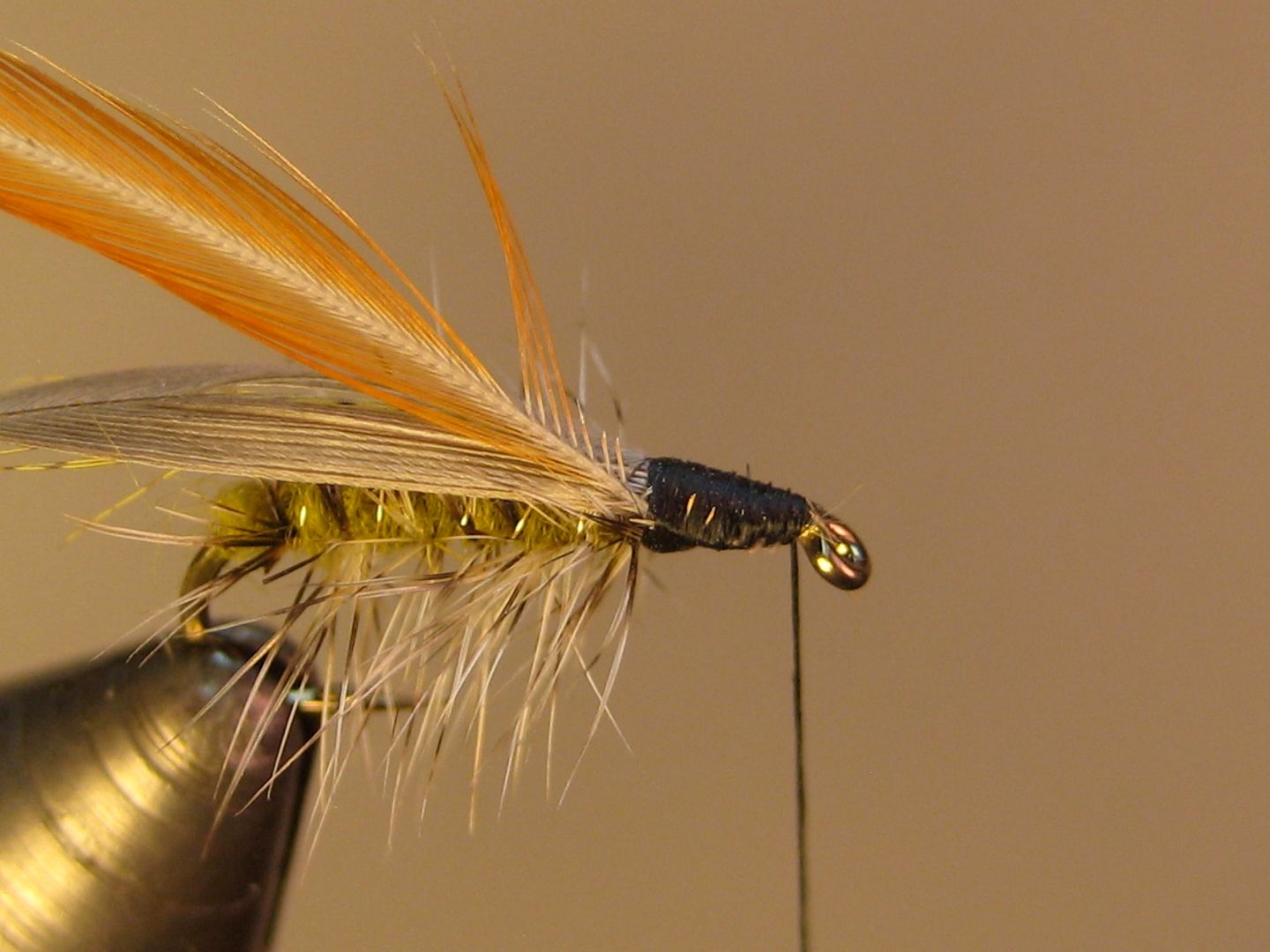
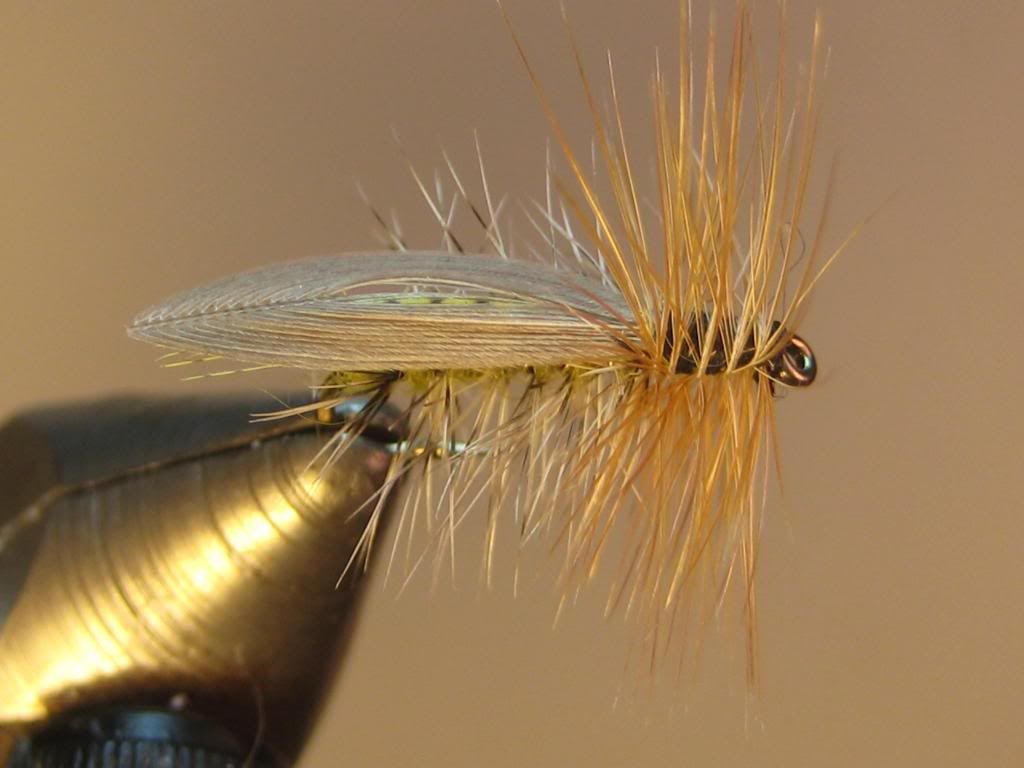
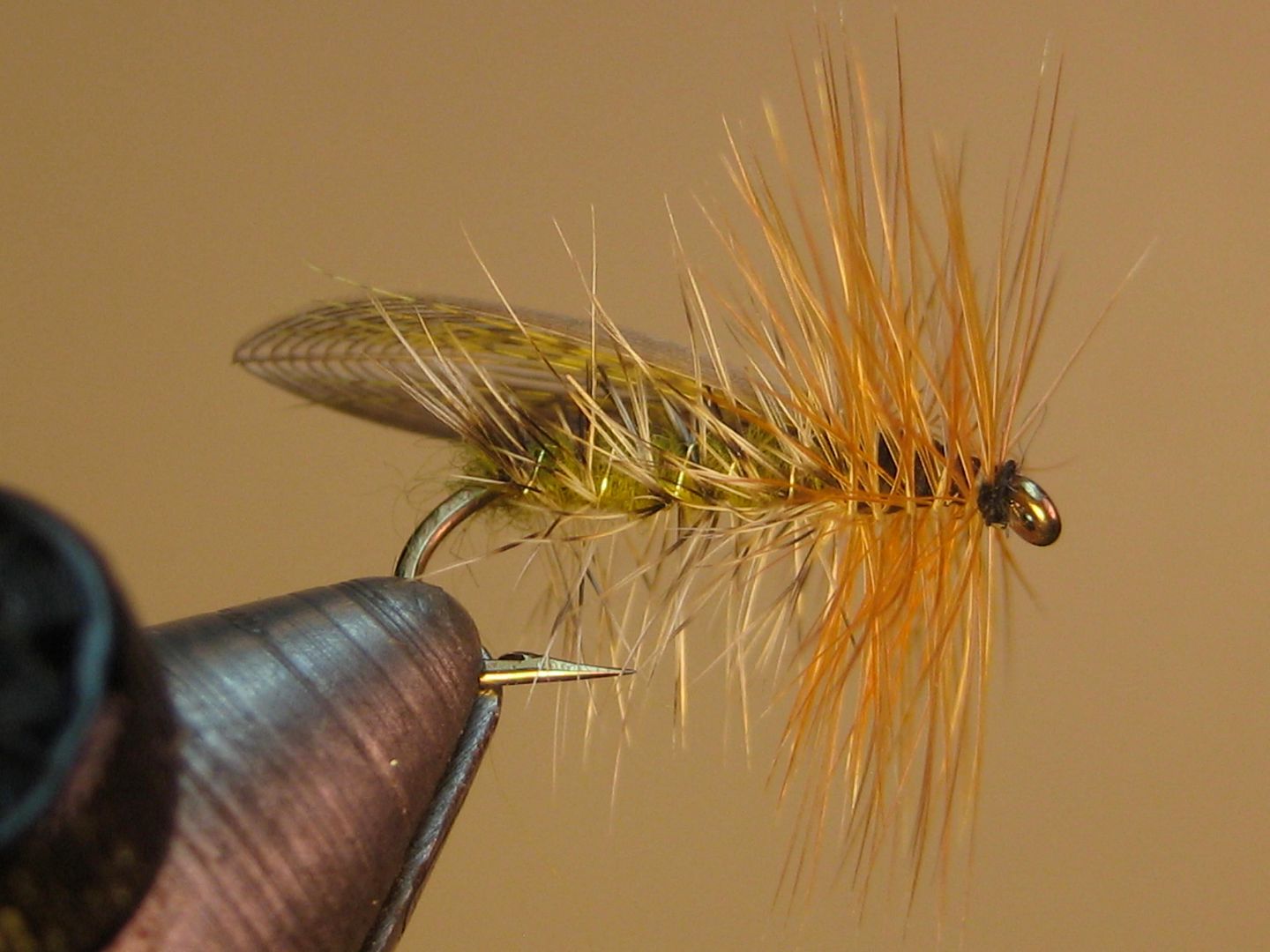
Do the quill wing tips face up? down?, cross over each other? Can’t ever remember (or get it right) so I cheated.
hook - Mustad 94840 #14
thread - Danville 6/0 black
rib - x-fine wire gold
abdomen - dubbing olive
body hackle - grizzly (undersize by 2)
underwing - mallard dyed wood duck
wing - hen dun (Wondewing style)
front hackle - brown
Part 1
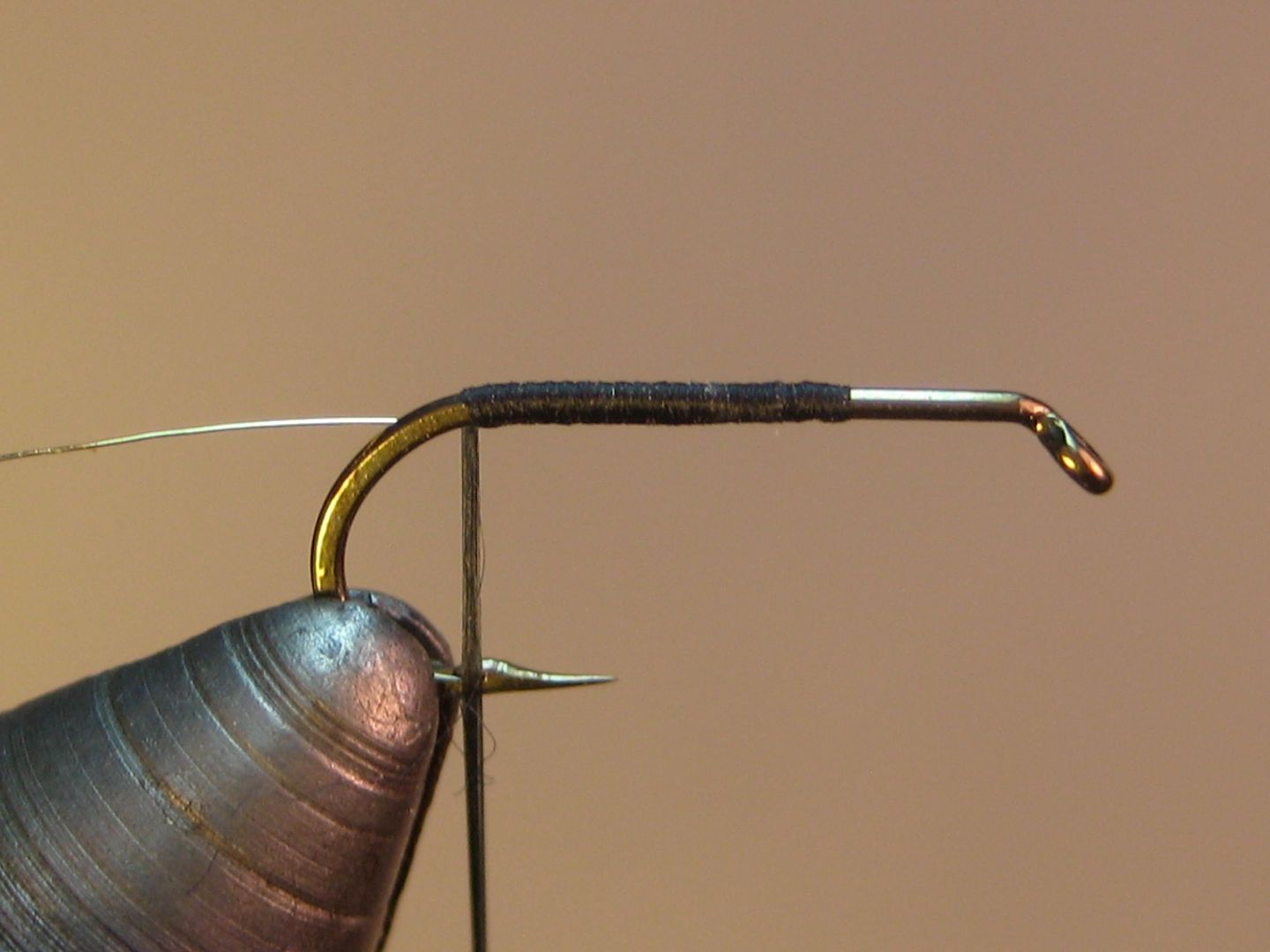
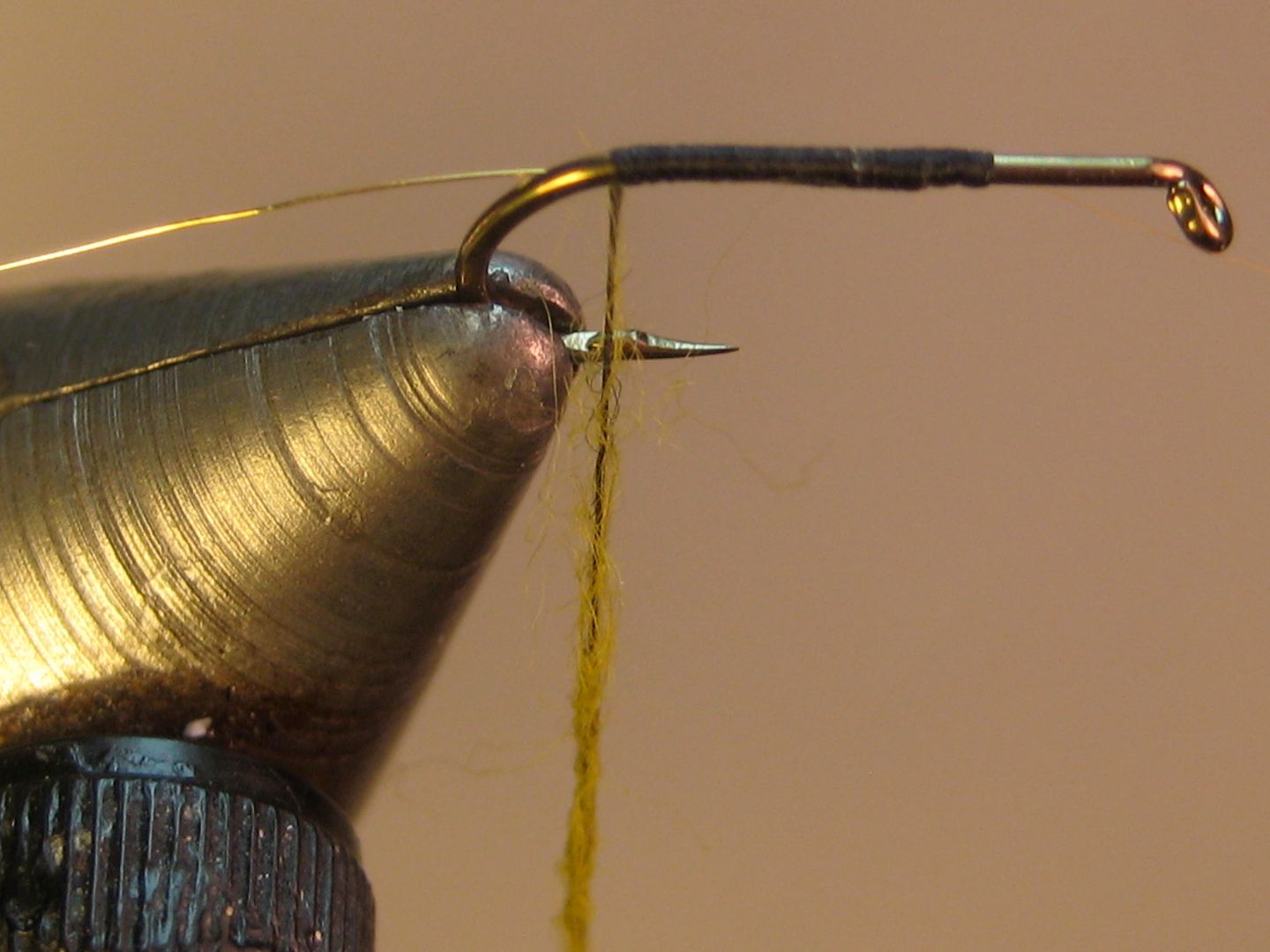
mash barb, start thread at 2/3 mark; tie in rib and wrap back to point above barb
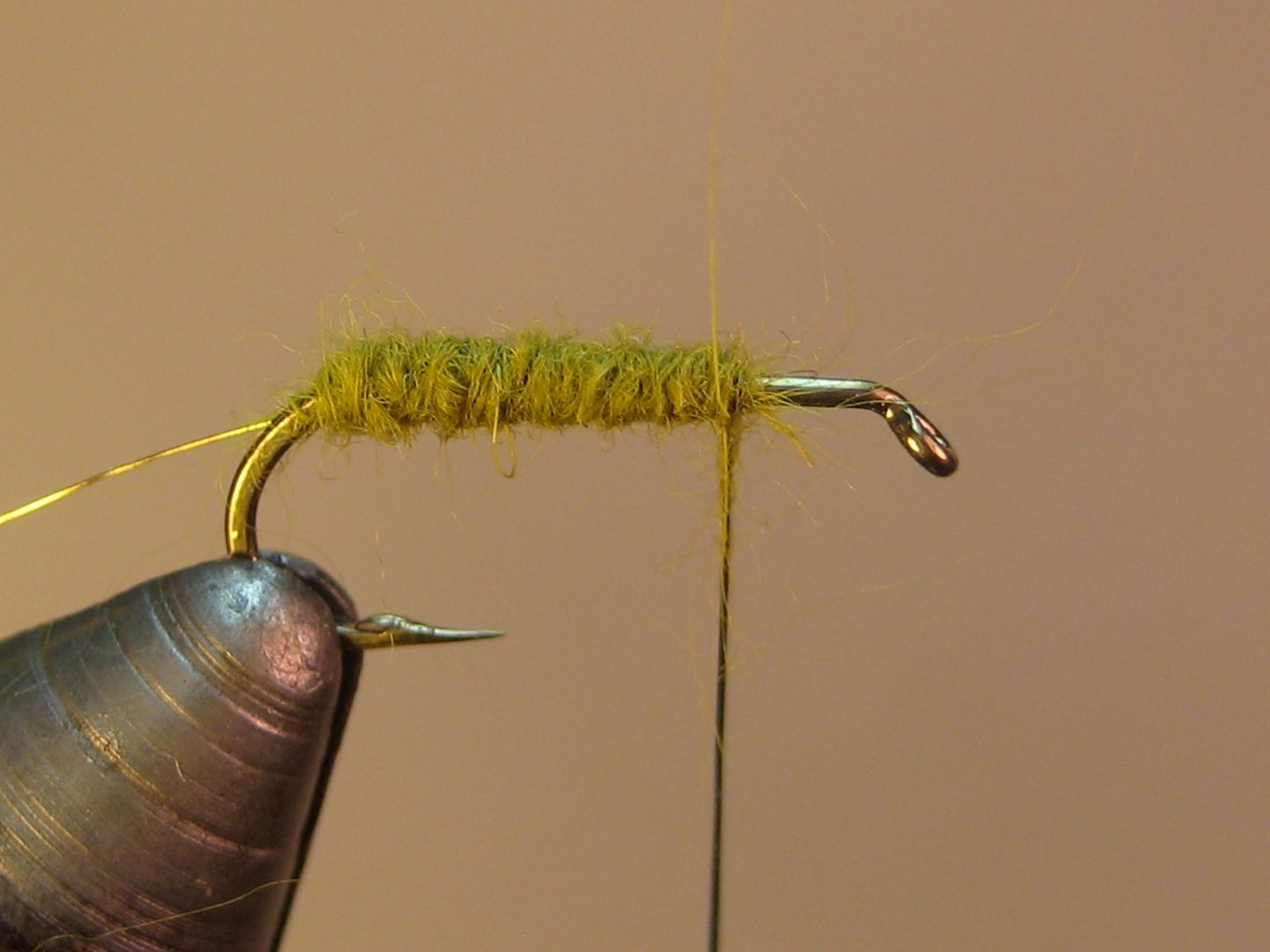
dub thread, dub body
tie in grizzly hackle at front of body
wrap hackle to the back; capture tip with ribbing, continue ribbing to the front, helicopter and tie off (not the traditional method, but it works great for an EHC so why not? more durable, too)
trim hackle on top
measure a few mallard fibers (not quite gap width); tie in
Beautiful, Scott. I think those wings look good on any fly. I have a problem with them turning on me when I tie them in. They don’t always cooperate. Do you find them durable at all?
Thanks. The first few times I tied the wing, I had problems with thread torque rolling it, too. I tie it a bit short and a little more on my side of the hook, let the thread take it to the top and after a few more wraps, pull the feather back to the proper length; works more often than not.
Haven’t put it to the test, yet, and never got a chance to fish the WW Stonefly, but it can’t be any less durable than the ones I used to tie with quill slip wings - they looked like I stuck them in an electrical outlet after a few casts
I’ve a question. When do you think the ‘Wonder Wing Style’, as used in this pattern, developed? I ask because I don’t consider a simple tied in hackle that was pulled back as a ‘W.W.’ I’ll explain further a little further down. Others may also consider this and add their information too.
Very nice fly and very good pattern though.
I got the idea from an article by Al and Gretchen Beatty http://www.flyanglersonline.com/flytying/fotw2/050905fotw.php I’ve also seen this method referred to as a Wonderwing in a number of other places; if I’m operating under a false pretense, oh well.
How did you knowI was demoing this fly tonight at our class!!! I was just talking to one of the tiers and we were discussing using Krenick as a body instead of dubbing. The wing was driving me nutty until I realized it was a tent style!
Thanks, Scott.
Mike
For mayfly wings, I lightly coat the outside edges with SHSAN. It helps a bit. If one of the inner fibers break, I just snip it off. If you coat the whole wing, it will spin due to air resistance.
Given that this is a down wing, you could probably coat it pretty liberally.
What I was getting at in the 1st post was that the ‘WW’ style was not a new innovation. Harry Darbee, in his ‘2 Feather’ fly, inverted and pulled down the barbs but used a few barbs on each side of the stem for the tail. The pulled back barbs served as the body and wing. The 1950s sounds about right. I also thi9nk that the Dettes developed a fly pattern that also used inverted and pulled back hackle barbs . The ‘Riffle Dun’?
Who knows who did what first and whether anybody was influenced by anybody else?
Quick Google search shows The Two Feather Fly was “introduced” in 1960 by Darbee’s friend A.J. McClane in Field & Stream, which means Darbee had been tying it in the 1950’s.
But I know Chauncy Lively (who’s usually given the credit for popularizing wonderwings) wrote about them in 1953. I was under the impression that he first saw wonderwings in Europe and brought the idea here.
The Dette’s had the Riffle Dun, but I don’t know the history. It’s an absolutely beautiful fly combining the wonderwing body with split hackle tip wings and parachute hackle. I can’t figure out how it’s tied.
“Who knows who did what first and whether anybody was influenced by anybody else?” Insofar as fly tying, this is so true. But sometimes we’ve just gotta blame somebody for our craziness at the vise. Or should I have said, ‘our vice at our vises’? LOL.