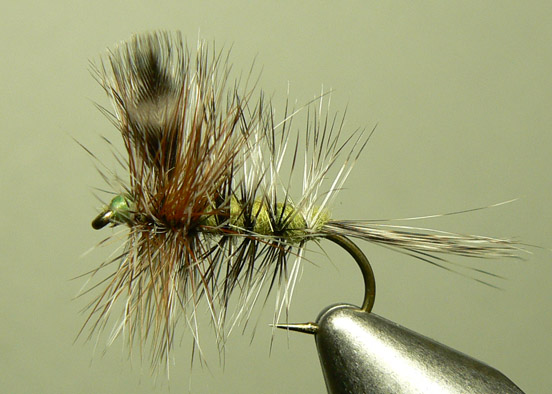
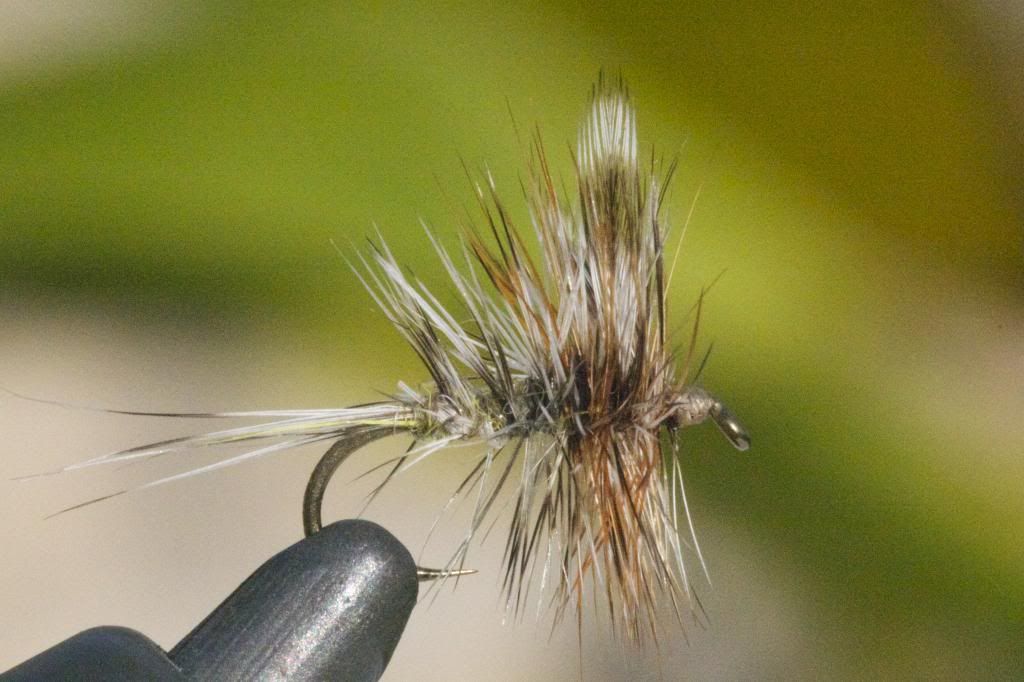
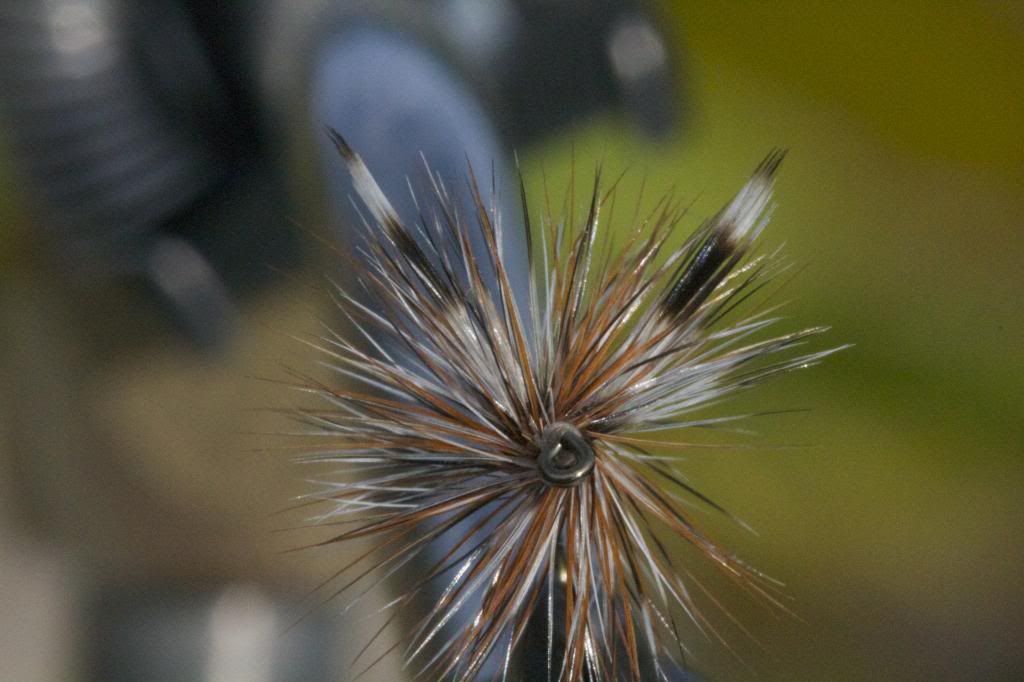
I believe the LH version would prove superior on streams south of the Equator; Coroilis Force and all that. Both flies look to be light on their respective feet; nicely done guys.
Beautiful flies everybody.I have to say that I would have broken the various hackles and have the whole thing unwind about five times during that sequence.I definitely will try the reverse hackling technique this weekend.
Thats a new pattern on me, but one that I shall be having a go with. On first sight I did think of how I’d go about tying it, and I must admit I would do it very differently. Still thats a sound way to knock one out. Could you describe a none traditional dubbing noodle for us please? That phrase did get me puzzled
Oh, the traditional way to tie it is quite different from how I showed in the video, and I no doubt frustrated some who are steeped in tradition. Call me a heretic, but I feel that as long as I deliver the look&feel of the accepted pattern, how I arrive at it is my affair
I like my flies to be efficiently tied, and durable. These are but two reasons why I use the sequence as shown.
Would you describe your proposed sequence? I am curious.
Could you describe a none traditional dubbing noodle for us please? That phrase did get me puzzled
Yeah yeah… “traditional” as in dubbing twisted around the thread to produce a dubbing ‘sausage’ - as opposed to the less traditional split thread method, or touch-dubbing". I will refer to it as “conventional” in a future video
I’d have tied a grizzle saddle hackle in at the tail and done all the grizzle hackle in one operation back to front. Though you could do it your way around if you formed the body after winding the brown hackle. Just me thinking how would I save operations if I had to tie 10 dozen.
Sorry couldn’t resist the “Traditional” remark. You know me!
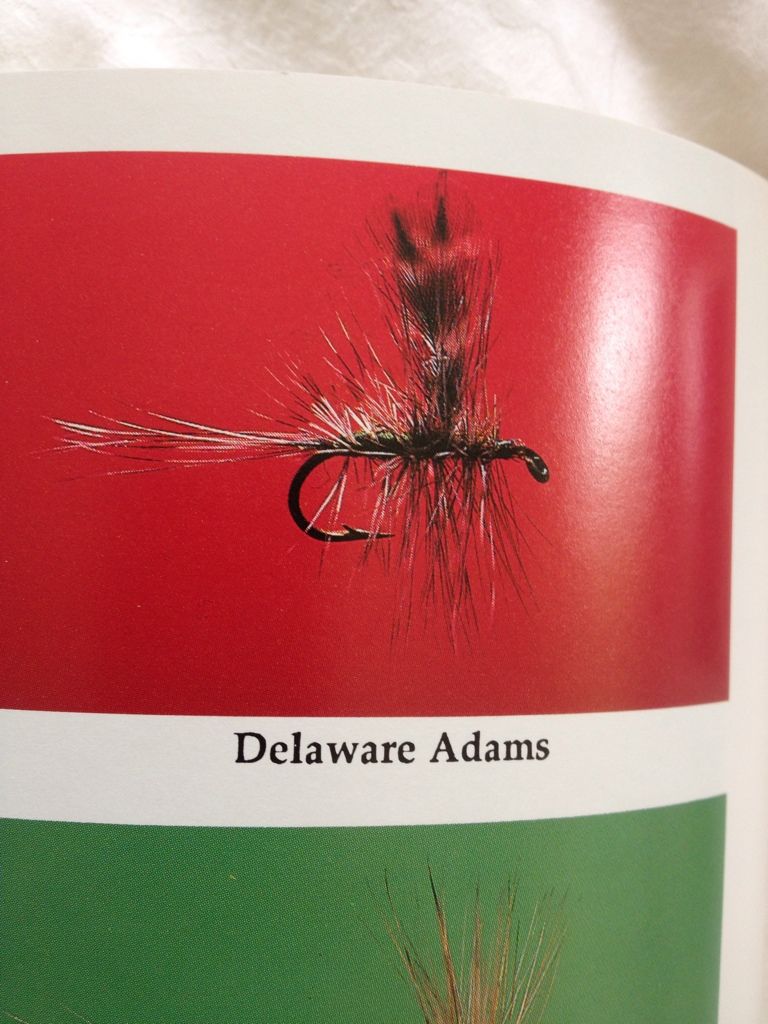
The Delaware Adams certainly leans on the contemporary Adams recipe for some components, but that does not mean it has to have the mixed tail.
I would be more inclined to wonder why the present day Adams is still called Adams, when it has lost the spent wings, the grey wool body and the GP tippet tail of the original Lenonard Halladay recipe :roll:
If you tie in the grizzly hackle at the tail and wrap it forward this has a couple consequences.
First the body hackle is (meant to be) one size smaller than the front hackle - hard to suddenly grow the barb length mid-wrapping. This would still require a second grizzly hackle.
Second you would lose the body reinforcement - though there are ways around this, for example by leaving a tag end of thread to cross-wrap.
In the scenario of tying in the hackle at the bend, would this be by the tip or the butt?
Now I’ve learnt something. Larger hackle at the head. The way the barb length varies on some saddles it is possible to jump a size or three mid hackle!!! but I take your point. With saddle it doesn’t seem to make much difference tip or butt, If I had a long neck hackle then it would be by the tip.
To which I would suggest you should source better quality hackle
but I take your point. With saddle it doesn’t seem to make much difference tip or butt, If I had a long neck hackle then it would be by the tip.
Tying it in by the tip would facilitate a decent taper, if the hackle is one with progressive barb length. It does, however, wrap against the feather’s natural barb angle as they come off the stem, and often results in reduced control on how the barbs will radiate out as you wrap towards the eye.
I tied mine Walt’s way. Wing; tail; tie grizzly in behind wing; wrap dubbing to tail - leave thread there; palmer hackle to tail and tie off and trim; wind thread through hackle to thorax; tie brown and grizzly in at thorax and wind both forward.
At least I believe that is how Walt tied them.
The hackles I am talking about are both Metz and Whiting! There are often short sections of longer fibres. I’ve found brown to be most prone, but noticed them on grizzle and badger. Not sure where to go for better hackles!
If you really must rib through the hackle why not leave the starting tag of thread long and wind that back through the hackle. However, the one dry I use a lot that has a hackle wound back to front, the Griffith’s Gnat, doesn’t have a rib. I’ve never had issue with the longevity of them. When I tie a Griffith’s I use a single strand of peacock wound in touching turns. The hackle stem sits hard against the stem of the peacock, which is in turn hard against the hook shank. Winding a hackle over a dubbed body would provide some cushioning and protection to the stem. For that reason I would doubt the need for ribbing.
We both know a certain river in Umbria where that pattern would probably work very well, in much larger sizes!