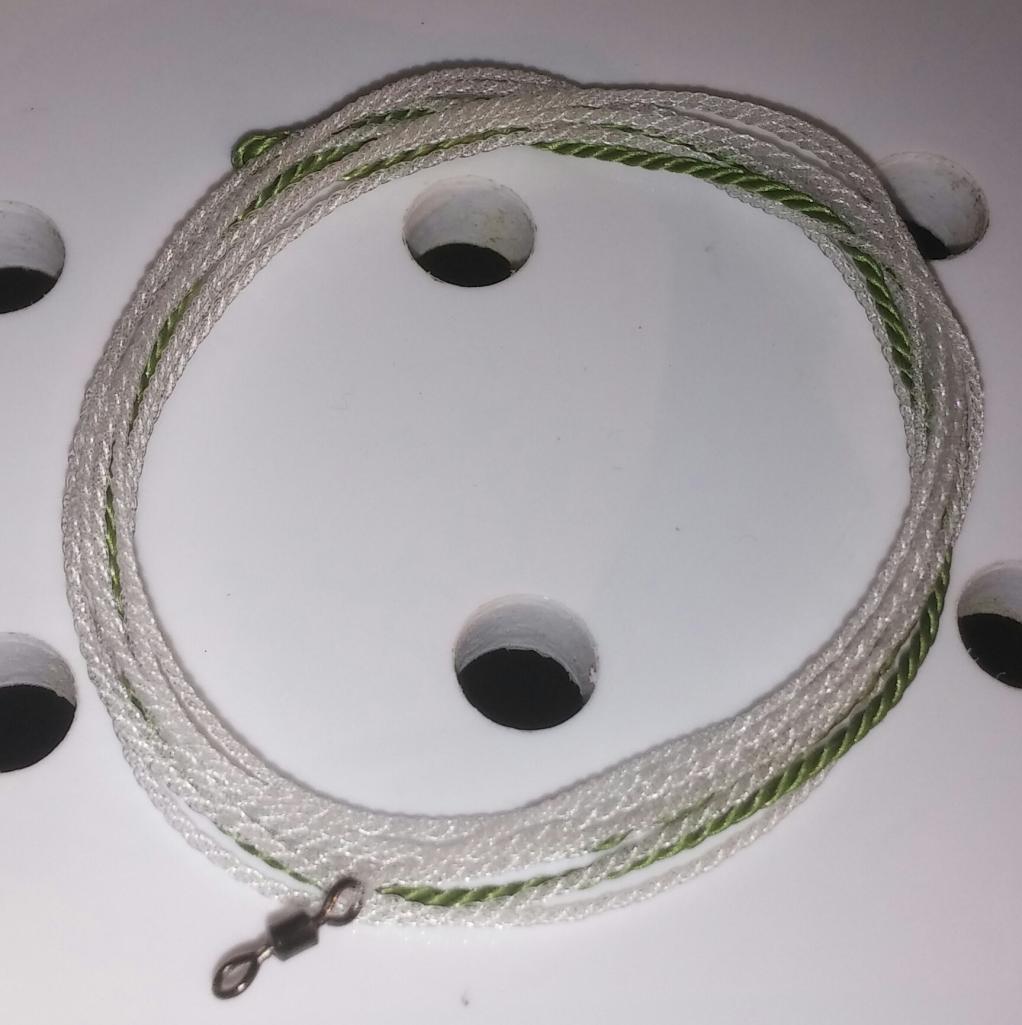
Three strand leaders

I was asked if I would do a post on three strand leaders and lines by John Scott, as to the advantages of them versus the traditional two strands we normaly use. First advantage that is a smoother taper, transfering energy better giving a better presentation. They are denser and rounder than their two strand cousin as well. This helps loading and cutting through the wind much better. An advantage that some may say is the greatest advantage of all, because they hate the spring like coil effect of a snagged furled leader. I haven’t really experienced this much since furling my own leaders and line, but did with the first ones I had bought. Three strand leaders/lines are less springy and don’t recoil leaving you in a mess. Just the appereance of the line its self is very different to look at. I had my motor made so that it was more durable and last a long time, as I’m selling these and make a high volume. The motor has four hooks on it that I use to furl. Three of which go the same direction, and the fourth going the opposite direction to do the actual furling. Here is a picture of my motor set up I use.

I set up my posts just the same as I do on my outside legs when making the two strand lines and leaders. The middle strand is put in between the posts on the outside to give it the perfect smooth taper. This is a Silk Tenkara Line I made for Jason Klass who reviewed it.

Tight Lines,
Brandon

.

.

Brandon -

Thanks for the brief introduction to your three legged leaders. Being a curious critter ( and different folks will make different things of that comment ), I do have a number of questions about the process.

First, do you make all three legs the same or are there variations in the number of material strands among / between them ??

Second, what is the final configuration, as in how many strands in the butt end, how many in the mid section, and how many in the tip section ??

Third, what are the proportions of the various sections - compared to my standard proportions of 40% butt, 30% mid, and 30% tip ??

Fourth, is it possible to incorporate a tip ring and / or do you add one after you’ve completed furling the leader ??

Fifth, do most of your customers want a leader that floats or one that submerges ?? You probably recall that I prefer my thread furled leaders to submerge and use a material that accomplishes that without sinking even very small dry flies in rough water. Does “denser” come in to the floatability / submergability equation ?? And does “denser” mean less supple ??

Sixth, are there any properties of silk that you believe make it superior to other threads such as Danville or Uni-thread ?? And have you done any three legged leaders using mono or fluoro ??

Finally, it’s not clear to me if the lack of “coiling” you describe is a result of the three legged furling process or the material used ?? Yes, that “coiling” is probably the biggest annoyance associated with using thread furled leaders, and it expresses itself in a surprising variety of ways, but that is a minor annoyance weighed against the advantages of the suppleness of thread leaders.

John

P.S. That is one slick power furling jig head you’ve designed. Are you offering those for sale ??

John

Those furling machines are available here…

http://www.eclecticangler.com/production-furling-machine/

Brad

Brad -

Thanks for the link. I tossed half a dozen of each in the shopping basket and then forgot to take them with me. Darn. :sad:

John

I have all the parts on the bench to make one, just been busy with other pressing projects. Maybe I will have to get on it one of these days.

Brad

Okay so first things first, I have made all three legs using the same as of now. However I have used differing sequences in two strand leaders with great success, and have no reason to see otherwise.

Second, the configuration will change depanding on what size leader you are making. The one pictured being a Tenkara line it is very small, and has less threads per step.

Third, I don’t see why your standard proportions wouldn’t work. The proportion side IMHO will work the same as a two strand.

Fourth, yes you can add a tip ring. I suppose you could do so before furling, but you would loose the added strength of the third leg doing it this way. By adding after furling you will have additional strands to add strength.

Fith, this depends a little bit. I sell some that are better suited for different situations. That said my most popular as of late are my new Spring Creek leaders/lines. These are made to float without any treatment. People are buying these for their dries, and wets. Then use other leaders for nymphing and streamers, so it is a matter of prefrence of what they will be fishing.

Sixth, The coiling or spring in the leader isn’t a matter of material, but rather the process. Now this is just my thoughts and thoughts only so take it for what it is. I believe the added steps and smoother taper help share the energy better, so when it is released after a snag it is less spring like. I hope this helps answer some of your questions.

As to boyancy I will do some testing on that next week as I am on vacation and will have some time for testing. I do believe it isn’t denser in mass but rather more compact might be a better word; which helps it cut throw the wind.

Cheers
Brandon
First, do you make all three legs the same or are there variations in the number of material strands among / between them ??

Second, what is the final configuration, as in how many strands in the butt end, how many in the mid section, and how many in the tip section ??

Third, what are the proportions of the various sections - compared to my standard proportions of 40% butt, 30% mid, and 30% tip ??

Fourth, is it possible to incorporate a tip ring and / or do you add one after you’ve completed furling the leader ??

Fifth, do most of your customers want a leader that floats or one that submerges ?? You probably recall that I prefer my thread furled leaders to submerge and use a material that accomplishes that without sinking even very small dry flies in rough water. Does “denser” come in to the floatability / submergability equation ?? And does “denser” mean less supple ??

Sixth, are there any properties of silk that you believe make it superior to other threads such as Danville or Uni-thread ?? And have you done any three legged leaders using mono or fluoro ??

Finally, it’s not clear to me if the lack of “coiling” you describe is a result of the three legged furling process or the material used ?? Yes, that “coiling” is probably the biggest annoyance associated with using thread furled leaders, and it expresses itself in a surprising variety of ways, but that is a minor annoyance weighed against the advantages of the suppleness of thread leaders.

John

P.S. That is one slick power furling jig head you’ve designed. Are you offering those for sale ??[/QUOTE]
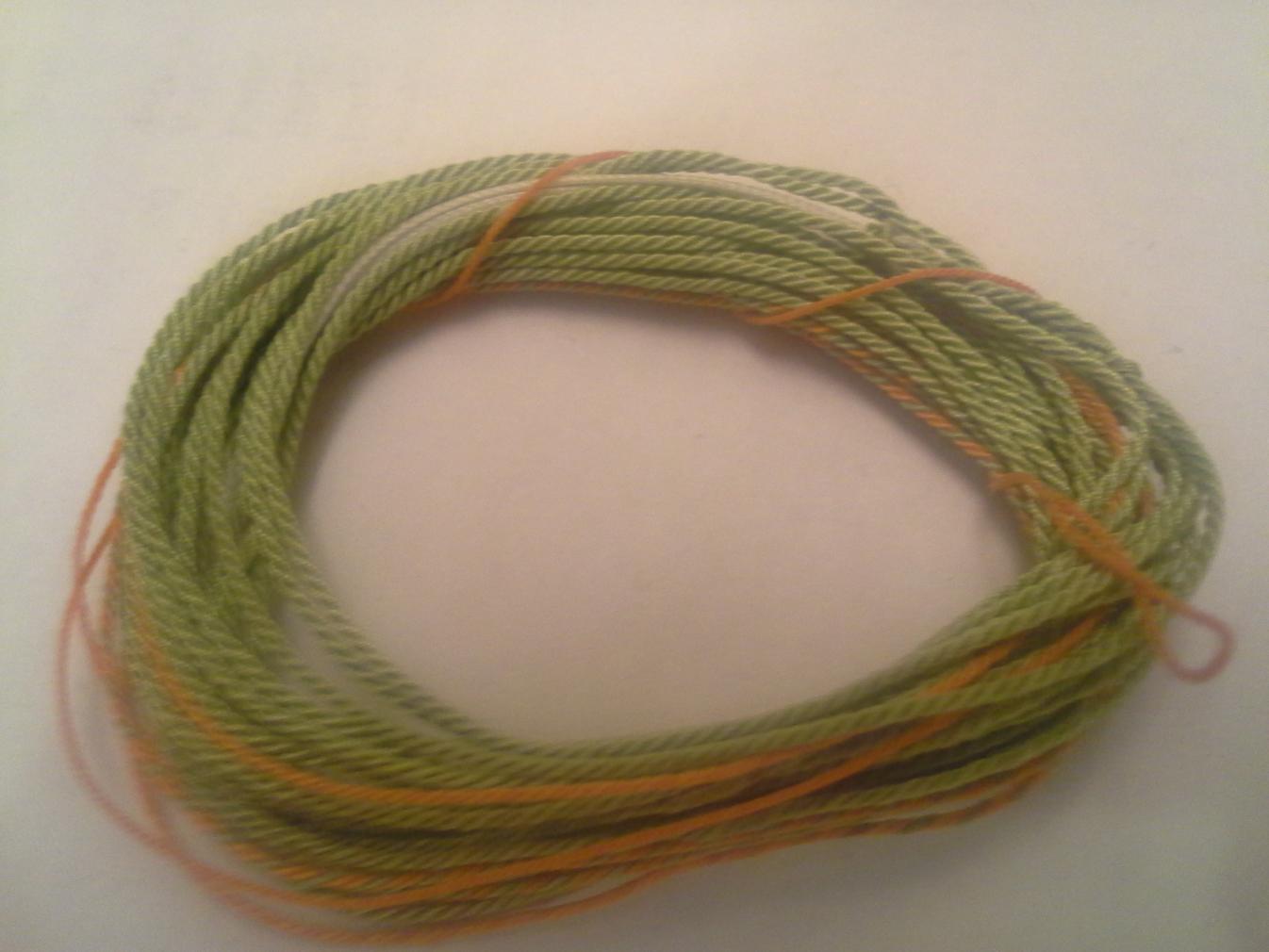
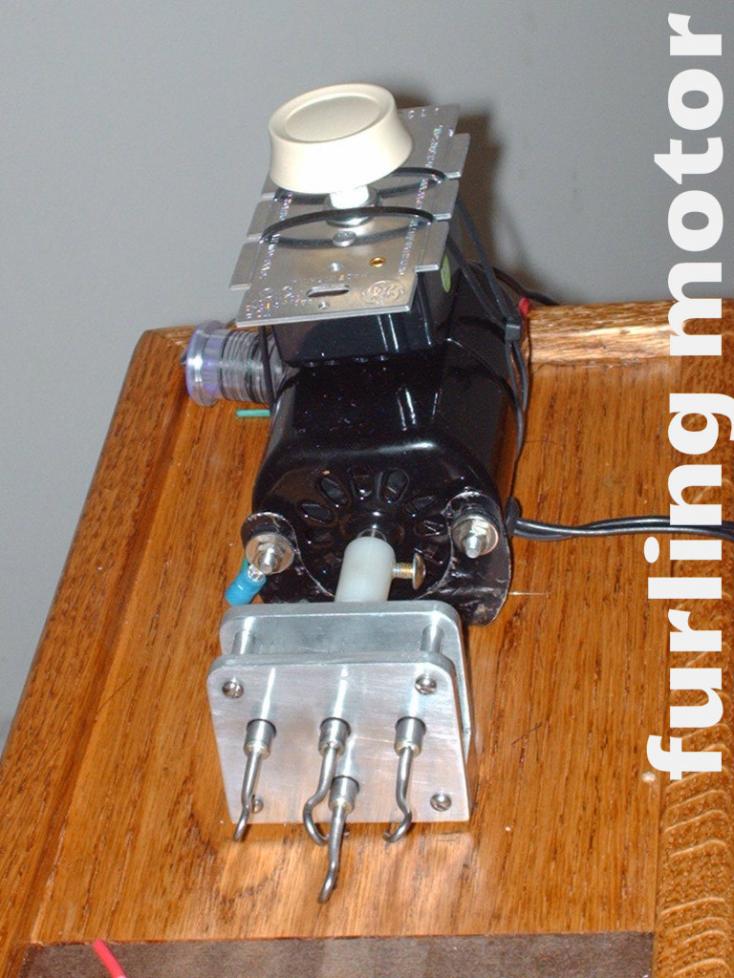
Michael thanks for coming in. His work is exceptional.

Brandon

Brandon -

Thanks for the response.

Michael -

Got your email and the attached PDF. Thanks.

John

That braiding machine Michael has is intriguing and scary at the same time.

Michael, I was referring to the braiding machine in your video not your furler!

Brandon -

Still curious about silk as a material for furling leaders.

What are the pros and cons for various applications for conventional fly angling leaders ??

John

P.S. My recollection, from when I built a rod using silk for the guide wraps, is that it is quite a bit more expensive than tying threads like Danville and Uni.

Michael -

Thanks much for your comments on the pros and cons of silk.

My top two priorities for a leader are suppleness and submergability - yes, submergability for fishing even very small dry flies on rough water. Next would be simpicity and durability in that order.

The Danville Flymaster Plus thread that I’ve used for years does quite well in the suppleness and submergability areas, and quite nicely for simplicity. More recently, for whatever reason, the durability has diminished, either because Danville has changed their thread or I’ve changed my furling techique ( from hand cranked to electric drill power ).

My last two points of curiosity go the relative suppleness and submergability of Danville compared to the silk that you normally use, if you have any impressions in that regard ??

John

P.S. When you get a personal use three leg hand cranked model down in the $100 range, I’ll be first in line to get one. Also, I think such a product at that price point would be a real boon, enticing a much larger number of folks to become homebrew furlers. And that should expand the market for those who produce furled leaders commercially.

John this is just my opinion from conversing with you and what you like to do with your leaders, that Silk isn’t going to do what you want it to. It will either float or sink, but not simply submerge. I would say it is more supple than Danville, but again that is my opinion. Michaels explination of this is very good. For me and what I like to do Silk fits the bill great! They are extremely beautiful, and have a much nicer smoother twist to them.

Cheers,
Brandon

The fact that silk absorbs water does not make it “heavier” while in the water, only while it is in the air or some medium that has a lower specific gravity than water. I think ??

My recollection from an earlier discussion is that Danville is made from a product that has a specific gravity of 1.2 and Uni is made from a product that has a specific gravity of 1.6. I believe the source of that information is credible, and that my recollection is accurate. That information is consistent with my experience that Danville submerges and Uni sinks.

The point being, if silk has a specific gravity equal to or less than Danville, it should submerge like Danville rather than sink like Uni. And it should float equally well as Danville with the same or a similar treatment, and require less treatment than Uni.

The treatment part of it goes to both presentation and simplicity. No need to carry around and apply some kind of stuff to the leader to keep it floating. And my experience is that in most conditions, a submerged leader makes for a better presentation than a floating leader, both because it is submerged and because it is not made less supple by applying a foreign substance to it.

There are conditions that I encounter routinely where a floating leader might offer some advantages. But those situations constitute a small part of the various conditions that exist on the freestone river that is my home water. If those conditions constituted the majority of the situations encountered, then I might opt for a leader that floats.

Anyway, thanks much to both of you, Brandon and Michael, for sharing your expertise and experience with us.

And Michael, let me know when that first Personal Furling Machine is ready to ship.

John

Michael,
Are you assuming the use of a reversible power source if one wants to power furl after twisting the legs? Maybe you are figuring the home furler will use an electric drill?

What are the diameters of the drive and satellite shafts?..and the distance between the sattelite shafts?

Thanks

If a person wanted to use a nonreversible motor would it cost more to have one with the drive shaft extended out the front centered between the satellite shafts?

Seems to me that wouldn’t amount to much and would give a little versatility.

Brandon,
I’m not sure what this means…can you elaborate please.
"The middle strand is put in between the posts on the outside to give it the perfect smooth taper. "
Do you lay out separate legs like eclectic angler or do you connect all 3 somehow?
How about a picture of the top you use for 3 strand leaders.

Bump…

Howdy All;

First Want to thank everyone for their knowledge and sharing it so freely.

Second I’d like to ask if there is a drawing/diagram/photo of a three Armed furling
set-up.

Third Thanks for all the work that’s been done and the willingness to spread the word.

hank


New streamer leader I’m working on. Made with the 3 legs. Pretty slick.
Cheers
Brandon