Q.
From MAYFLY 4: Many of our Western tailwater
fisheries present unusual conditions where fish
grow very large, very fast. Is the sheer number
of insects present (midges, mayflies, etc.) enough
to sustain the size of the larger fish? In other
words, what do the big fish eat?
A.
The key to this growth doesn’t have as much to
do with the large numbers of insects present,
but with the fact that if environmental conditions
remain essentially constant, as they often do in
tailwaters, then the fish can continue to grow.
In a normal stream, growth is cyclical depending
on water temperatures. When the water becomes
cold, movement, feeding, and metabolic activities
slow down; the reverse happens when waters warm up
and this is the time these populations grow. In
tailwaters, the populations are usually acclimated
to fairly constant water conditions throughout the
year and thus can continue to grow as long as there
is sufficient food. Fortunately, the same thing
happens to the insects. Many midge and other insect
species can continue to produce cohorts throughout
the year if water temperatures do not go to low;
thus, a continued supply of food for the fish. Thus,
it isn’t so much a case of large numbers of insects,
it is the fact that their production rate is high
and population turnover rapid.
You might want to refer to previous columns in
reference to predicting insect hatches. In
constant temperature waters, especially if
they are on the warm side, an insect can attain
the requisite number of degree days quicker that
under natural conditions and crank out more
cohorts per year.
If you have a question, please feel free to contact me.
~ C. E. (Bert) Cushing, aka Streamdoctor
105 W. Cherokee Dr.
Estes Park, CO 80517
Phone: 970-577-1584
Email: streamdoctor@aol.com
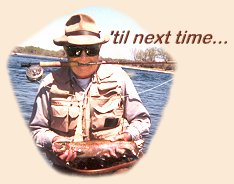
The ‘Stream Doctor’ is a retired professional stream ecologist and
author, now living in the West and spending way too much time
fly-fishing. You are invited to submit questions relating to
anything stream related directly to him for use in this Q & A Feature
at streamdoctor@aol.com.
Originally published February 9th, 2004 on Fly Anglers Online by Robert Younghanz.