Q.
I would like to know
the best reference book for identifying primarily
eastern species of stream insects, preferably one
that gives scientific names and good color photos.
A.
That’s a pretty tall order. Most taxonomic texts
contain keys to identify the insects and include
their scientific names - usually, at least, family
and genus. Not all reference works contain identifying
keys to species because, in many cases, we still
do not have enough information to separate all
specimens to this level; this is especially so
for the immature nymphs and larvae. Adults have
been identified to species. However, most of
these publications do not contain color photos -
at least not to all genera or species.
You must also remember that any reference book
will not be complete in terms of addressing all
species of all stream insects. There are over
1000 species of aquatic and semi-aquatic beetles,
over 3,500 species of dipterans (midges, true flies),
over 700 species of mayflies, over 500 species of
stoneflies, and over 1,350 species of caddisflies
in North America. That’s a lot of bugs to describe,
let alone photograph. Individual streams commonly
contain around 200 different species of insects and
Upper Three River Run in So. Carolina contains over
500 species.
The point of this discourse is to help you realize
that whatever book I suggest will have its pros and
cons in terms of your request. One book might be
better than another in terms of actual keys and
identifications, but another might be better for
photographs. Also, some references contain broad,
but less detailed information on many insect groups
whereas another that emphasizes a particular group,
such as caddisflies, will have more detail. So,
with all the above cop-outs and caveats, I would
suggest the following as the best all-around
references - and note that except for Peckarsky’s
book, they are NOT restricted to eastern streams.
Peckarsky, B.L., P.R. Fraissinet, M.A. Penton, and
D.J. Conklin, Jr. 1990. Freshwater macroinvertebrates
of northeastern North America. Comstock Publ./Cornell Press.
Pros: Broad coverage of organisms; eastern region.
Cons: Insects only identified to generic level; no color photos.
McCafferty, W.P. 1981. Aquatic entomology.
Jones and Bartlett Publishers.
Pros: Many color plates; broad coverage;
much good information.
Cons: Insect keys only go to family level.
Merritt, R.W. and K.W. Cummins (eds.). 1996. An
introduction to the aquatic insects of North America,
3rd. ed. Kendall/Hunt Publ. Co.
Pros: Very good coverage; much technical information.
Cons: Insects keyed to generic level; no color.
A new edition of this book is in the works.
Schwiebert, E. 1973. Nymphs, a complete
guide to naturals and imitations. Winchester Press.
Pros: Nice color plates; lot of fishing information.
Cons: Badly out of date; not regional.
In summary, if your main interest is in insect
identification, I’d recommend Peckarsky et al.
or Merritt and Cummins. If you want color and
more general information, I’d pick McCafferty.
~ Bert
If you have a question, please feel free to contact me.
~ C. E. (Bert) Cushing, aka Streamdoctor
105 W. Cherokee Dr.
Estes Park, CO 80517
Phone: 970-577-1584
Email: streamdoctor@aol.com
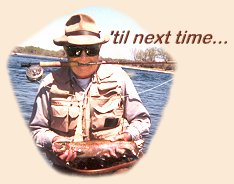
The ‘Stream Doctor’ is a retired professional stream ecologist and
author, now living in the West and spending way too much time
fly-fishing. You are invited to submit questions relating to
anything stream related directly to him for use in this Q & A Feature
at streamdoctor@aol.com.
Originally published April 4, 2005 on Fly Anglers Online by Bert.