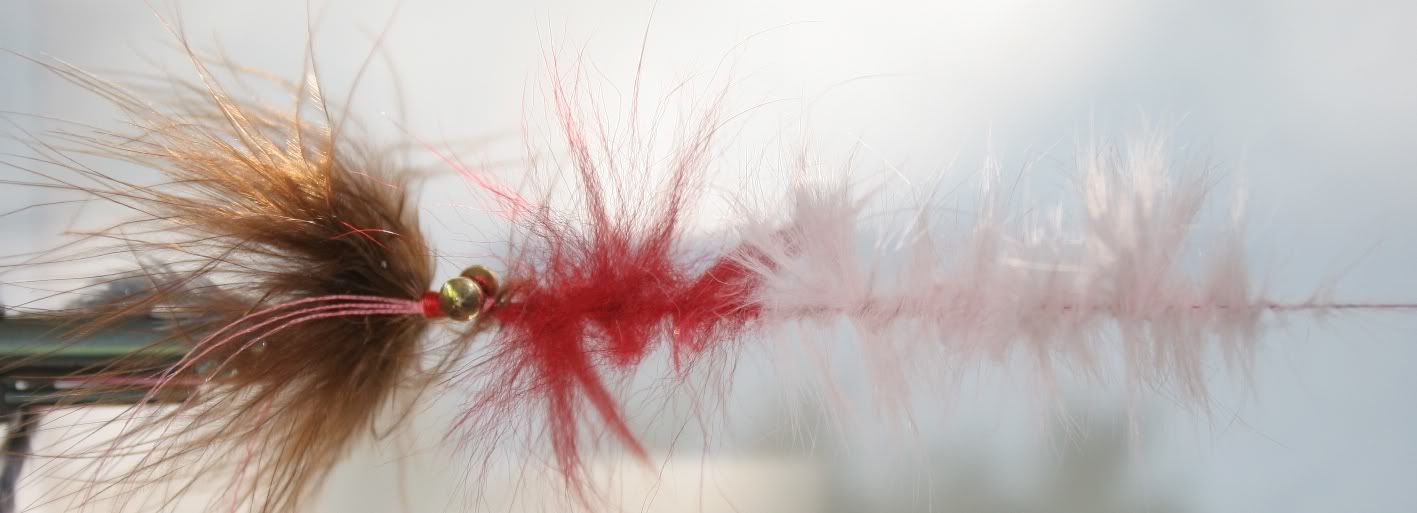
Rather than clutter the thread asking about articulation ideas the Haymaker deserves its own. This was designed by Mark Hieronymus and he has not been real open about how he does this so this is just an assumption. It has proven, tied this way, to fish, and fish well for a long time. The colors were chosen only to show up better in the photos and the pink bunny head did not do so well in that regard… There are a total of 18 assembly photos and that is excessive, but every step is being shown.
Please feel free to critique the directions harshly if needed and let me know if you are able to tie this fly based on them. I need to do a more formal write-up for the new book by the Alaska Fly Fishers and input is appreciated.
Here is the finished product
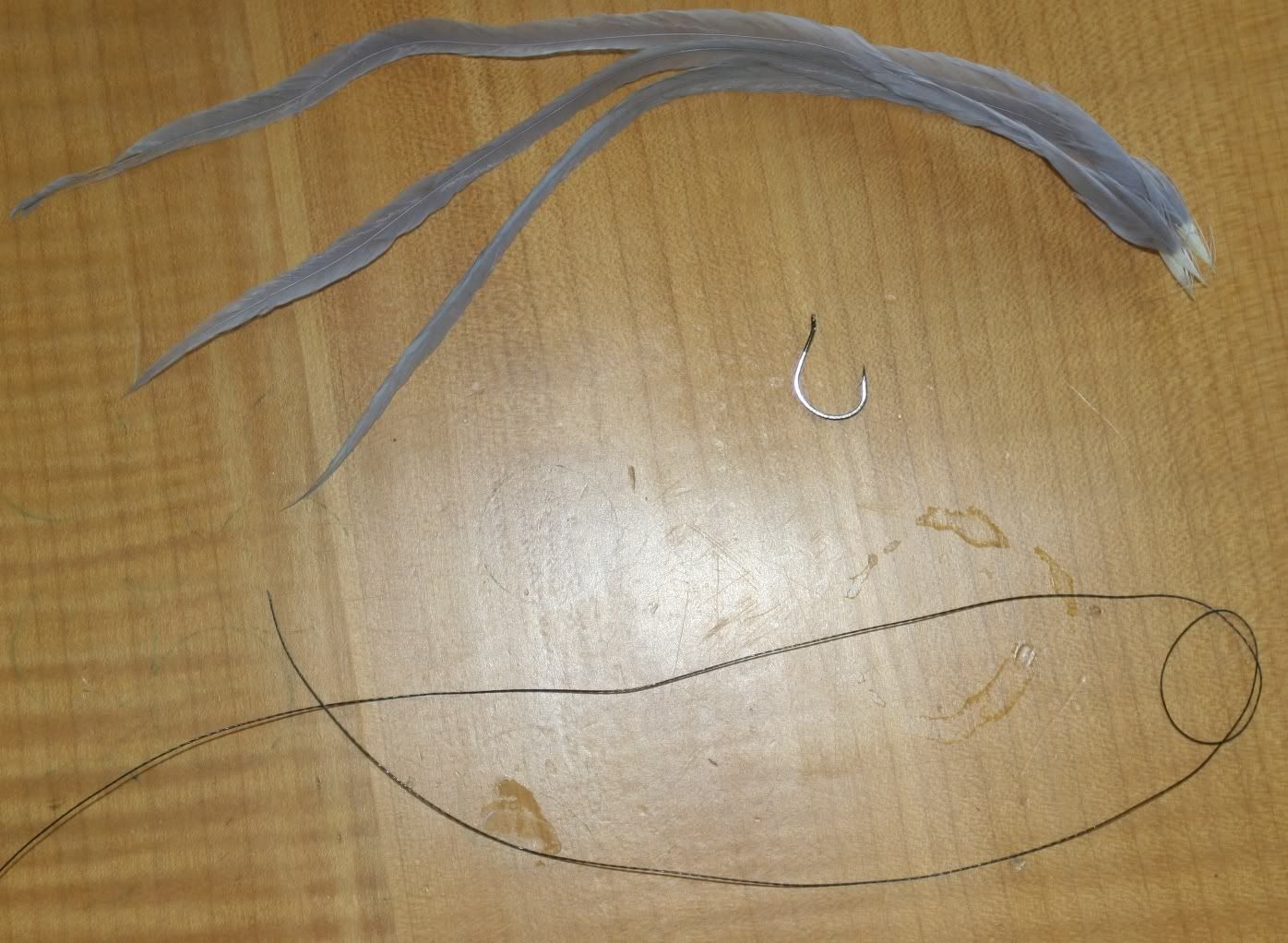
Start with a good octopus or other up-eye, short shank. For big trout we use size 6 or 8 Gamakatsu by choice (6 in the photos)
[u]
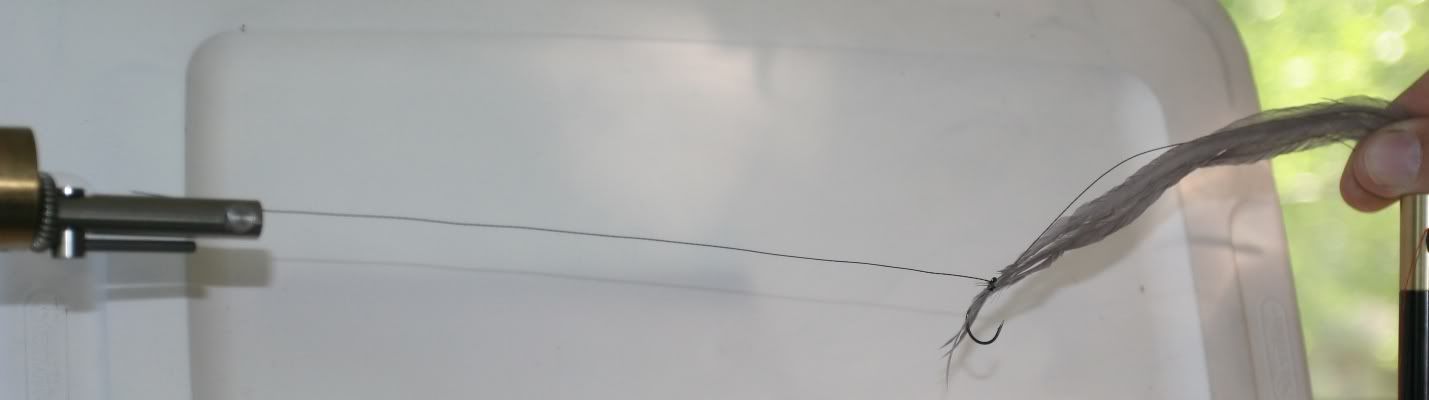
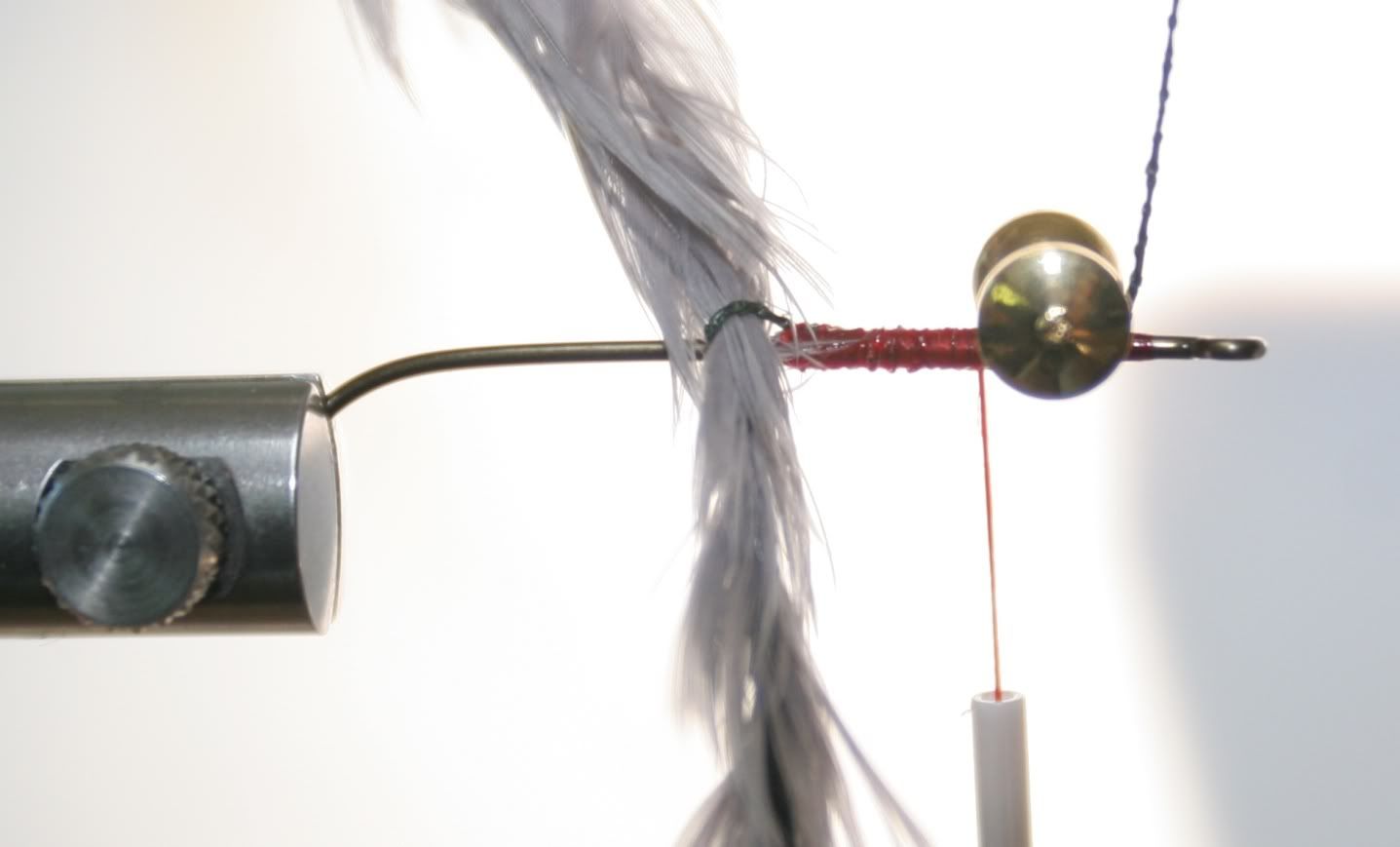
[/u]Three schlappen feathers are tied to the hook shank with 16" of Spectra articulation thread.
[u]
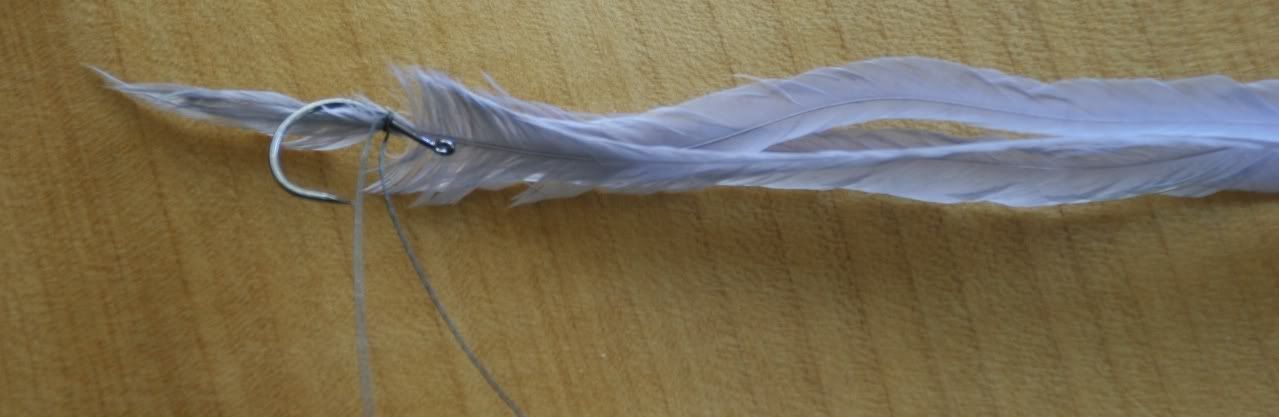
[/u]One end of the Spectra is tied in a simple overhand knot around the schlappen and the hook shank, then threaded through the hook eye.
[u]
[/u]The other end is then tied in the same fashion and also threaded through the hook eye
Now comes the part where a Nor-Vise makes a big difference, but it is easy enough to do this either with a rotary vise or by simply twisting the furled tail piece you just assembled.
Do not hold the schlappen with a death grip, but rather hold it to keep it in place and allow the ends to slip a little if needed. This seems to prevent breaking the schlappen. Soaking the schlappen in water for a short while before tying them is not needed but might help the nervous feel more comfortable about the operation.
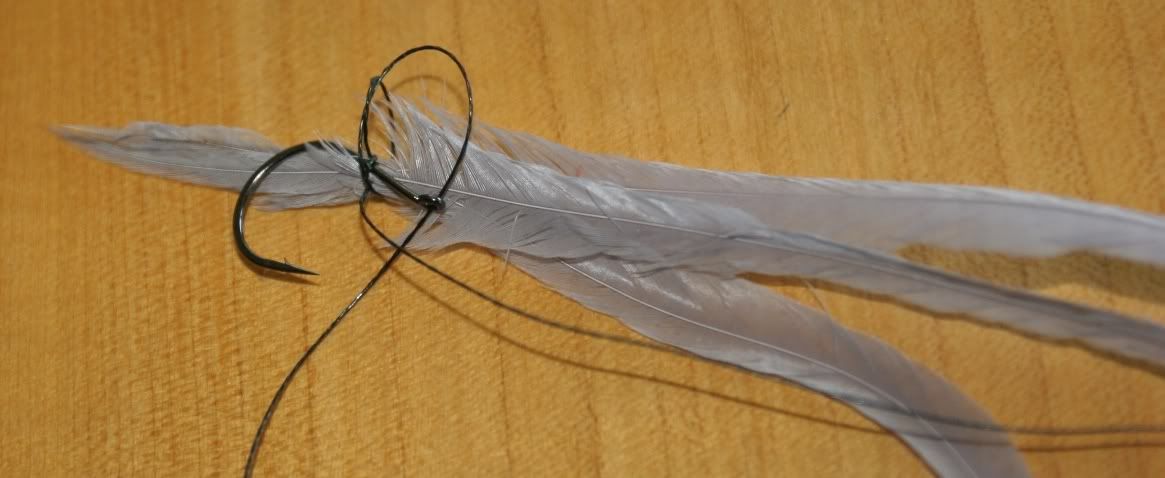
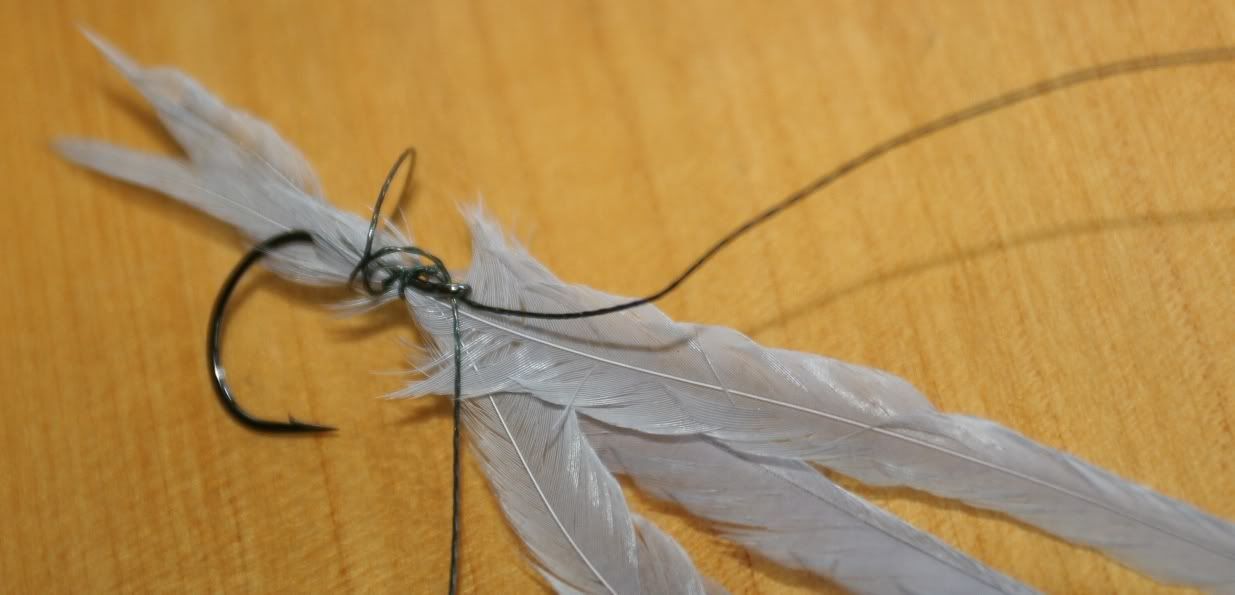
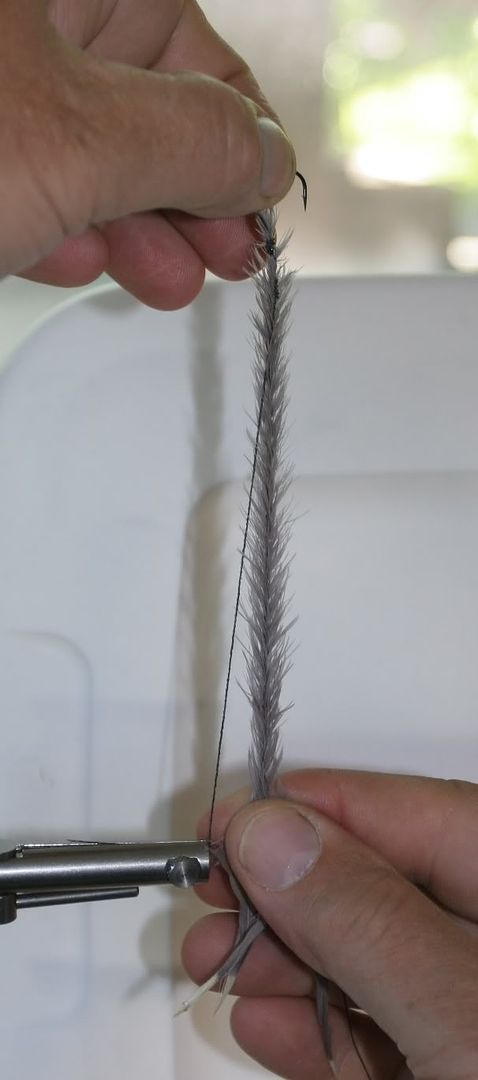
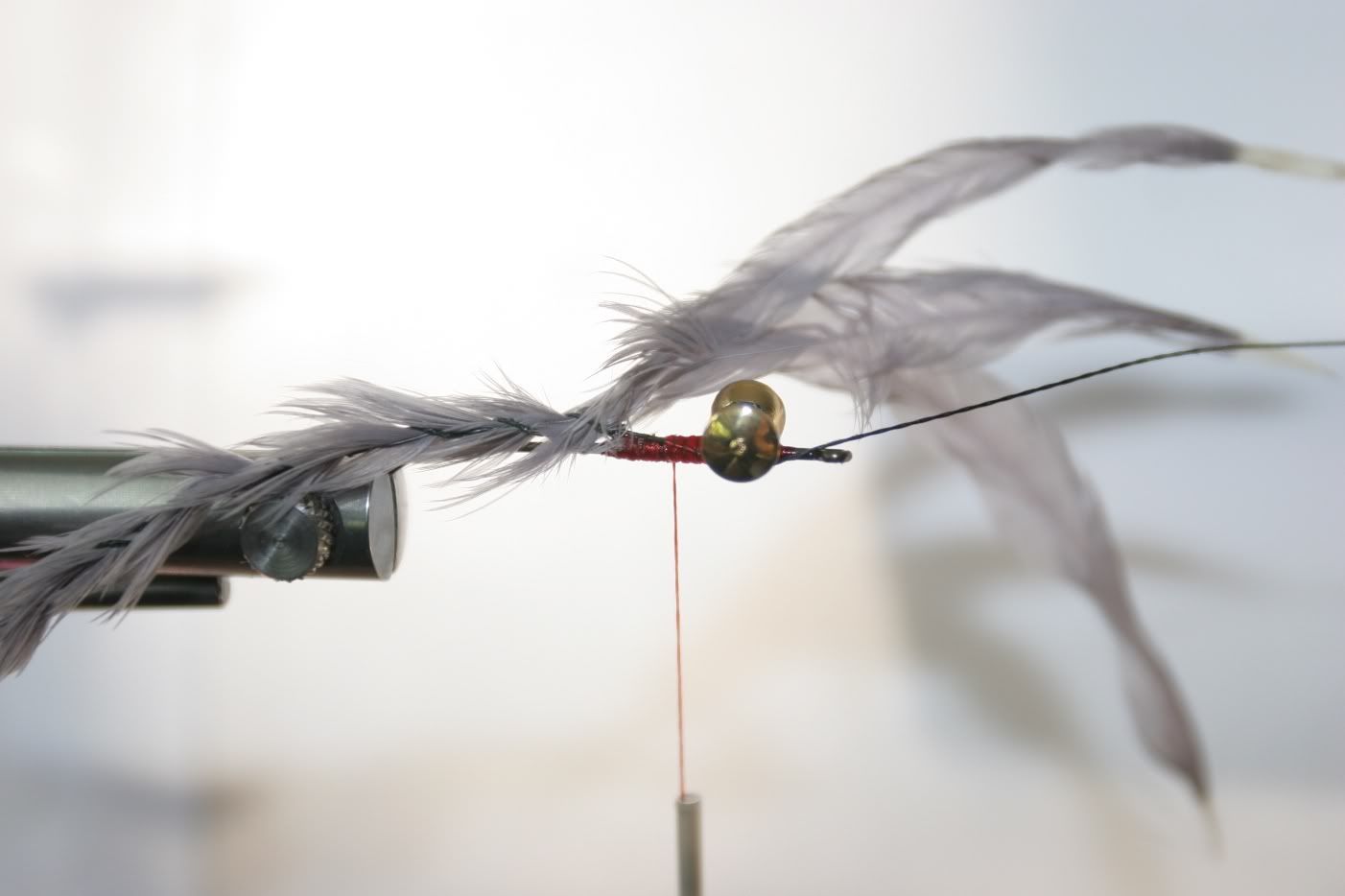
Twist them fairly tight, so the Spectra just wants to start kinking on itself. Note the tiny kink started near the hook. Time to stop twisting…
Now pick the hook straight up, bringing the two ends of the Spectra together.
Now let go of the hook.
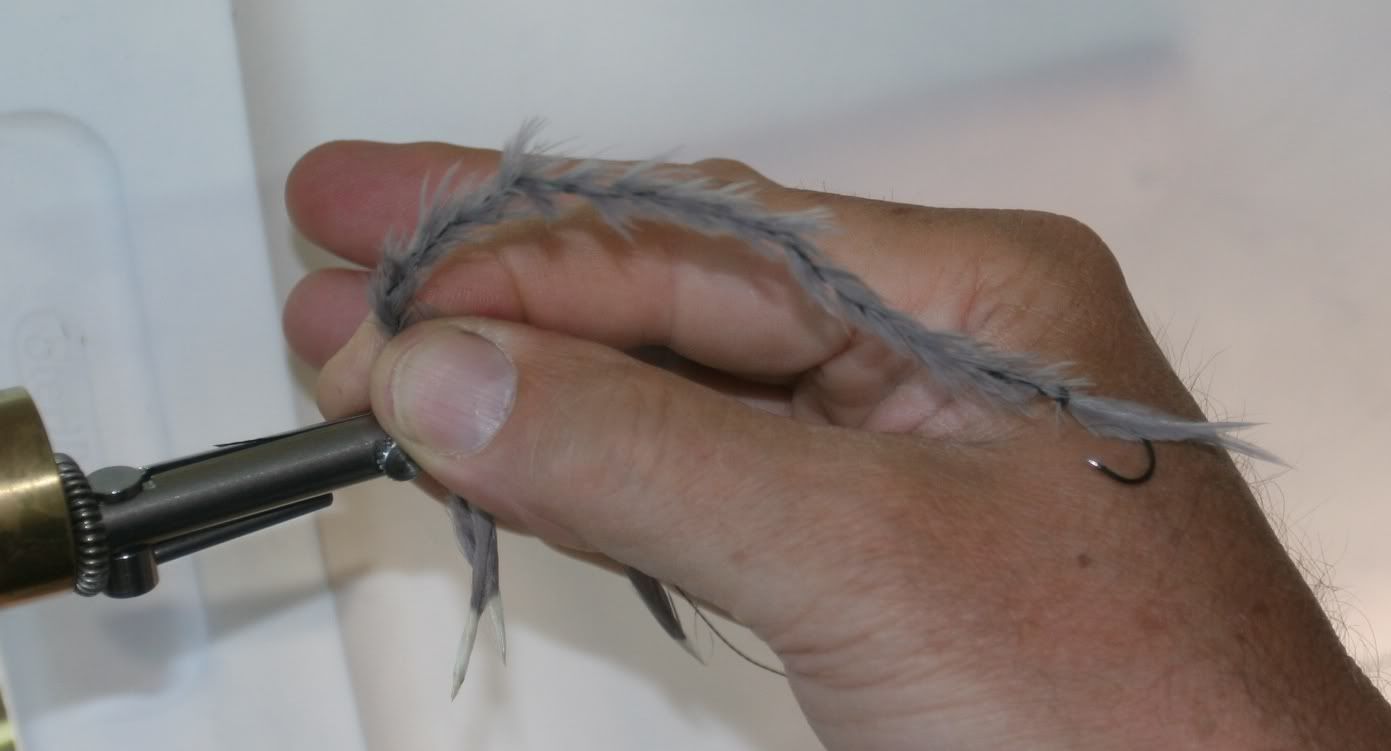
The Spectra and schlappen will furl all by themselves, but you need to twist them a bit find the true orientation of the hook when the furl settles in to its final position. Brush the fibers vigorously to make them stand out. Set the furled tail aside in a clamp, or under a weight to wait for the next steps.
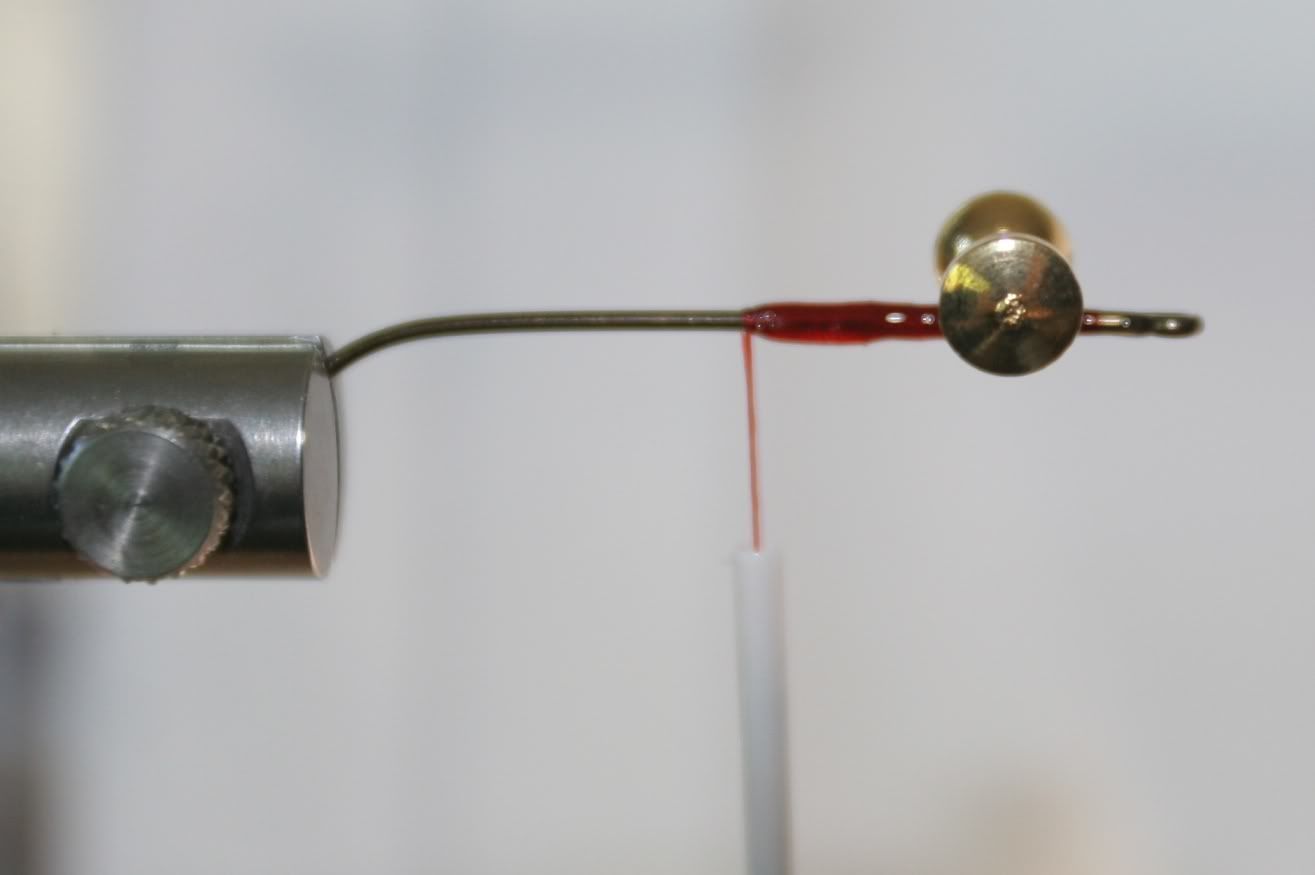
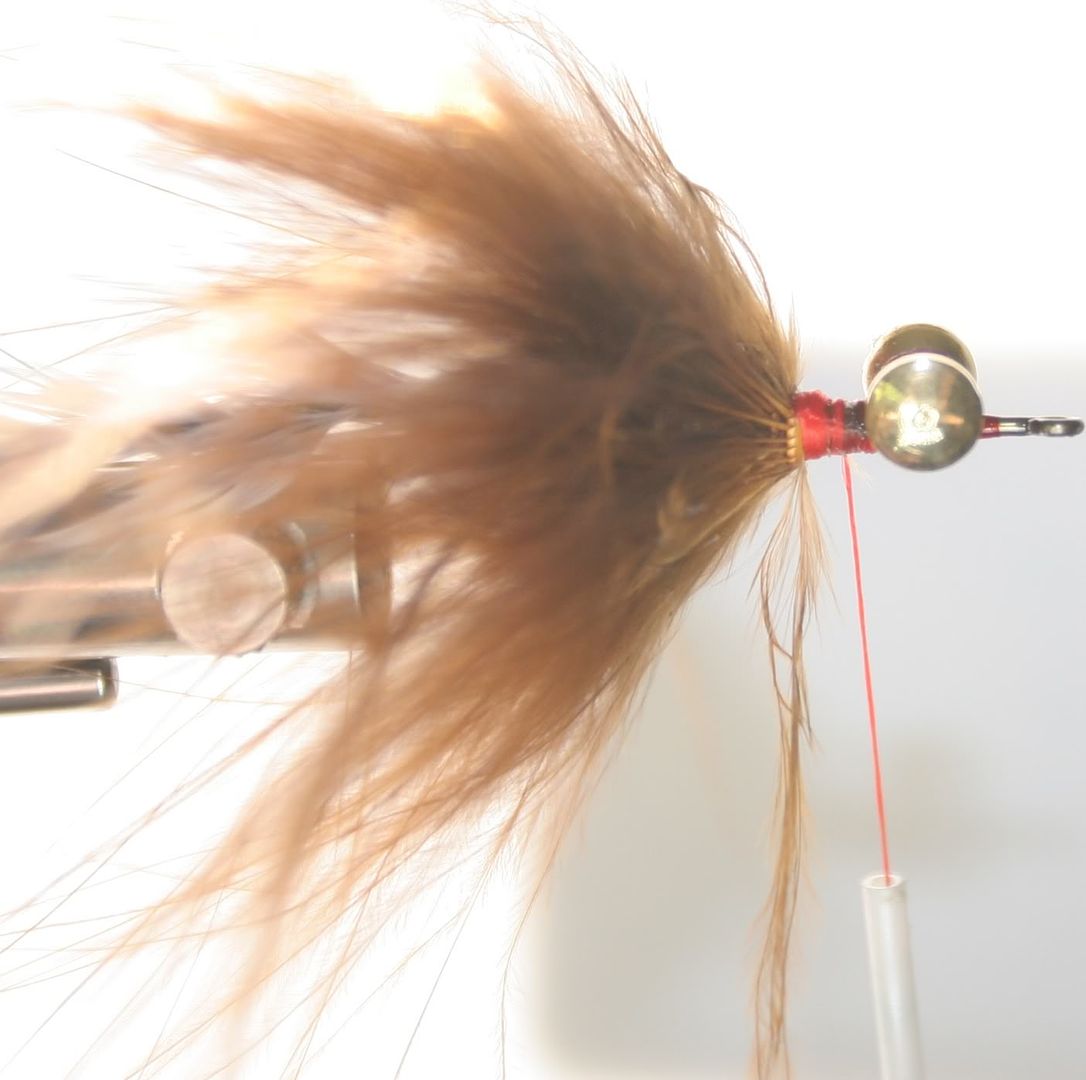
Cut the point off the straight-eye sacrificial hook and put it in the vise. Lay down a good thread base and add some Sally Hansens or Zap-a-Gap. Then tie in a pair of barbell eyes. Figure 8 the eyes and add some horizontal wraps around the thread wraps to get the eye good and solid… add some more glue… “Use it like your brother sells it!” was the phrase we used in the oilfield…
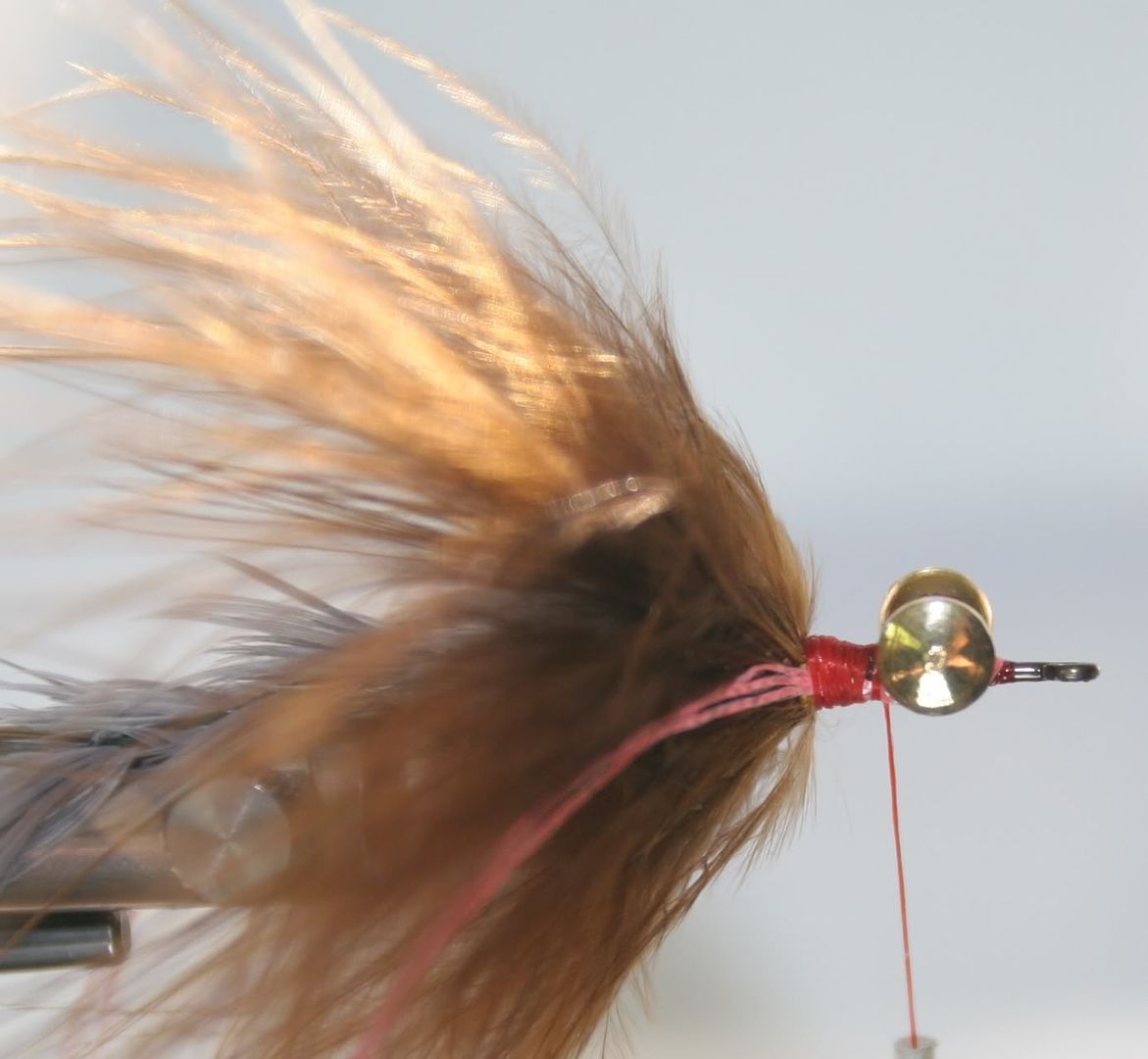
Tie in one side of the Spectra right up tight to the thread base at the length you want your fly to ultimately be and wrap it tightly all the way to the back of the eye. Wrap the Spectra under the eye and back along the body of the fly. Remember your glue-sniffing brother. Wrap the Spectra tight to the back of the body and start the other end of the spectra.
Pull the furled tail out straight and make sure the hook orients itself down when tying in the second Spectra leg. Don’t forget the brother…
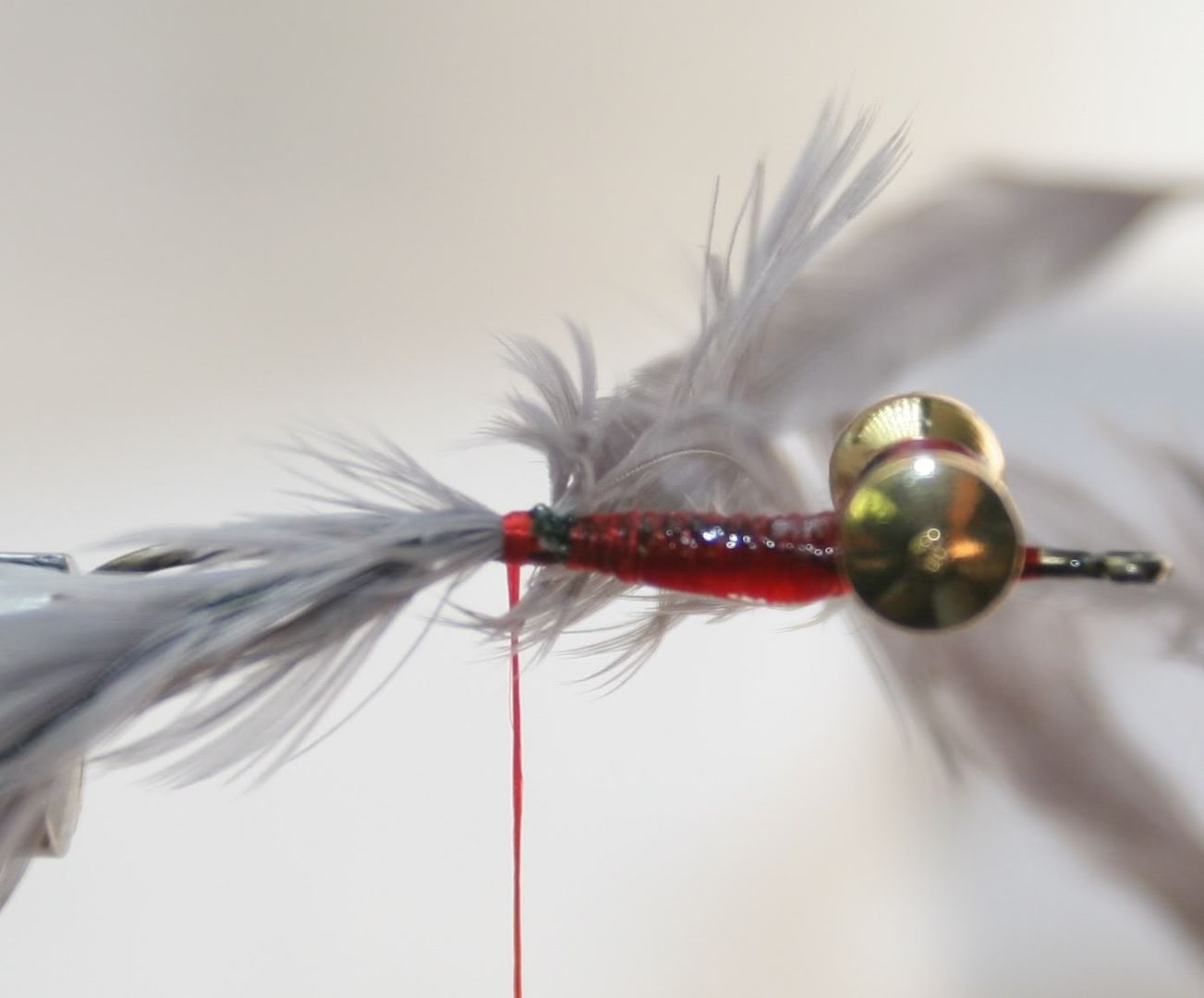
Now take a few turns of thread to secure the schlappen to the hook shank. The hook point should ride down (opposite the eyes which will be on the down side when fishing) to help reduce snagging. Almost every fish I have caught on the Haymaker has been hooked in the upper lip, usually near the corner of the mouth.
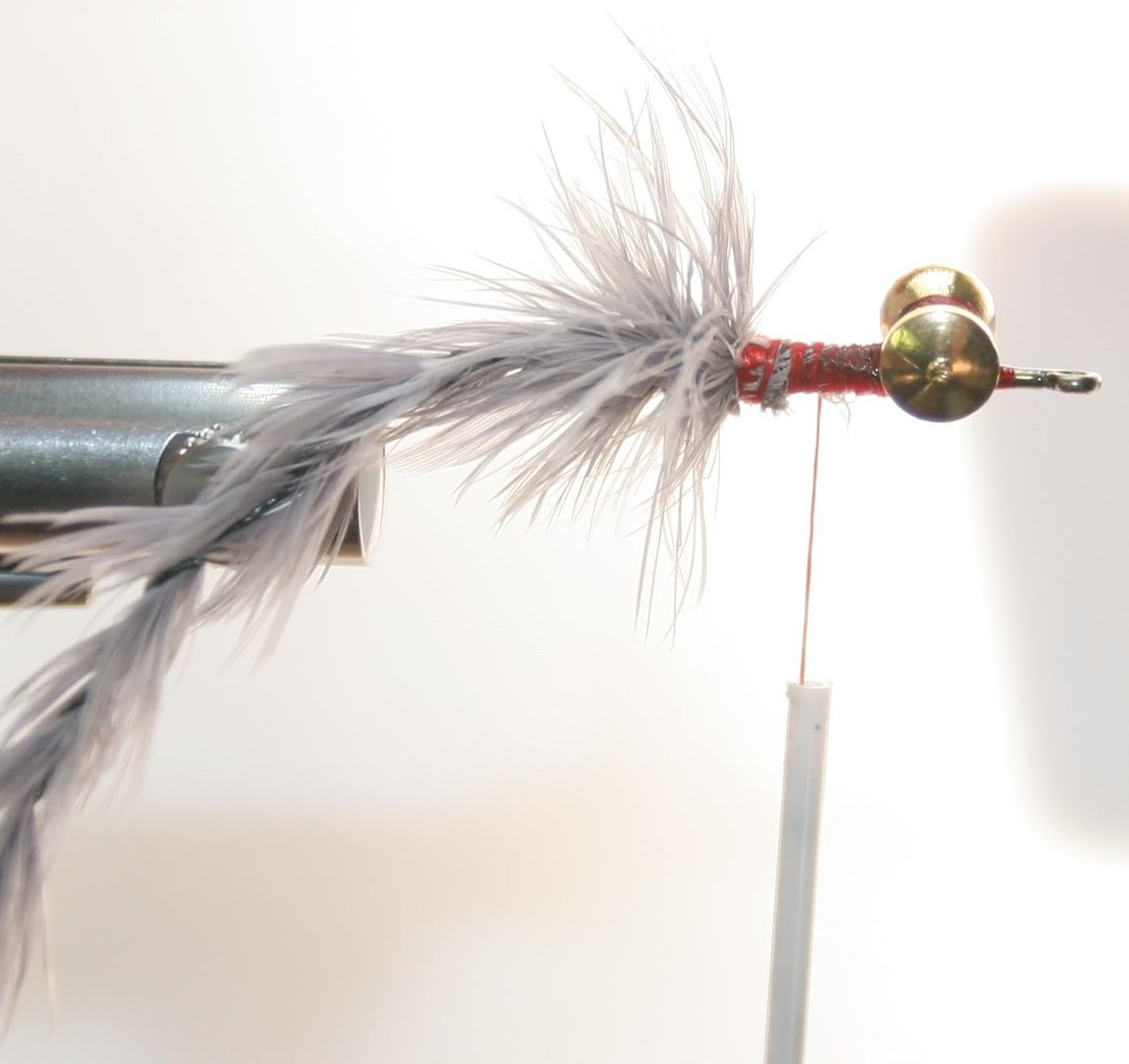
Now take a couple turns of the schlappen around the hook shank to help stand the marabou out and tie off and trim the ends.
Tie in a marabou blood quill by the tip and take a few turns. Wet your fingers and sweep the marabou back as you wrap to keep it straight.
Add a few fibers of Flashabou down each side by tying in the center of a long group of fibers and bending them back around the body and securing them. Continuous pieces tied in this way will never come loose. I have taken a serious liking to UV and Glow in the Dark colors…
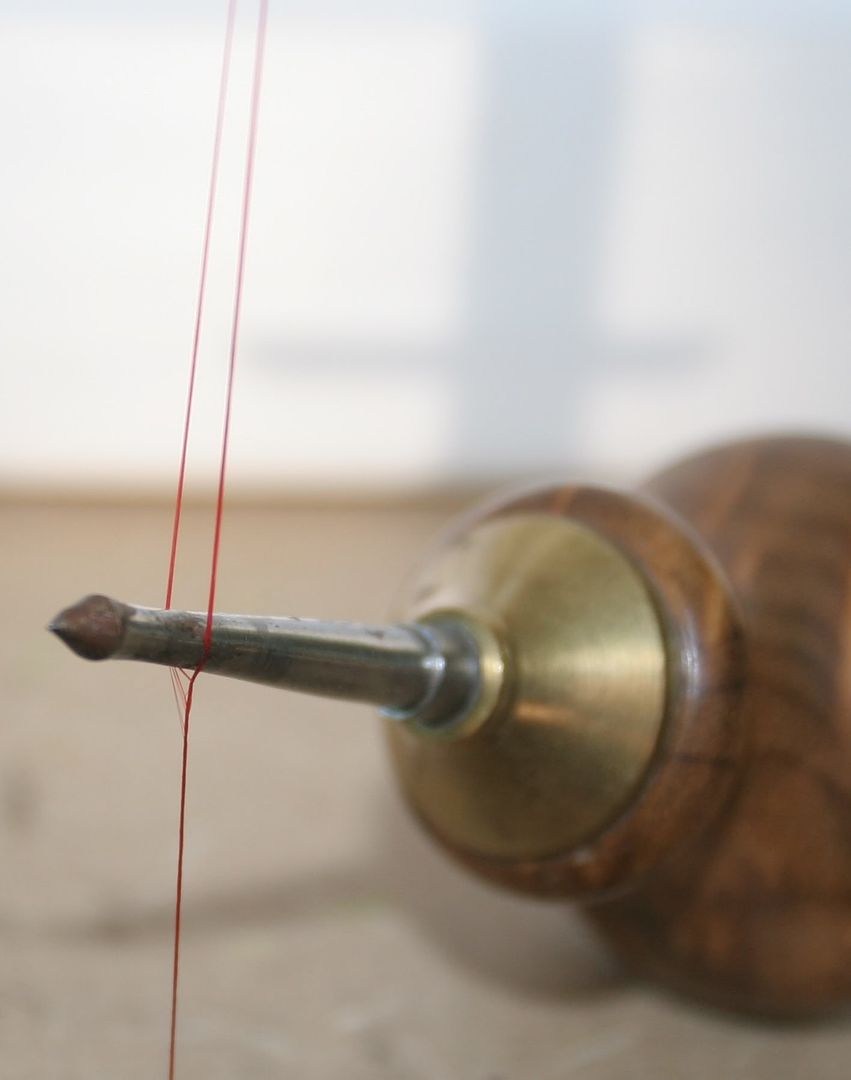
Split your thread with a bodkin or awl and let its weight hold the thread straight down with a gap.
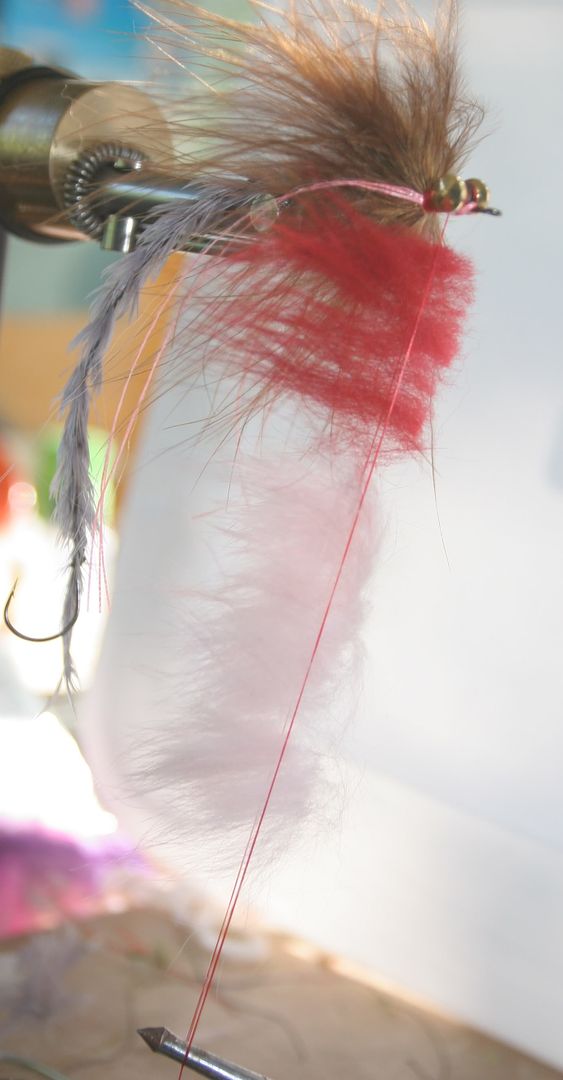
Insert loose fur in the split thread to form a dubbing brush. The red is arctic fox dyed red and the bottom is pink bunny fur. Spin it tight either by spinning the bobbin or the vise if you have a Nor-Vise.
Wrap the brush tight to the rear and then wrap the bunny around the eyes and under the head to cover the whole thing before tying off.
And the final product again, in case you have forgotten what it looked like way back there at the beginning!
All black is a great color choice, adding a red (UV) Ice Dub head in the split thread really fishes well…
One of the beauties of this fly is the fact it seldom hangs up on itself when fishing. Another version I really like with this pattern is using jig hooks for the sacrificial hook… Some will clip the rear hook instead of the front and I understand that is a big deal in some places. In AK you will not hook many fish if you do that…
I like that fly a lot. It’s similar to the Slinkie and Pig Sticker flies I showed in another thread. But easier to tie. One observation: as a guy who has made similar flies , I do seem to get better hooking with a mid-fly-mounted hook. In fact, if you divide the fly into thirds, I try to place the fly 1/3 fo the way back from the front. That does produce the most reliable hooking for me.
nicely done, and thank you… the closest thing to this body style was on a thread i found last night.
place 2 feathers one pointing to the left, the other to the right on top one another, add a piece of tippet for strength if desired. place both ends in hackle pliers, twist and furl. the major down fall of doing that style is the furled body is half the length of the original feather… they used a stiff hackle for extended dries, and it looked awesome… if only i didnt have my browser set to delete everything every time i close it…
This is a perfect example where a substitution would remove basically all the difficulty. Swap the Schlappen for Polar Chenille or Boa Yarn and you’d have 95% the same look and easy as pie to tie. I would probably furl the chenille/yarn first, tie everything on the front hook, then just use thread secured with a superglue knot to attach the rear hook.
Having played with this extensively, including using various chenilles, I can assure you the schlappen does not increase the difficulty… What it does is create a huge profile that sinks deep, casts easily, weighs next to nothing and is very durable. Chenille reduces the sink rate.
Chenille has proven quite frail in use in furled tails unless you pay particular attention to the lay of the threads, too. But it can certainly be done and it will fish.
Think bunny strips if you do not mind extra weight and are looking for a big profile substitution. The schlappen is not difficult to work with at all, though it can be difficult to find…
art
After rereading your post I notice you suggest dangling the trailer hook on articulation thread after a bare furled tail is tied in… That will leave lots of room for the trailer to tangle in the fly body during casting. One of the extreme benefits of the furled tail is the fact it seldom tangles due to the stiffness generated.
Also, because we use these for big fish we absolutely anchor the articulation thread under the rest of the tying materials. Hanging the works on a glued knot is probably not a realistic way to catch big fish reliably.
Spoof
Finding quality schlappen is the hard part and the stuff I used was not the best, just the right color…
A friend ties a furled fly he calls Sarah the Lamprey that furls the schlappen without a trailer hook… It is a very cool fly and will be in the new book…
art
… and I’m still thinking about how to do the extended body without so much tying material to the hook.
In the meantime, you open your third post with the following: “Now take a few turns of thread to secure the schlappen to the hook shank. The hook point should ride down (opposite the eyes which will be on the down side when fishing) to help reduce snagging. Almost every fish I have caught on the Haymaker has been hooked in the upper lip, usually near the corner of the mouth.”
I’m wondering if you meant up which would fit the context of the sentence, or do you mean that hook should be oriented in the down position while being tied in ?? Maybe it’s a matter of semantics - just trying to be clear.
Just off the cuff, having done a few FEBs with stinger hooks incorporated, it strikes me that if the schlappen, or any other material substituted, were over twice as long as the intended finished extended body, you could put the ends of the schlappen, or other material, and the ends of the spectra in clips ( or whatever you use to hold the ends of the material while twisting / furling it ) to twist / furl them after just sliding the hook onto the spectra and positioning it at the midpoint of the material / spectra so it would be at the end of the extended body when you furled the material / spectra.
IF you have schlappen or other material that is long enough to try this, I would suggest putting the butt ends of half the feathers used and the tip ends of half the feathers used in each clip ( or whatever you use to hold the ends of the material while twisting / furling it ) to keep the body relatively uniform. If you put all the butts in one clip and all the tips in the other, you would get some taper, but maybe that is what you want ??
I see where the word “ride” is problematic and leads to the semantics confusion. While tying, the hook point should be down. That makes it opposite the eyes and while fishing means the hook point should ride up.
Tying the tips to the trailer is designed to produce a tapered body and with most (better) schlappen the taper is greatly magnified. The example is more of a string leech!
The extra overhand knots to attach the articulation thread are needed because Spectra is slippery stuff. I tried a lot of different ways to tie the schlappen to the trailer and the direct approach with the Spectra is faster, easier, and leads to fewer broken schlappen, which was a real problem when anchoring them with thread wraps.
Another pattern we tie does not use a trailer hook and the schlappen is just tied with the Spectra and spun. It works quite well…
Thanks again for the help!
art
I was wondering if the schlappen would be strong enough to handle the more direct method of furling with an incorportated stinger hook that I suggested, let alone if it would be available long enough to do the extended body you want for this fly. Taper is another issue, and I wasn’t sure which way you wanted to go with that.
Your method actually twists the schlappen and spectra at the same time but you might be able to twist only the spectra and then let the spectra furl gathering up the schlappen as it does so ?? ( Another illustration of furling technique is available in the current FOTW Duck’s Green Drake which incorporates tails in an FEB. In that fly, the tailing material is not twisted with the body material, but gathered up as the body material furls. ) If that could be done, you wouldn’t have to do all the knots ??
The other materials suggested by Wally ( longs for cutts ) would be strong enough and long enough to use the more direct method to incorporate the hook, but as you pointed out, you have to be careful with the cheniles to be sure you twist them against the twist of the thread in the chenile.
Breaking the schlappen has only been a problem when trying to control it too tightly… Once I started allowing it to “creep” a little during furling, breaking it became a non-issue. Schlappen can be had VERY long if you buy whole chicken skins…
Please get over the knots! Lashing the schlappen to the trailer with a three overhand knots is extremely easy! I usually do either six or twelve bodies at the same time and it takes just a few minutes to prep them. I then furl them all and hold them with metal paper clamps, usually several per clamp. The rest of the tying goes quite fast that way.
I use UV Polar Chenille with the schlappen for a “secret” pattern variation here, but the addition is cumbersome to add and outside the scope of what I wanted here… Chenille does not make anything easier, IME…
On Saturday my son caught two rainbows on these on the Kvichalk River that would be literal “Fish-of-a-Lifetime” for almost everyone, almost everywhere. Bending a switch rod into the cork and holding it there for 10 minutes or so with just a furled tail holding fish and rod together leaves me using a LOT of glue and believing in doing everything possible to make my articulations tough… And Riley did not change flies, just kept catching fish on the same leech…
thanks
art