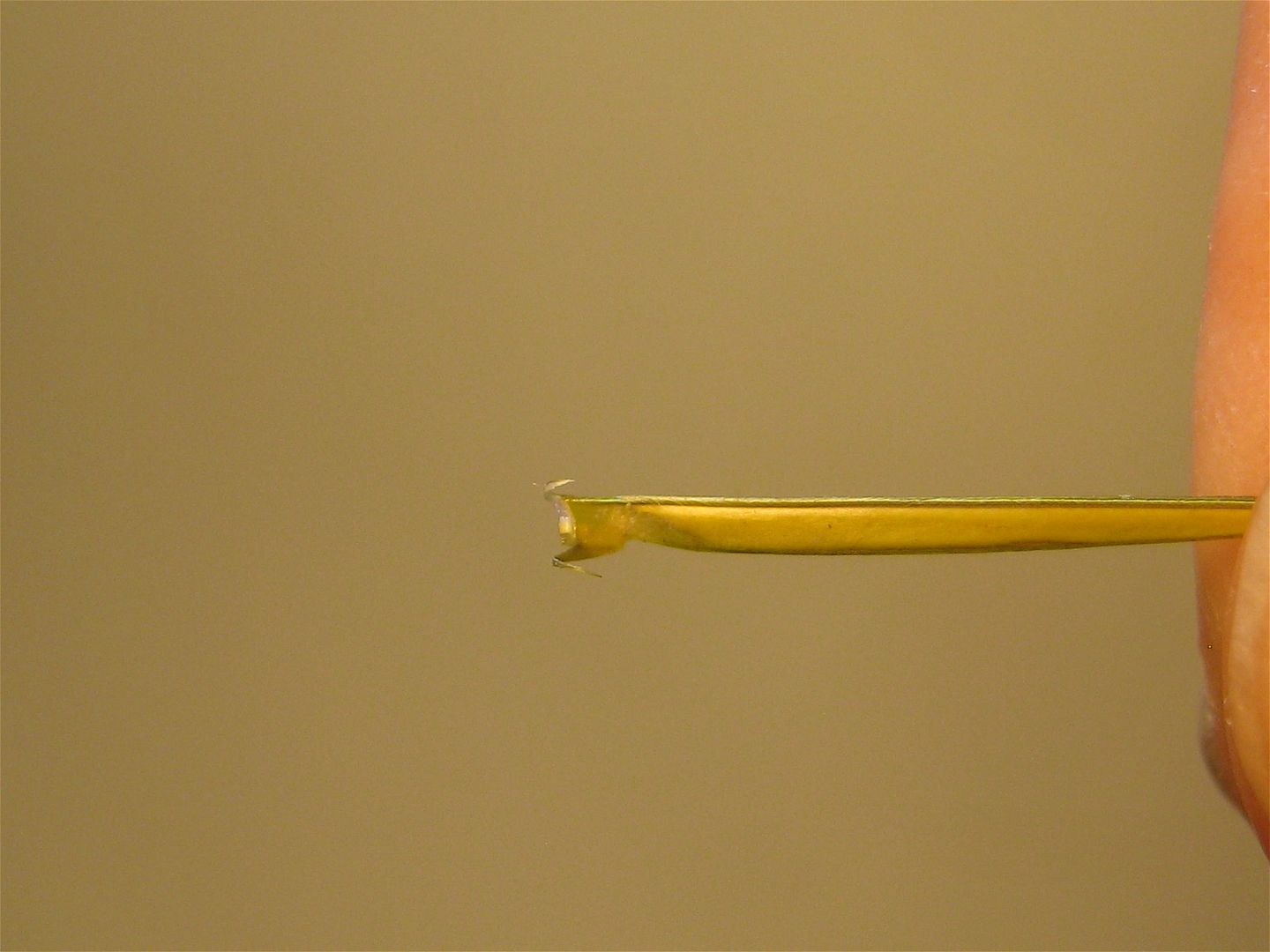
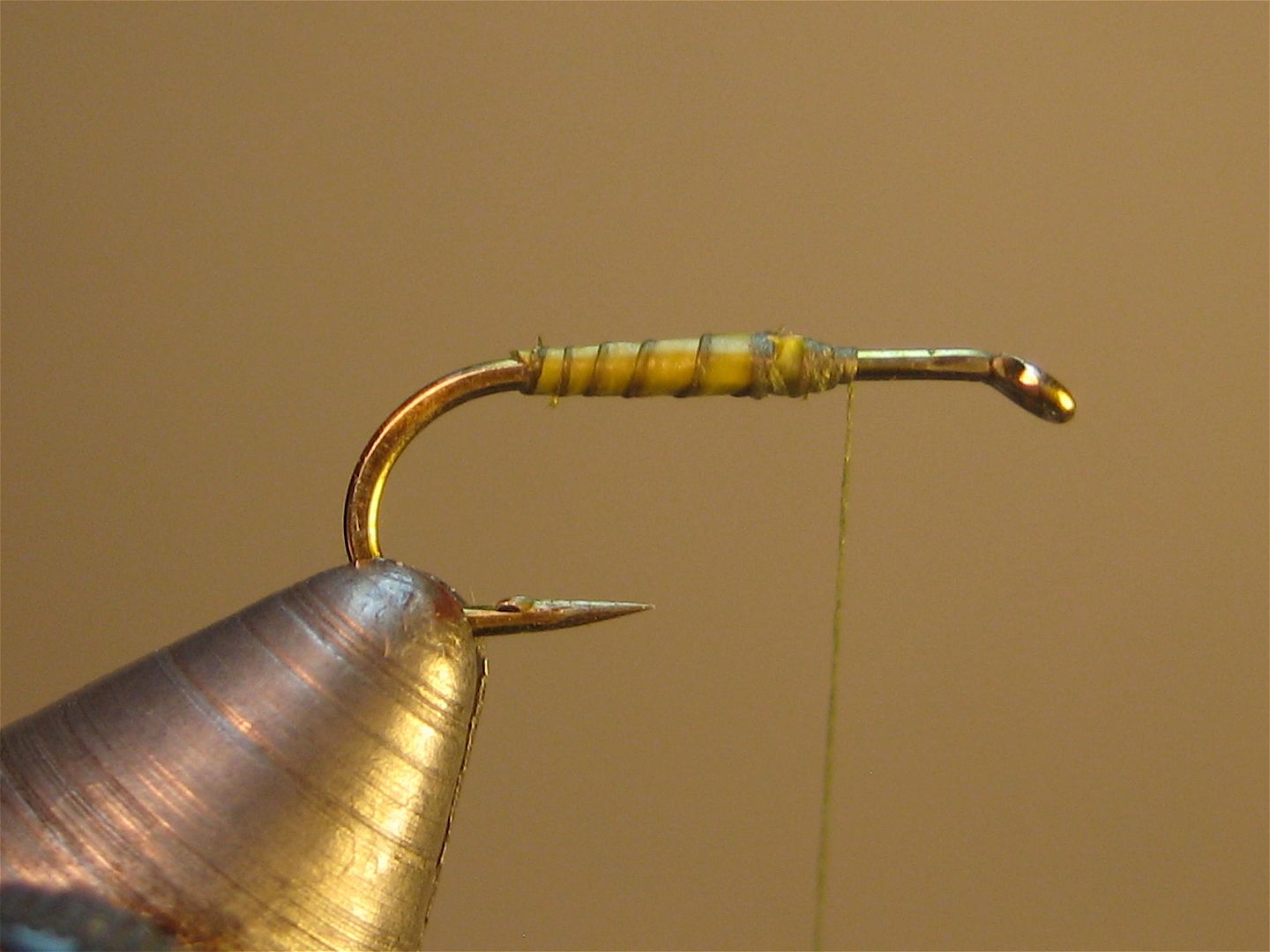
A number of years ago I bought a Whiting neck marketed specifically for stripping and dyeing the stems. I don’t know if they are still marketed that way. I used them, as per AK Best’s instructions, because I thought the smooth, waxy-looking stem looked much better as a body on some flies than did dubbing. I don’t see hackle stems used much today (never did, really. I was always told in forums that dubbing was more versatile) but stripped peacock and goose/turkey biots seem to be used and talked about more and more. Durability was never an issue because I always coat the body with cement or resin to strengthen them and bring out the colors.
Anyway, I’m about out of them and was wondering which do you prefer? For a fuzzy ribbing on the body I assume you go with biots, but for smooth bodies which is your choice and why?
If you want a smooth (but still segmented looking) body using biots, just reverse the way it’s tied in. I like the raised rib look so, after moistening, I tie them in by the tip, notch-side down, then wrap them forward. To get the smooth body, I’d just tie them in notch side up. By the way, I’ve found goose biots to provide a more pronounced segmented effect than turkey; turkey’s advantage is length so for larger flies (#10 and up) I’ll go with the gobbler.
notch side down
notch side up
Never was very good with stripped hackle quills and biots are so plentiful in a wide variety of colors, so I gravitated to them. Stripped peacock makes some beautiful bodies but years ago, reading A.K. Best’s Production Flytying, I found his dyed wild turkey biots produced a very similar effect so I’ve been using those ever since.
One other plus with biots is durability; I’ve seen some folks coat the shank with Super Glue or cement prior to tying, but I’ve never found that necessary and my fly’s bodies have held up fine to fish chewing them. You definitely want to moisten them prior to tying though - makes them much easier to wrap, and they’re a lot less likely to split.
Another for the mix. How about moose main. Two fibres, light and dark, wound together. My example is a wet fly but you can use this on any.
Just this morning I was tying with stripped peacock…
I have, and do occasionally still do, use stripped hackle quill. Although these days mostly on Snelda salmon flies.
Using Uni 8/0 in black and camel colours it is quite easy to make a passable copy of a stripped peacock body. Very passable if you coat it.
In my fly box for the lochs are some wet flies tied with biot bodies. I haven’t had opportunity to use them much so can’t report as to their effectiveness.
Cheers,
A.
I am sort of new tier and though I do have some goose biots. What part of the turkey feather would I find the biots on? I know it’s a wing feather and I thought it was the leading edge of it. But the feathers on that side are so short I don’t see how you could use them to wrap a fly. Am I correct or way off base?
I used to use the stripped peacock quite a bit but found that it didn’t last long even after coating it with super glue. My next material was Moose mane which worked very well and it also began to fall apart after 8-10 fish. I got a piece of fireline, took apart the four strands, and used it instead. Seems to be far more durable for what I am using it for. Also, I believe I will always use goose or turkey biots on some of the patterns I tie. Excellent material in my opinion.
They are similarly placed on the turkey as on the goose. ‘Leading edge’. You should make sure that you’re using the leading edge off of the Primary wing feathers, not the secondary. As a general statement, turkey biots are long enough to tie a body on a size 8 hook.
If you want a fuzzy rib then I agree that goose or turkey biots are about the only way to go. On very small flies that you want a smooth body on, the biots can get a little bulky, especially at the tie-off. I definitely prefer the stripped hackle stem on those because of the very small diameter at their tip if you don’t want to use just a thread body.
Have you tried using a thin UV resin instead of super glue to coat them? Seems to hold up much better, at least for me.