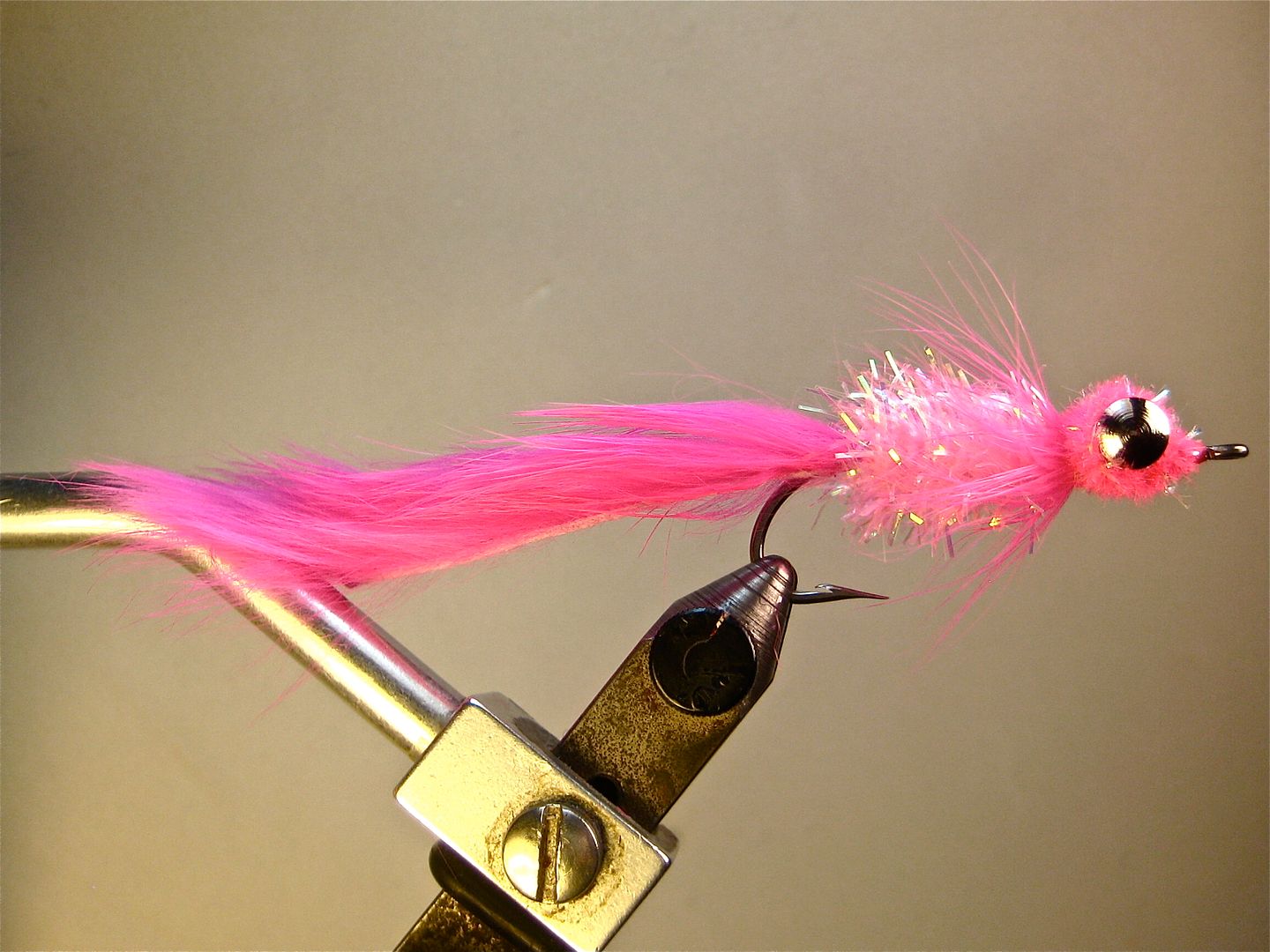
Another great tie. I had never heard of cut-shank hooks so I looked it up. Wouldn’t it be a similar setup to use a tube? What are the advantages of the cut-shank hook over the tube?
Main reason for me to use the cut-shank is cost; I don’t have a tube vise attachment, or the necessary tubes. I do have a bunch of large streamer hooks that have been gathering dust on the shelf for years and a good pair of wire cutters. Here’s a nice SBS for anyone interested:
Interesting idea about the cut hook style shanks, but I’m not sure even Ed Ward ties them that way any more. Seems like the much more popular style these days is to use a Waddington shank or the like, and a loop of stiff wire such as Senyo Laser wire. Here’s one example to look at: http://www.flyfishusa.com/fly-tying/fly-patterns/stinger-fly.htm.
You could also just use a cut shank, put a stinger hook in a loop of Firewire or the like, tie that to the rabbit strip (or just run it through the strip if you want a really quick solution), before tying it down the the hook shank.
The advantage of either of these styles is it makes it much easier to change flies. Have never seen anyone bother with these steps for a Starlight Leech, but they are useful techniques for any large pattern.
Going to Alaska for a week in late july so I’m starting to play around a bit.
Again, it’s a cost thing. Until I get comfortable with these flies, I don’t want to put the $ out for the Wadingtons. I’m going to try some with the hook threaded on the loop, too; lots of possibilities here.
Cool. No reason why you can’t use the other methods with normal shanks. I usually just make my own from cheap saltwater hooks. Having played with those wire looped flies though, I’d personally never go back. YMMV.
Tied on a size 12 hook with a marabou tail instead zonker strip and I bet it would work for grayling. Not that I’ve ever had a chance to pursue grayling.