I want to glue some foam sheets together to make some bass poppers. How long and wide should I make the bodies?
Thanks
I make mine any where from 1/2 in to 1 1/2 in long and I use 30-45 cal. shells as cutters (3/8-5/8) wide.
Mine are 5/8" long because that is how thick foam mats are.
Use the largest Harbor Freight hollow punch 1/2" or the next largest 7/16" .
Use Mustad 37187 hooks.
Generally about this big:
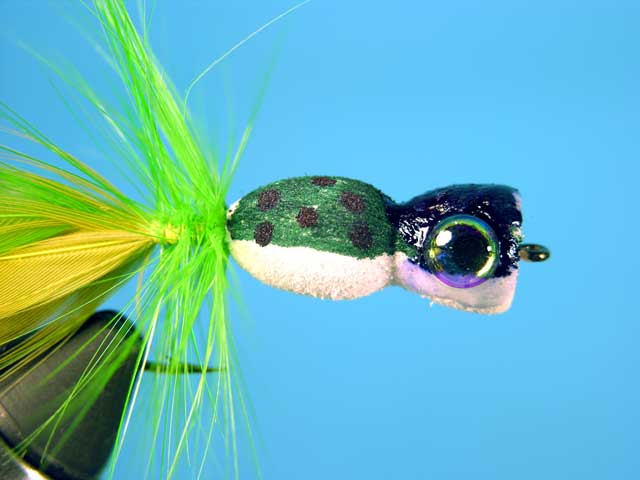
(That is a size 2 Mustad Aberdeen hook for scale. )
So I guess you’re saying it’s a matter of preference?
I make mine about 2 X the gape wide, and cut to length so that the back end of the body is just proud (=shy) of the hook point. Thus, the size varies in proportion to the hook size. Height above the hook eye is also about 2 X gape. I make all of mine with a flat bottom, and they are cut from glued-up sheets of Fun Foam and sanded to final shape with a Dremel and sanding drum with 600-1000 grit sand paper glued over the original grit. These proportions basically follow those for deer hair bugs.
What glue do you use? I had some old 77 and it seems to work okay.
Crazy Glue, Super Glue, any CA glue.
SEE http://www.flyanglersonline.com/articles/bobboese/2010/bobboese20100118.php
I used put some Loctite on a material called “Legs Alive” sold at the Fly Tyer’s Dungeon, and they melted. I thought I’d reinforce them where I pulled them through the foam with the needle.
I starting using Shoe Goo back when I was running 20+ miles a week and got where I used it for about everything that needed gluing. You can thin it with solvent and spread it with a popsicle stick for gluing craft foam. In theory you can make a fly as long as you like if you keep diameter consistent and glue them together. Length can be a problem unless you get your foam blank cylinder mounted exactly center and supported the length of the blank, especially if you have a single speed rotary tool (Dremel).
I use any of the contact cements, such as, Barge, Weldwood Contact Cement, or Pliobond. Weldwood now has a ‘water-clean-up’ version on the market. These all stay flexible. I do not like the various CA glues, as they are not flexible, can become brittle with time (can be critical with glued-on eyes), and produce 'hard" seams. The thinned Goop referred to by Uncle Jesse should also be great, as it too remains flexible. The “solvent” he refers to can be either Toluend (Toluol) or Xylene (Xylol). They are two of the very basic Aromatic carbon compound Trio, with Benzene being the third member. I have also heard that rubber cements work.
Cheers,
Frank
I use “Liquid Fusion” for these type of poppers, it works great…

Me thinks we have answers to two different questions going on here: 1) what glue do you use to glue foam sheets together; and, 2) what glue do you use to glue foam bodies to hooks.
Cheers!
I use CA from the dollar store (3 tubes for $1) to glue bodies to hooks, I typically pull the hook shank through the body rather than cutting a slit or slot. I have rarely glued sheets together, but Shoe Goo works for almost everything and it does stay flexible, I have tried to repair waders with it.
Mr. Henn that is a nice looking popper you made, did you mean Fabric Fusion? Which has worked well for me to glue lots of stuff although it may get cloudy after getting wet but will clear up.
Uncle Jesse. Here’s a link and review about “Liquid Fusion.”
http://www.joann.com/liquid-fusion-clear-urethane-glue-2-oz-/xprd1130128/