For the past twenty five years I have made trips to the saltwater, some of the trips were for just a couple of weeks, while others lasted for months. In 2008 my wife and I bought a place in Sebastian, Florida. Here I have the Indian River and Sebastian Inlet (Which is listed as one of the top ten fishing Inlets in the world) to fish, as well as the St. Sebastian River.
Long before I moved to spend my winters in Florida I had a saltwater fishing boat which I stored when I wasn’t using it. I had fished the saltwater in many other areas before I chose Florida. Shifting from the challenging spring creeks of Paradise Valley, the delightful variation of the waters of Yellowstone Park and drift boats on the Yellowstone, Missouri, Madison and Big Horn Rivers is quite a change.
Like everyone who fishes the saltwater I had a lot to learn about the wide variety of fish species that there was to catch. I had to learn about the bait that those fish feed on and the seasons for the bait. Learning about the tides and the effects of the weather on the fish and learning about the tackle that would make the fishing easy and comfortable was equally challenging.
There is much to learn for the fly fisher who is new to the saltwater and for me it was the challenge of delving into a new aspect of our wonderful sport which drew me on like a moth to a candle. Now, I make no claims of being an expert and I am still learning and progressing as a saltwater angler, however I do know that teaching and sharing the knowledge is the best way I know of improving my own abilities and the abilities of other anglers.
Therefore I wish to share the lessons I have learned and the experiences I have enjoyed over the years. The information in this column will be drawn from my saltwater fishing journal, and is concentrate on the time period from October to June as the rest of the time I am in Montana.
FLY FISHING ADVENTURES IN SALTWATER
As I grow older I find that I am less excited by the winter fishing in Montana than I once was, so several years ago I began to take trips to Florida during the cold weather months and became very interested and excited by the opportunities and challenges offered by saltwater fly fishing.
However the switch from three to six weight rods to rods that handle eight, nine and ten weight lines takes a slight adjustment. When I first began my adventures in saltwater the bulk of my knowledge was confined to the books and magazine articles that I had read on the subject. Fortunately I also had made friends with several saltwater guides and their advice and information was very important to my success in those early years.
I spent time in the Florida panhandle fishing around Destin and Panama Bay, I spent time fishing Tampa Bay and Newport Richey, but I finally settled on Sebastian Inlet where I could divide my time between the Indian River and the Sebastian Inlet and the St Sebastian River. A few years ago we finally bought a place in the quite town of Sebastian and now I spend my entire winter down in Florida fly fishing the saltwater and occasionally chasing some largemouth bass and bluegills. The entire adventure has been one of constantly learning and adjusting to the differences between saltwater fly fishing and freshwater fly fishing and realizing that, though there are some major differences, there are also many similarities. Regardless of whether you are fly fishing for trout, steelhead, warm water or saltwater the angler still has a number of steps to follow that will lead toward a successful day on the water.
Salt-Water Fly Fishing:
Just those four words bring visions of sun, warmth and mental images of leaping silver tarpon, screaming runs from bonefish and the challenging fishing of the permit.
For some fly fishing the salt is a way of life for others it is a yearly trip or two to fish for species not found in their home waters. For others it is the dream that someday they will have the opportunity to fish in the saltwater. If you are an occasional saltwater angler or an angler new to the saltwater there is some information that you should obtain if you are going to be successful.
Where do you plan to fish the salt?
What time of the year are you going to fishing the salt?
What are the targeted species?
What bait will these species be eating?
What is the weather outlook for the time period of our visit?
How will the tides affect you fishing?
What information have you been able to find on the inter-net?
What tackle has been suggested? (Rods, Reels, Lines and Leaders)
What are the recommended fishing methods?
What fly patterns are suggested?
All of this seems like a lot of information but it is not all that hard to obtain this information. But now for the big problem; chances are if you are fishing the saltwater the suggested rod weight run from a seven weight to a twelve weight. The question is how much time do you have casting the heavier weight outfits? True, the basic principles of casting are the same whether you are casting a four weight or an eight weight, however you also need to cast with the recommended line and flies that you will be using, that way you will avoid any surprises that can create problems or basically ruin your day!
Several years ago my son and I were fishing by the Grass Flats just off of Sebastian Inlet, and on this day the Ladyfish, Jack’s, Spanish mackerel, Bluefish and the occasional sea trout (Spec’s) were all willing and eager to take our flies. Soon another boat anchored about a hundred yards off to the west of our position and a husband and wife, as we discovered later, began to fly fish, and their problems began immediately. Their rods appeared to be too light for the flies they were attempting to cast and we could see that they were using floating lines as we were using type III sinking tip lines.
There appeared to be a great deal of noise coming from their boat and several times both my son and I saw them have encounters of the wrong kind with their flies. An encounter of the wrong kind can often occur when you are under gunned and the flies which are normally weighted hit you in the head, ear or middle of the back on the forward cast. A situation of this type can be amusing to watch but painful for the participants.
The water was clear and the fish were very visible and on occasion they did hook a fish, as a matter of fact the gal hooked a ten pound Jack on what turned out to be a six weight rod. The Jack took off and finally they followed it in the boat and twenty minutes later we saw them slip a net under the fish.
When the returned to their previous position the problems continued and finally they reeled in and sat down, looking over at us they said “This saltwater fly fishing is a lot harder than it looks.”
We decided to take a break from our fishing and see if we could help them. We moved our boat over next to their craft and began to talk with them. This was their first trip to the saltwater and they were frustrated and discouraged. I asked about their outfits and they told me that one was an 8½ foot for a six weight and the other one was a 9 foot for a seven weight. The nine foot rod had recently been won at a fishing club raffle and this was their first time fishing the rod. My son was deeply impressed that they had landed a ten pound Jack on the six weight but commented that his lightest rod was an eight weight.
They explained that they had only fished for trout around their home in the Catskills and seldom used anything heavier than a five weight rod. Though their fly patterns were of the right colors they were much larger and heavier than the flies that we were using. I gave them a few flies and explained and demonstrated some power casting methods that work for me and we left them for the rest of the day, or so we thought.
Later we ran into them at the dock and they told us they had caught many more fish with the patterns we had given them and after a casting lesson on the grass they insisted on buying us dinner. At dinner we explained how to find the information on the Internet and that bait shops will also provide information on what the fish are eating and where to look for them.
It turns out that the boat they were using belonged to a friend they were staying with but he only fished bait and lures and knew nothing of fly fishing but had taken the time to obtain some flies for them at one of the area fly shops.
So as you can see how a little practice and a little information can make your first trip or two to the saltwater a little less frustrating and a lot more fun. Now for the individuals who plan on using Lodges and Guides you still need to practice casting the heavier rods and flies. Remember the guides are there to teach and assist the angler but they are not miracle workers!
We will delve further into the knowledge needed to become a successful saltwater fly angler in forth coming issues of the column.
Tackle Systems
The following is the tackle systems that I use for my saltwater fishing. Now I will tell you right now that there are many find rods and reels that will do the job. The rods and reels I use have served me well but you will have to make your own choices.
My main fly rod for saltwater fly fishing is an Orvis nine foot rod with a fast tip for an eight weight line, I would name the rod type but in a year or two it no longer be made or the name will change. I also have a Sage of the same length and weight that I rely on. For reels I have a couple of Islanders, Fin-Nor’s , several SA System II Reels and extra spools and a few of the Dan Bailey Large Arbor Reels and all have been very serviceable. As for fly lines I carry floating lines, 10 and 14 foot sink tips both type III and type V’s, full sinking lines type II, type III, type IV and type V. I also carry a nine weight shooting head type V. I also use a ten weight system using the same line types including a ten and eleven weight shooting heads type V. In addition I also have a twelve system with a Tarpon line, floating line and sink tip line, and all of the reels I have carry 250 yards of 30 pound backing.
As for leaders, for general species my butt sections are 40 pound mono which is 50% of the length of the leader, followed by 30 pound mono which is 30% of the leader follow by a section of 25 pound mono which is 10% of the leader length and this section is looped and a bite tippet which will vary and it is looped and is 10% of the leader. This leader formula can be adjusted to the length of the leader desired. Now this leader is not to IGFA standards but it will turn over the flies I use. For fresh water bass and bluegill I sometimes use a six and even a four weight rod system depending on the situation.
Enjoy & Good Fishin’
| Sysadmin Note |
|---|
| Sysadmin Note |
|---|
Pop-Ups
A Tale of Sink Tips, Mice & Minnows
Over the years I have written about a lot of different topics concerning the various methods of fly fishing and/or fly tying for a variety of different species. Seldom are the ideas on which I expound truly original or unique. Many of the ideas come from reading the older books of anglers of yesteryear, or perhaps the idea was planted after scanning an article in a magazine; or maybe it took root when I was exchanging information with another angler at the side of the river or across the deck of a boat. The point that I am trying to make is that there is very little in fly fishing that is new and undiscovered. Mostly what I try to do is share the knowledge that I have gathered over a fly fishing career that has covered a fifty year period. By doing so I hope to entertain and assist you by increasing your knowledge and giving you some interesting ideas to try out on the fish you chase with a fly rod.
Several years ago I began playing with the idea of flies - mostly mice and minnow imitations - that were tied to float on the surface of the water. Now, that in itself is not new - anglers and fly tiers have been tying and fishing these types of imitations for a long time. However, what I have been doing is mating the proper sized buoyant fly types with nine foot leaders and sink tip lines. This system, or method if you will, allows me to present the imitation deeper in the water column when stripping and it also allows the fly to pop to the surface when I stop the strip. Now, you might ask “Why is this important?”
Through observation in the field and by reading and talking to other anglers, it occurred to me that many of the predator fish attack their prey from below; coming from behind and up to the unsuspecting victim whenever they can. I have used this method on trout, bass, northern pike and also on several saltwater species and I can tell you that it is effective.
A couple of years ago I was fishing with my son in Florida. We were fishing on the Indian River very close to Sebastian Inlet. This happened in early June. The water was about ten feet deep, the day calm and the water was nice and clear. We had been catching Bluefish, Jacks and Ladyfish when six tarpon in the forty pound class swam into view. Well, I had a ten weight rod already rigged up with a sink tip (Type IV) and floating minnow imitation ready to go, as I had eagerly been waiting for a chance to try this method on the Silver Kings.
I quickly reeled in the eight weight rod I had been using and grabbed the ten weight; and by the Grace of God, I was able to place a cast out in front of those tarpon without spooking them into the next county. This, I might add, is what I normally do, you know - Spook them!
We could see the tarpon and we could see the fly. When I started to retrieve the imitation, the fly began to dive downward as it was pulled by the weight of the sink tip line, and we could see that the moment I paused in the stripping retrieve that fly started to swim towards the surface. If you have ever chased tarpon you will understand the excitement we felt when we saw one of the tarpon turn to chase the fly. Wow! One moment he was chasing the minnow and the next he was gone. I thought he had turned off as the fly was getting fairly close to the boat. I stopped the strip and the fly popped to the surface. I was already eyeing the other tarpon that seemed to be circling us and preparing to lift for another cast when that tarpon took the popped up streamer by rocketing out of the water. I only had eight or nine feet of fly line out beyond the tip of the rod.
My son and I both were extremely surprised; maybe shocked would be a better word. Almost without stopping the tarpon made four more leaps going away, (and even I was bowing to the fish with each jump) before the final leap when it fell back on the leader and that was the end of that!
Soon I was tying on a new streamer and my son, Ryan, was re-rigging his ten weight with a sink tip and a long leader. The tarpon were moving through that day and we had several more shots at them, with Ryan hooking and landing a nice forty pound tarpon on the pop-up rig and I hooked another, which jumped several times before throwing the fly. After this we experimented with these rigs using eight weight rods and took Blue Fish, Snook, Redfish, Ladyfish and Jacks all using the pop-up method. Now, lest you think that this is just a method for saltwater fish, let me tell you about a day on the Yellowstone River that happened just last summer.
Anyone who has spent much time on the Yellowstone River knows that it is one of the most challenging rivers in the west. The day before I had floated with two clients and done very well using hoppers, beetles and attractor dry flies. But, that was the day before, and even though the weather hadn’t changed and there was no front moving in, there was some insect activity, the trout were not coming to the surface. We tried nymphing, both at mid-depth and bouncing the bottom. We even tried streamers on a full sinking line, but nothing. Well, to be honest we had taken a couple of smaller trout and several dandy whitefish, but the larger trout of the day before seemed to be taking the day off.
We were running out of things to try, when I suggested the “Pop-ups”. We pulled over on a gravel bar, and switched rigs. I always carry a pair of eight weight rods in the boat when I am guiding. I explained the method and we walked across the gravel bar to the deep channel on the other side. I had rigged one angler up with a mouse and the other with a sculpin type minnow. Both patterns were tied to float and I had thoroughly dressed them with fly floatant. Well, they both took nice trout out of the channel, one rainbow and one brown. Not huge, but nice. With that we were off down the river, fishing out of the boat and stopping and fishing likely side channels and runs. When you are on the Yellowstone River, if you are just fishing out of the boat and not stopping, you will miss half of the excellent fishing opportunities the river has to offer.
By the end of the day we had taken rainbows, cutthroats and brown trout, all by using the Pop-up Method, including a nice twenty inch brown and a high flying eighteen inch rainbow. Oh, I should include the Merganser duck which spooked off the bank, ran through the leader and became hooked in the foot. That darn duck ran into the backing several times before we could get it under control and safely release it. By the way, be careful handling a hooked Merganser, as they are generally unhappy about the whole situation and will reward your attempt to release them with a bite or two! I guess it would not have taken so long if the guy rowing the boat and the other angler calling out encouragement had not been laughing so hard. But the situation was funny. Now, if by telling this I have offended some lover of birds (of which I am one.) The duck was not targeted nor hooked deliberately. We tried to point and pull and break off the duck, but 10 lb Maximum leader material is tough stuff.
I mention the leader in passing. When using this method you want a stiff material that will turn over these types of imitations. There is nothing worse than a limp leader and a fly in the back of the head to take the fun out of the moment.
Therefore, let me share with you the formula I use to build the leader when fishing the Pop-ups for trout or bass. I will also share my leader formula for saltwater, though I will tell you that I am going for effectiveness and care little for records. So, if you are interested in records you will have to use a different leader formula.
Trout & Bass Pop-up Leader Formula, 9 Foot Leader
This entire leader is constructed using Maximum Chameleon Leader Material. I use the Maximum for its stiffness, and therefore its ability to turn over large, buoyant flies when properly cast. First I create a loop with the fly line at the end of sink tip line. For the most part I am using eight, nine or ten weight Type IV Sink Tips. I attach the leader and fly line together using the loop to loop method. This works well for me though you may wish to do it another way. Every now and then I find that I didn’t measure correctly and the leader is ten feet in length. Oh well, as long as it is performing I leave it alone.
I use the heavier sink tips because you need a certain amount of weight to draw the imitation downwards when you are stripping, but still allow the imitation to pop to the surface when you stop. I freely admit that I have not tried this with six and seven weight rods and lines; however, I feel that if the lines were mated with the proper sized and constructed imitation that it would work on these lighter lines as well.
Butt Section: 36" - 30 lb Looped with a Perfection Loop
Section Two: 18" - 25 lb
Section Three: 18" - 20 lb
Section Four: 12" - 15 lb Looped with a Double Surgeon’s Loop
Tippet: 24" - 10 or 12 lb Looped with a Double Surgeon’s Loop
Saltwater Pop-up Leader Formula, 9 Foot Leader
There are a great many saltwater leader materials which will work. I suggest using your favorite, as long as the butt section and section two of the leader are nice and stiff. My favorite saltwater leader material is Triple Fish.
As stated above, I use the loop-to-loop method for attaching my leader to my fly line and my tippets to my leader. I use the loop-to-loop method for my tippet to leader connection because it allows me to quickly change tippets as the situation demands.
Butt Section: 36"- 40 lb. Triple Fish with a Perfection Loop
Section Two: 36"- 30 lb. Triple Fish
Section Three: 18"- 25 lb. Triple Fish tied with a Double Surgeon’s Loop
Bite Tippet: 18"- As Desired Triple Fish tied with a Double Surgeon’s Loop
The strength of the Bite Tippet will depend on the species that you are working. Once again depending on the size of the tarpon, you will use anything from 40 lb. to 100 lb. When working other species 20 lb. to 30 lb. may be adequate. Trust me when I tell you that either of these leaders will turn over and deliver the large imitations.
I would like to share with you just a couple of the imitation types that I use for the Pop-Up method. After that, go forth, be innovative and create your own Pop-Up Imitations for the waters you fish.
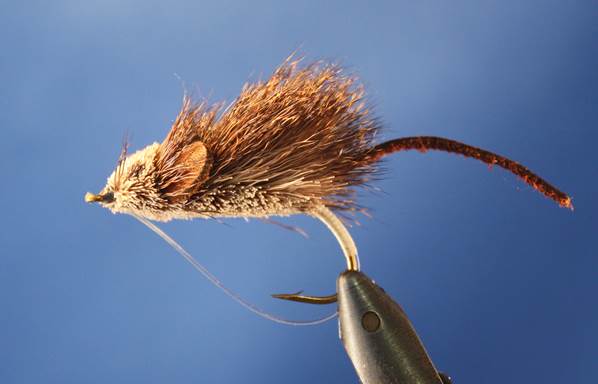
WHITLOCK’S NATURAL MOUSERAT
- Hook: TMC 8089 Size: 6
- Thread: 3/0 or A White in the back
3/0 or A Black in the front - Weed guard: 20 or 25 Mason Hard Nylon
- Tail: Tapered strip of Tan Chamois
- Body: Natural Deer Hair
- Ears: Tan Chamois
- Head: Natural Deer Hair
- Eyes: Black Pantone or Black 3-D
- Whiskers: Black Moose Body Hair
I also tie this pattern in all black and all white.
I use this pattern on western rivers, bass ponds and have even taken snook in the saltwater on this style using the pop-up methods.
Another pattern which I use for the Pop-Up Method is a floating minnow style with a sculpin type head. Both freshwater and saltwater have sculpin type minnows. In the saltwater they (sculpins) are called Gobies. I tie these in several different colors depending on the water I am fishing. The following pattern will be described in one of my favorite color variations that I use while fishing the Indian River and Sebastian Inlet area in Florida.
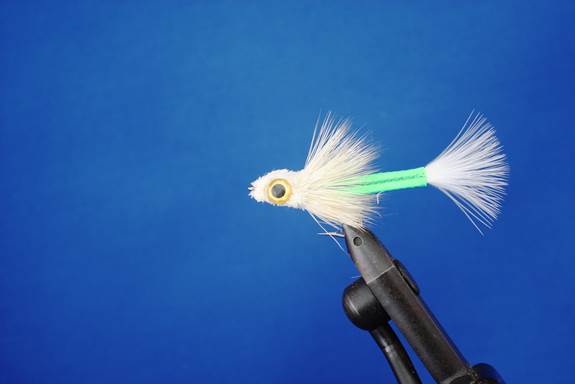
Pop-Up Streamers
White & Chartreuse
- Hook: Mustad 34007 or 3407
- Thread: A White or to match head Color
Sizes: 2/0 to 6 - Body & Tails: White Marabou pulled through a section of Chartreuse E-Z body material
- Collar: White Deer Hair, Flared
- Head: White Deer Hair, Flared, packed, stacked and trimmed to shape
- Eyes: 3-D Yellow with black centers, applied with epoxy
Note: The hooks and thread will remain the same for all the recipes listed.
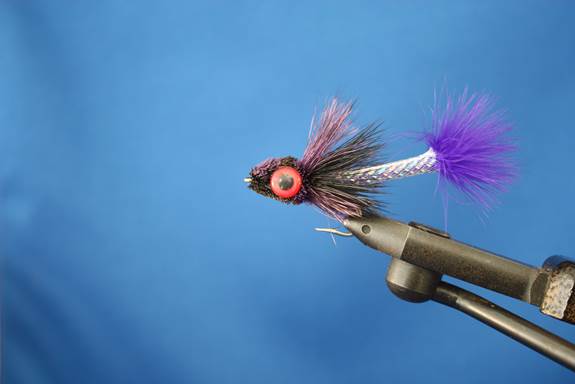
Purple & Black
- Body & Tails: Purple Marabou, pulled through Pearl E-Z body material
- Collar: Black Deer Hair, Flared, Purple Deer Hair, Flared
- Head: Black Deer Hair, Purple Deer Hair, flared, packed, stacked and trimmed to shape
- Eyes: 3-D, Red with Black centers, applied with epoxy
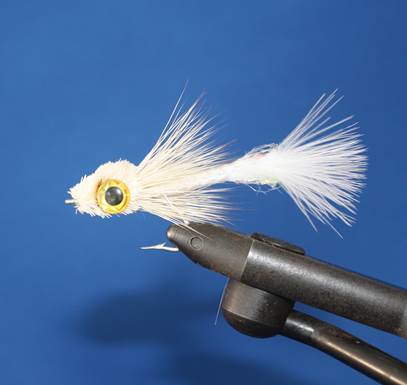
White & Pearl
- Body & Tail: White Marabou pulled through Pearl E-Z body material
- Collar: White Deer Hair, flared
- Head: White Deer Hair, flared, packed and stacked, trimmed to shape
- Eyes: 3-D, Yellow with Black centers, applied with epoxy
Note: This pattern is effective on Several Saltwater Species as well as Bass and Cutthroat Trout.
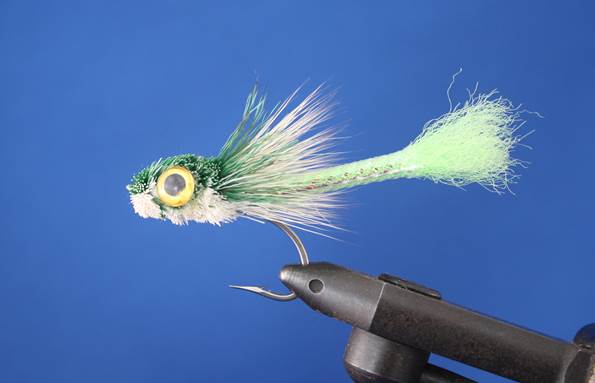
Chartreuse & Green
- Body & Tail: Chartreuse EP Fibers, pulled through Pearl E-Z Body Material.
The sides of the body are marked with a thin black line on either side using a Black Sharpie - Collar: Bottom, White Deer Hair, flared - Top, Green Deer Hair, flared
- Head: Bottom, White Deer Hair and Green Deer Hair on the top, all flared, stacked, packed and trimmed to shape
- Eyes: 3-D, Yellow with Black Centers, applied with epoxy
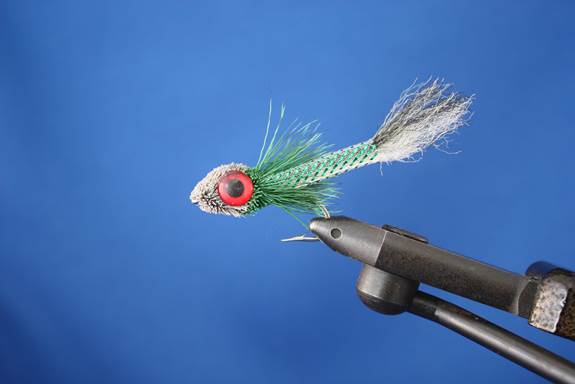
Mullet
- Body & Tail: EP Mullet Fibers pulled through Pearl E-Z body material
- Collar: Green Deer Hair, Flared
- Head: Gray Deer Hair, flared, packed, stacked and trimmed to shape
- Eyes: 3-D, Red with Black Centers, applied with epoxy
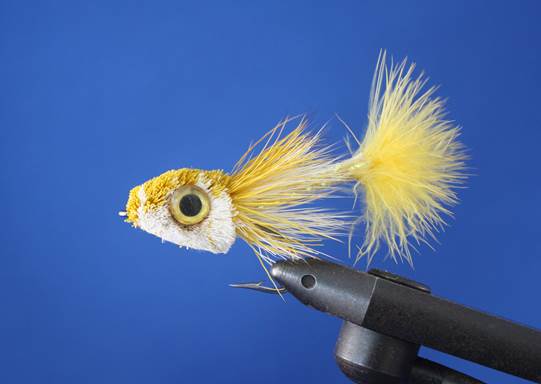
Yellow & White
- Body & Tail: Yellow Marabou drawn through Pearl E-Z body material
- Collar: 1st- White Deer Hair, flared, 2nd, Yellow Deer Hair, flared
- Head: Bottom—White Deer Hair, flared, packed and stacked
Top—Yellow Deer Hair, with Bands of White Deer Hair,
All packed, stacked and trimmed to shape. - Eyes: 3-D, Yellow with Black Centers, applied with epoxy
These patterns, when tied in proper sizes are effective on Saltwater Species, several Warm Water Species and on Trout. Tie some up, grab your high speed Hi D Sink Tip Line and give them a try. They have accounted for many memorable fish and lots of excitement for me and my friends.
Enjoy & Good Fishin’
| Sysadmin Note |
|---|
| Sysadmin Note |
|---|
BAIT, now there is a term that makes many fly fishers cringe, however if you fish the saltwater the talk is always about what baits are running or what baits the fish are eating. You might say that the discussion of baits is part of the saltwater fly fishing culture, at least in my area. The importance of the bait can not be over stated, this is what the fish are eating and what we strive to create imitations of in hopes that the fish will eat our creations. Therefore, we need to understand where the bait is found, how it swims and acts, is it a solitary creature or does it move in groups or schools and finally what is the availability of the bait to the fish? Find the Bait and you will find the gamefish it really is as simple as that!
As fly tyers we must consider the size and color of the bait and where in the water column the bait is found. We need to consider the activities of the bait such as how it swims, how the tides effect movement of the creature in question. We also must consider the silhouette, the amount of natural flash on the bait and the translucence and/or iridescence of the bait and finally the size and color of the eyes of the bait.
So what kind of BAITS are we talking about probably the most common and popular of the baits is Shrimp. Now I could lay out the Phylum, Subphylum, and Class and so on, but I suspect that there is little interest in that information, however I will tell you that various shrimp species inhabit the coastal waters from Maine to Texas and the sizes and the colors can vary.
When I am fishing in the Destin area of the Florida panhandle I often found brown or tannish shrimp to be very effective. However, in Panama City area olive or banded tan shrimp are the ticket, when fishing here in Sebastian Inlet area I have the best result with tan or gray Shrimp.
The following are some of my favorite shrimp patterns. I found these patterns to be very effective for me however I use a variety of fly lines when fishing these patterns. The water has to be very shallow for me to be using a floating line, if the water is three or deeper then I will be using a sink tip or full sinking fly lines.
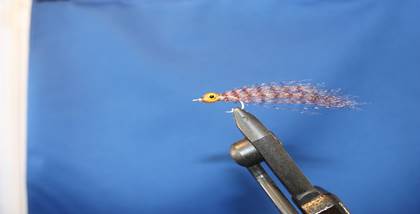
Banded Tan Super Clouser Shrimp
- HOOK: 34007 SIZES: 6-2
- THREAD: CLEAR FINE ULTRA THREAD
- EYES: PAINTED LEAD EYES, YELLOW WITH BLACK CENTERS
- BOTTOM WING: TAN SUPER HAIR
- TOP WING: TAN SUPER HAIR
- SILVER KRYSTAL FLASH WITH THREE STRANDS OF BLACK
- KRYSTAL FLASH
- TAN SUPER HAIR
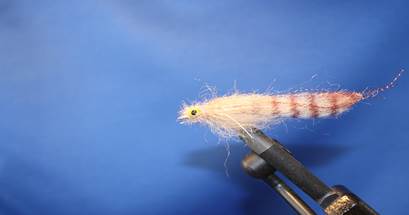
Tan Inlet Shrimp
- HOOK: DAI-RIKI 930 SIZES: 4-2/0
- THREAD: WHITE A
- EYES: DUMB-BELL LEAD, YELLOW WITH BLACK CENTERS
- WING: PUGLISI EP TAN FIBERS, BARRED WITH A BROWN SHARPIE
- COLLAR: PUGLISI TAN STREAMER BRUSH WITH LEGS
- HEAD: TAN CRYSTAL CHENILLE
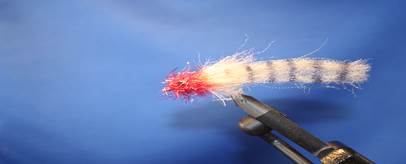
Red Head Tan Inlet Shrimp
- HOOK: DAI-RIKI 930 SIZES: 4-2/0
- THREAD: WHITE A
- EYES: DUMB-BELL LEAD, YELLOW WITH BLACK CENTERS
- WING: PUGLISI TAN EP FIBERS, BARRED WITH A BROWN SHARPIE
- COLLAR: PUGLISI TAN STREAMER BRUSH WITH LEGS
- HEAD: RED ESTAZ
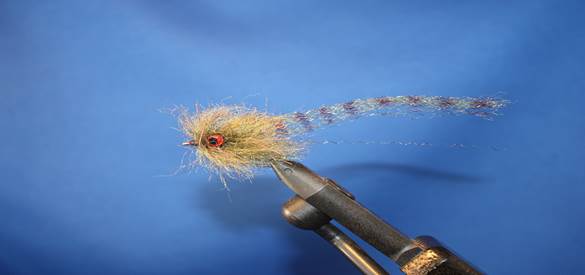
Panama Bay Olive Banded Shrimp
- HOOK: DAI-RIKI 930 SIZES: 6-2/0
- THREAD: BROWN A
- EYES: DUMB-BELL LEAD, RED WITH BLACK CENTERS
- WING: OLIVE SUPER HAIR, BANDED WITH A BROWN SHARPIE
- HEAD: PUGLISI OLIVE STREAMER BRUSH WITH LEGS
I have caught a number of different species on shrimp patterns including snook, bluefish, sea trout, lady fish, redfish, and smaller tarpon, just to name a few of species caught with shrimp patterns. Shrimp imitations are patterns that I am never on the water without.
In the next installment of the column I will be discussing Crabs and Worms.
Enjoy & Good Fishin’
| Sysadmin Note |
|---|
| Sysadmin Note |
|---|
BAITS PART TWO
In part two of Baits we will be discussing Crabs, Worms, Eels and Sand Fleas all of these are essential saltwater baits that the fly tyer/angler must understand and contend with during certain times of the year. Remember in the saltwater everything is basically a prey and predator relationship and oftentimes a creature is both.
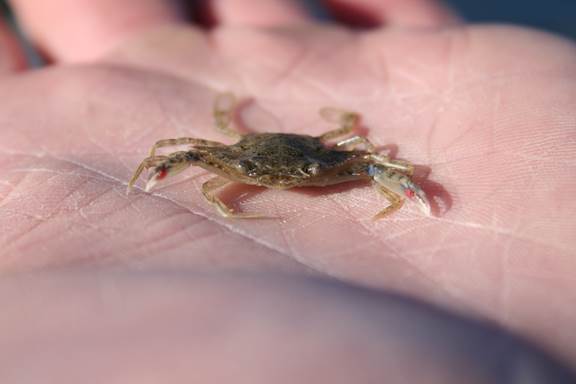
CRABS
Crabs are readily available in marshes, tidal flats, mangroves, grass flats and oyster reefs *(Rakes) and many species of saltwater fish feed on the various crabs that are found in the saltwater. There are two species of crabs that are popular with both the saltwater fish and the saltwater anglers as table fare and they are the Blue Crabs [Callinectes sapious] and Stone Crabs [Menippe mercenaria]. Crab patterns have long earned a place in my saltwater fly box. However I am surprised by how few anglers use crab imitations unless they are fishing for Permit.
I remember one experience where Ryan and I had been catching Sailcats in March and how one of the landed Sailcats disgorged a crab that was six and half inches across the shell and how we joked about having to cast the hubcap crab imitation.
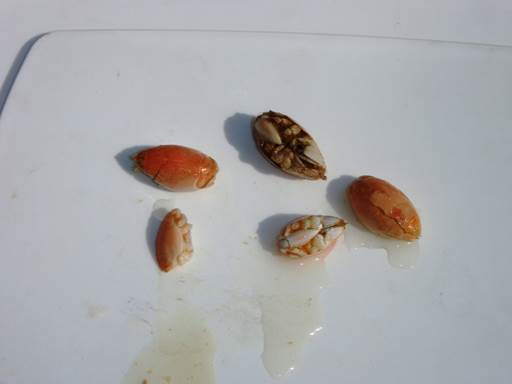
Sand Fleas is another of those baits that saltwater anglers use, now before you start reaching for the insect repellent, relax the Sand Fleas that I am speaking of are actually a crab without claws they are often referred to as Mole Crab or Sand Crab and I do know that both Pompano, Whiting and Redfish feed on these small crabs.
They belong to the Family Pocellanidae and the Genus Emerita. Sand Flea lives in the wet liquid sand at the edge of the beach and down to 20 feet in depth, they range in size from a half inch to an inch and half in length and they live for two to three years. The wave action will dislodge the Sand Fleas making them available for the fish cruising the surf line and along the beaches.
THE AMERICAN EEL AND FRIENDS
They are known by many names and are found along the coast line of the gulf coast and the eastern seaboard. They are sought after by many as table fare and many of the fish that inhabit the saltwater. My grandfather ran an Eel Weir on a tributary of the West Delaware River so I was familiar with Eels however my first contact with Eels in Florida was several year ago during a Southeast Conclave of the FFF at Pensacola.
I had arrived a couple of days early to do some fishing and I notice the old bridge which had been converted to a fishing pier and I wandered out to see what was going on, it was there that I watch anglers use old spark plugs as weight and hook live Eel of 12 to 15 inches and cast them over to the water. I wondered how in the heck were they were going to land a hooked fish from the pier and I wondered what they were fishing for, that question was soon answered when I was told they were fishing for Cobia. This had all gone on during early evening hours and soon an angler was hooked up with a Cobia and I watched the fished being reeled up out of the water and when the fish was within six feet of the rod tip.
Then the rod was leaned up against rail and then the fish was hand lined up to the angler, this turned out to be a 22 pound Cobia, during the course of the next couple of hours I watch this several times and learned that this was an annual event. Later I was able to hook some OF hard charging Cobia on Eel patterns that one of the local anglers had given me. One evening he took me out on his boat and we started at 7 P.M. and we fished till 3 A.M. in the morning. Wow, that was one fishing trip which I will never forget. Since then I have caught several different saltwater species on Eel imitations.
The American Eel [Anguilla prostrate] is Dark Gray to Olive on top and Yellowish or White on the belly. During the spring and summer large colonies of eels of various sizes will hold in rivers, bays and estuaries. Eels swim with a side to side undulating motion and do most of the moving during the hours late evening and darkness.
The beaches of Destin, Florida is another place where the Eels and the Cobia converge but there are many locations where Eels and saltwater fish meet, Bluefish, Stripers and Flounder also feed on the Eels.
There are several species of Eels but most of my contact has been with the American Eel however there is a species of Conger Eel the will occasionally be found in shallow water and then there are several species of the Snake Eel Family of Ophichidae which live in shallow water like the Sooty Eel and Whip Eel plus many others species which are found in south Florida and in the warmer waters of the Caribbean. I believe that due to these various species is why I sometimes do well with Eel Patterns while trolling at night.
WORMS
I was amused years ago with the introduction of the San Juan Worm into trout fishing, I remember stocking several colors and sizes in my fly shop and how some customers would slide in making sure that no one but the staff was in the shop and purchase their San Juan Worms and quickly sliding the box into a pocket before anyone could see what they were obtaining.
I have some very funny stories that deal with the San Juan Worms and the fly anglers, but I fear I am off the subject and those stories must wait for another time.
I remember several years ago I was walking along the beach with my wife just south of Coco Beach when we bumped into an angler who was fishing the surf and he showed me a worm that had become wrapped around his line. That darn worm was almost twenty inches long and I never did find out what it was but I did take a photo of it, now I just have to find it. As far back in angling literature as you can go you will find the worms and angling have been intertwined.
However, there are several worms found in the salt and brackish waters that many different species of saltwater fish will feed on.
In the Florida Keys there is the famous Palola Worm which is reddish in color and varies in size from 2 to 7 inches. Most of the time you wouldn’t know that the worms were about until spring or early summer when they swarm to mate; this action goes on during the afternoon and lasts into the evenings during low tides and full moons. Generally this happens in the Keys during late May and early June.
The Keys are the only place which I have had any experience with these worms therefore the dates of the swarming may vary in other areas. Now Tarpon are most often coupled with the swarming worms but many other species like Jacks, Permit, Bonefish, Grunt, Ladyfish and Snapper will all move to feed on this bounty.
There are also Burrowing Scale Worms that don’t burrow but live under stones and among the roots of Mangroves and are found in shallow saltwater, tidal pools and brackish water, they range in size from 3 to 6 inches.
There are Blood Worms which range in size from 3 to 15 inches and these worms are commonly sold in Bait Shops and are heavily used by bait anglers.
Clam Worms vary in length from 3 to 7 inches these worms emerge in breeding swarms during the dark of the moon at night from June to September. These are just a few mentions of the many species of Marine Worms and when found by the fish they are eaten.
Therefore various worm patterns share my saltwater fly box with the imitations of shrimp, crabs, sand fleas, eels and minnows.
Now I will share a couple of my favorite patterns with you that represent these baits that we have covered in this column.
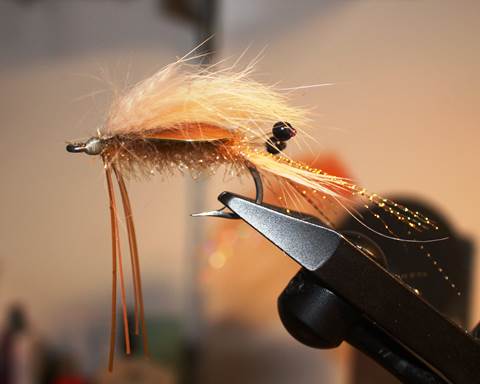
Tan Rabbit Spoon Crab
- Hook: Mustad 34007
- Sizes: 4/0-2
- Thread: Tan 6/0
- Weight: Wraps of non-toxic wire, as desired
- Tails: Tuff of Tan Rabbit fur with guard hairs, four to six strand of Root Beer Krystal Flash and two strands of Pearl Flash-A-Bou
- Antennae: Two strands of Black Krystal Flash
- Eyes: One pair of Black Stalk Eyes, made with a pair of black seed beads and 80 pound mono
- Underbody: Tan Estaz, wrapped and trimmed flat on the top
- Body: Gold flat spinner blade, fixed to the top of the underbody with 5 minute epoxy
- Backstrip: Short length of Tan Rabbit Strip
- Legs: Four strands of Pumpkin Sili-legs
I also tie this in an Olive variation.
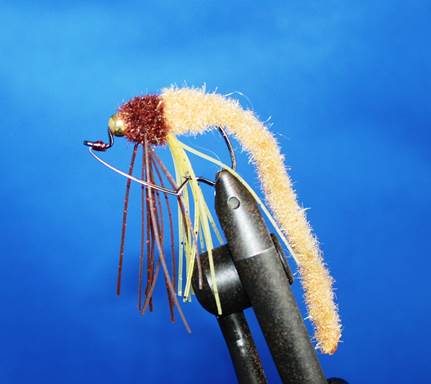
Tan Bass Worm
- Hook: Gamakatsu G-Lock Worm Hook
- Sizes: 4/0-2
- Thread: Tan 6/0
- Bead: Gold Metal
- Body: Tan Antron Chenille, melt the tip
- 1st Set of Legs: Chartreuse Sili Legs Six to Eight
- Thorax: Brown Antron Chenille
- 2nd Set of Legs: Pumpkin Sili Legs Six to Eight
- Weed Guard: 30 lb mono or 25 lb steel wire formed with pliers
I tie this in several different color variations and this is the same wiggle worm pattern that I use for Bass and Panfish.
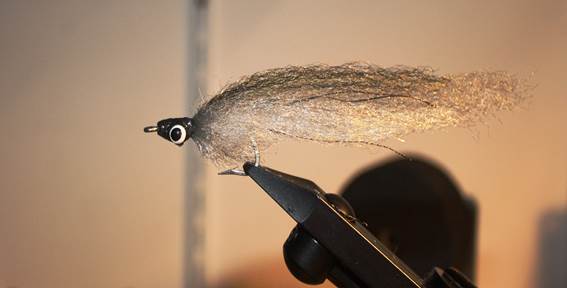
Cobia Eel
- Hook: Mustad 3407
- Sizes: 5/0-2
- Thread: White A
- Eyes: Dumb-bell Painted White with black center
- Body/Wing: Silver/Grey EP Fibers with three strands of Silver Flash-A-Bou, with two strands of Black Krystal Flash with Grey EP Fibers and a thin bunch of Mullet EP Fibers on the top
- Belly: Silver/Grey EP Fibers
- Head: Tied bullet style with Grey EP Fibers on top and Silver/Grey EP Fibers on the bottom with a thin coating of epoxy around the head and eyes
These are only three of the patterns that you might use to imitate the food forms covered in this column. There a many fine and effective patterns that you can use all you have to do is to go and find them.
Enjoy & Good Fishin’
| Sysadmin Note |
|---|
| Sysadmin Note |
|---|
Saltwater Gamefish of the Sebastian Area, Florida
In this installment we will be covering Flounder, Stingray and Black Drum. These are not the glamorous species you normally hear about but they are fun to catch and they all are great table fare.
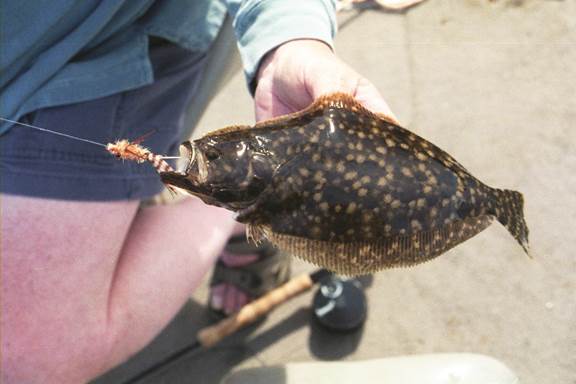
Flounder:
There are three species of Flounder found in the waters of Florida. The first species is the Summer Flounder [Paralichthys dentatus] and is the largest of the Flounder species with some exceeding twenty five pounds however they are only found in the extreme northeast Florida.
The Southern Flounder [Paralichthys lethostigma] is very common along the coastal waters of Florida. From the angler’s perspective they average two to four pounds with eight to twelve pound fish available and they can reach twenty pounds and thirty six inches in length.
The Gulf Flounder [Paralichthys albigutta] are also found on both of the Florida coasts with the average fish being two to three pounds and topping out at around six pounds.
Flounder are a flatfish with both eyes on the same side of the head and they can change color to suit their surroundings. The spawning occurs in January and February offshore and with sixty days the young drift into the lagoons, estuaries, and tidal creeks. The best information says that they live for approximately twenty years. Adult Flounder can be found off the coast in deeper water however a great many inhabit the inshore waters and are available to the fly anglers.
In shallow water they prefer soft sandy or silty bottom near channels, along the edges of grass beds and are often found in the sandy openings in the middle to grass flats. They are also very tolerate to salinity levels and are found in many brackish water rivers and creeks, where often the angler’s don’t even realize they are present.
They are ambush predators which lay camouflaged on the bottom and striking their unwary prey with incredible quickness and they feed on fish spawn, small fish, shrimp and other small crustaceans. Once again various Clouser style minnows are very effective on Flounder. However any shrimp, crab or small minnow pattern fished close to the bottom are effective and I am often using a Sink Tip Line with a six foot leader and at times I am using full Sinking Lines and troll the imitations at very slow speeds.
Due to their flat shape they give a tough fight, however I do have a tip and that is once you have hooked a flounder keep steady pressure on the fish, don’t pump up the fish as you fight them, just keep steady and constant pressure. If you try pumping up the fish trying get them off the bottom chance are you will lose them! Flounder is also a great fish to eat and many are taken for the table.
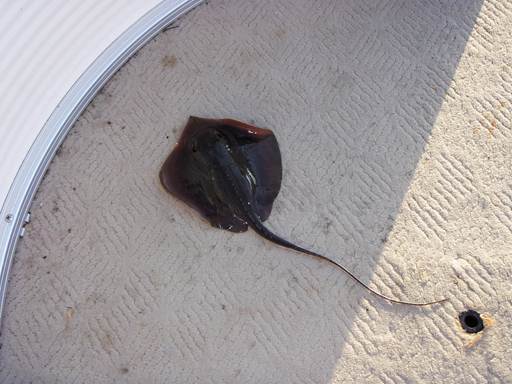
Stingrays:
Anyone that has spent any time at all in the saltwater has seen Stingrays sliding over the bottom in the shallow water and most anglers never target the “Rays”. Now this may have something to with the venomous spine located on their tail and the fact that many anglers don’t realize that they are excellent eating and they do in fact taste like Scallops. The angler usually catch small Rays with wingspans of two or three feet however they can reach 220 lbs and 79 inches in length however the average is more like 11 pounds and 24 inches.
In the waters of Florida there are two species they are the Atlantic Stingray [Dasyatis sabina] and the Southern Stingray [Dasyatis americana] and there is also the Clearnose Skate [Raja eglanteria] with is also very common in the shallow waters along the coast and like the Stingrays are very edible.
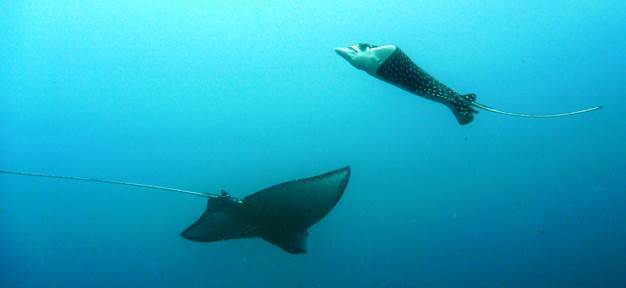
Now don’t confuse these with the much larger Manta Ray or Spotted Eagle Ray. Any fly angler who hooks one of these will find it a short encounter.
Stingrays are common along the coast including the brackish and freshwater habitats. They can be found over sandy and silty bottoms and they are also found in the open ocean and around coral reefs. They feed on crustaceans, shellfish, worms and small minnows. Little is known about their life span but based on the date available it is placed at nine years.
I remember the first time I caught my first Ray and it was on a Clouser Minnow, I was aware of the spine on the tail but was very curious to exam this strange creature and I was aware that they were edible. Some say that the Stingray doesn’t fight very well but I found that they were fun and very tasty.
Black Drum:
Black Drum [Pogonias cromis], are cousins to the Red Drum or more famously known as the Redfish and they are found in a wide range of habitats. They are found inshore in lagoons, estuaries, brackish water rivers, tidal creeks, around docks, bridge piling, in the deeper water along the channel edges and on the flats. They are also found along the surf line and close offshore.
They will school and can attain weights of 115 pounds, however anglers generally catch Black Drum in the 5 to 30 pound class and it is believed that their lifespan is 60 years.
Spawning occurs off shore in February through March and again in June and July. Upon hatching the fry move to the shoreline, estuaries and lagoons to gain food and protection from predators. They feed on crabs, shrimp, worms, small fish, and squid and they are highly sought after as a food fish by the conventional anglers.
Many of the bottom feeding fish that lack the glamour of the Bonefish or Redfish are often ignored by the fly anglers in the saltwater and this is a shame. It means that many anglers lose out on some great fishing.
Over the years I have caught my fair share of Black Drum, however I am always curious and willing to learn. One day I was south of Sebastian on the Indian River fishing in the area of the Wabasso Causeway Bridge and I noticed an angler who was fishing with live shrimp fishing by the bridge supports catching one fish after another. Being curious I dropped anchor to observe what this angler was doing and noticed that he was using a float cork and a live shrimp and what I was interested in was the distance of the cork above the live shrimp. I was able to see that the cork was placed four feet above the live shrimp, now I found that interesting as I knew that the water he was fishing in was nine feet deep, I filed away what I had seen, wrote a note in my journal and continued on with my fishing day.
About a week later I returned to the same location and was able to fish the water around the bridge where I had seen the angler with the live shrimp fishing and I tried several different shrimp imitations and various fly line without success. Then I decide to switch back to floating line and nine foot leader and try using strike indicators to control the depth of the imitations and after a bit of trial and error I began to catch Black Drum. Since that day I always have some form of strike indicator with me and I have found that often the Black Drum will move up in the water column to feed.
Now I will share some of the patterns that I use to catch the species I have discussed in this installment.
The number one pattern that I have found effective on both Flounder and Ray’s or Skates are Super Clouser style minnows in various color combinations. These patterns have already been well covered in the Saltwater Chronicles.
However, I do have a couple of patterns that I use on Black Drum and on Flounder that I will share with you. These patterns were developed by mixing the components use by fly fishers and spin fishers; some will find them exciting others will claim that they are not real flies, but that discussion will be addressed at another time and place.
Many fly tiers across the country have experiment with various soft plastic used by the Bass, Walleye and saltwater anglers use with various jigs, crankbaits and the like, the innovative fly tier have long played with these materials. Years ago I found the “Fly Tails” in the Cabela’s Catalog and gave them a try and the following is the result of that experimentation. This pattern has proven effective on Rays, Pompano, and Flounder.
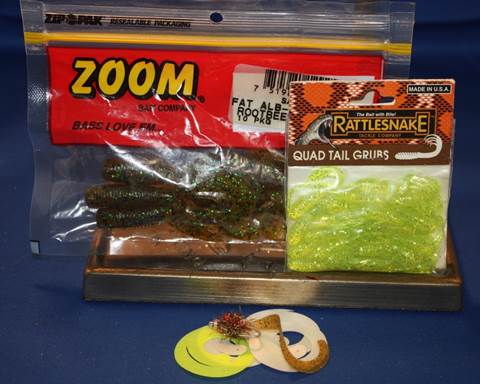
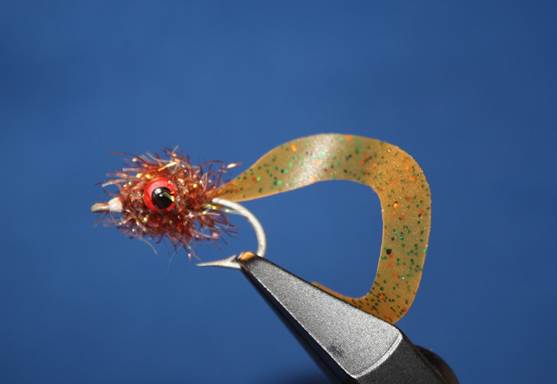
Root Beer & Pumpkin Grub
- Hook: Mustad 3407 Sizes: 4-8
- Thread: Brown 6/0
- Eyes: Dumb-bell type, painted Red with Black centers, coated lightly with five minute epoxy for durability place the eyes on the top of the hook shank so the hook will invert in the water to ride hook point up.
- Tails: Cabela’s Fly Tails, Pumpkin either two inch or two and quarter inch. These tails come in packs of twenty and cost around $4.50 a pack.
- Head: Root Beer Estaz or Crystal chenille tied tightly in a figure eight around the eyes
This pattern is easy and quick to construct and the action with the tail is incredible remember not to retrieve this pattern to fast, skittering and twitching across the bottom is much more effective.
The next pattern is the Spoony Tan Shrimp and the Fly in photograph shows a down eyed stainless steel saltwater hook. I am unsure of what this hook is as I received it in a box of materials from an estate of someone who had passed on to fish the waters in the sky. But I believe the hook is a Partridge CS11/2 Stainless Steel size four. The photograph is of the original proto type and I now tie this pattern on Mustad 34007 or 34011.
For those fly tiers who wish to experiment with spoon blades I suggest looking in the Cabela’s Tackle Craft Catalog where the variety of spinner blades is very impressive and I use many different styles in the construction of some unique and innovative patterns. Now none of them really work but they sure look good and generate plenty of conversation!
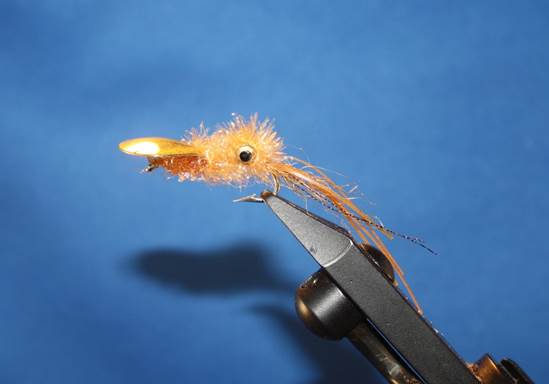
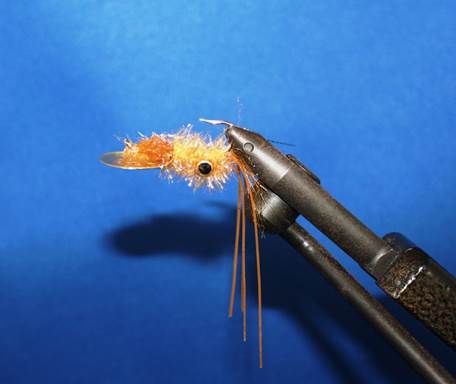
Spoony Tan Shrimp:
- Hook: Mustad 34007 or 34011 Sizes: 2/0-6
- Thread: Tan 6/0
- Tails: Farrar’s Flash Blend Redfish Fibers, tied down the bend of the hook
- Antennae: Two strands of Black Krystal Flash tied 1-1/2 times the length of the hook and to either side of the tail
- Eyes: Dumb-bell type painted Tan with Black centers, tied on the top of the hook shank so the pattern will invert and ride hook point up in the water
- Legs: Four strands of Pumpkin Fleck Sili-legs, two per side tied on either side of the eyes and stagger cut so each leg is a different length
- Head: Tan Crystal Flash Chenille tightly wrapped around the eyes
- Body: Tan Crystal Flash Chenille or Estaz
- Spinner Blade: Gold metal spoon blade, the spinner blade is placed on hook shank with concave side of the blade facing forward, once half of the body is completed this place the blade on the top of hook shank and press down, building a base with thread and then continue wrapping the body. Then blade is held in place by placing epoxy on the forward half of the hook shank and then the blade is pressed tight to the body. Once it has dried a second coat of epoxy is applied.
This pattern can also be tied in a shrimp grey or olive and is an excellent pattern for Black Drum.
You are only limited by your own desires to be creative at the tying vise and there are still many innovative and effective patterns yet to be designed for saltwater fly fishing.
Enjoy & Good Fishin’
| Sysadmin Note |
|---|
| Sysadmin Note |
|---|
Saltwater Gamefish of the Sebastian Area
In this installment we will be covering the Longnose Gar, Barracuda and the Look Down. These are not the normal fish species that are covered in most fishing magazines however they can be caught by the saltwater fly angler and each has its own appeal.
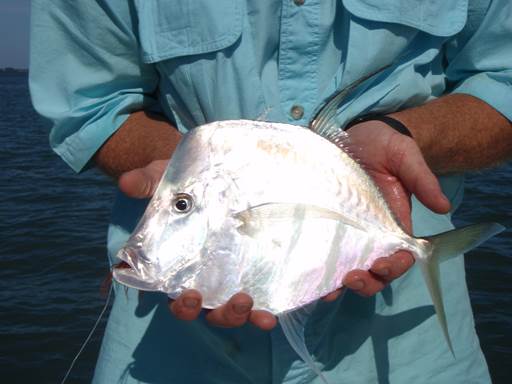
Look Down [Selene vomer], now these are different looking fish and I remember the first time I caught one, after it was photographed and released I grabbed for the fish identification book to figure out what I had just caught. It was a beautiful silvery fish with a pearly hue and I couldn’t wait to catch another, later when I telling a friend about them he asked if I had kept any of them to eat. I replied that I had release them and he told me about how good they were as table fare.
The Look Down and the Atlantic Moonfish [Selene setapinnis] are often confused by the angler as they are very similar in size and shape and are often found together. They can be found anywhere in the shallow coastal waters and are often found around bridge, dock pilings and prefer sandy bottoms. They will also gather around navigational markers and lighted docks where they will gather a night around the lights. They also are found in brackish water and are found near offshore up to depths of 180 feet. The average size is one to two pounds but can reach four pounds plus and they live for twenty years, they are spirited fighter and are very aggressive furthermore they are an excellent panfish to eat.
The feed on small crabs, shrimp, worms and various minnows and a number of different patterns are effective.
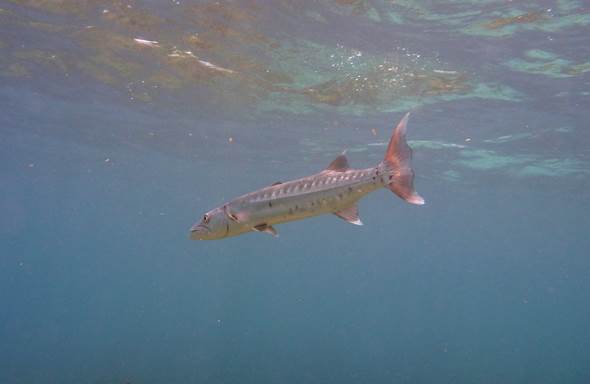
Great Barracuda
Great Barracuda [Sphyraena barracuda] are also called Cuda, Sea Pike and Sea Tiger are found in a variety of waters from the shallows of the lagoons and estuaries to the near shore surf and the open ocean and have a wide range of water temperature tolerance. The juveniles can be found in brackish water but the adults prefer saltwater environments. The can reach five and half feet in length and can attain weights of one hundred ten pounds and they live up to fourteen years.
Smaller Cuda are often found around the mangroves, bridges, and grass flats and around the channel markers. In the shallow coastal waters the anglers normally catch Cuda ranging from two to ten pounds. Did you know that the small Cuda are excellent table fare and little is known of their spawning habits.
Barracuda are fast predators which feed on a wide variety of fish and they locate their prey by sight and move in for the kill with tremendous speed (as fast as 36 mph) and are daylight feeders. They are great fighters and are very exciting to catch; they are in fact the saltwater version of the Northern Pike.
Be careful of consuming large Barracuda as they sometimes carry Ciguatera which is type of poison which can cause serious illness. Due to their mouth full of sharp teeth and aggressive nature be careful in handling and unhooking the Cuda.
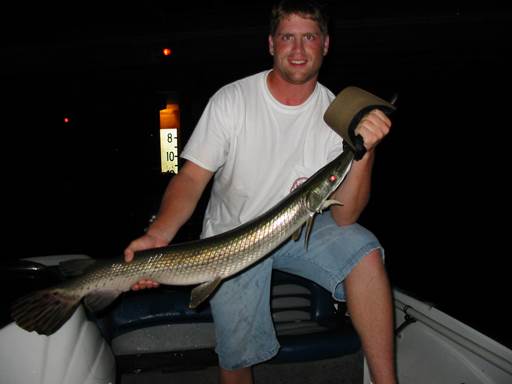
Longnose Gar:
Longnose Gar Lepisosteus osseus this species is found in many fresh water areas but also are found in the brackish water. I have caught Longnose Gar in the Choctawhatchee River and many other tidal rivers but the largest was taken in the Saint Sebastian River a few years ago on Christmas Eve and the Gar was almost forty pounds and put up an incredible fight.
The Longnose Gar is wide spread across the eastern half of the United States. The Saint Sebastian River has an excellent population of these and I have taken many of them over the years.
The average size is between five and fifteen pounds but can grow large as fifty plus pounds. The Gar is actually a good eating fish but few angler do so, also note that the roe poisonous and should not be consumed. Another interesting point of interest is that the Gar can actually breathe air a fact which is fairly unique among fish.
They prefer lazy rivers along with reservoirs, bayous and estuaries and prefers sluggish backwaters and are often seen floating near the surface. They migrate to spawn in clear clean water and can live up to twenty two years. The young will feed on insects and small minnows however within a short time they switch to a complete fish diet. Depending on the area the diet will consist of shad, small catfish, menhaden or mullet.
They are ambush predators laying wait or slowly stalking their prey. They will feed both day and night and are more active a night. This species seldom attracts much attention from fly anglers; but believe me they are a very exciting and challenging fish to catch. Oh be careful of their needle sharp teeth, I generally wrap a towel around the long nose when handling them.
Now I have caught Longnose Gar on standard saltwater patterns however I have often hooked and lost many Gars because the fly got hook on the nose and failed to penetrate. Therefore I have pattern type that I use when I am targeting Longnose Gar.
I will also include my favorite Barracuda pattern along with a pattern for Look Down’s and Moonfish. Many of the Clouser style minnows and Bullet Baitfish patterns will work on Look Down’s and Moonfish as will small Shrimp or Grub patterns. However these also feed on Marine Worms.
Brown Marine Worm
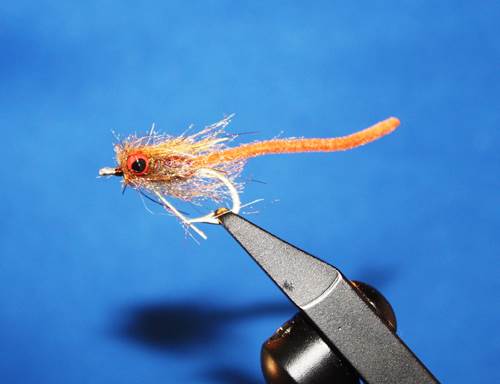
- Hook: Mustad 3407 Sizes: 4-8
- Thread: Brown 6/0
- Bead or Eyes: Optional, Copper metal is the best.
However I tie this pattern in several different colors and I match the bead color to the body color. I also tie this pattern using very small dumb-bell eyes which are painted Red with black centers and they are tied on the top of the hook shank so the pattern will turn over or invert in the water with the hook riding point up. - Weedguard: 20 pound monofilament
- Tail: Brown Ultra Chenille, melt the tip to improve durability
- Body: Ice UV Dub Brown, spun in a dubbing loop
- Collar: Root Beer Dubbing brush, two wraps to enhance the illusion of life and because it makes the imitation look cute!
Standard patterns like Surf Candies, Tarpon Toad Streamer and many other work on Longnose Gar however because their long bony noses and abundant teeth the fly hook often doesn’t find a good bite and pull out. However due to their feeding habit of slashing with their long toothy nose you can tie flies using combed out strands from nylon rope. When they slash at the imitation their teeth get tangled in the rope and I have often landed them without sinking a hook into flesh! The following is one of my favorite patterns styles shown in a couple of color variations.
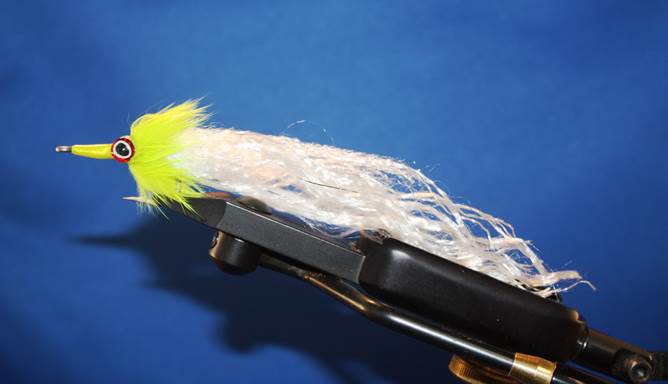
Gar Nylon Rope Streamer (Chartreuse & White)
- Hook: Tiemco 800S Sizes: 4/0-2
- Thread: A Nylon Chartreuse
- Wing/Body: White Ultra Hair fibers, with eight to twelve strands of Silver Flash-A-Bou with another small bunch of White Ultra Hair fibers on top, the creates a good base for the imitation, then surround the Ultra Hair with White Nylon Rope fibers. The over-all length of the imitation should be from six to nine inches.
- Collar: Chartreuse strip of Rabbit fur wrapped
- Eyes: 3D Red with Black Centers applied with epoxy and eyes are set at the base of the collar and the nose is also coated.
Coloring of the imitation is the angler’s choice but I like to add gill slashes and light barring or spots using a Sharpie Marker. The patterns can be tied in many different color combinations as the angler desires. Some have told me that you can tie them with a hook and that the rabbit and flash are not necessary however I like adding the frills, it makes me happy!
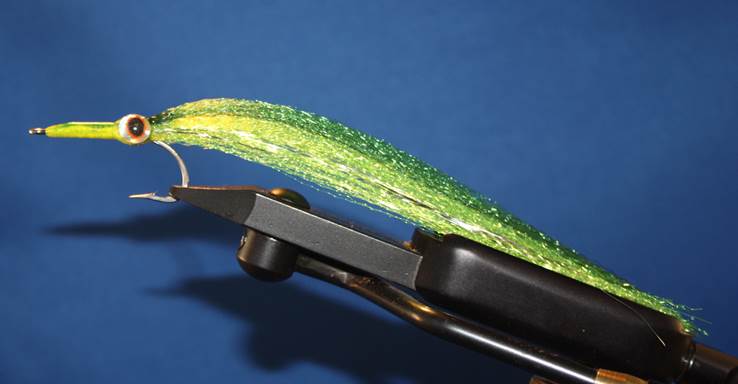
Chartreuse Cuda Candy - (Pattern Style developed by Bob Popovics)
The over length of the pattern can vary between six and nine inches in length.
- Hook: Mustad 34007 Sizes: 5/0 to 1/0
- Thread: Ultra Clear Mono
- Wing: Small bunch of Chartreuse Ultra Hair, with eight to fourteen fibers of Silver Flash-A-Bou, followed by Chartreuse Ultra Hair and a few strands of Black Ultra Hair fibers and topped with Green Ultra Hair.
- Eyes: 3D Orange with black centers, applied with epoxy and the entire head is coated as well.
This style of pattern is my favorite for Cuda and I seldom use others though I sure that there are many other effective patterns out there. Enjoy & Good Fishin’
| Sysadmin Note |
|---|
| Sysadmin Note |
|---|
Saltwater Gamefish of the Sebastian Area: Sharks
In this installment we are going to sink our teeth into the Sharks that the angler might encounter while fishing in the saltwater and offer some suggestions on how to catch these toothy and dangerous sport fish.
Now before I go any further I am going offer some advice on fishing and wading around sharks. Over the years I have read several articles about fishing around sharks where the author fails to give a warning about the potential danger. Sharks are eating machines and they are dangerous creatures who should be treated with caution. Unless you want to suffer an encounter of the wrong kind which could really ruin your day I will offer this advice; Wading at dusk and dawn is unwise even in clear water as your visibility is reduced and this is a time period when certain species of sharks are out cruising and feeding. Wading in murky or discolored water at anytime is foolish and wading in any water with a stringer of fish attached to you is just plain stupid! Anglers have told me that they have waded all their lives and never have had any problems and my reply to this is that it only takes one bad encounter to ruin your day.
Are the shark’s blood thirty predators? No, they are just natural creatures that are feeding in their natural manner and people are just in the wrong place at the wrong time or are doing something foolish. Therefore, treat them with respect for what they are and don’t place yourself in their habitat with bait attached to your belt. I will discuss how to handle hooked sharks later in this narrative.
There are approximately 470 species of sharks found throughout the world and they range in size from the six and half inch Dwarf Lantern Shark to the thirty nine foot Whale Shark. Many species are denizens of the deep water and are seldom if ever seen by anglers, however there are many other species which are encountered by saltwater anglers in Florida waters.
Sharks have been around since the beginning of time and for any species to last that long is a testament to its adaptability and toughness. The best time period to target sharks with a fly rod are the months of May to October. However, I can tell you that sharks are available to the angler throughout the year, and often I have hooked sharks while fishing for other species.
Sharks in general are great fighters and will test your tackle and your stamina while fighting them; the larger sharks are best released at a distance or very carefully! Sharks are also excellent table fare and the smaller sharks are always the best for the table.
The most common sharks that are encountered in Florida waters are Bull Sharks, which are also the most dangerous to the wading angler as they are often found in the shallow waters in the Indian River Lagoon and in the St. Sebastian River. As an interesting side note, the Bull Sharks enter the Indian River Lagoon every year during the spring to drop their young, therefore small Bull Sharks are often taken by anglers in the IRL system. Sharks are a saltwater creature except for the Bull Shark which can be found in brackish and freshwater also Bull Sharks often employ the bump and bite method when they are feeding which makes them a danger to the wading angler. Personally I only wade in very shallow and clear water otherwise I use a boat.
Other species that are encounter are Black Tips, Hammerheads, Tiger Sharks, Bonnet Head Sharks, Smaller Nurse Sharks and Spinner Sharks. The annual Spinner Shark fishing off of Palm Beach during March is very well known. There are many other species that are found in Florida waters but these are the species that I have encountered on a yearly basis.
Sharks feed on bony fish, other sharks, turtles, birds, dolphins, terrestrial mammals, crustaceans and stingrays. All of the Sharks found in Florida waters are classed as good table fare however the smaller Black Tips are rated as very good as are the small Spinner Sharks and the smaller Nurse Sharks are rated as excellent comparable to Swordfish because of their major shellfish diet. However as with any species, make sure to check the regulations to make sure it is legal to harvest any saltwater fish including sharks!
Though sharks are often described as solitary hunters but often during good feeding opportunities several can be seen and on the flats of the Indian River the small sharks can often show up in great numbers when you are in the midst of a large school of Ladyfish.
I remember at incident where my son and I were fishing on the grass flats just north of Sebastian Inlet and the fishing for Jack’s, Ladyfish, along with Spanish Mackerel was fast and furious when suddenly the small Bonnet Head Sharks appeared and some of the fish were lost to the sharks and some of the sharks took are flies.
These small Bonnet’s were around two feet in length and the fight was astounding and fun, unhooking and release them was interesting until we found that they were easy to deal with once we turned them belly up. These small sharks were taken using streamer imitations on eight weight rods with sink tip lines. Now we did lose a fly or two to “Bite Off’s” but really not a lot and we didn’t switch to wire leaders.
Often I have hooked and landed sharks while fishing for other species however if I am targeting larger sharks then I recommend using ten or twelve weight rods with leaders that are set up for sharks.
I remember my first sighting of shark as a saltwater angler and that took place while I was out with a friend in a fourteen foot Carolina Skiff and a rather large Hammerhead Shark swam along the side of the boat and the shark was about ten or eleven feet in length and that line from the movie Jaws came to mind "I think we are going to need a bigger boat", I didn’t say it, but I sure thought it.
Now let’s talk about fly fishing for these swimming appetites with teeth. Some think that anything that is an eating machine would be easy to catch, but many of the sharks are in fact spooky and will shy away from the boat however let’s begin with the smaller Bonnet head Shark. A large one would be 36 inches in length but many are between 18 to 24 inches and they love to feed on the flats eating shrimp and crabs. They still have teeth but their much smaller mouth makes handling them much easier and unlike most sharks they have poor eyesight. Also I never use a wire leader with these guys, generally using a thirty pound bite tippet. Depending on the depth of the water I am using either a floating line or a sink tip on an eight weight rod system.
These smaller sharks are still strong and will give you a battle and more than once I have been fishing for other species and found myself hooked up with a Bonnet head Shark and they are fun to catch. Besides they are very numerous in the Indian River and are a great way to break into fly fishing for sharks. For the Bonnet head Sharks I use size 1/0 to size 4 flies.
Sharks have advantages that the angler must consider and these are rough skin, extremely sharp teeth and tremendous power so gear up accordingly with ten or twelve weight rods with reels carrying 250 yards of backing. They can run off line at an astounding rate and are easily as exciting as any fish you will ever hook including Tarpon.
The best flies are large imitations of small fish, with the imitations being six to ten inches in length and a full profile is needed, slender profiles will work on Barracuda but seldom work on Sharks. Therefore you need to carefully consider the materials you are going to use in the construction of these patterns. Remember you will be the one casting these “Baby Chickens”.
Therefore consider your design and materials as you don’t want to endanger yourself or your fishing friends with an imitation that is too heavy and hard to cast. Also remember that you may have to make a fifty or sixty foot cast with this monster fly!
If you find sharks like the Spinner Sharks along the beach you can anchor up near the patrol path of the sharks and cast ahead of head and then twitch and move the imitations as the sharks move within range of the fly, they will follow and turn off several times before taking the imitation.
Now there is another method to lure the sharks toward you and that is to hang a partially filleted Jack or some other oily fish by the tail off the boat and this will create a scent trial which will draw in the sharks.
Sharks are somewhat spooky so slapping it in the head with the fly is not a good idea; place the fly out ahead of the cruising shark. If the shark moves toward the fly you then can increase the speed of the retrieve.
The larger sharks are very strong and powerful and you may have to follow them once hooked but so do carefully. If you do subdue the fish and bring it to the boat if the fly is deep then cut the leader or use a long handled hook remover and keep your hands clear. Do not grab a shark by the tail as they are very flexible and they will turn and bite you!
Now I will share a couple of the patterns that I use and the leader that I employ for sharks.
A shark leader is made of 5 feet of 50 pound with another 4 foot section of 40 pound and then 12 to 16 inches of stainless steel wire using an Albright Knot to attach the wire to the monofilament and then using a haywire twist to attach the fly.
One of my favorite patterns for the Bonnet head Shark is a Tan Rabbit Shrimp and I also have had good results with an Orange Rabbit Shrimp (Crawfish Orange).
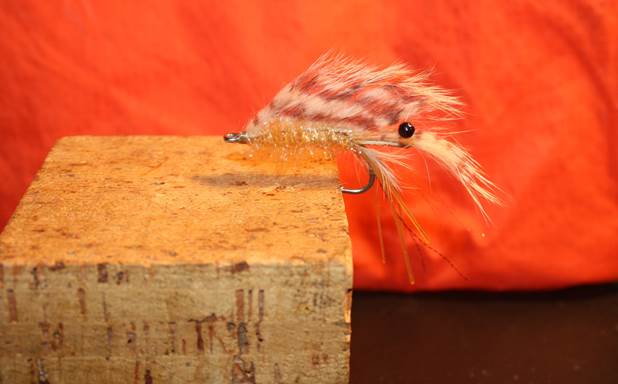
Tan Rabbit Shrimp
- Hook: Mustad 34007 Sizes: 2/0-4
- Thread: Tan 6/0
- Tails: Tuff of Tan Rabbit fur with guard hairs, with several strands of Root Beer Krystal Flash
- Antennae: Two strands of Black Krystal Flash
- Rib: Clear Ultra Thread, which will be used to wrap through the rabbit strip on the back in a matuka style
- Eyes: Stalk Eyes, made with two black seed beads epoxied on eighty pound monofilament, tied long
- Legs: Four Pumpkin Flake Sili-legs all trimmed to different lengths
- Underbody: Tan Estaz
- Backstrip: Tan Rabbit Strip, trimmed to a point and laid over the tail and tied down at the head and the strip is barred with a brown Sharpie marker
- Weight: Non-toxic wire, wrapped, the amount as desired per the water being fished. I also tie this in Olive and in an Orange Crawfish variation.
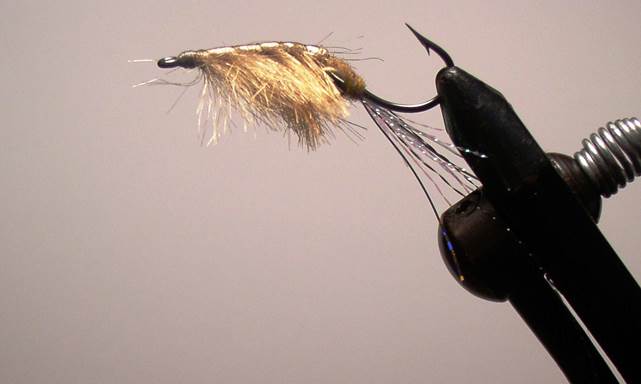
Salty Root Beer Shrimp
- Hook: Mustad 34007 Sizes: 1 to 8
- Thread: Hot Red 6/0
- Tails: Thin tapered point of clear plastic, with several strands of Pearl Krystal Flash, then tow strands of Silver Holographic Flash, slightly longer than the tails
- Antennae: Two strands of Black Krystal Flash 1-1/2 times the length of the hook
- Eyes: Dumb-bell type eyes, painted red with black centers, tied on the bottom of the hook at the back of the hook
- Head: Dubbed, Scintilla #58 Garden Hackle
- Shellback: Clear Heavy Plastic Strip
- Rib: Dark Fine Ultra Thread, used to create segmentation and to fasten the plastic strip in place
- Body: Root Beer Holographic & Tri-Lobal Hackle, tightly wrapped
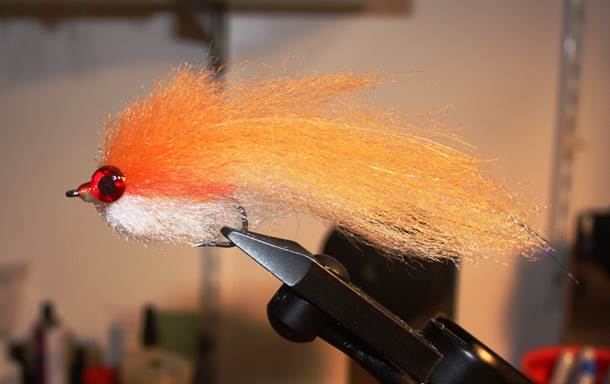
Orange & White Sharkie Streamer
- Hook: Mustad 34007 Sizes: 6/0-2
- Thread: White A
- Body/Wing: White EP Fibers with 4 or 5 Silver Holographic Flash Fibers to top, followed by Orange EP Fiber with 4 strands of Pearl Flash-A-Bou on top followed by Orange EP Fibers layered up the shank of the hook
- Belly: White EP Fibers, layered up the shank of the hook
- Gills: Small bunch of Red EP Fibers, tied along either side of the hook shank
- Head: A White thread with the top colored by an Orange Sharpie marker.
- Eyes: One pair of 3D Red eyes with black centers, applied with 5 minute epoxy
Note: Upon completion of the imitation, comb out the body and then trim to shape
The pattern photographed is 5 ¾ inches in length. Some like to use a stinger hook on long flies of this type; however I find that a stinger is not needed with imitations for sharks as they are eating the whole fly instead of trying to bite it. This belief is based on observation and the knowledge of their feeding habits.
This pattern can be tied in several different color combinations and I have found these combinations to be effective: Yellow & Orange, Red & Yellow and Silver & White.
Sharks are often overlooked as a gamefish and I think it is because the both frighten and fascinate us. However anyone who has ever taken a shark with a fly will understand the strength and fighting spirit of these outstanding fish. Give them a try you won’t be disappointed.
Enjoy & Good Fishin’
| Sysadmin Note |
|---|
| Sysadmin Note |
|---|
Saltwater Gamefish of Florida
One of the most popular species of saltwater gamefish that tops the saltwater fly fisher’s dream list are bonefish. Though I have been told that during the months of summer bonefish occasionally move through the inlet and into the Indian River system generally you need to travel a little further south to get reasonable action on this highly sought after fish.
Bonefish [Albula vulpes] are also known as the Silver Ghost, White Fox, Gray Ghost, Phantom, Silver Streak and the Banana Fish.
As of April 2011 FWC Commission (Florida) issued a rule making bonefish a catch and release fishery. They want to preserve and enhance this outstanding gamefish so future anglers will have an opportunity to stalk this magnificent gamefish on the flats of Florida.
For those who would like a fish mount it takes is a reasonable photograph and a couple of quick measurement to have an excellent replica mount completed at any number of qualified businesses.
Bonefish are found in intertidal waters, around mud, sand or grass flats as well as mangrove lagoons, estuaries, bays and reefs. They also are found in water up to thirty feet deep and are able to live in oxygen-poor water because they can breathe air as they have a lung-like bladder which allows them to do so.
Bonefish can weigh 20 pounds plus and can grow to 41 inches in length and live for 25 years. They will travel and feed in schools containing similar sized fish however larger bonefish over say six or seven pounds will often travel in small groups of two or three and the extremely large “Bones” are often found alone.
Spawning occurs from November to May in the Florida Keys and the Florida Keys and Biscayne Bay are very popular destinations for trophy bonefish. Bonefish are found in many other places including Hawaii and throughout the Caribbean.
They prefer water temperatures of 76 to 82 degrees and during the warm months of summer some bonefish will migrate up the coast and have been found as far north as Nova Scotia but they move south as soon as the water temperatures cool since water temperatures below 60 degrees can be deadly to bonefish. When the water temperatures rise above 82 degrees the “bones” will seek deeper and cooler water.
I suspect that the first image of fly fishing for bonefish is of the angler on foot or in a boat stealthily stalking the bonefish across the shallow water flats. However my first encounter with “bones” came in the Florida Keys where I was fishing a deep water grass flat (15 to 18’) using a 1/0 shrimp imitation and working on a groups Jack’s. Suddenly I was hooked up with a fish that ran off 100 feet of line in the blink of an eye and this turned out to be a 7 pound bonefish. So not all bonefish are stalked in the shallow water and when you are in an area that contains bonefish understand that they can appear or be hook unexpectedly.
Bonefish feed on worms, fry, shrimp, crabs and small minnows and in my experience they prefer to feed on a rising tide and are often first spotted by seeing them feeding in a head down tail up position with all or parts of their tail fin protruding from the surface of the water.
These are referred to as tailing “bones”, however they can also be spotted by the observant angler as they move along the bottom stirring up the mud as they feed, this is called mudding and give away the “bones” position.
As for tackle for “bones” the recommendations are all over the place and everyone claims that their advice is correct. However I believe that the choice of rod weights, fly lines and fly patterns are best determined by the water to be fished, the depth, the wind and the expected size of the bonefish being targeted. The size of the flies and the weight of the flies is also a determining factor in the choice of rod weights.
The key to being a successful bonefish angler is to be prepared with a knowledge of the water and area to be fished. Then the expected size of the fish and what presentation methods are need to be mastered and what patterns are needed paying attention the size and weight of the patterns.
For those angler who are serious about catching Bonefish you might check on the Internet, however I would suggest reading Fly Fishing For Bonefish by Chico Fernandez published in 2006, Bonefishing by Randall Kaufmann in 2000 and Bonefish Fly Patterns by Dick Brown published in 1996.
Now I know that two of these volumes are a little bit older but the information is still excellent and the patterns still work, remember that the fish are always the final judges when it comes to flies. If you feel the need to have the latest and greatest patterns just go online or browse the fly fishing magazines such as Bonefish and the flies used for them are always hot copy.
Bonefish are exciting and catching one is the dream of many anglers and bonefish are on your “Bucket List” then try your luck in Florida.
Now I will share a couple of my favorite patterns for “bones”. I call this pattern the Bonefish Buddy and I tie this pattern in several different color combinations and I actually use it on a variety of species that feed on shrimp.
The story of the development of the pattern is amusing as the proto type was tied with scraps on my tying table and during the construction the idea began to take shape and the pattern fully emerged and now it is one of my favorites. When I am tying, I start out very neat and organized with all the materials laid out, but when I am writing articles or class seminars where I am tying one or two samples of each pattern for photographs then the fly tying desk tends to get a little cluttered and it was during such a time period that this pattern was developed. This isn’t the first pattern that has come to life that way and I am sure that it won’t be the last.
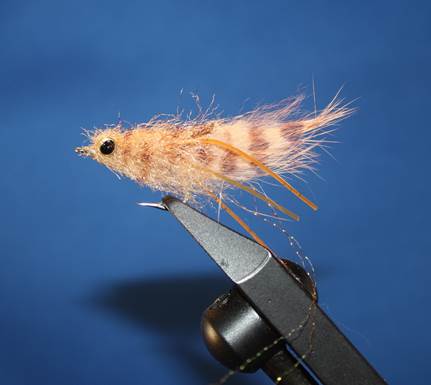
Bonefish Buddy-Tan
- Hook: Mustad 34007 Sizes: 2 to 8
- Thread: Brown 6/0
- Antennae: Two strands of Root Beer Krystal Flash, tied long off the bend of the hook.
- Tails: Short strip of Tan Rabbit tied with the hair down, the strip is also tied down off the back of the hook shank and faintly barred with a brown Sharpie marker.
- Legs: Four Pumpkin Sili-Legs, two per side, stagger cut. The legs are also tied down on either side of the tail.
- Eyes: Dumb-bell type, painted Tan with black centers, tied on the top of the hook so the hook will turn over in the water and ride hook point up.
- Body: Tan Dubbing Brush, wrapped, when wrapping do not make the wraps tight side by side, do a partial spiral, then take a needle and pick out any of the fibers that get wrapped under then comb out the body and trim as desired.
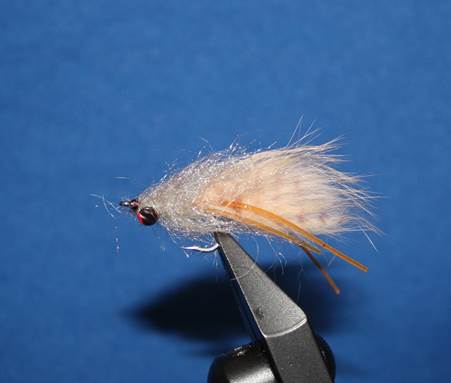
Bonefish Buddy Variation
Now I could offer several more patterns but the already mentioned books are filled with recipes for highly effective and proven Bonefish fly patterns.
Enjoy & Good Fishin’
| Sysadmin Note |
|---|
| Sysadmin Note |
|---|
Saltwater Gamefish of Florida
One of the most popular species of saltwater gamefish that tops the saltwater fly fisher’s dream list are bonefish. Though I have been told that during the months of summer bonefish occasionally move through the inlet and into the Indian River system generally you need to travel a little further south to get reasonable action on this highly sought after fish.
Bonefish [Albula vulpes] are also known as the Silver Ghost, White Fox, Gray Ghost, Phantom, Silver Streak and the Banana Fish.
| Note |
|---|
| As of April 2011 FWC Commission (Florida) issued a rule making bonefish a catch and release fishery. They want to preserve and enhance this outstanding gamefish so future anglers will have an opportunity to stalk this magnificent gamefish on the flats of Florida. |
For those who would like a fish mount it takes is a reasonable photograph and a couple of quick measurement to have an excellent replica mount completed at any number of qualified businesses.
Bonefish are found in intertidal waters, around mud, sand or grass flats as well as mangrove lagoons, estuaries, bays and reefs. They also are found in water up to thirty feet deep and are able to live in oxygen-poor water because they can breathe air as they have a lung-like bladder which allows them to do so.
Bonefish can weigh 20 pounds plus and can grow to 41 inches in length and live for 25 years. They will travel and feed in schools containing similar sized fish however larger bonefish over say six or seven pounds will often travel in small groups of two or three and the extremely large “Bones” are often found alone.
Spawning occurs from November to May in the Florida Keys and the Florida Keys and Biscayne Bay are very popular destinations for trophy bonefish. Bonefish are found in many other places including Hawaii and throughout the Caribbean.
They prefer water temperatures of 76 to 82 degrees and during the warm months of summer some bonefish will migrate up the coast and have been found as far north as Nova Scotia but they move south as soon as the water temperatures cool since water temperatures below 60 degrees can be deadly to bonefish. When the water temperatures rise above 82 degrees the “bones” will seek deeper and cooler water.
I suspect that the first image of fly fishing for bonefish is of the angler on foot or in a boat stealthily stalking the bonefish across the shallow water flats. However my first encounter with “bones” came in the Florida Keys where I was fishing a deep water grass flat (15 to 18’) using a 1/0 shrimp imitation and working on a groups Jack’s. Suddenly I was hooked up with a fish that ran off 100 feet of line in the blink of an eye and this turned out to be a 7 pound bonefish. So not all bonefish are stalked in the shallow water and when you are in an area that contains bonefish understand that they can appear or be hook unexpectedly.
Bonefish feed on worms, fry, shrimp, crabs and small minnows and in my experience they prefer to feed on a rising tide and are often first spotted by seeing them feeding in a head down tail up position with all or parts of their tail fin protruding from the surface of the water.
These are referred to as tailing “bones”, however they can also be spotted by the observant angler as they move along the bottom stirring up the mud as they feed, and this is called mudding and gives away the “bones” position.
As for tackle for “bones” the recommendations are all over the place and everyone claims that their advice is correct. However I believe that the choice of rod weights, fly lines and fly patterns are best determined by the water to be fished, the depth, the wind and the expected size of the bonefish being targeted. The size of the flies and the weight of the flies is also a determining factor in the choice of rod weights.
The key to being a successful bonefish angler is to be prepared with a knowledge of the water and area to be fished. Then the expected size of the fish and what presentation methods are need to be mastered and what patterns are needed paying attention the size and weight of the patterns.
For those anglers who are serious about catching Bonefish you might check on the Internet, however I would suggest reading Fly Fishing For Bonefish by Chico Fernandez published in 2006, Bonefishing by Randall Kaufmann in 2000 and Bonefish Fly Patterns by Dick Brown published in 1996.
Now I know that two of these volumes are a little bit older but the information is still excellent and the patterns still work, remember that the fish are always the final judges when it comes to flies. If you feel the need to have the latest and greatest patterns just go online or browse the fly fishing magazines such as Bonefish and the flies used for them are always hot copy.
Bonefish are exciting and catching one is the dream of many anglers and bonefish are on your “Bucket List” then try your luck in Florida.
Now I will share a couple of my favorite patterns for “bones”. I call this pattern the Bonefish Buddy and I tie this pattern in several different color combinations and I actually use it on a variety of species that feed on shrimp.
The story of the development of the pattern is amusing as the proto type was tied with scraps on my tying table and during the construction the idea began to take shape and the pattern fully emerged and now it is one of my favorites. When I am tying, I start out very neat and organized with all the materials laid out, but when I am writing articles or class seminars where I am tying one or two samples of each pattern for photographs then the fly tying desk tends to get a little cluttered and it was during such a time period that this pattern was developed. This isn’t the first pattern that has come to life that way and I am sure that it won’t be the last.
Bonefish Buddy-Tan
- Hook: Mustad 34007 Sizes: 2 to 8
- Thread: Brown 6/0
- Antennae: Two strands of Root Beer Krystal Flash, tied long off the bend of the hook.
- Tails: Short strip of Tan Rabbit tied with the hair down, the strip is also tied down off the back of the hook shank and faintly barred with a brown Sharpie marker.
- Legs: Four Pumpkin Sili-Legs, two per side, stagger cut. The legs are also tied down on either side of the tail.
- Eyes: Dumb-bell type, painted Tan with black centers, tied on the top of the hook so the hook will turn over in the water and ride hook point up.
- Body: Tan Dubbing Brush, wrapped, when wrapping do not make the wraps tight side by side, do a partial spiral, then take a needle and pick out any of the fibers that get wrapped under then comb out the body and trim as desired.
Bonefish Buddy Variation
Now I could offer several more patterns but the already mentioned books are filled with recipes for highly effective and proven Bonefish fly patterns.
Enjoy & Good Fishin’
| Sysadmin Note |
|---|
| Sysadmin Note |
|---|
Saltwater Gamefish of Florida
In this installment we will cover one of the most exciting classes of gamefish found in the ocean and that is the Billfish. We will cover the Swordfish, Sailfish, Blue Marlin and White Marlin.
These are true deep water fish and the angler will need a suitable boat, a friend with a suitable boat or a guide to pursue these species. Furthermore with the exception of the Atlantic Sailfish and the White Marlin these species are classed as extreme big game fly fishing due to their size, strength and speed.
Swordfish
Swordfish [Xiphias gladius] they are also called Broadbills, this fish is found in the deep water oceans off the coast of Florida and in the Gulf of Mexico. Swordfish are solitary or swim in loose aggregations and are a highly migratory and predatory fish.
Swordfish can be reached by fourteen feet in length and weigh 1,400 pounds; they prefer to hang in areas of the ocean where the currents meet. The average Swordfish caught on a fly will run from 50 to 125 lbs. They prefer water temperatures between 62 and 72 degrees but can tolerate 41 to 81 degrees and have a lifespan of 10 years.
They are normally seen on the surface but can dive to 2,100 feet and are known for their strong fight and occasional jumps. These are extremely fast fish and can reach speeds of fifty miles per hour. The spawning takes place from March to July and off the coast of Florida is one of the spawning grounds.
They feed on rockfish, barracuda, squid, herring, mackerel, bluefish, and many others and they slash and slice with their bills to disable their larger prey and swallow the smaller prey whole.
Bait anglers chum and fish at night and find this method most productive however smaller Swordfish are taken during the hours of daylight. Fly fishing for Swordfish is classed as extreme fly fishing where 12 to 14 weight rods are used and reels capable of handling 350 yards of backing plus the fly line. Most of the current information on fly fishing for Swordfish is found on the inter-net.
Atlantic Sailfish
Atlantic Sailfish [Istiophorus platypterus] also called Billfish, Spindle Beak or Bayonet Fish. They are another worldwide species that migrates following the bait. The Atlantic Sailfish was adopted as the official state saltwater fish of Florida in 1975.
These fish are found both offshore and at times in near-shore waters along the Florida Coast Line. They are often called solitary fish but there is evidence that they will form loose groups to feed and migrate. This fish has little value as table fare and most are now caught and released but they are very popular as a sporting gamefish.
They prefer water temperatures of 70 to 83 degree water and are generally found swimming near the surface in search of prey. They can reach 128 pounds and 124 inches and lives up to 16 years.
In the waters of Florida the average catch is between 49 to 83 inches are the most common. The spawning occurs during the summer months and they grow very quickly and can reach 40 inches in their first year.
They feed on squids, octopus, halfbeaks, needlefish, and mackerels, along with tuna, jacks, mullet, ballyhoo and other baitfish. Sailfish are very fast and can reach sixty plus miles per hour and at times will use their dorsal fin to help herd baitfish.
They are the easiest of the Billfish for the angler to target as ten weight rods are capable of handling them and they are also found near shore.
Blue Marlin
Blue Marlin [Makaira nigricans] this is another blue water fish found in the open ocean off the coast of Florida and the Gulf of Mexico and are well known for their speed, power and their aerial displays. The swim above the thermocline near the surface and are the largest of the billfish and can reach 1550 pounds and 15 feet in length.
However the normal catch will run from 100 to 350 pounds. The current All Tackle Florida record is 1046 pound and was taken off Panama City and the fight lasted for five hours; remember this if you are going to target Blue Marlin.
The bill is used to slash strike and stun their prey which includes mackerels, dolphin, squid, jacks, mullet and a host of other fish. Popular live baits include bonito, barracuda, ballyhoo and small dolphin. They are primarily day light feeders and can live up to 28 years. The spawning occurs from May to September in the waters near Cuba.
Fly fishing for Blue Marlin will involve the use of trolled teasers to attract them to the surface so the fly angler can get a cast to them. This is not a fish that you causally pursue and you must plan and carefully prepare for before engaging in this activity.
White Marlin
White Marlin [Tetrapturus albidus] this is another blue water fish that is found off all of the Florida coasts. The White Marlin is the most aerial of all the Marlin and is also one of the smallest reaching 200 pounds and 7 feet in length at the tops. However they average between 40 to 70 pounds and have a life span of thirty years.
They spawn during the early months of summer and there is little known of the spawning cycle or the young White Marlin. They can be seen as individuals but can also form loose groups and can found weed lines, drop offs, upwelling’s and shoals.
Like all Billfish the White Marlin is very fast and an aggressive feeder that feeds on squid, flying fish, blue runners, bonito, herring and many other baitfish and they are day light feeders.
There is a great deal of information on Fly Fishing for Billfish available on the inter-net however for those who would like a recommendation on a good book on this subject, then get a copy of Bluewater Fly Fishing, by Trey Combs published in 1995 or Billfish on a Fly, by Jack Samson published in 1995. Also check out the patterns listed in Pop Fleyes by Bob Popovics published in2001 or Innovative Saltwater Flies by Bob Veverka published in 1999. Another excellent digest of patterns is Flies for Saltwater by Dick Stewart and Farrow Allen published in 1992, all of these volumes contain excellent and effective patterns for chasing the Billfish.
I will share a couple of patterns that I have produced for others that have proven to be effective on Atlantic Sailfish. I have not chased the Billfish as my idea of a safe deep ocean boat is something like the U.S.S. Ronald Regan and I have yet to encounter an Atlantic Sailfish in the waters I generally fish.
Flash Blue Backed Sailfish Bait
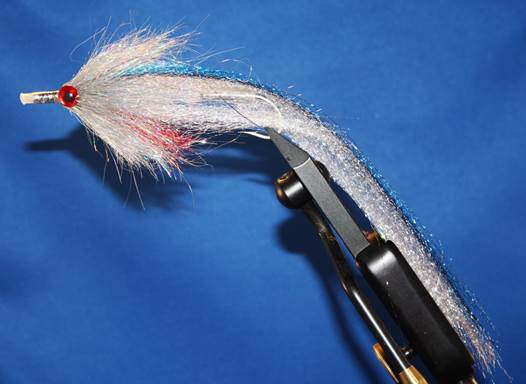
- Tube: Four to Seven inch white hard plastic tube 11/64th, the snubber tube used would be inch and half soft plastic tube 15/64th. A snubber tube is used to place one end on the hard tube and place hook in the other, I would rig this with tandem hook. The overall finished pattern could run from six to twelve inches.
- Thread: White A
- Belly: White Ultra Hair
- Gills: Red Ultra Hair
- Wing: White Ultra Hair followed by Grey Ultra Hair, followed by a thin bunch of Black Ultra Hair, followed by six to twelve strands of Silver Holographic Tinsel topped with Blue Ultra Hair.
- Collar: Silver & Pearl Dubbing Brush wrapped and combed out
- Eyes: 3D Red with Black Centers, applied with epoxy
- Nose: Silver tinsel wrapped and coated with epoxy
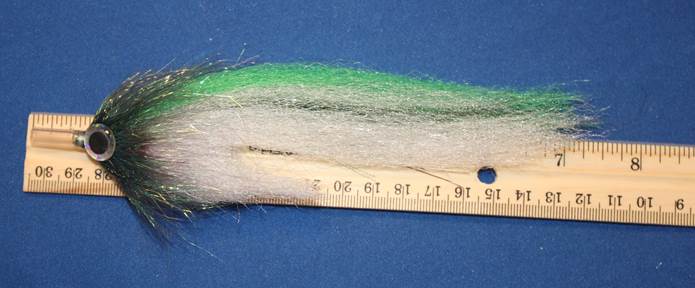
Green & White Sailfish Special
- Thread: White A
- Tube: Soft Plastic 15/64th, four to eight inches in length as desired, hooks of 6/0 to 2/0 will fit into the end of the soft plastic tube so that no snubber tube is needed.
Overall length of the fly is 6 to 12 inch as desired. - Belly: White EP Fibers, layered up the bottom and sides of the hook
- Wing/Belly: White EP Fibers, Eight to Ten Silver Flash-A-Bou strands, White EP Fibers, Thin bunch of Black EP Fibers, with eight to ten strands of Peacock Krystal Flash, White EP Fibers and topped with Green EP Fibers. Once the imitation is completed, comb out and trim to shape.
- Gills: Red Slashes on either side, made by Red Sharpie marker
- Collar: Aqua Pearl Dubbing Brush wrapped
- Eyes: 3D Silver with Black Centers applied with epoxy
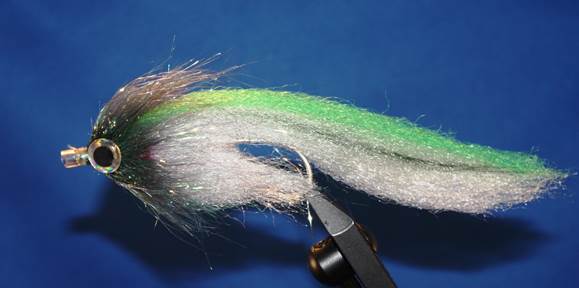
These patterns can also be fished with a popper head.
Enjoy & Good Fishin’
| Sysadmin Note |
|---|
| Sysadmin Note |
|---|
Saltwater Gamefish of Florida
Another one of the most popular species of saltwater gamefish that tops the saltwater fly fisher’s dream list are Permit. For best opportunities at this species I travel further south in Florida to pursue this highly sought after gamefish.
Permit
Permit [Trachinotus falcatus] this is another one of the “Bucket List” species for many anglers with dreams of the saltwater adventures. Fly anglers will find this species is very abundant in the waters of South Florida.
They can reach 79 pounds and 48 inches in length and have a life span of 23 years. They spawn off shore in Florida waters from May to July however little else has been discovered on the spawning habits of Permit. There is also little known about their tolerances to water temperature and salinity.
It is well known that they feed on shrimp, crabs, worms, and small minnows and are found in shallow waters around mud flats, channels, and tidal flats, around inlets, near shore, coral reefs, jetties and wrecks.
The juveniles are found in the sea grass beds and among the mangroves and along the beaches.
It is interesting to note that all the geographical distribution descriptions state the Permit range from Massachusetts to southeastern Brazil but I seldom read about Permit fishing opportunities north of Florida. I do know that Permit is found in the Gulf of Mexico and warmer waters south of Florida. But north?
Legendary saltwater angler Jack Samson has authored two volumes on the subject of Permit fishing, in 1996 Permit on a Fly was published and then in 2003 Fly Fishing for Permit was published. Both of these books are a must read for the serious angler who is targeting Permit. Randall Kaufmann’s Bonefishing! Published in 2000 contains excellent information on fly fishing for Permit as well as good information on choosing the proper fly patterns.
I use an eight weight rod system with floating lines, sink tips and various full sinking fly lines for most of my Permit fishing however I do bring along my ten weight rod system for the windy days.
Larger Permit can be the most frustrating of fish for the saltwater angler to conquer as no angler can really tell what a Permit will do when presented with a fly. Tarpon, snook, bonefish and redfish are regularly takes flies but Permit are much different the pattern that work today may not work on the next hundred Permit that you cast to, what does help is to learn about the habits of the Permit and to fish for them as often as possible and to learn from others who have learned the secrets of the Permit.
Learning the best times to fish for Permit, how they are affected by weather change and the effects of water temperature changes, how to work them on the flats and over the deep water where are located. How to choose the best patterns and what fly lines and retrieve methods are best to attempt depending on the situation encountered. I know several anglers who have hired guides and taken the Permit of their dreams never to return to fish them again. They just wanted to catch a Permit.
However to conquer the Permit takes a lot more dedication and hours of fishing and you may become proficient but guess what, like any species they are impossible to conquer, as there is happily always more to learn. So what do you want, just to catch a Permit or do you wish to challenge the Permit!
Small Clouser Minnows and various Shrimp patterns are effective on Permit however whenever this species is mentioned the first pattern that comes to mind are the Crab patterns.
There are many effective crab patterns out there and many or covered in the volumes I have already mentioned. I have my own favorite pattern that I prefer for Permit and it is my favorite because I have taken several Permit on it. Good reason to like the pattern huh! I like this pattern because it is quick and easy to tie and something it even works.
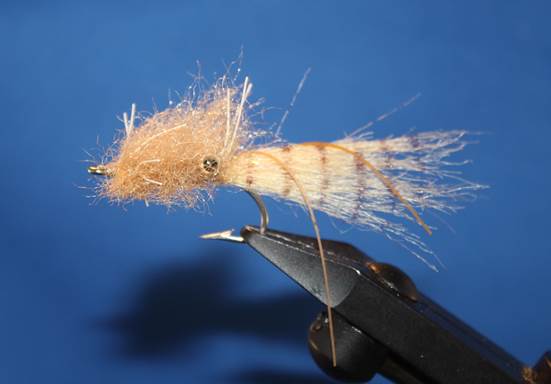
Tan Crabby Shrimp
- Hook: Mustad 34007 Sizes: 2/0 to 4
- Thread: Tan 6/0
- Tails: Tan Craft Fur, barred with a brown Sharpie marker
- Antennae: Two Pumpkin Sili-Legs on per side
- Eyes: Dumb-bell type, painted Tan with black centers, and they are tied down on the top of the hook shank so the hook will try over in the water and ride hook point up, the eyes are located at the back of the hook at the base of the tail
- Body: EP Tan Dubbing Brush with Rubber Legs wrap the body tightly with side by side wraps, the brush and out the body and trim off the fiber on the bottom of the hook. Finally add a coat of epoxy to the trimmed off section this will help maintain the crab shape
I tie this pattern in Olive and Grey color combinations.
The next pattern that I use on Permit is the spoon crab which may offend some but it works and that is why I use it.
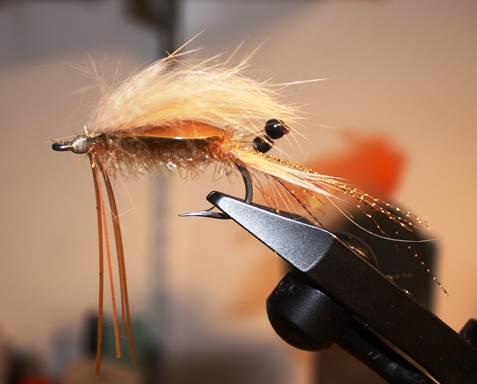
Tan Rabbit Spoon Crab
- Hook: Mustad 34007 Sizes: 4/0-2
- Thread: Tan 6/0
- Weight: Wraps of non-toxic wire, as desired
- Tails: Tuff of Tan Rabbit fur with guard hairs, four to six strand of Root Beer Krystal Flash and two strands of Pearl Flash-A-Bou
- Antennae: Two strands of Black Krystal Flash
- Eyes: One pair of Black Stalk Eyes, made with a pair of black seed beads and 80 pound mono
- Underbody: Tan Estaz, wrapped and trimmed flat on the top
- Body: Gold flat spinner blade, fixed to the top of the underbody with 5 minute epoxy
- Backstrip: Short length of Tan Rabbit Strip
- Legs: Four strands of Pumpkin Sili-legs
Enjoy & Good Fishin’
| Sysadmin Note |
|---|
| Sysadmin Note |
|---|
Saltwater Odds & Ends
There are days when the Snook are hiding, the Tarpon are absent and the Redfish seem to be on vacation at Sea World but that does not mean that you will go fishless for there are many species that can tantalize the angler while other species will cause you to grab the Florida Fish Identification Guide to see just what the heck you have on the end of the line. Besides, on days like these I will often experiment with a variety of patterns.
During this time of experimentation I often use small minnow patterns that I have tied from the scraps of materials from other patterns that I have been tying. Over the years these small minnow imitations a have produced some surprising results producing Snook, Ladyfish, Jack’s and many other species.
Even on a slow day of fishing there are so many events that can catch your attention and all of these events fill up a rather wonderful day and the fish become a bonus. Remember you can’t catch fish unless your fly is in the water!
Here are photo’s of things that have filled up my days even when the fishing is a little slow. Then I will share some photographs and comments on some of the small minnows I have created from the scraps on my tying table. Furthermore I am always playing with patterns like the Clouser Minnows where I have added a collar of dubbing brush material. This pattern has proven effective on many different species and I now tie it on many different color combinations.
In the saltwater there is always much to learn and many pattern styles to experiment with and modify or new ideas which sends us to the fly tying vise. Everyone seems to have their own personal saltwater hooks which they advocate using, however I have large quantities of Tiemco, Mustad and Dai-Riki Saltwater Hooks and therefore these are the hooks I generally use. But if you have a favorite hook then use it most of the modern hooks for saltwater are well made and will do the job. When tying an imitation I make sure that the point and barb are in good shape and that the hook eye is closed, I do not sharpen the hook until I am ready to use it. Why sharpen the hook at the vise and then place in a fly box where it rattles around with a bunch of other flies becoming dull in the process and that is why I sharpen my hooks when I tie the imitation to the leader.
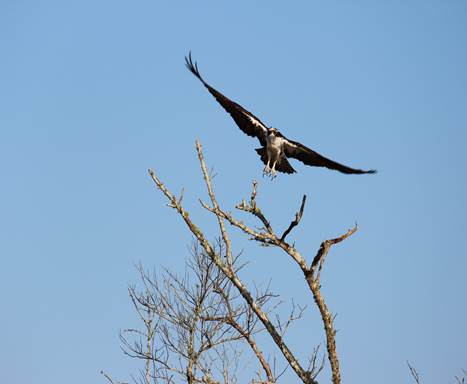
Often you will encounter another angler on the water!
Sometimes you can receive a surprised visit from others who roam the waters you are fishing and these visits can be the high light of your day.
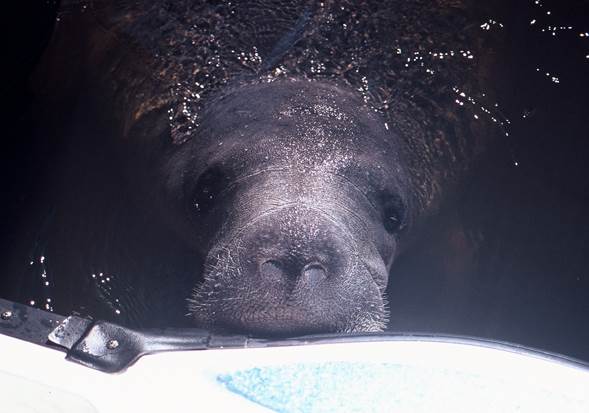
Hi Guys, How’s the Fishing!
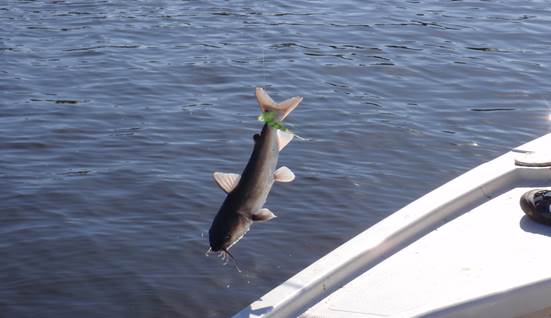
Oops, Hard Headed Catfish caught by the wrong end, must be a local method.
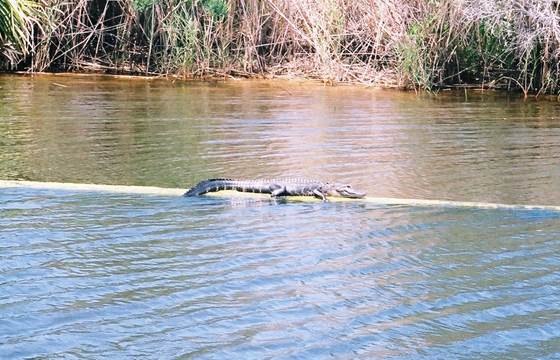
Ok, now you better not cast to that!
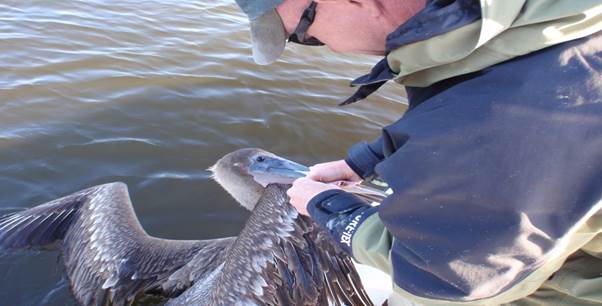
Pelicans often get in the way of the fly angler, be careful of their bill when you are unhooking them!
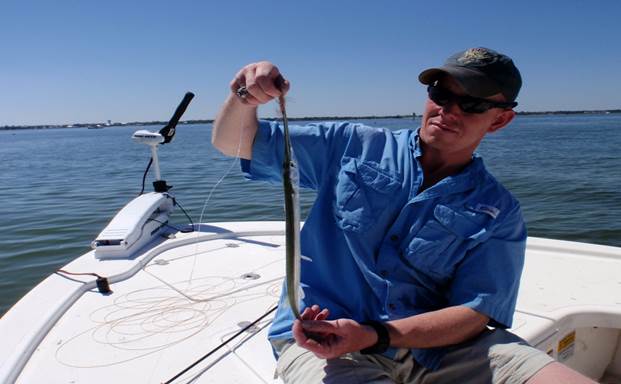
Needlefish on a Fly.
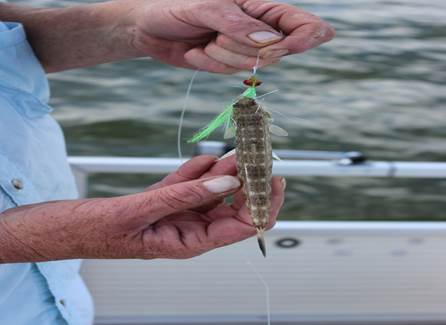
Lizard fish on a fly!
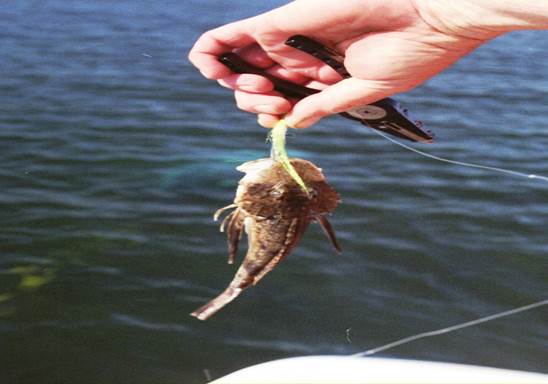
Goby on a Fly.
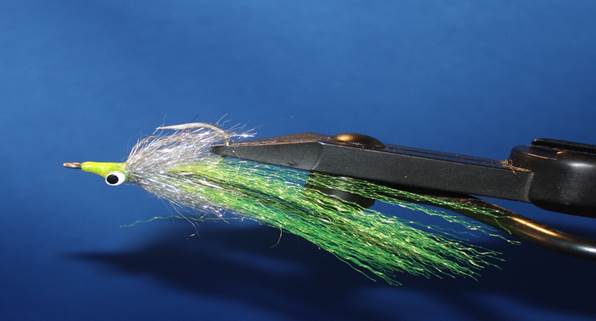
New Idea for a variation of the Clouser Minnow, adding a Dubbing Brush Collar on certain color combinations, looks good but will it work?
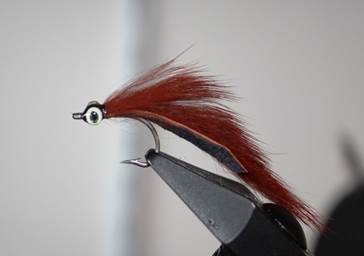
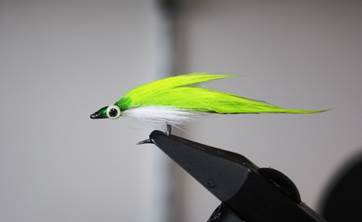
This style of Bunny Worm works as an imitation of the smaller Marine Worms found in the saltwater and so far this pattern has worked well on Flounder, Pompano, small Snook and Redfish.
The Scrap Bait Series
The following photographs are of flies that I have tied from the scraps on my fly tying table and these small minnow patterns have accounted for many good fish over the years. Some of these patterns have become standard patterns in my fly boxes, all of these patterns are tied on Size 4, 6 or 8 and are very simple to construct. I often use these patterns with sink tip or slow sinking lines and these patterns often used in shallow water, however I have successfully used this pattern in deeper waters and as with all patterns remember to fit the patterns to the situation you encounter.
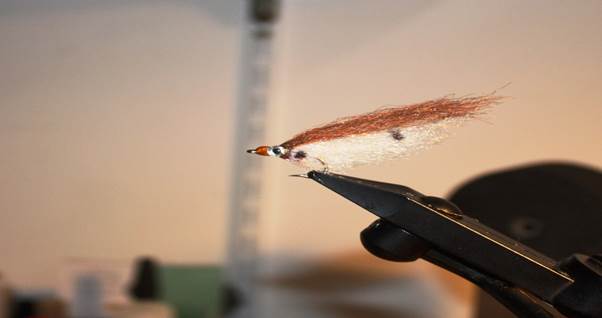
Brown Spot Scrap Bait
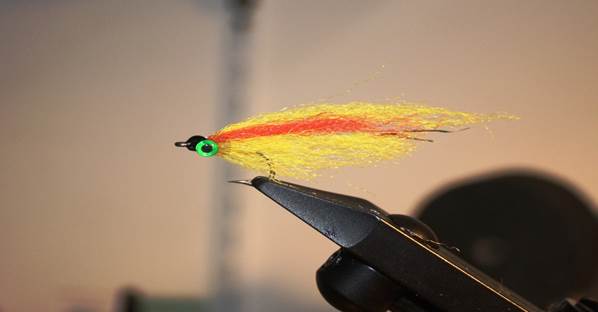
Yellow & Red Scrap Bait
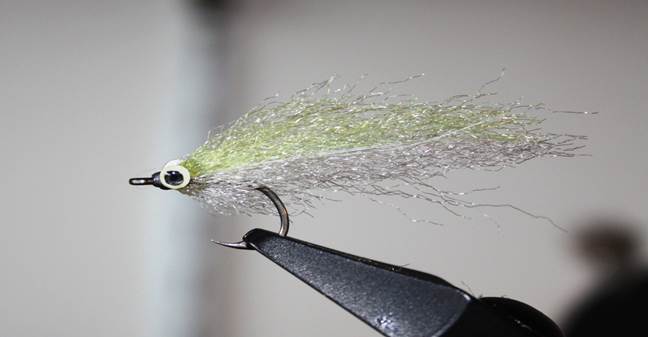
Pale Chartreuse Scrap Bait
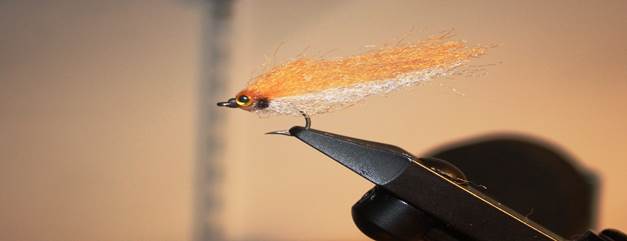
Orange & White Scrap Bait
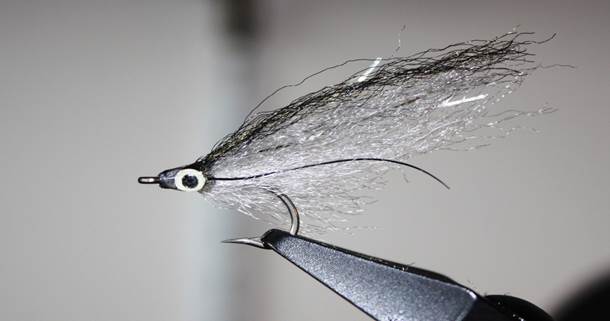
Black-Silver & White Scrap Bait
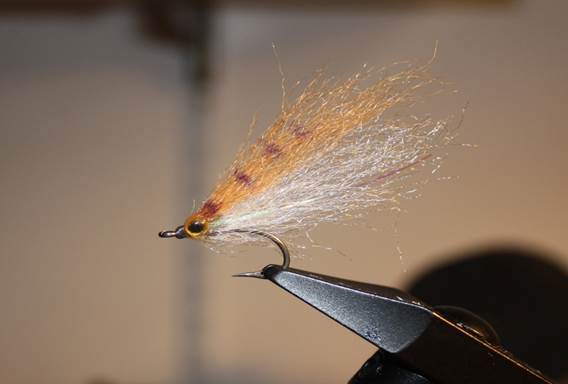
Barred Orange & White Scrap Bait
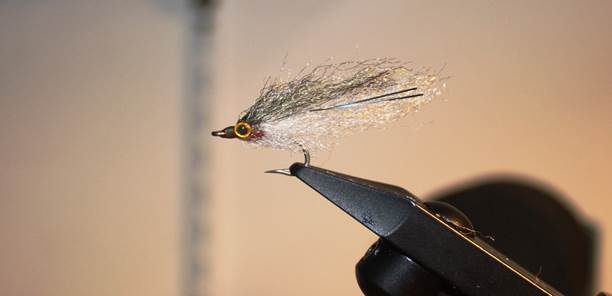
Baby Mullet Scrap Bait
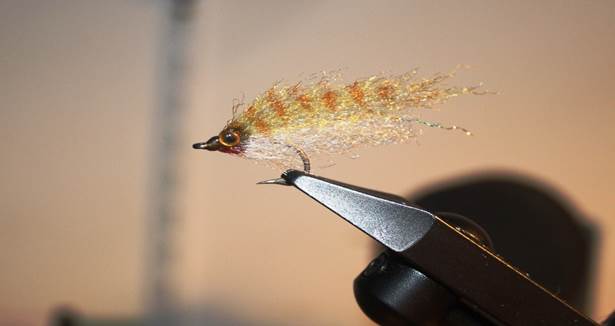
Barred Backcountry Scrap Bait
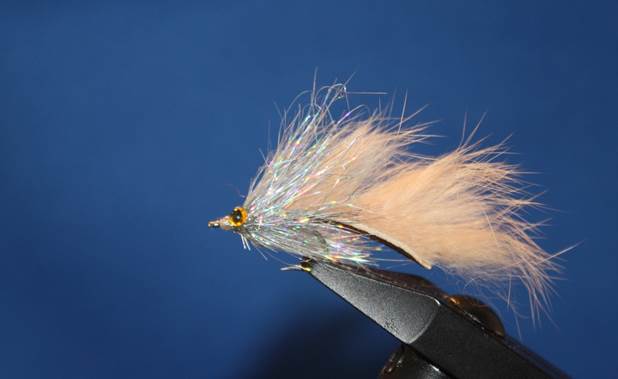
Flashy Tan Rabbit Scrap Bait
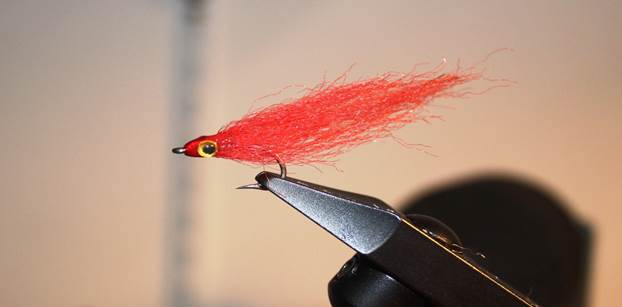
Red Scrap Bait
All of the Scrap Bait patterns are tied with EP Fibers or the obvious Rabbit Strip and the eyes are all 3D style and applied with epoxy.
Besides the saltwater I have used these patterns on Bluegill, Bass and even Trout have fallen to these small minnows. Experiment and try a few of your own creations and you may be surprised by what chases and eats these small minnows.
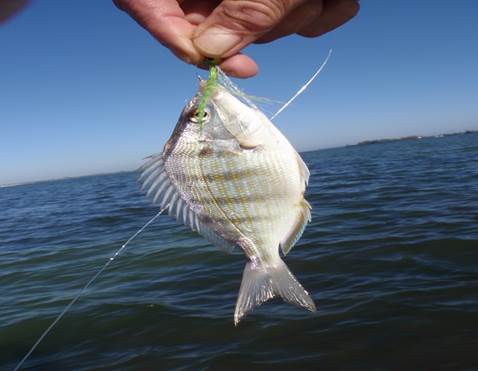
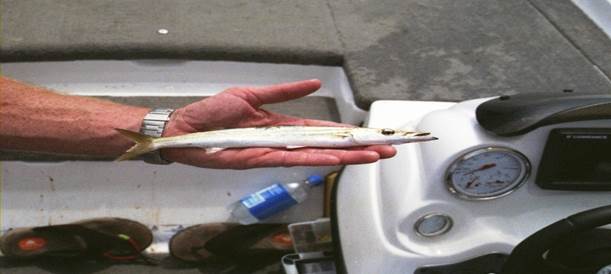
Ok it ate a Scrap Bait but what is it.
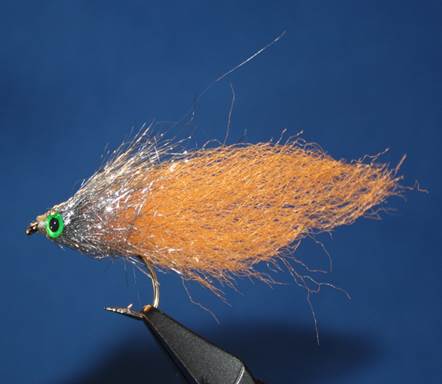
I wonder if they will eat this?
There are many patterns that will work and there are many different events that may fill up my days on the saltwater making each day a true adventure and each day special.
Enjoy & Good Fishin’
Originally published May 05, 2014 on Fly Anglers Online by Tom Travis. Combined from 12 parts.