Fly box too full? Do they get crushed under the lids of the box? How about
those ‘slimed’ and, ‘water-logged’ flies; not to mention those that have
been repeatedly saturated in floatant. We can revive all those old flies
with a simple, “do-it-your-self” technique!
This technique was shared with me many years ago by an ‘old timer’ I met
on the North Branch of the Au Sable River, here in Michigan. Now that I’m
an ‘old timer’ it’s time to pass it on to you.
Throughout the year I take all my flies that need to be reconditioned,
and place them into a jar. During the winter months, when the mood strikes
me, I gather up the flies and some simple equipment and set out to refurbish
them.
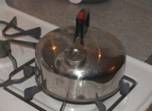
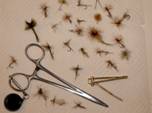
that’s needed are some nail clippers, a hemostat and an old whistling tea
kettle; the kind that allows the steam to escape through a small hole producing
a stream of hot steam. Take
the nail clippers and remove all the old tippet material from the flies.
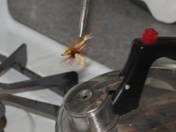
Now, holding each fly (one at a time), with the hemostat, place the fly
in spout of steam coming out of the tea kettle. Using a soft rag or paper
towel, wipe the fly clean. Place it back into the steam and repeat two
or three times. This process will remove any wax, silicone, dirt, oils
or lacquer that has built up on the flies.
If the flies have lost their shape due to crushing, just remove them from
the steam and using your fingers, pull the fly wings, tails, etc. back
into shape. This process will also have to be repeated a few times to bring
the fly back to its original condition.
When you have finished, just allow the flies to air dry for a short period
and place them back into their respective fly boxes. With just a short
investment of time your flies will be restored to their original state
giving you many more hours of good service and fun.
See you on the water…
Copyright 2009©Deschaine
 Tom Deschaine is a retired school teacher who lives
in Westland, Michigan. A lifelong hunter, fisherman
and outdoorsman, he now has the time to share some
of his thoughts ad experiences with us
Originally published November 2, 2009 on Fly Anglers Online by Tom Deschaine.