I’m using Tenkara gear now, so thought I would share the images of a fly that I have adapted, which has been developed over a 10 year span of fishing my small home stream for 6 to 12 inch browns, rainbows and brookies. I tie these on a Daiichi 1260 hook mostly size 12 (very occasionally size 14 or 16) in three different colors; brown, olive and black. The beads are dubbed glass and along with the sparse tie ensure that the fly sinks well, but not to fast. The hackle is rabbit fur. I ran out of black rabbit for this shot so used another fur for that fly (not as good as rabbit). These are extremely effective for all styles of drift or retrieve and in most water types. Without a doubt the most effective single fly for my waters that I have ever used in 44 years of fly fishing, it was an easy choice for my one Tenkara fly. I think it would also work well nationwide.
Nice job, are those metal or plastic beads?
Sorry, I see there glass. I should have read first. Duhhhhh
Thanks Scott. They are a bit more fiddly to tie than your typical Tenkara fly, but not difficult. I can put together a dozen in pretty good time.
Is your dubbing loose like in a loop, then wrapped loosely around the beads? Nice look.
Thank you. Actually it’s a rather unique method. At least I haven’t seen it done before. I’ll describe the process, which takes a bit of practice because certain steps have to be done quickly and accurately because of the super glue used to seal the beads and thread wraps. However, while you learn another type of cement could be used to slow down the process. But, nothing holds up like super glue, and you will end up with a super durable fly.
- Flatten the hook barb and put the larger bead on the hook shank, wrapping a bit of thread behind it, and “liquid” super glue the bead and thread in place. The glue will flow between the bead and the hook shank. Use a tissue to soak up any excess glue.
- Make a dubbing brush for the rabbit hair, very sparse, wind it on and whip finish, cut the thread carefully with an Xacto knife and finish with a tiny drop of super glue, deftly push the rabbit fur forward. If you wish you can put more thread wraps behind the fur hackle. I don’t bother with this step.
- Place the remaining small beads on the hook shank, but not too many.
- Push the first small bead up to the rabbit hair and super glue in place. Again, the glue will flow into place.
- Put a tiny bit of high tack wax on the hook shank behind the first small bead, being careful not to get the wax on the beads.
- Touch a small wad of antron dubbing to the wax to release a sparse amount onto the wax. Push the next bead forward against the first bead.
- Repeat with each remaining bead.
- Wind a bit of thread behind the last bead as a tag and add a tiny dab of super glue.
The whole trick is to learn to be sparse with all materials, gentle and quick when needed throughout the process. Good luck and enjoy. Brant.
Here are a few more bits of information on this fly which resulted from questions on another forum. I thought you guys might like to have it.
The beads appear to be 3 millimeter for the larger head size and 2 millimeter for the smaller body size. On smaller hooks I would ordinarily just use the 2 mm beads. They should be available from most craft stores. Another thing you can do with these is use two larger beads, one in front of the hackle and one behind, following up with the smaller beads. This keeps the hackle spread out slightly more than with just a single large bead at the hook eye. It’s a small difference with rabbit fur, but another possible variation. You could also use other furs or feathers for the hackle, I just like the “in the water” action of rabbit. Particularly in slower water. If you retrieve it like a streamer you now have a tiny bait fish imitation. Very versatile. I do recommend staying with the Antron for the dubbing as it has definite benefits hard to replicate with anything else.
Thanks for the hints, will try some.
You could also use the larger bead in front and progressively go down in size of the beads, shaping a body. Also, maybe use one color on the largest bead and then use a different color on the smaller beads. Either way, you can do a lot with the basic fly you hosted
The trick is to find tiny glass beads. Nothing at the local Hobby Lobby.
Bob9
I googled glass seed beads and found these as a few of the top returns:
http://www.firemountaingems.com/search/ … seed+beads
http://www.abeadstore.com/beads/index_glass_seed_beads
http://www.artbeads.com/delicas-seed-be … 4Aod7UQAkw
http://www.millhillbeads.com/products/p … category=1
I’m working on an improved tie for this fly for the 2013 season. I am planning to make two versions. First, I intend to incorporate a soft feather with characteristics similar to rabbit fur, but more traditional in the Japanese spirit of Tenkara. The second will be a simplified version without the Antron dubbing, to create a simpler tie getting me back on the stream quicker. I have been getting help from some friends with names. The fluffy version reminds me of Phyllis Diller (may she rest in peace) with her hair sticking out all over the place. And the beads on the hook shank remind me of tidbits on a skewer, so… “Shish Kebari”, comedy relief, LOL. And the simpler version, simply “Glass Kebari”. Thanks for all of your encouragement an interest guys!
"6. Touch a small wad of antron dubbing to the wax to release a sparse amount onto the wax. Push the next bead forward against the first bead. "
Is the antron horizontal or does it end up around the entire circumference of the shank?
Do you put super glue between each bead?
The Antron sticks to the tacky wax all around the hook shank giving it a 3 dimensional appearance. Be aware that this is an extremely soft, sticky wax. I ensure that the dubbing is complete by touching the dubbing to the wax on the top, at lower left and the lower right. It’s not important to super glue each bead as the tacky wax holds the dubbing and the tag (which is super glued at the end of the tie) holds the other beads in place against the hackle. To be clear, where use super glue, is at the head bead and the tag. I do often super glue the bead right behind the hackle, but it’s really not needed. I do it more for convenience in having that bead tight so it doesn’t slip around while I’m dubbing.
Jim, when I first saw this I thought the hackle might be CDC. You might consider that if you want to try a feather. A while ago I tied up some damsel nymphs and used CDC and dropped it in the water of my sink to test. The motion was incredible…better than Hoffman’s chickabou I believe…probably would need some long ones.
Thanks for the info…it looks like a fun tie.
Thanks for the tip. I am still looking for feathers, so I’ll check both of these out. Most feathers have a fluffy base that would work, the trick is finding samples that don’t break when you tie them with the stem close to the skin, and have the right color. I’m going to try out Whiting feathers also.
"I do recommend staying with the Antron for the dubbing as it has definite benefits hard to replicate with anything else. "
What would those benefits be?
I believe it was Gary Lafontane who started Antron use in flies with his caddis patterns. Caddis seem to ascend to the surface with gas bubbles which create a glowing halo around their form. Antron seems to replicate this. It also adds some flash due to the shape of it’s fibers. I have photos of this effect in both fly and imitation, but the server won’t let me upload them for some reason. I’ll try later.
There we are. 
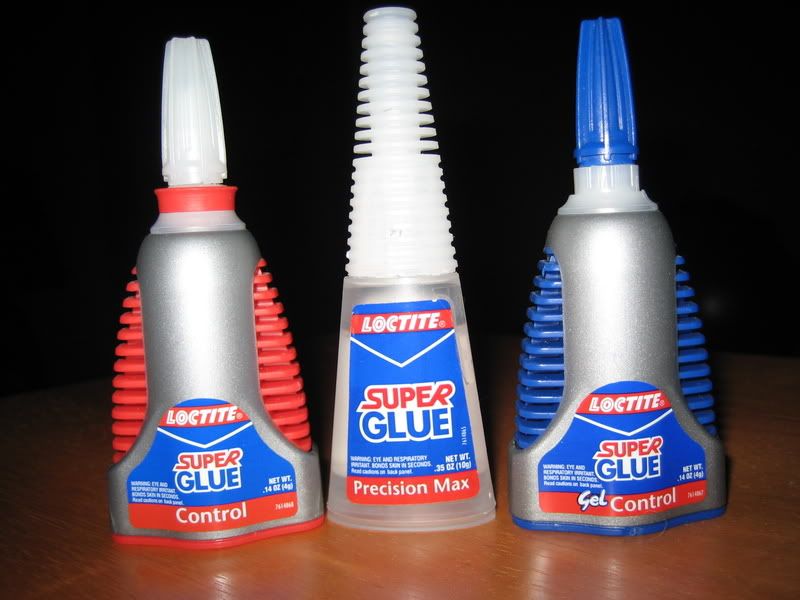
brant…I noticed you mentioned excess superglue…I just tied with some of your steps and had no problem applying the superglue…if you haven’t tried this you might like it…the one in the middle.