Mikulak Sedge By Philip Rowley
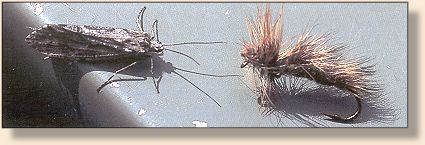
When adult sedges are on the water there is one
pattern I reach for more than any other - the
Mikulak Sedge. In stillwaters this design has
no equal. The Mikulak or Mitch’s Sedge offers a
superb profile both in looks and how it rides upon
the surface. Stripped, it leaved a convincing wake
easily duping any trout into believe it is a scampering
sedge. The Mikulak is durable. Trout chew it for days
with no adverse effects. This pattern also works in
moving waters. A yellow Mikulak makes a great hopper
imitation. Steelhead anglers might want to try waking
a Mikulak across the tailout of their favorite run too.
The Mikulak Sedge was the brainchild of the late Art Mikulak
from Calgary, Alberta. Art had watched trout gorge themselves
silly on adult sedges only to have them refuse anything he
threw at them. Spurned on by this challenge, Art felt there
had to be some pattern out there that trout would accept as
the real thing. In the winter of 1973-1974 art set out
creating a suitable imitation, looking for a durable
floating pattern that offered the right silhouette,
size, and color of the natural sedges. Hundreds of
designs came and went, most never seeing the end of
Art’s leader. During his crusade, Art decided that
seal’s fur would make the right body material. For
the silhouette Art chose a staggered wing. He scoured
the animal hairs of North America and Africa before
stumbling upon the solution in the trunk of his car.
Art’s bother-in-law had shot two elk and they were
hanging in his garage. Helping himself to a couple
of 18-inch square pieces, Art rolled them up and threw
them in the trunk of the car where they lay forgotten
and frozen by the harsh prairie winter. He finally
removed the elk swatches and tanned them in preparation
for tying. In this dry tanned state the elk hair
stiffened, perfect for what Art was looking for. He
stacked the hair by tapping his hair stacker with only
his forefinger so tips aligned maintaining the elk hair’s
natural curvature. After figuring out the sequence of
elk hair and seal’s fur, Art finally had the design he
had been seeking. A clipped brown hackle at the front
of the fly completed Art’s sedge. Trimmed top and bottom,
the hackle served as stabilizers and helped provide the
distinct wake of the scurrying adults. In 1985 Art began
using two sections of elk hair to form the wing. I still
use the original three sections on sizes 8 and larger
remaining true to Art’s design on smaller sizes.
The only real trick to this pattern is getting the wing
placement correct as incorrectly placed wings make the
silhouette look unnatural and unbalanced. For the
three-tired version I begin by tying in the elk hair
tail along the entire hook shank. This way I can use
thread pressure to control the flaring of the hair
while adding floatation. I like my tails to be about — the shank length. The wings should reach back about
half the distance of the previous wing. Dividing the
hook shank into thirds, tie the first wing just in front
of the hook point, the second at the halfway point and
the third about 1/3 back from the hook eye. Maintaining
these proportions ensures a balanced, neat Mikulak every
time. Be careful not to overdress the pattern by using
too much elk hair. The overall sedge look is the sum of
all of the elk hair. Better to err on the side of sparse
than heavy.
Materials List:
Hook: Mustad C 53S in the Signature Series, #6 - #10.
Thread: Olive or green Monocord or 6/0 UNI-Thread.
Tail: Natural elk.
Body: Olive to mint green seal’s fur.
Wings: Natural elk tied in 3 sections along the body.
Hackle: Brown saddle, clipped top and bottom.
Instructions - Mikulak Sedge:
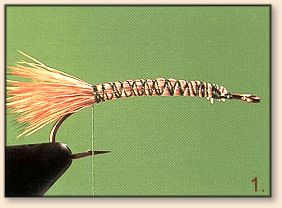
- Cover the hook shank with tying thread to provide
a firm base for the elk hair. Prepare and stack a
clump of elk hair. Tie in the elk hair just back
from the eye along the entire hook shank. Use thread
tension to control the flaring of the tail. The
finished tail should be — the shank.
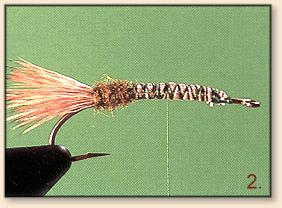
- Cover the rear 1/4 of the hook with seal’s fur
dubbing. The first body section should finish just
in front of the hook point. Move the tying thread
to the middle of the hook shank.
- Prepare and stack a second clump of elk hair.
Measure the elk hair so the tips extend about half
way back onto the tail, pre-trim the elk hair at
this point. Tie the elk hair in at the halfway point,
again using thread tension to control the flaring of
the hair. The natural curve of the elk hair should
flow down the pattern.
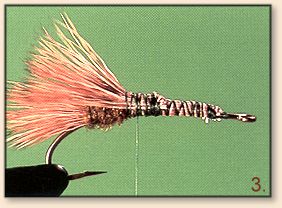
- Cover the elk hair butts to the halfway point
with seal’s fur dubbing. Advance the tying thread
to the 3/4 point on the hook.
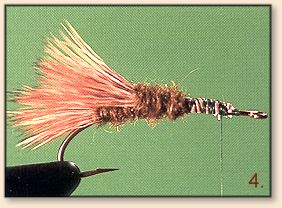
- Prepare a third clump of elk hair in the same
manner as the second. Cover the butts of the third
clump with seal’s fur.
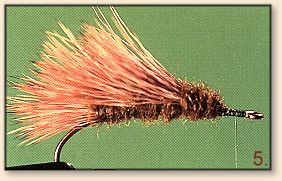
- Prepare and stack the fourth clump of elk hair.
Measure the wing so it extends back about half way
on the second wing. Do not pre-trim this clump.
Tie the elk-hair stack in at the eye of the hook
securing the elk hair back in place to the end of
the dubbing.
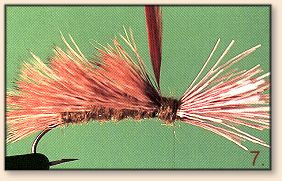
- Prepare a saddle hackle and tie it in place at
the base of the third wing. Be sure to tie the
hackle in with the dull side facing forwards. The
hackle should be one size smaller than the hook as
the bulk of the elk hair makes up the size difference.
Cover the front 1/4 of the hook with dubbing.
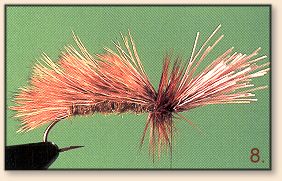
- Palmer the hackle over the front 1/4 of the fly.
Make sure the first wrap of hackle encircles the base
of the wind. Tie off the hackle and trim the excess.
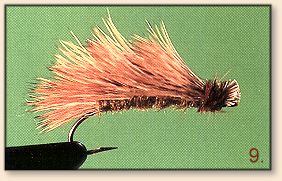
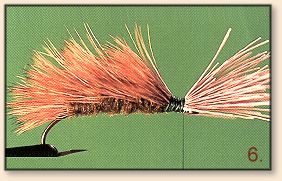
- Lift the remaining elk hair butts and build a
neat head and whip-finish. Apply head cement to
the hackle tie off point in addition to the head
area. Trim the elk-hair butts out over the eye
in the same fashion as an Elk Hair Caddis. Trim
the hackle flush top and bottom.
How to Fish the Mikulak Sedge
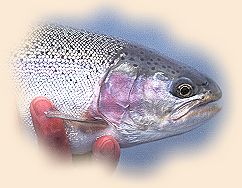
When fished dead drift or with a hand-twist retrieve
to run the fly across the surface, the Mikulak Sedge
is deadly. Takes range from subtle to vicious depending
upon the mood of the trout. Trout often attack a
stripped Mikulak with reckless abandon. Try to scamper
the pattern upwind as the naturals have a tendency to
do. Trout will also try to swamp this pattern like the
naturals. Hang tough; resist the urge to strike. The
trout will return to leisurely sip the pattern down.
I have had trout choose my Mikulak Sedge over a natural
sitting close by on many instances. I have the utmost
confidence in the Mikulak and I am indebted to Art’s
diligence in developing this supreme sedge pattern. ~ PR
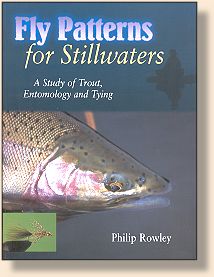
Credits: From Fly Patterns for Stillwaters,
by Philip Rowley, published by Frank Amato Publications.
We appreciate use permission.
Originally published March 31, 2003 on Fly Anglers Online by PR.