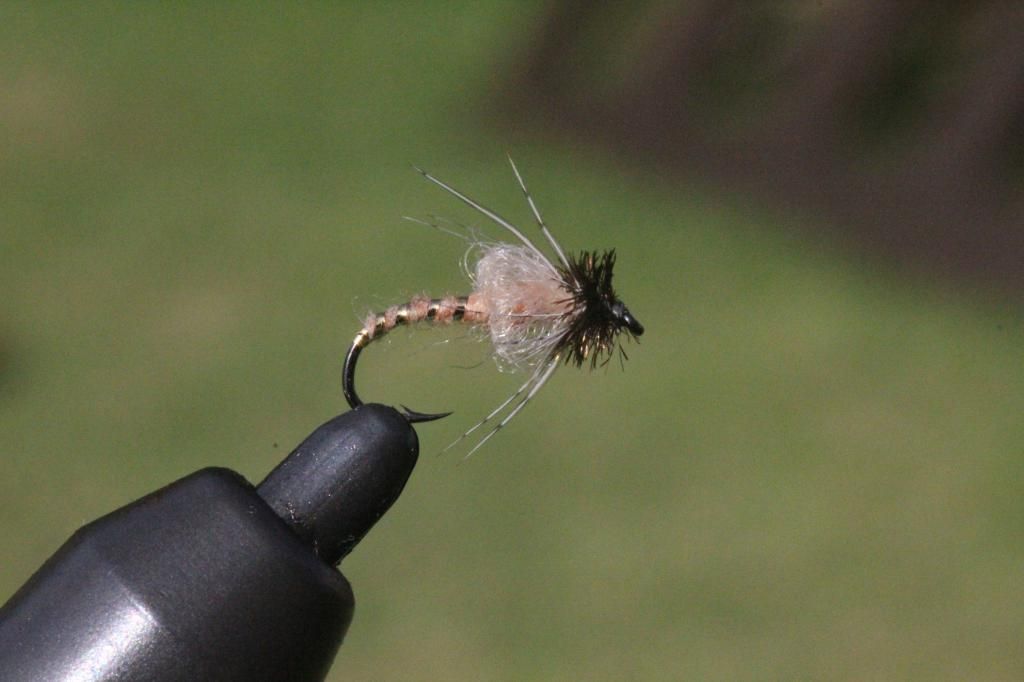
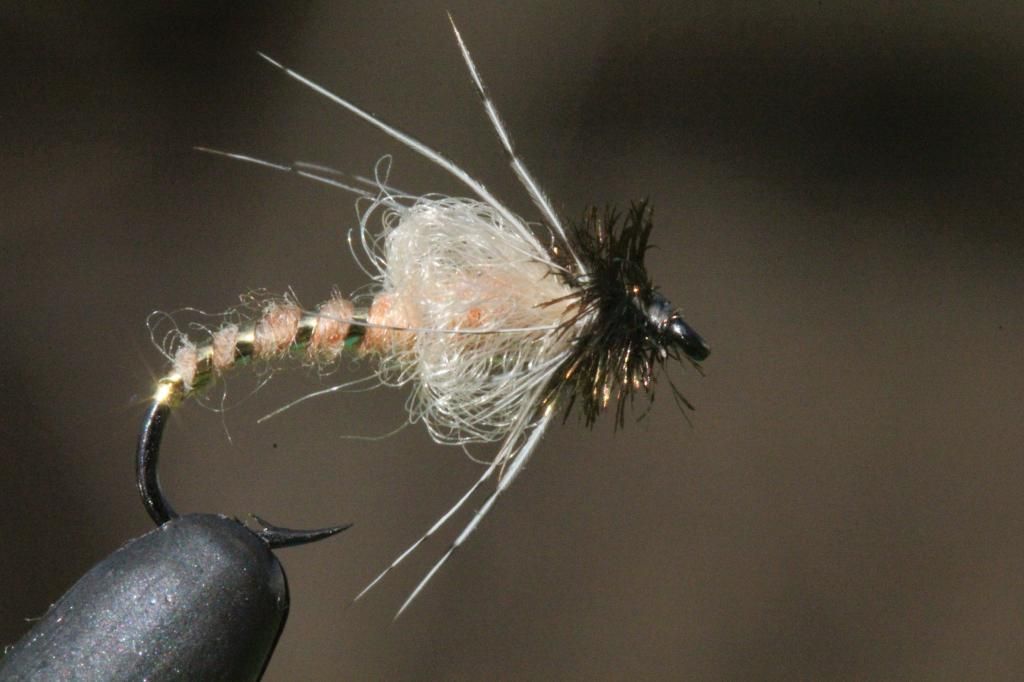
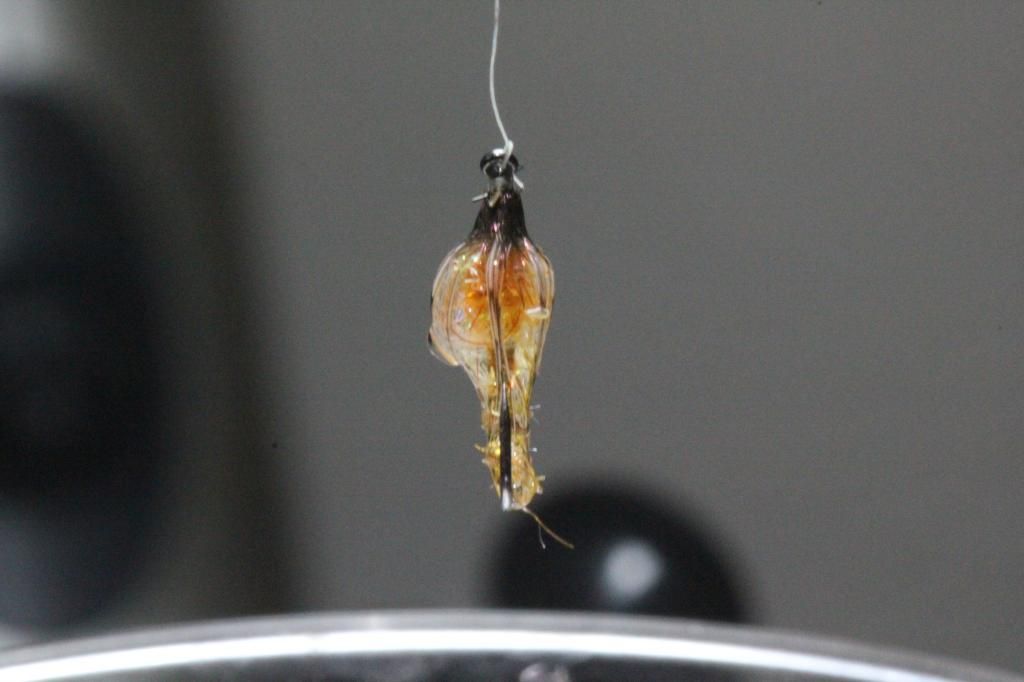
This is a basic caddis pupa pattern I have really had a lot of success fishing across and down. I added a twist and veiled the thorax with an antron/antron-like material.
[
 ](http://s1101.photobucket.com/user/byhaugh/media/IMG_6214_zps63ae4387.jpg.html)
Byron,
How about turning this into a Fly Of The Week for me. Send me the step by step process, with images and I would love to use it.
Neil
Hmmm…Glossosoma Byron?
From BRF:
" Both the pink larval and pupae of this tiny caddis often form a food supply in the drift that concentrates trout in or below riffles that contain high numbers of these caddis according to Gary LaFontaine in his book, “Caddisflies”.[b]"
[/b]PT/TB
Very nice, Byron. That’ll be in my box next season, for sure.
Chuck
Chuck, I think it will work well for you. Let us know!
PT: I think you’re right. Even in caddis pupae which we consider “green”, there is a part of what I would call “pinkish tan”. For example, the Apple Caddis Pupa.
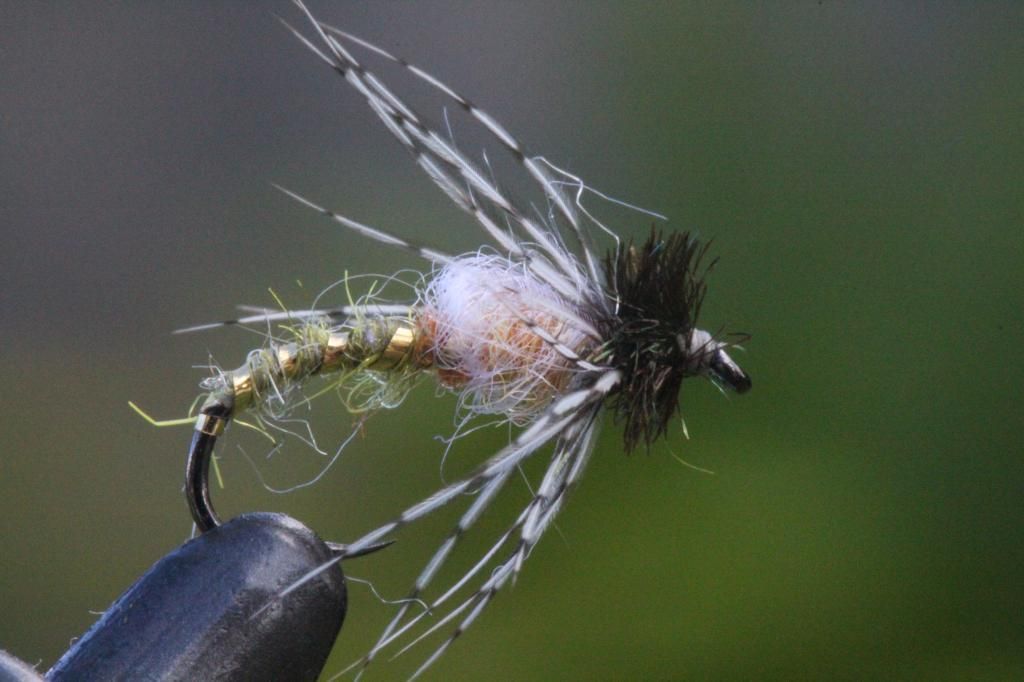
Of course, you can have a green body and pinkish tan thorax too.
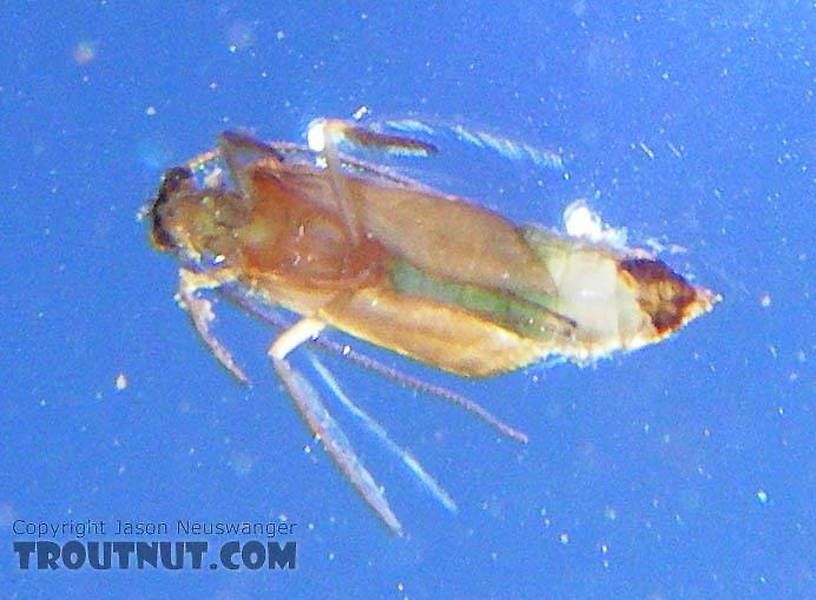
Here is a close-up from the wonderful website “Troutnut.com” of an Apple Caddis pupa and another fly like the pattern above with a green abdomen.
[
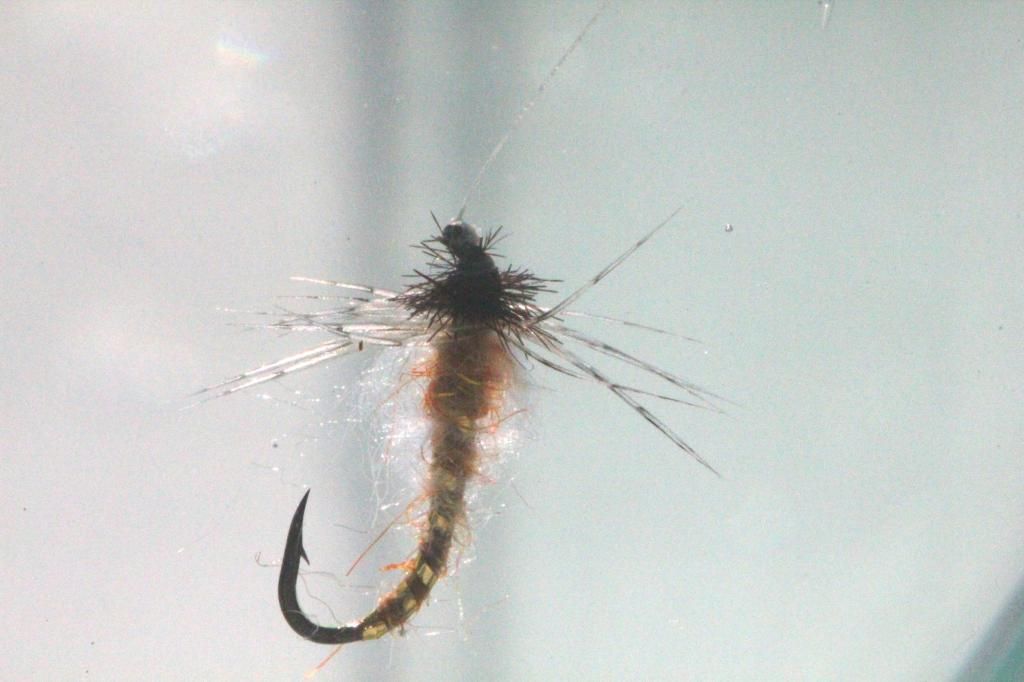
Keeping in mind that when wet and in the current, the partridge fibers undulate and mimic the legs of a struggling caddis pupa.
 ](http://s1101.photobucket.com/user/byhaugh/media/IMG_6218_zps64bae817.jpg.html)
One of these patterns when wet. In the current, the partridge will undulate a bit, but when wet, it can look like this
one of these underwater …suspended in still water.
 ](http://s1101.photobucket.com/user/byhaugh/media/IMG_6214_zps63ae4387.jpg.html)


