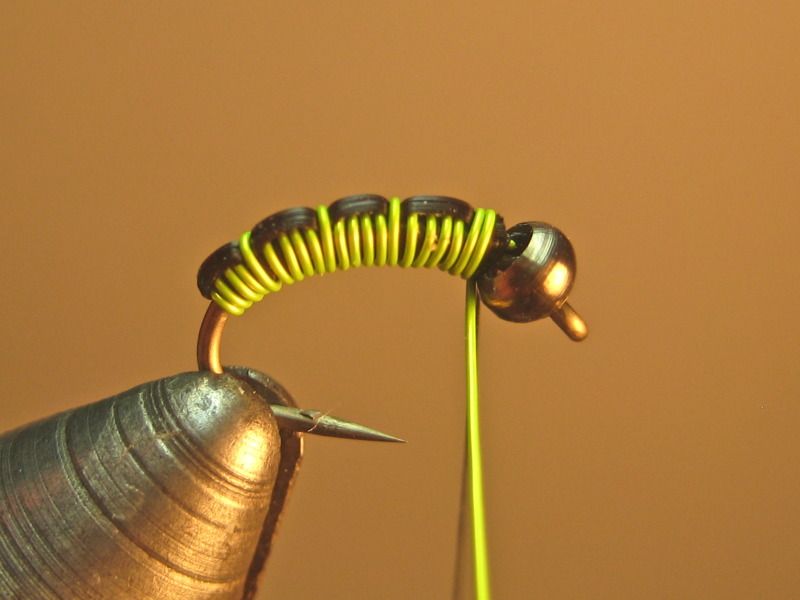
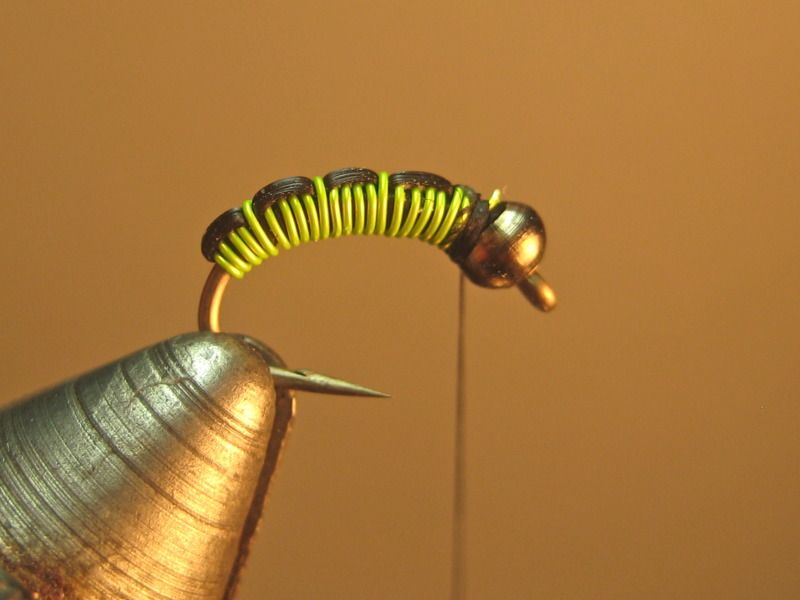
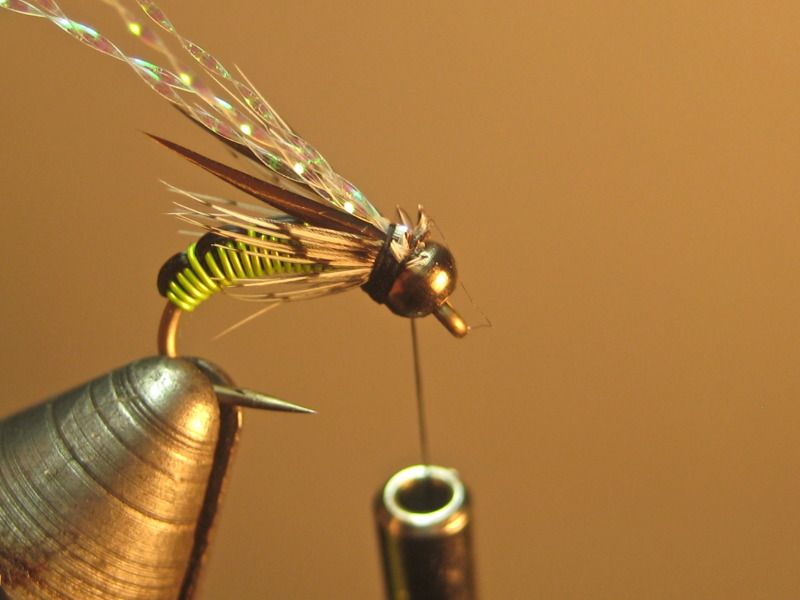
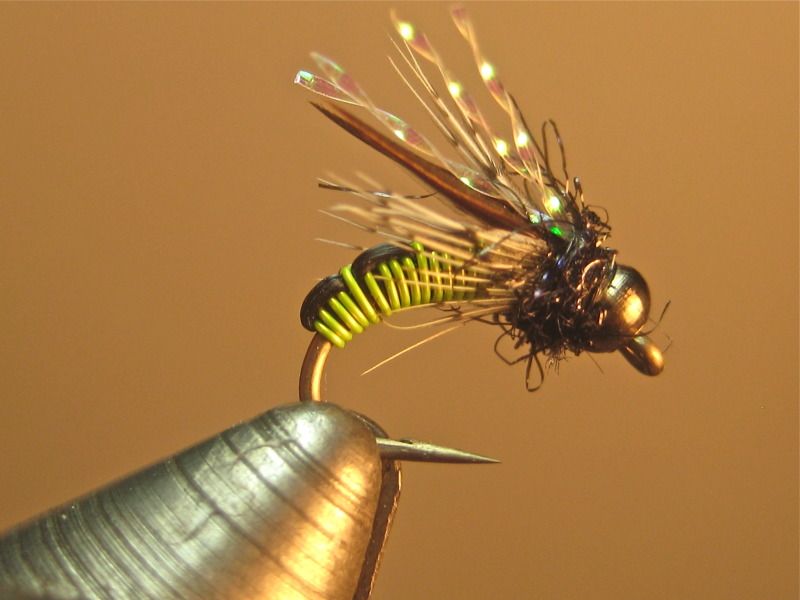
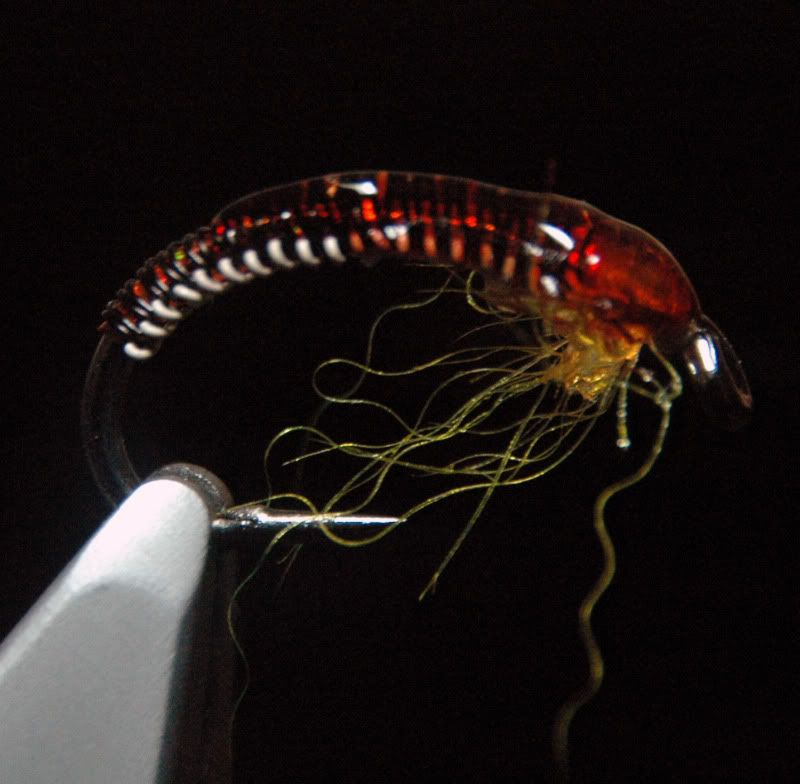
Without question, my favorite, and most effective fly for whitefish is Ken Morrish’s Hot Wire Caddis. A couple years ago I was fishing the Teton River and South Fork Snake in SE Idaho and found that this fly in chartreuse and hot yellow outperformed my previous favorite, a bead-head Prince, by a wide margin. I’ve caught bigger whities on zebras and firebead scuds on some western tailwaters but this fly has proven a more consistent fish-getter. If you don’t mind catching a trout every once in a while, straight copper, brown and black have worked pretty well, too.
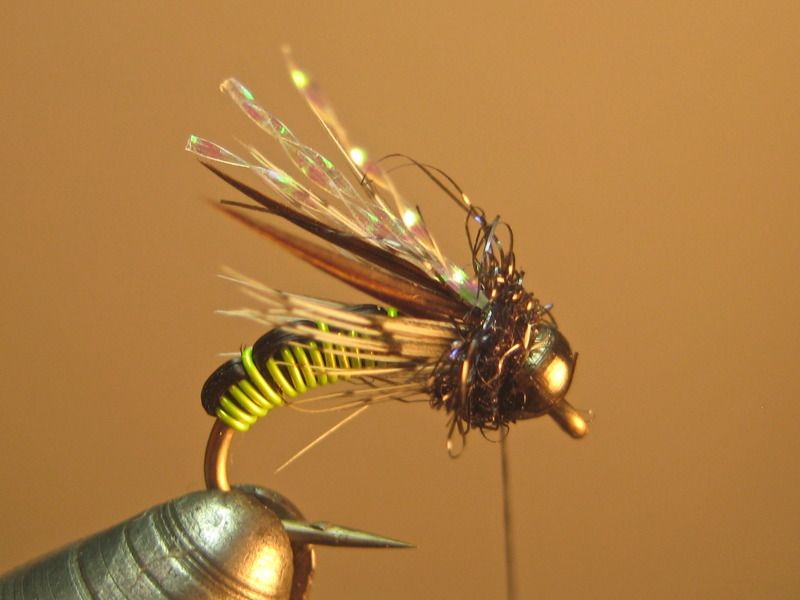
Pretty simple fly to tie. I did this one in a bit of a hurry (while my wife was out running errands), didn’t have any of the UTC wire in Small, only Brassie or X-Small so I used the Brassie, which was probably a little big for the hook size, hence the gaps between wire wraps (could have pushed them back with my fingernail but fish don’t care). We’ll call this a guide tie, even though I’m definitely no guide; guess I could call it a TFLTFI (Too Frikkin’ Lazy To Fix It)
hook - Dai Riki 135 #16
thread - Uni 8/0 black
body - UTC Ultra Wire chartreuse
shell back - flexi floss black
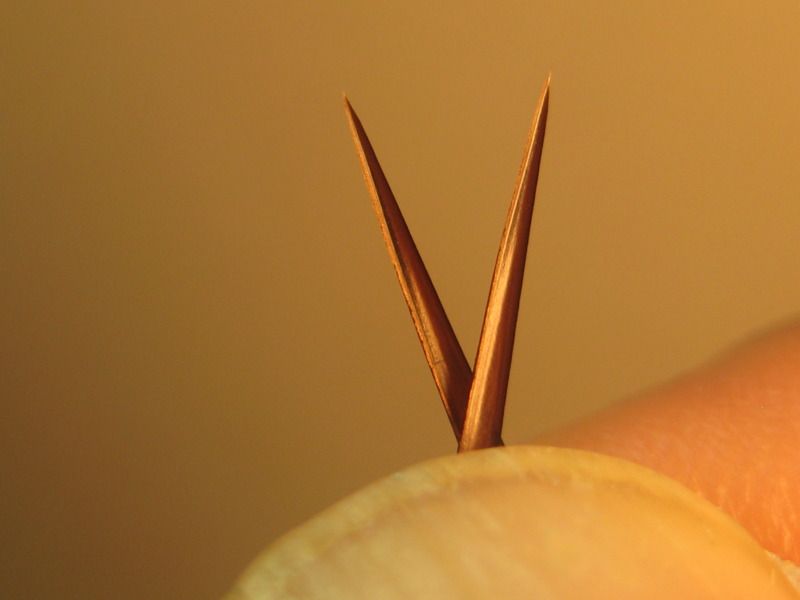
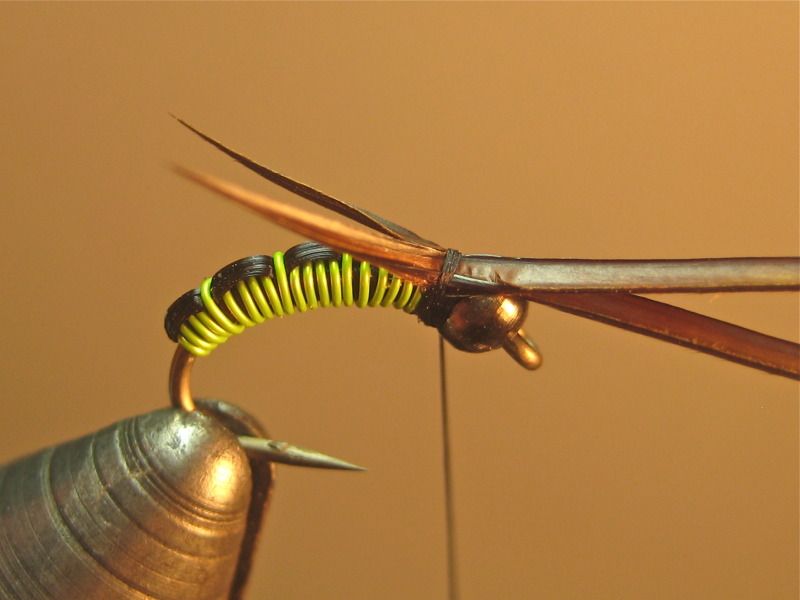
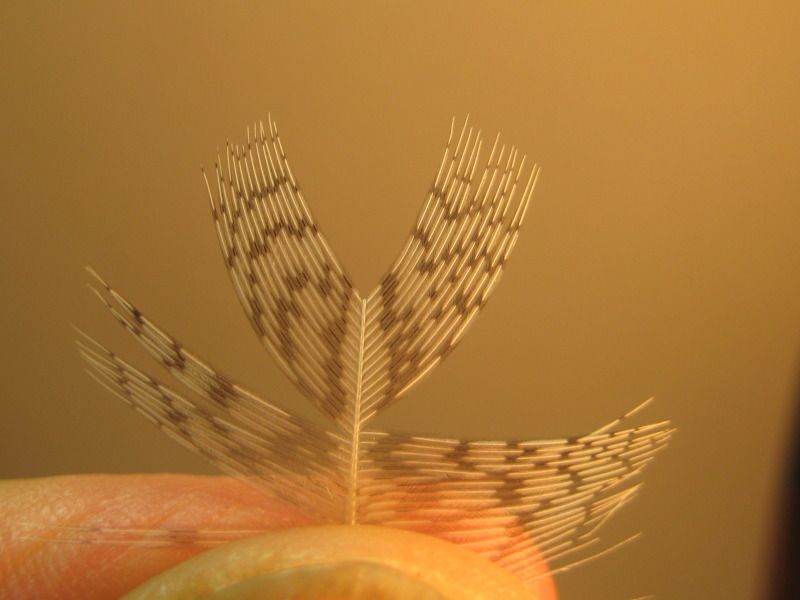
underwing - goose biots brown
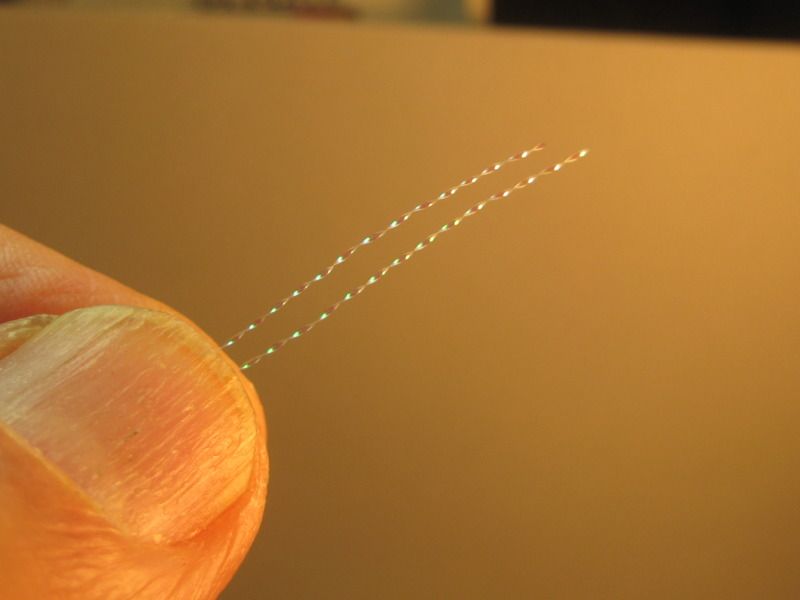
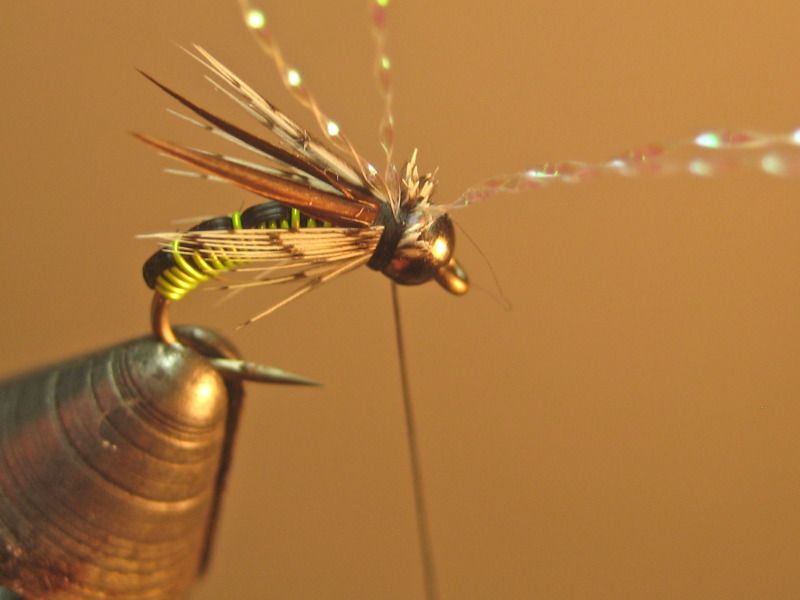
overwing - Krystal Flash pearl
legs - partridge hackle
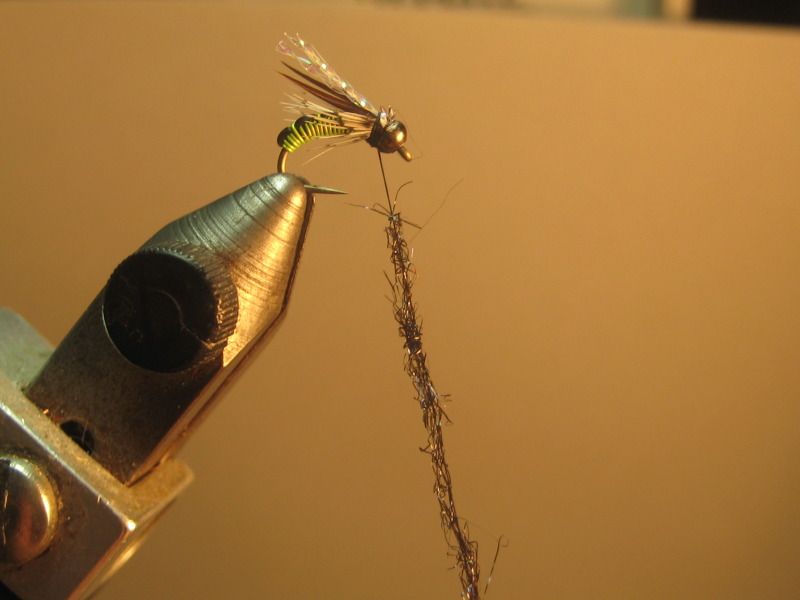
collar - Ice Dub UV black
head - 3/32 black brass bead
Part 1
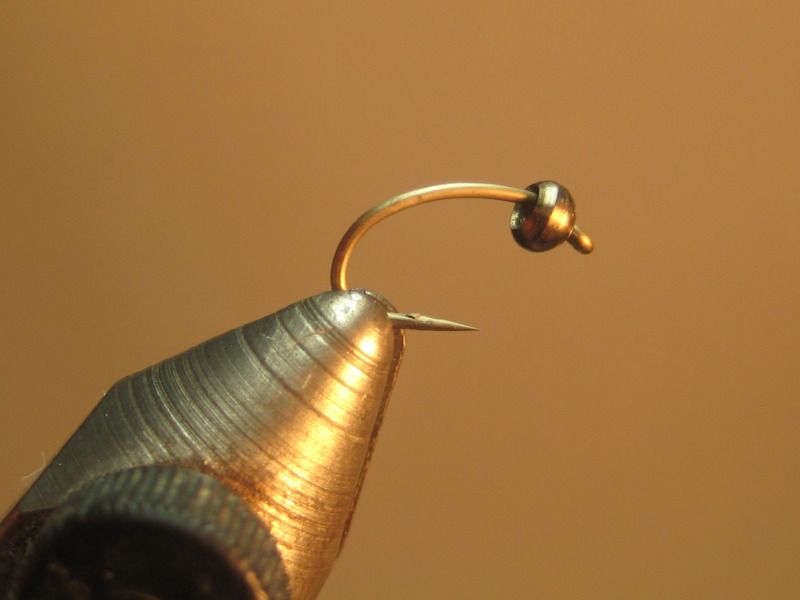
Mash down barb & slide bead on hook
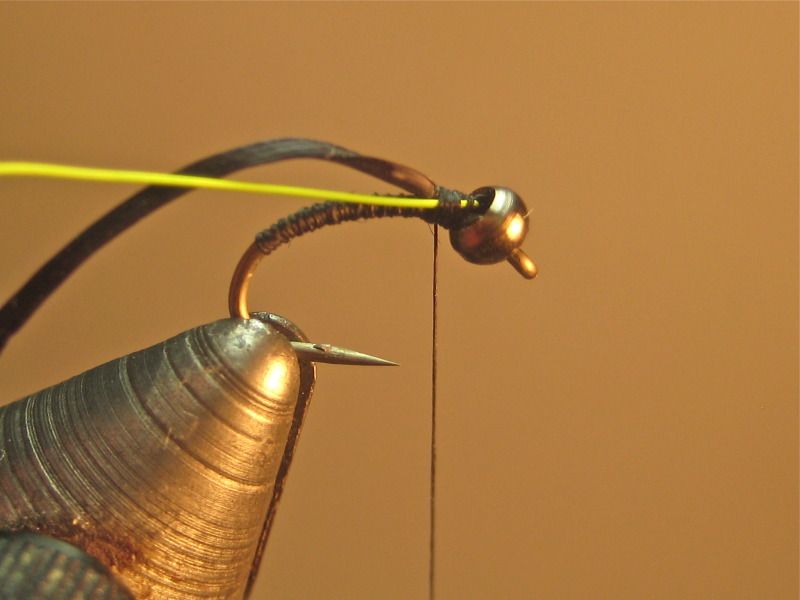
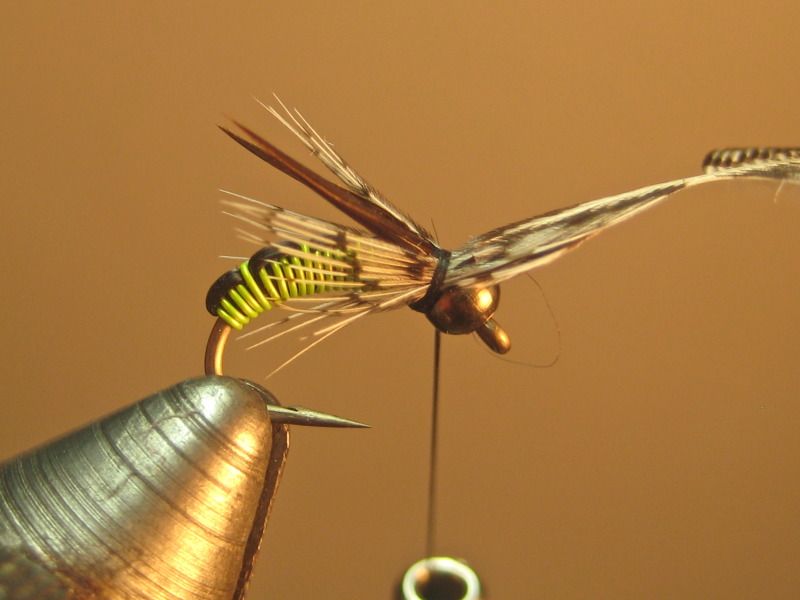
Lay down a base layer of thread then tie in Flexi-floss and wire
Wrap Flexi-floss and wire back to and past hook bend (thread’s frayed; looks like I’ve got a nick in the bobbin tube)
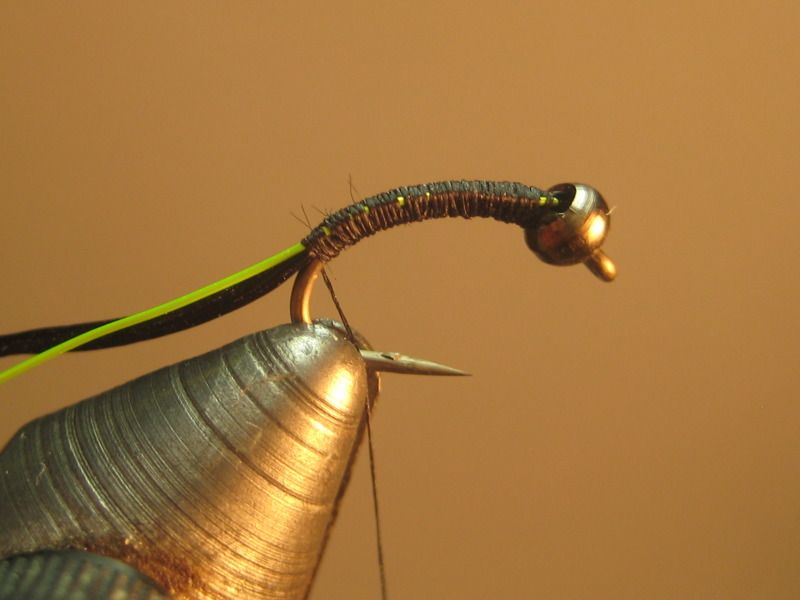
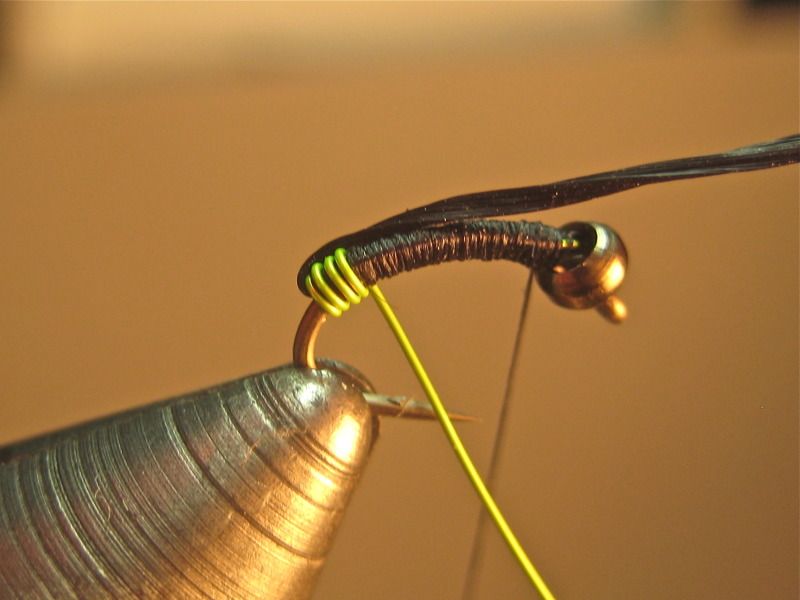
Wrap thread back to head and then wrap wire forward 4 turns
Pull Flexi-floss over top of wire
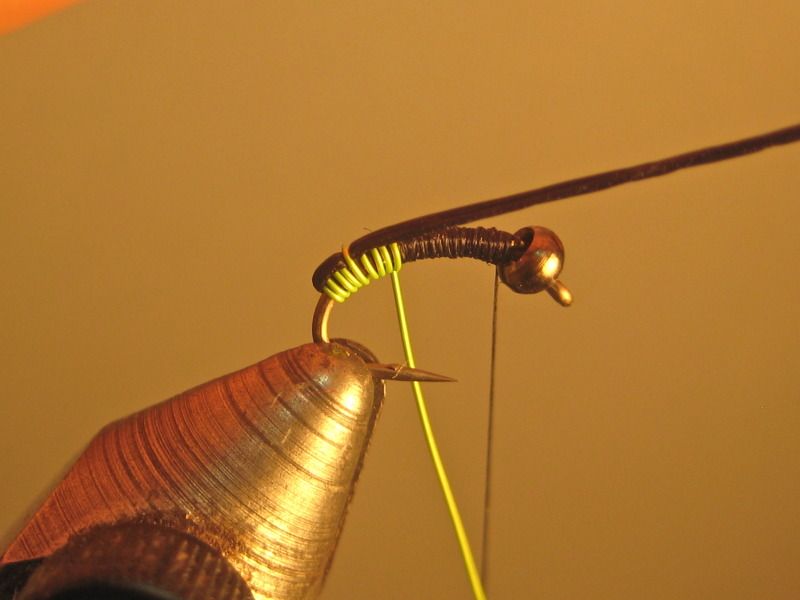
Hold Flexi-floss there and then wrap wire once over, pull floss back and continue wrapping wire (4 turns again)
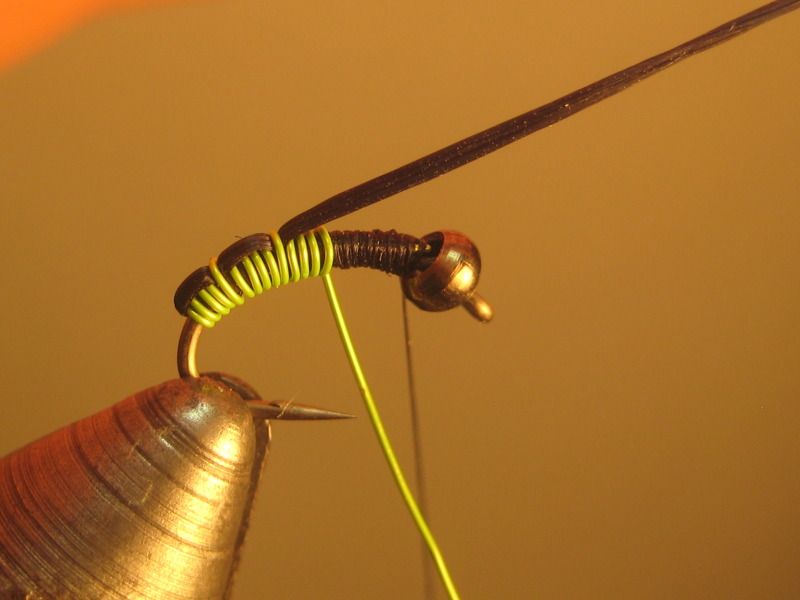
Repeat
and again
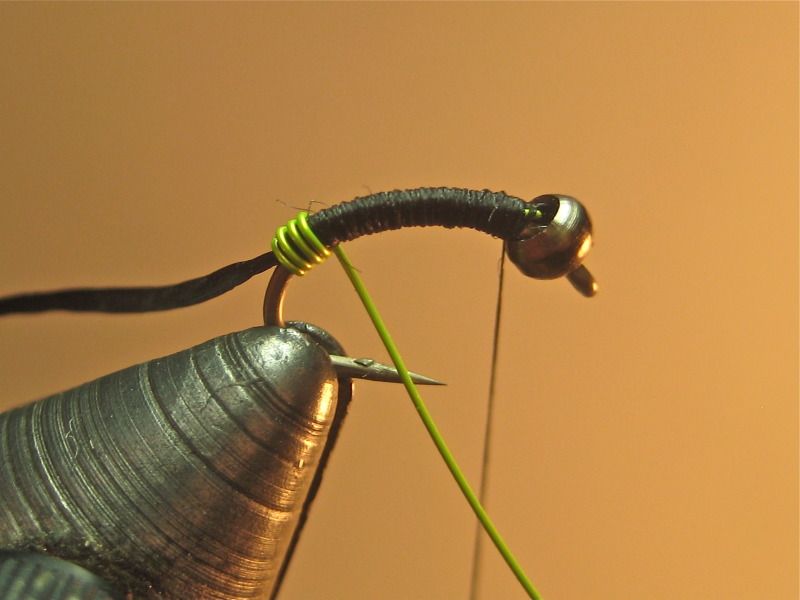
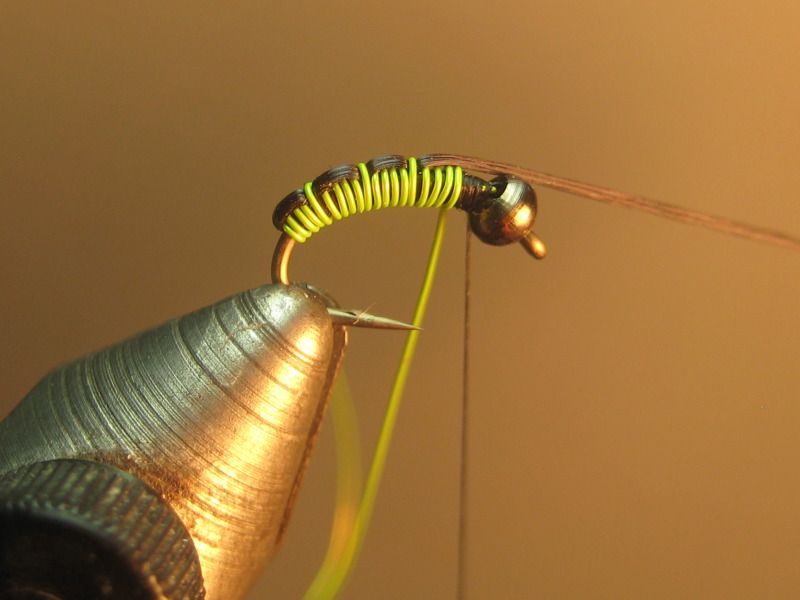
Couple more wire wraps and snip tag end of shellback
Helicopter wire to break it and cover end with thread wraps
For the last couple of years I’ve been playing with wire bodied flies. There are various ways you can use it. The simplest is just to wind a body of the wire. If you know what you are doing with dubbing, you can dub onto it.
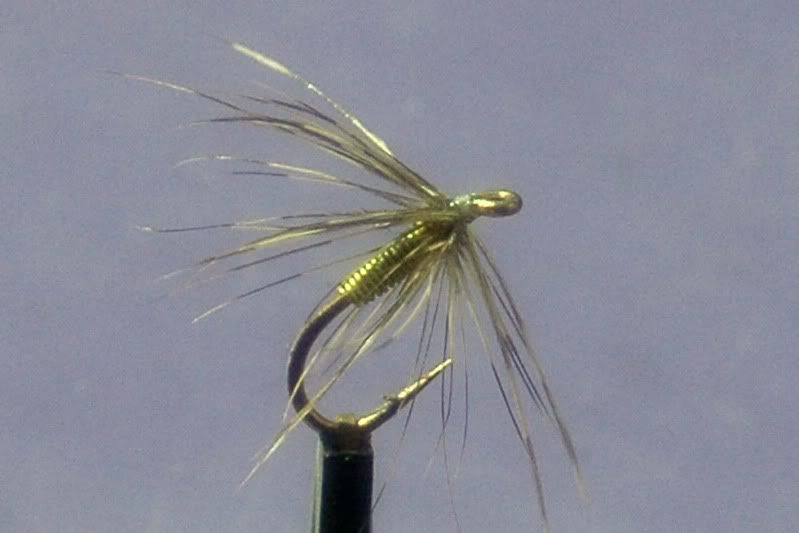
As well as nymphs and pupa you can tie more traditional style wet flies.
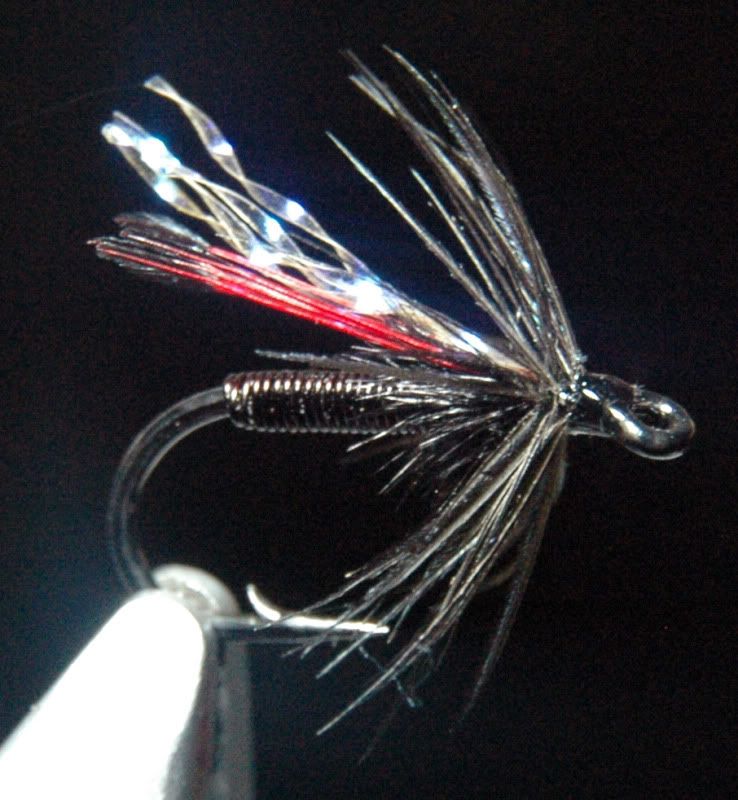
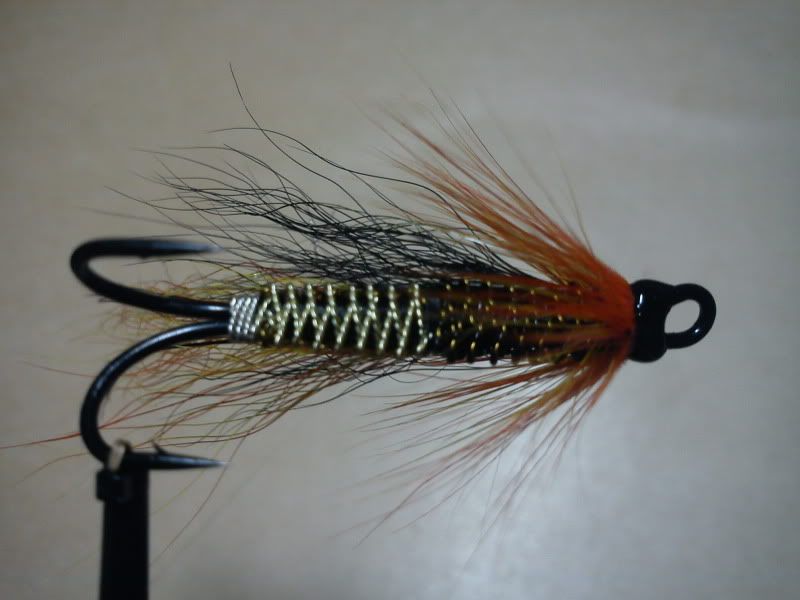
Then you can incorporate a rib. On this I have used three lengths of wire, two black and one silver, to create the body on a Black Pennel.
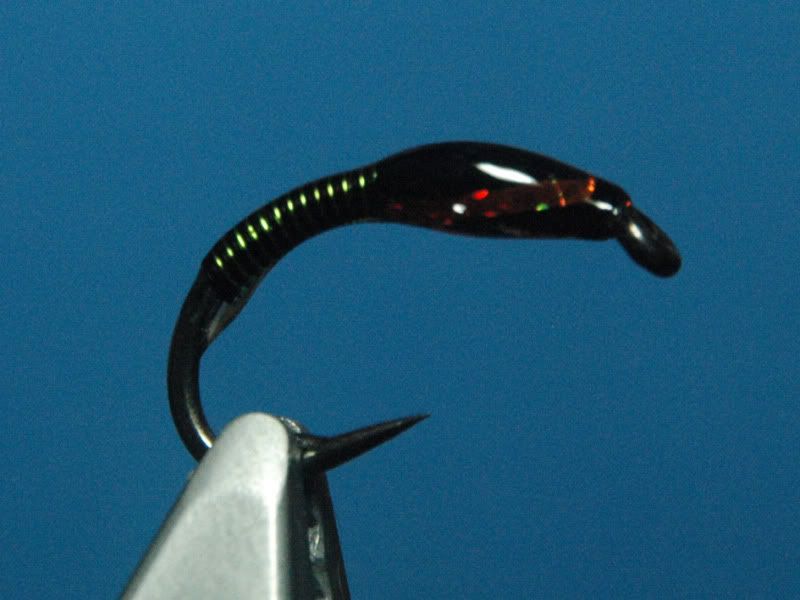
It makes grate midge pupa patterns.
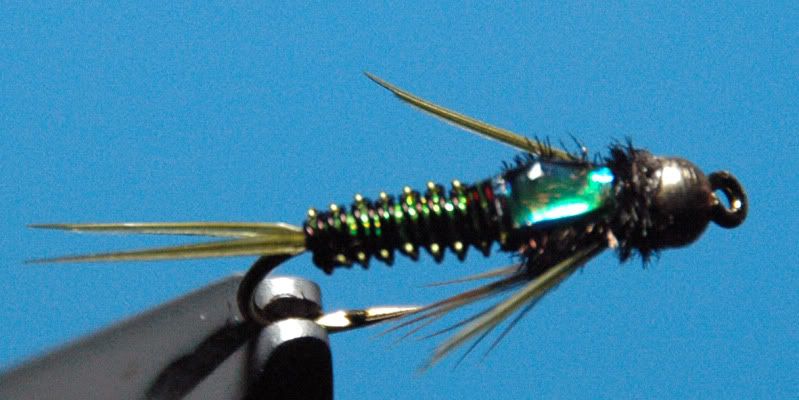
Some thoughts about heavy flies. When it comes to heavy flies there are two kinds of material. Those that make the fly sink and those that make it float. If there are more materials on the fly that make it sink it is a heavy fly. Putting a little lead wire on and loads of dubbing will not make a really fast sinking fly. It will make a rather fat one, that will sink slowly. Using coloured wire for the body makes a slimmer fly that will sink much faster. One way to get more wire into the body is to weave the wire. I know many will cringe at the thought of weaving bodies. Don’t worry, wire is by far the easiest material to weave with. There is no tension to be maintained constantly, as the wire stays where you put it. A shuttle weave will put 20 to 30% more wire into the body than winding the wire on the same body. Here is a version of the Copper John with a wire woven body.
If you want to incorporate more colour into the body, like mixed dubbing, you can wind a layer of holographic tinsel first and weave over it. The weave leaves tiny gaps through which you can see the tinsel. Like in this Wire Woven Czech Nymph.
Dubbing can also provide movement, To give this fly a little movement I’ve included a touch of dubbing at the thorax / head. Use a synthetic dubbing that doesn’t absorb water to maintain the sink rate of the fly.
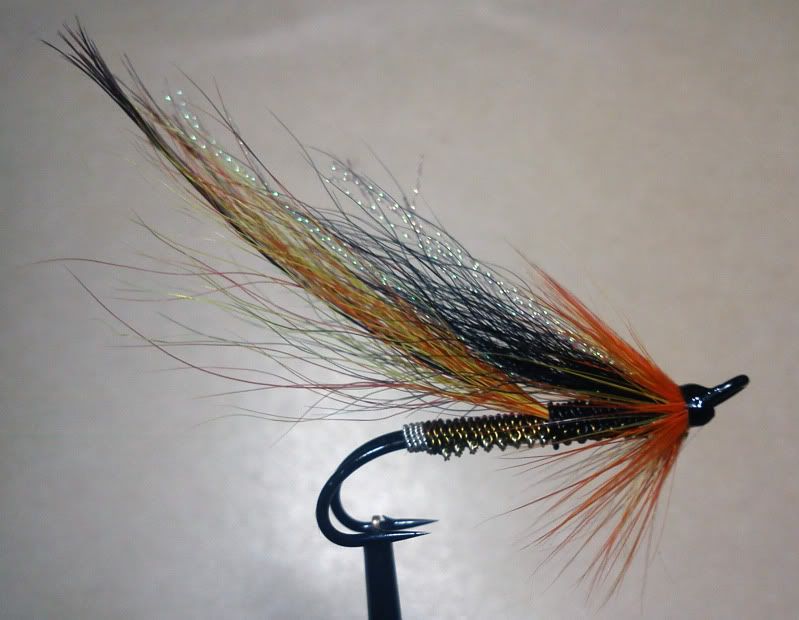
Those are all trout and grayling flies. Sometimes Atlantic salmon flies can benefit from a little extra weight.
These are just a few ideas on the uses of wire beyond ribbing. One that amazes me every time I see one is…
How many of you have a spool of wire in your fly tying kit, and have spent good money on a bobbin threader? Why not just fold the end of the wire over, push it through your bobbin tube, insert the thread and pull it out? Its okay you don’t have to confess here, we’ve all been conned at one time or another.
Cheers,
A.