Recently, while doing some research for an article I was writing I stumbled across nifty little pattern I wanted to share with your readers. The pattern is called the Herring Drake. It was designed for lake whitefish (Coregonus clupeaformis), which Michigan sportsmen erroneously call ‘herring’ (hence the name, Herring Drake).
Its distribution includes most of the Midwestern States and Canada. The fish live in deep inland lakes. Although extremely large ones do exist, they average about 16-18” long and average about 2-4 lbs. in weight. They are an extremely fragile fish with a delicate mouth.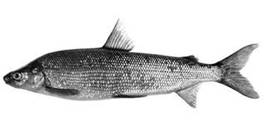
During the summer months when the mayflies are on the water early in the morning and evenings these lake whitefish will feed on surface insects and rise to dry flies.
Materials:
- Hook: Mustad #94831 Size 6-10 3X Long
- Thread: Yellow, 6/0
- Tail: 3-4 Pheasant Tail Fibers
- Body: Natural Deer Body Hair
- Rib: Yellow Thread
- Wing: Deer Hair butts
- Hackle: Grizzly or brown
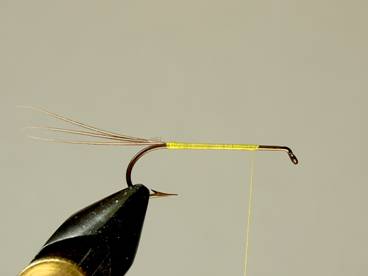
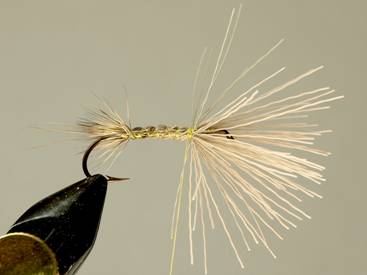
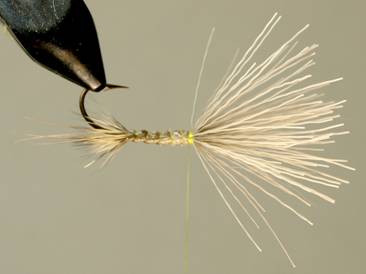
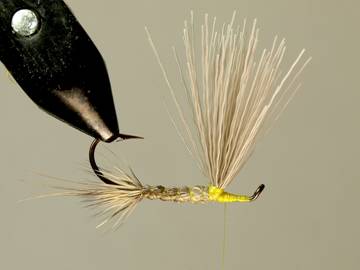
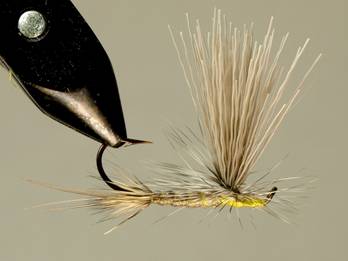
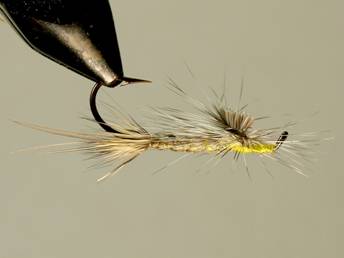
This pattern was created by Ann Schweigert of Roscommon, Michigan back in the 1950’s. The inversion of the hook is interesting to say the least. This is a common technique used with some bonefish, streamer, nymph and salt water patterns, but this is the first and only time I’ve ever seen it used on a dry fly pattern. Although it was designed for Lake Whitefish, I strongly suspect it might be effective on trout as well.
Next season will bring an answer to that question.
See you on the water…..

Tom Deschaine
For more great info, check out:
Originally published May 31, 2014 on Fly Anglers Online by Tom Deschaine.