Fishingfiend…
It would have been helpful in drafting a response if you had initially mentioned that you were trying to learn from videos, etc., and on your own. I am self-taught, and from books only, as the modern teaching aids called “Videos” were a thing of the future when I was learning; so, I am quite familiar with many of the associated problems. I did not mean to insult, or demean you in any way. I am sorry if you have been offended by my responses. My references to 8 and 10 year olds were made to convey the fact that spinning and stacking are not any more difficult than properly mounting the wings on a dry fly, regardless of their type. Moreover they were"Taking" the course, and these were their very first attempts at the process. They had not yet “had” a course.
I am not responsible for the shortcomings of either books or videos on the subject. You should see my “list” of gross omissions I have noted in such things over the years. This is all part of the learning process, in my opinion.
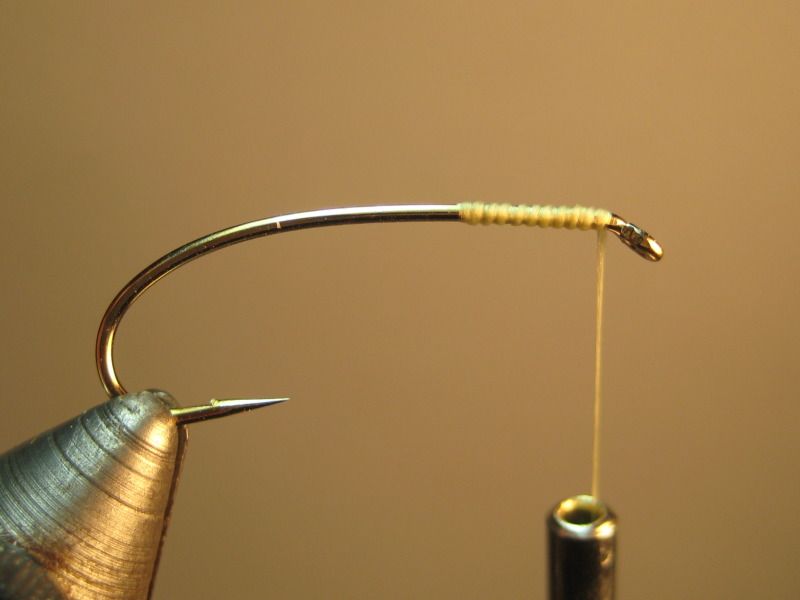
I did not mention the Jamb Knot, as I assumed that, since you are trying to worlk withdeer hair, that you already know how to attach the thread to the hook. Given the nature of your post, I think this was a reasonable assumption to make.The method of attachment is known as a “Jamb Knot”.
The jamb knot is made by laying the thread across the hook at about a 45 degree angle, and then wrapping the thread backwards over itself for five or six turns, and then cutting off the ‘tag end’; the short, loose end of the thread. (With regard to any type of thread/rope work, the short end of the material is known as the “Tag” end, and the long working portion is known as the “Standing” portion.)
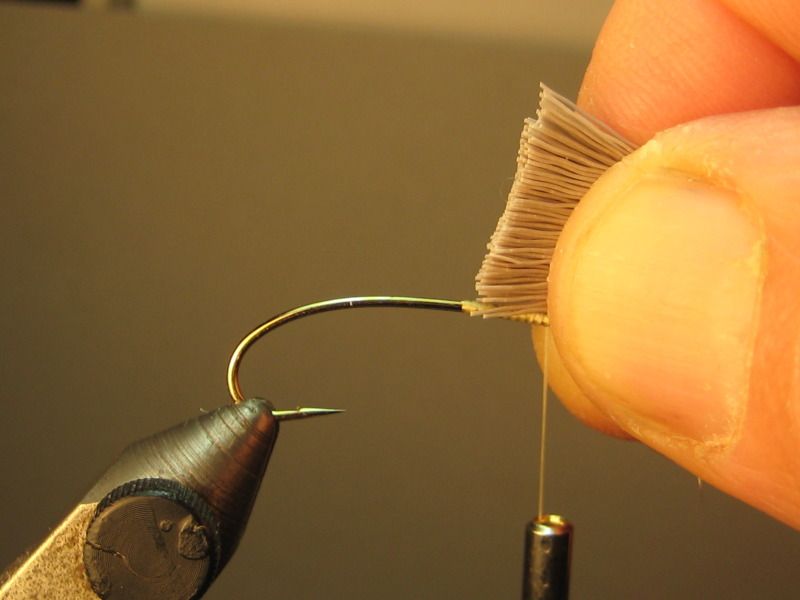
With respect to hair clump size, a bunch that is about the diameter of a #2 lead pencil (what’s that?) is about right for a bug on #1 or larger hooks.
Byron…
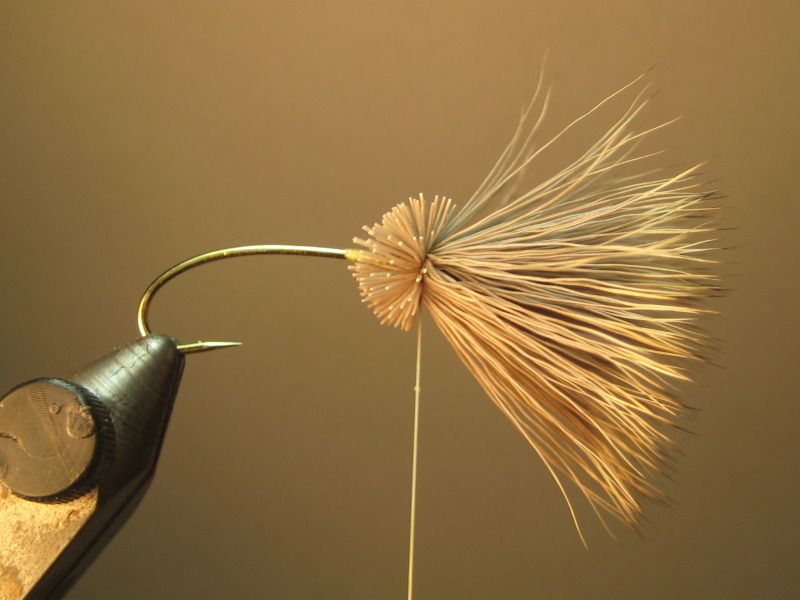
I think you will find that most ‘professional’ deer hair bug-tiers tie directly to a bare hook, both for spinning and stacking. Most, at least those of my acquaintance, develop the knack of using the thumb of the non-tying hand to stop the hair from moving around the shank once it is on the bottom side of the hook. The hair will spin just as readily over a thread base as it will over a bare shank. With just a little practice, the technique is quickly mastered.
Nontheless, your suggestion is a good one for beginners.
Regards,
Frank