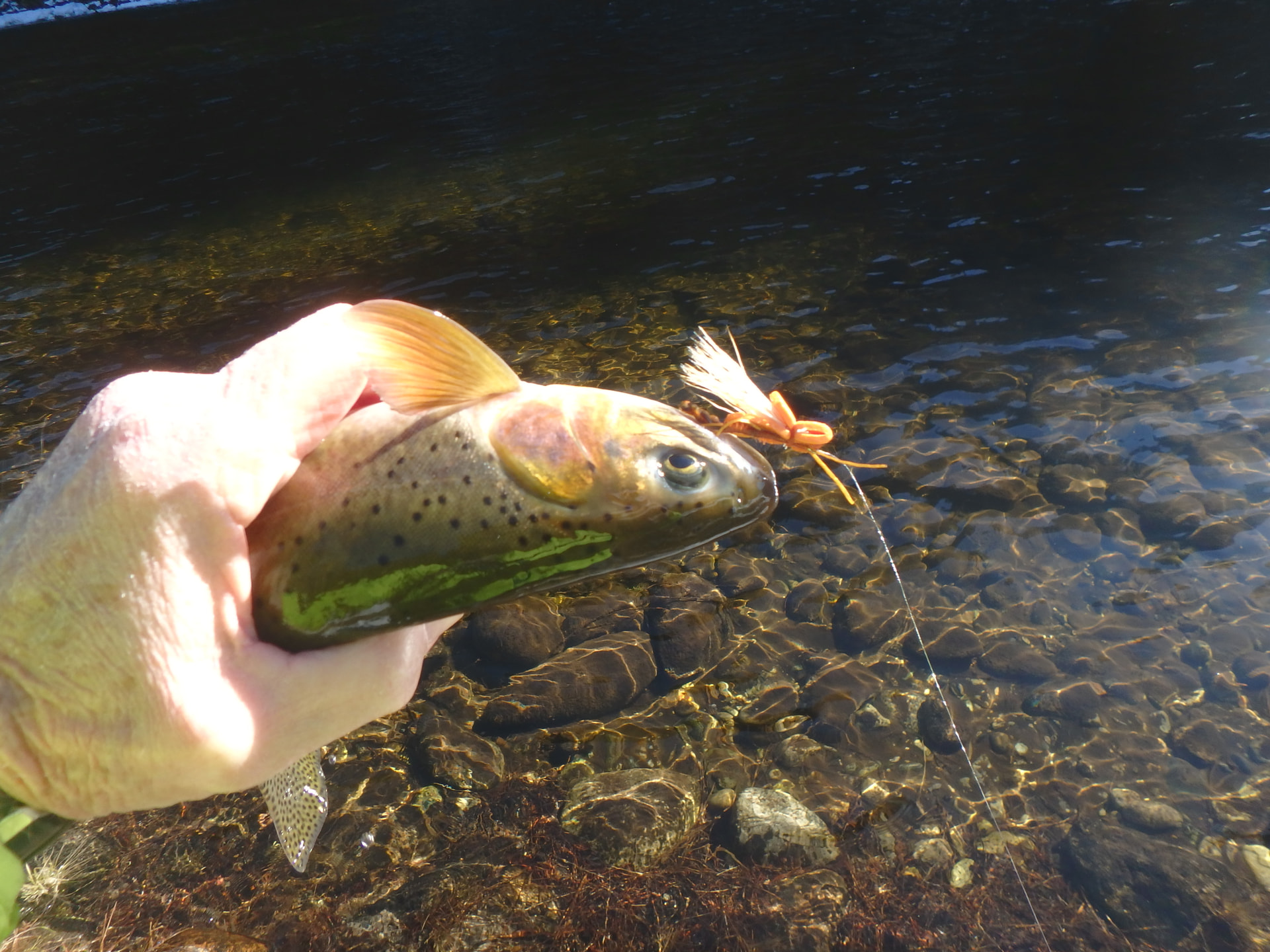
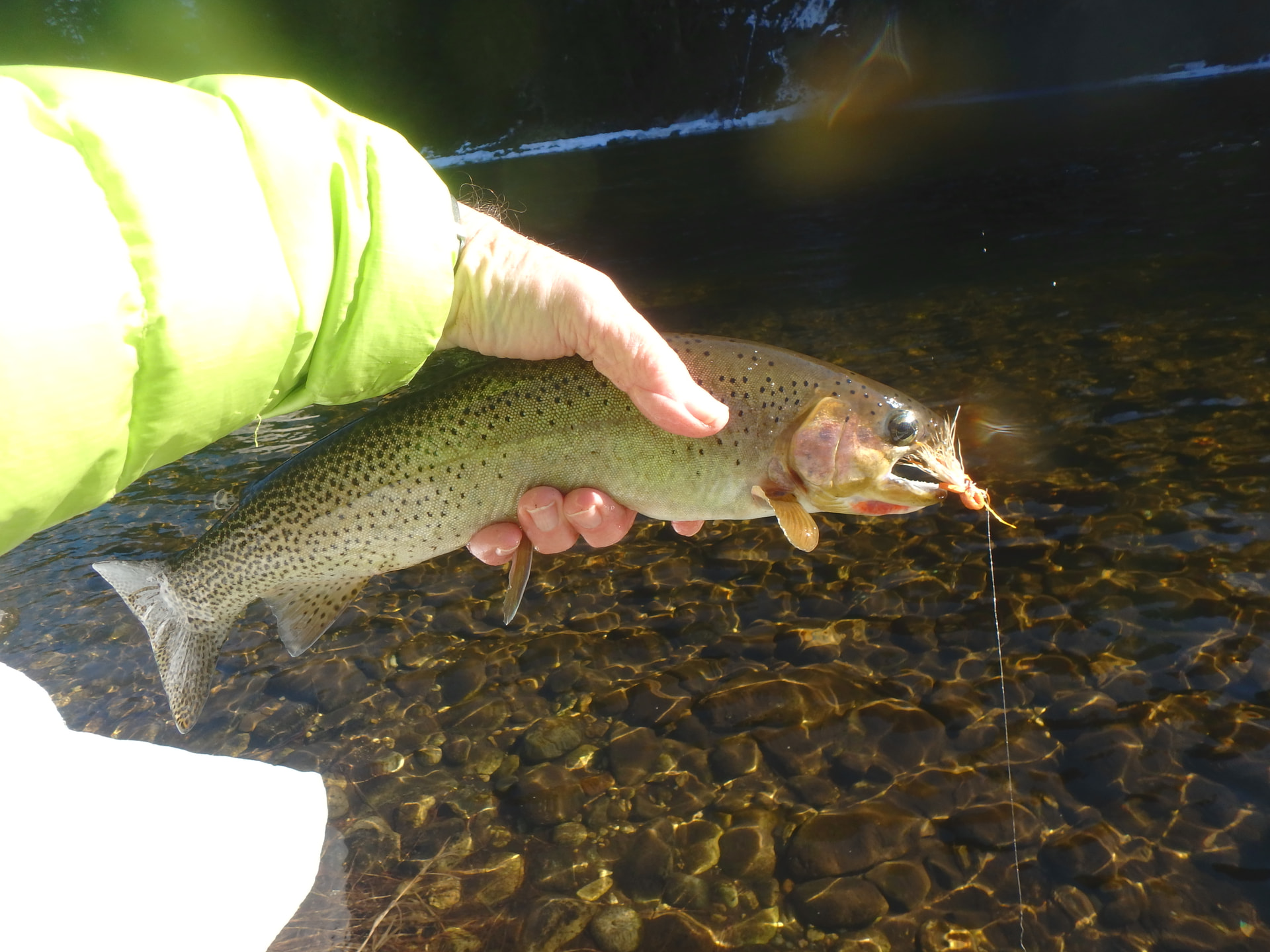
I’m a numbers guy. So I ran some numbers based on the average cfs ( cubic feet per second ) on the river I have been fishing for the months that I fish foam dry flies. The average, over the course of a season, is somewhere around 1000 cfs, some years a bit more, some years a bit less.
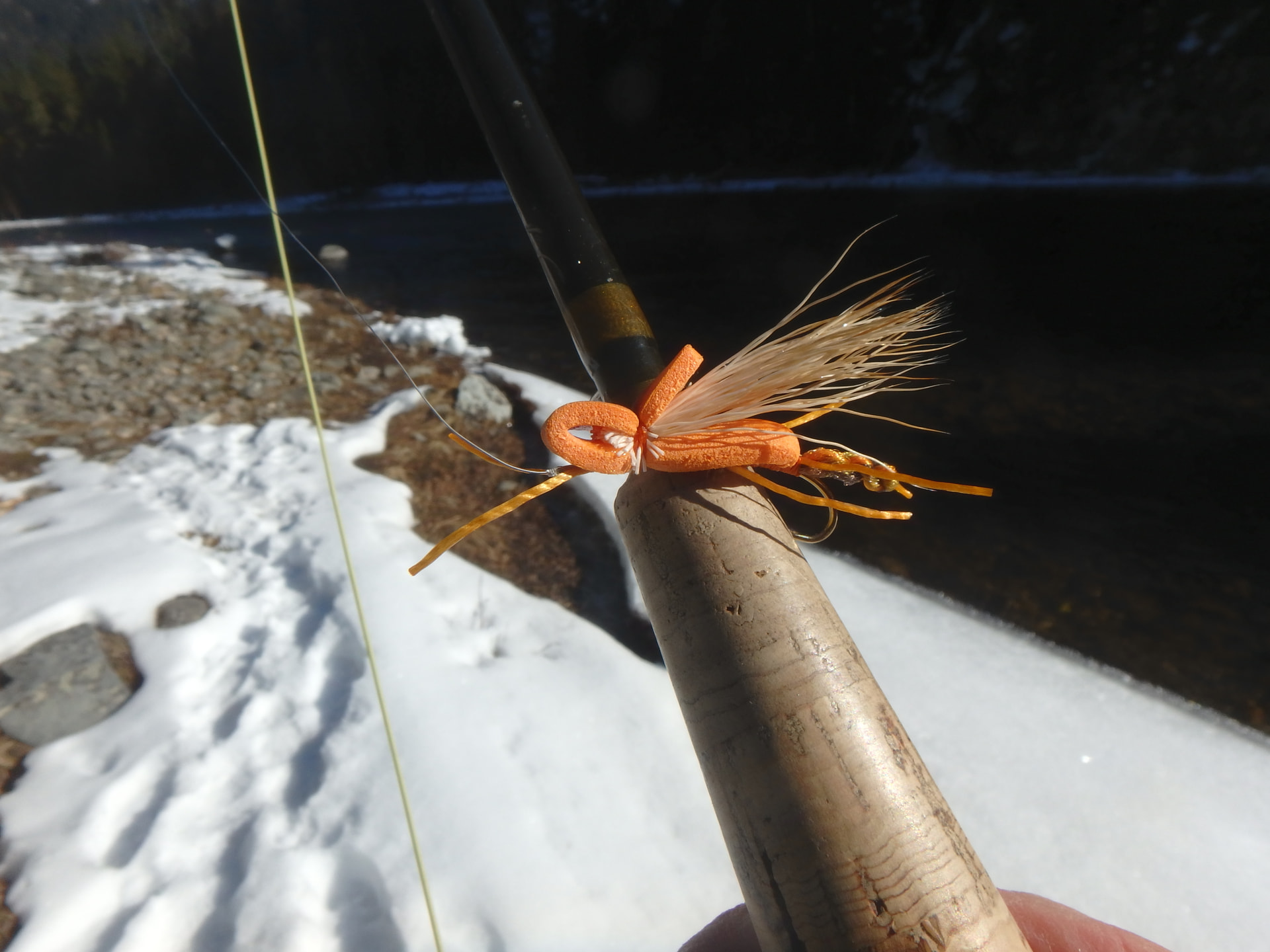
I measured the amount of foam that goes into the salmonfly subject of this thread. It is equal to 1/2 inch by 1/4 inch by 1/4 inch. ( There would be somewhat smaller dimensions for the skwala, golden stone, hopper and October caddis patterns. )
So, the volume of foam in one fly is .5 x .25 x .25, or .03125 cubic inches. ( It surprised me, to say the least, that with absolute precision and following the measurements indicated, that I could get over 55,000 flies out of a one cubic foot block of foam ! )
Anyway, a cubic foot of water is 1728 cubic inches, so 1000 cfs equals 1,728,000 cubic inches of water flowing by me every second.
One fly with a cubic volume of .03125 cubic inches divided into 1,728,000 cubic inches of water equals one fly for 55,296,000 units of streamflow.
Now, if I fish that one .03125 volume of foam for one minute, I can multiply 55,296,000 units of stream flow by 60, which means my little old fly will have occupied 3,317,760,000 cubic units of streamflow.
So, by the numbers, I have zero concern about somehow polluting my river on that rare occasion when I lose one fly over many hours of fishing.
If you want to be concerned and feel guilty about fishing and maybe losing foam flies, maybe you should run the numbers for the waters you fish to see if your concern and guilt are reasonable.
John
The fish are always right.