I got the idea the other day of thrying to tie a craw fish tail and letting that float dead drift downstream. But i’m not much of a tier and have no idea what would be the best way to try that. I’m thinking about some brown dubbing, some sort of skin for shell with ribbing and at the open end, or wounded end some white dubbing with some red marks from a marker. I haven’t had time to try it yet, but what do you think? I tried a google search and found lots of wounded minnow patterns but nothing for a crawfish. or crawdad or crayfish, what ever you prefer:) I know there are some great tiers on here, what would you try?
thanks Normand, I found those but they’re not exactly what I was looking for. Let me explain and maybe you guys wont think I’m awful or turn me in to animal right activists, but when I was a kid we fished the creeks around here with live crawfish, and sometimes we’d tear off the tail and fish with just the tail. The other day I tried fly fishing for carp for the very first time and I got one:) But I’ve been thinking about going back and got to thinking that just the tail would probably get there attention real quick. So that’s what I am after.
I think a simple light brown/tan poly yarn tail with a swiss straw shell and a thin copper wire for ribbing would work fine. If you wanted to, you could start with a wrap or two of reddish pink yarn to simulate the torn off section of the tail and finish the remainder with light tan. This should be an easy pattern to make up. Please let us know how it turns out. Remember: simple and cheap is almost always better in fly tying. IMHO
In case it isn’t the LOOK of a crayfish’s tail that triggers a strike, perhaps you could tie up a pattern using some amber D-rib palmered around some real shrimp meat?
Totally kidding!
Seriously though, if the fish recognize a crayfish’s tail for what it is… then one would think they would go for the whole crayfish, too…in which case you can try the various crawdad patterns. Do you suppose it would be more psychologically satisfying (on some level) to know that you fooled 'em with something that looked alive, instead of something that looked like “meat”? (And this question coming from a guy (me) who has fished for grass carp with “bread” flies and “vegetation” flies, so absolutely no offense intended. Plus, salmon guys sometimes fish with “flesh flies”.)
Now that I think about it that way…I’m curious to find out what pattern you come up with, and what success you have with it. Keep us posted!
You could just tie my Larvae Lace Crawfish, and leave off the front carapice and claws. Tie it on a shorter hook.
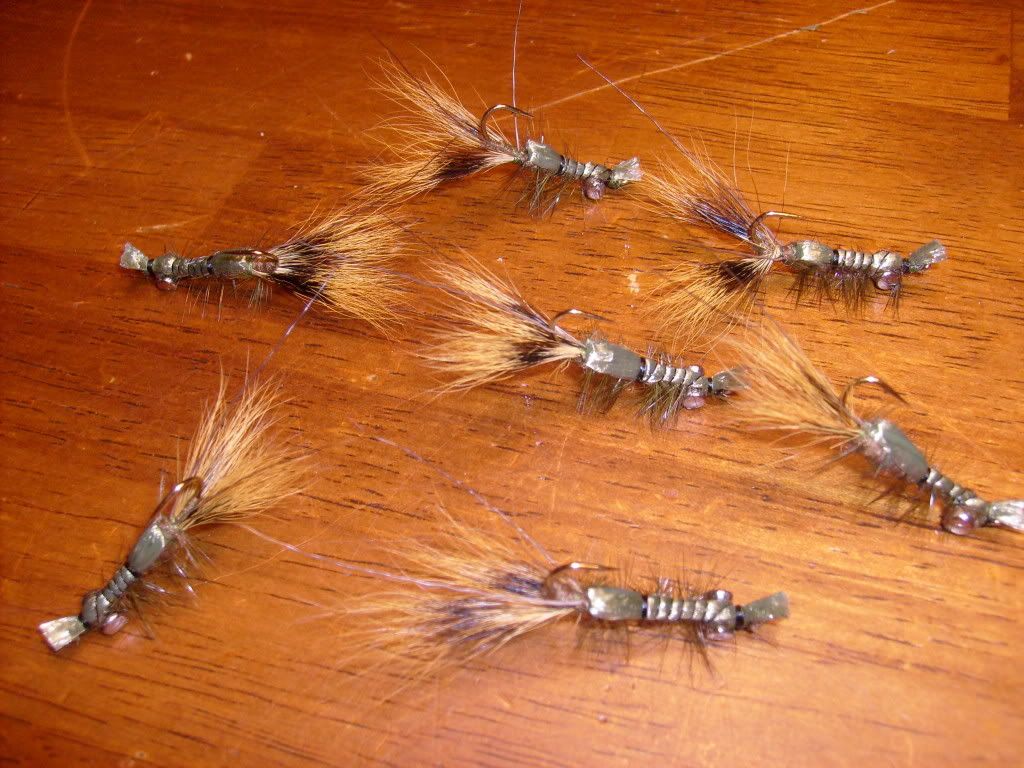
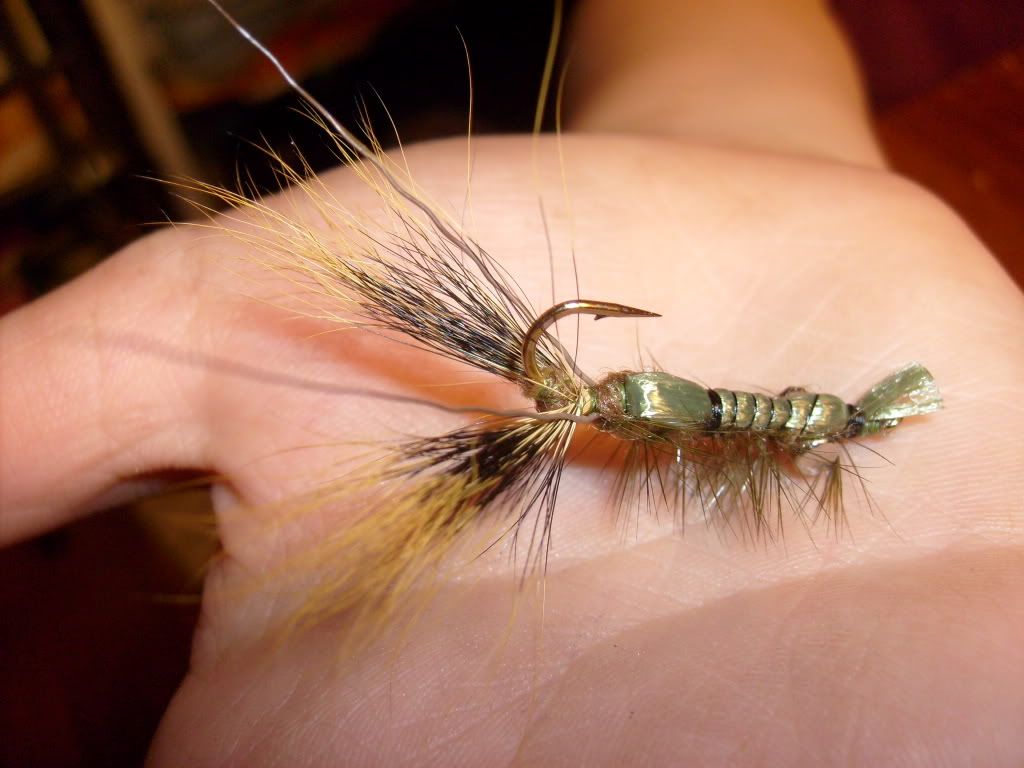
Or, you could tie my Swiss Straw Crawfish, and leave off the front carapice, and claws. You can make a shrimp tail just by changing the colors slightly.
I doubt it was the tail itself that triggered the strike as much as the scent.
A half a worm always seems to catch a fish; a half of a plastic worm just doesn’t work as well.
You could always make a replica out of flared deer hair and a short section of yarn and soak it in some type of scent if it is legal to do so where you plan to fish your “fly”; but my guess is you’ll have much better luck with a WHOLE craw pattern.
Well, to be really honest, I’m not a real good fly tier and was thinking the tail might work and be only half the fly to tie:) Oh well, I’m having a lot of fun practicing the whole fly:) Those are awesome Gigmaster, wish mine looked half that well.
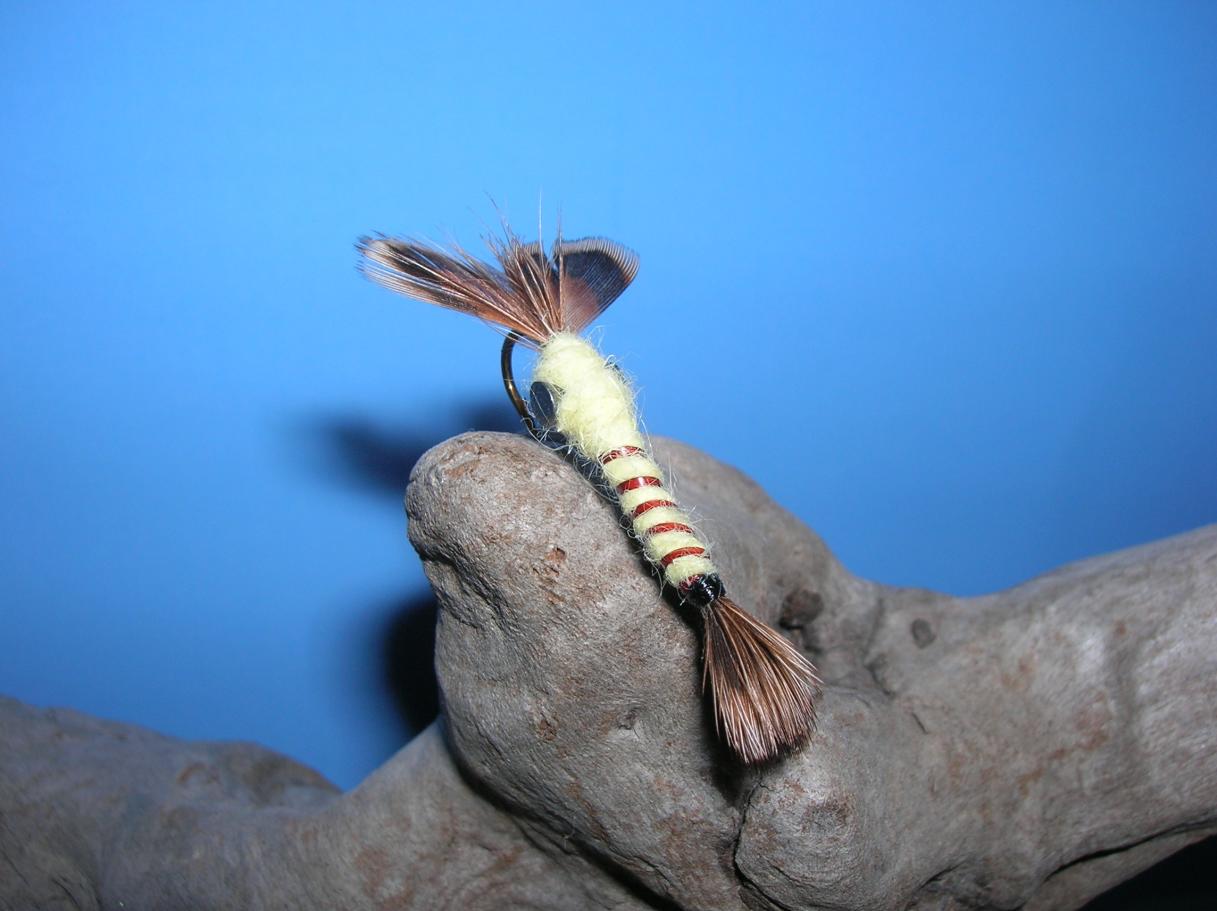
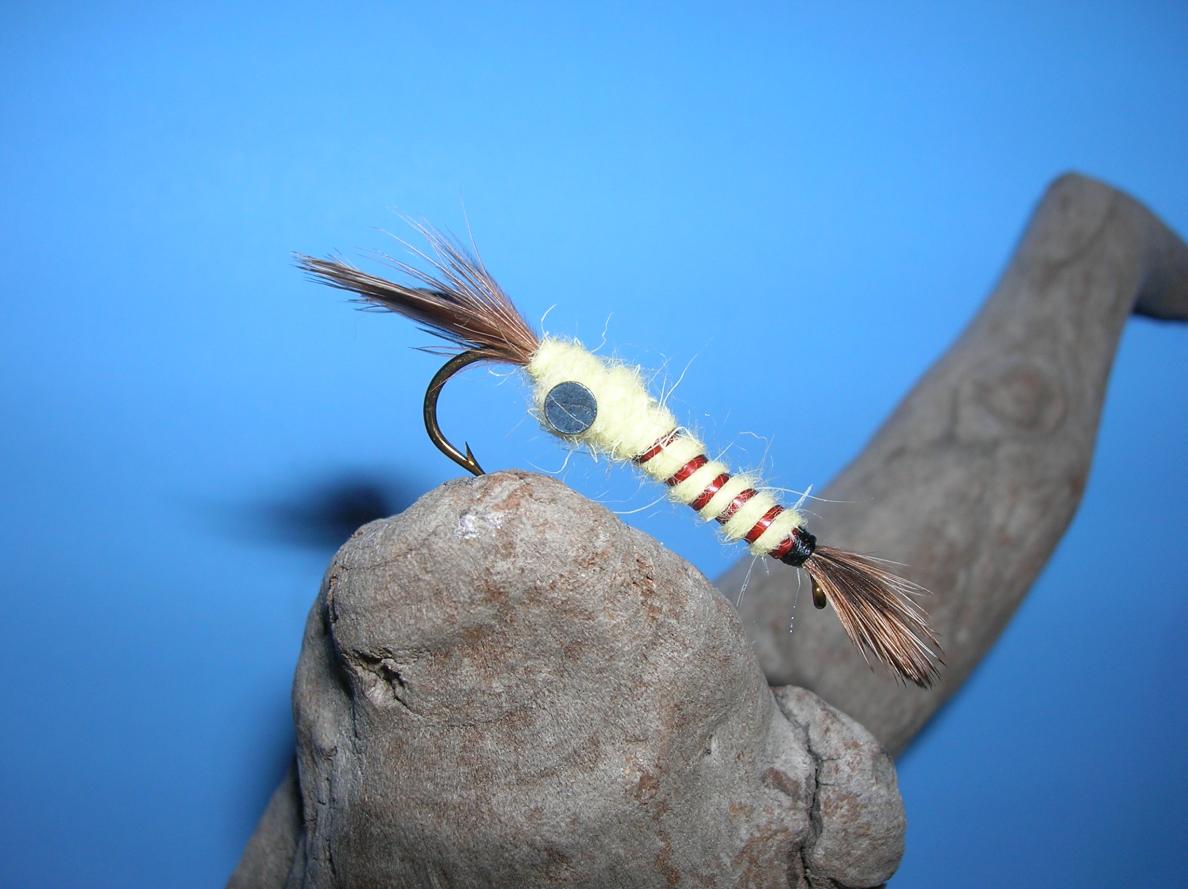
Something to think about with crayfish. With crayfish in trout streams, the hottest bait that you can find on the stream is an immature white-to-pale yellow crayfish found by flipping over the rocks. Prior to forming it’s darker hardened shell. Trout will literally fight over it and rip it apart if caught in the open. As will smallmouth. Onsite research was done on this issue at a young age:^) Yet I’ve never seen a commercial crayfish pattern tied in that fashion. I have found a Creamy-tan colored body, pheasant feather claws, with rootbear larva-lace ribbed over the abdomen & tied no lorger than a #8 hook to outperform the darker versions. No pics available…will try to post some.
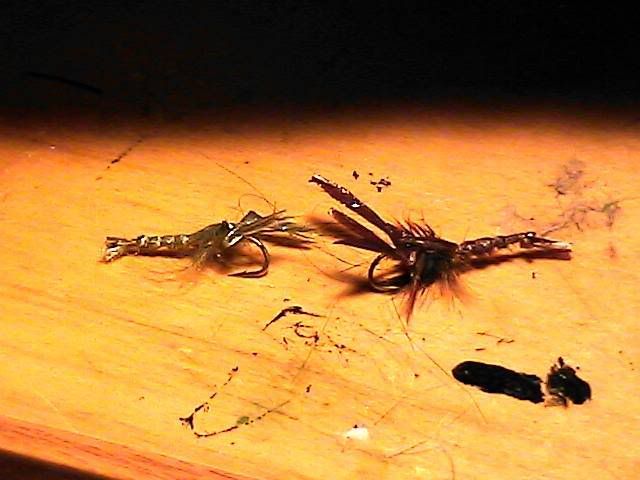
I may have just the the pattern you’re looking for. An on-line tyer friend I used to know from another forum sent me some crayfish patterns several years ago. These had extended tails (tied first off the hook). He sent me some extra tails as well (that I never did anything with). These were meant to be tied on the hook so they would articulate a bit for added action in the water. I know I still have the tails, but being at work right know I cant dig them out until this evening. They may take some modification to make an actual ‘tail-fly’ but it might be a good start. If not, there has been some good suggestions so far.
I shop at JoAnn Fabrics for my Peacock Herl, and the loose bags of Almond Pheasant Hackle. I use the the loose Almond Pheasant Hackle for my tail. I use some of the smaller hackle sizes, using some fake fingernail adhesive (CA) create my crayfish tail. I then coat the tail with some Dave’s Fleximent, and let it dry. For the claws I use larger pheasant hackle, snip out the the inside so the lower portion with stem attach is a V shape, I make one claw using two hackle that are the same shape, and Fleximent them together.
I found that a one claw crayfish is a vulnerable target to bass and trout. More so than a crayfish that has both claws…
swiss straw (Shell Back & tail -#1 material for crawdad tails - come in miny colors), Fox Squirrl Tail (Claws), Moose Mane ( Antenne) Yarn & hackle (body), Brass Wire (segmentation) - Seatch “Bill Millers Crawfish” for a similar pattern,
Here are some different color versions of a pattern I came up with. I 't is very effective on shy and overfished trout and bass.On very agressive fish it may be a little over kill. It takes a little time to tie, probably three times a standard fly , but in situations like fishing behind other anglers on a stretch of river , it has been worth it. The claws are made from porcupine quills and the legs ,antenae and eyes are made of monofilement. The shell is made of tissue paper impregnated with flexement. With the materials chosen this fly is anything but delicate. Coloration is done with markers (Sharpies) so you can match the hatch so to speak. Or lighten or darken the fly to make it more visible in various water and light conditions.
Here is the pattern I was talking about. Folks could probably do alot better with it than I do, as I only tie a handful a year. I also just use a standard hook. A bent swimming hook would probably improve it some. It’s very simple to tie. This is the pattern I use for trout streams mind you. I don’t fare well with it in warmwater, and go with a pattern tied with Pine Squirrel strips for the big slow-water critters. I dead drft it halfway through the drift…then begin twitch-retrieving it in the second half of the swing.
Hook: 2XL Nymph hook #6 - #10
Thread: Black 6/0 Uni-thread
Eyes: Tungsten Barbell
Body: Rabbit Dubbing ( I also use Angora)
Rib: Rootbeer Lace
Claws: 1 Each Hen Pheasant feather
Tail: 3 stacked Hen Pheasant feathers
Note: prep the pheasant feathers as if you were tying a softhackle pattern with them.
Tie in thread with hook upside down. Tie in dumbell. Tie in each claw feather with the quills crossing inside the dumbell (Sweep them forward and pinch to bunch up in a tighter claw). Stack 3 feathers for tail and tie in (sweep and pinch tight to get the shape desired). Move thread back to the dumbel. Dub the thorax. Tie in the lace. Dub the abdomen. Wrap the ribbing back to the tail. Tie off and build the head.
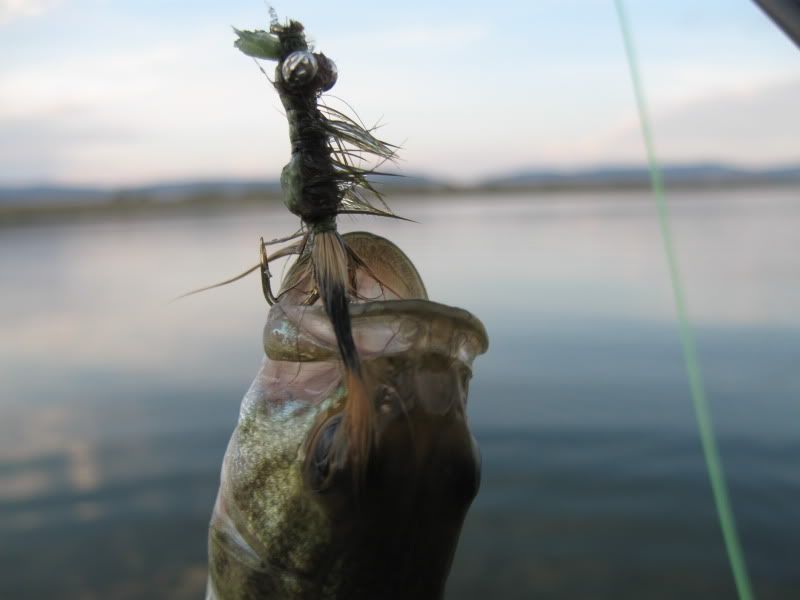
Be careful, if you use tails on crayfish patterns. Any semi-rigid material will cause them to spin, when you retrieve them. I use my own pattern that I based on a wooly bugger and a Brooks stonefly. It’s tied “in the round”, so it has no carapace and uses lead eyes for weight and action (also creates the illusion of a tail). The trout and bass love it.
bspitts are more what I use for pattern, I don’t care for the patterns that use a feather for the claws they just don’t look “right” to me. I also use the fox squirrel for my shell back n tie it in by the tips then pull it over between the claws which also helps seporate them. I also like a lot of weight n wrap lead wire over a double strip lead underbody and gently compress with pliers to get a nice wide underbody and mottled hen back feather for legs… I find it’s more a size issue with carp, They seem to perfer smaller crayfish patterns…so I tie these in two sizes n switch back n forth till I see which is perfered… I’ve caught everytrhing from Pike to pannies on these n love em!
On extremely small juvi crayfish, the claws are almost unecessary. The feathered claws more than provide the impression of claws when wet. But on larger patterns feathers do not fill the requirement.