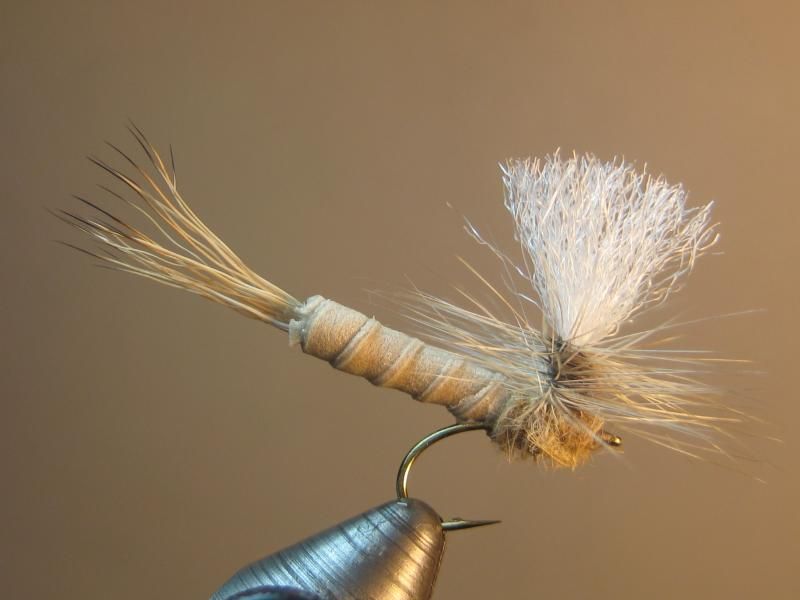
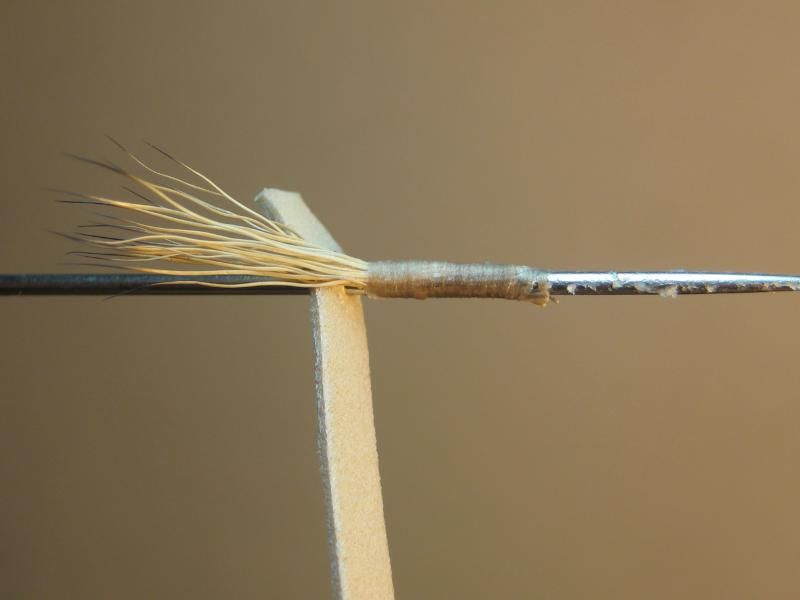
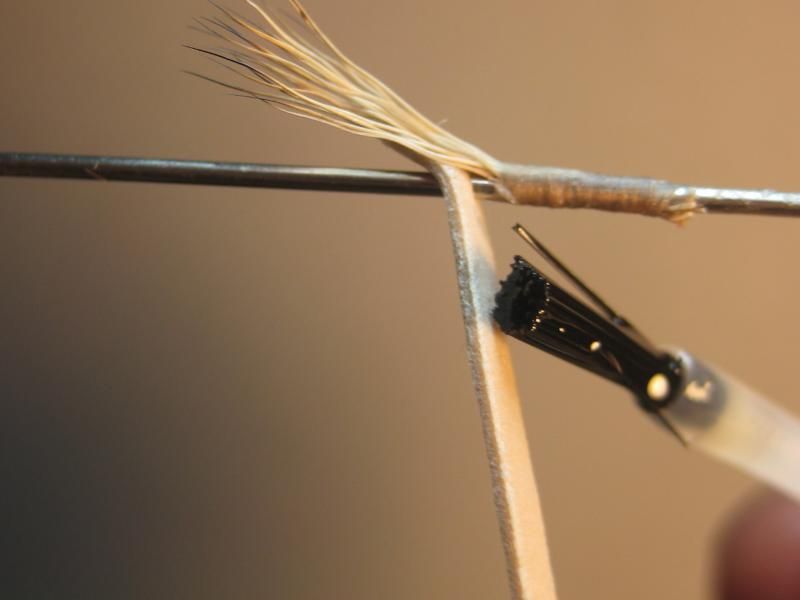
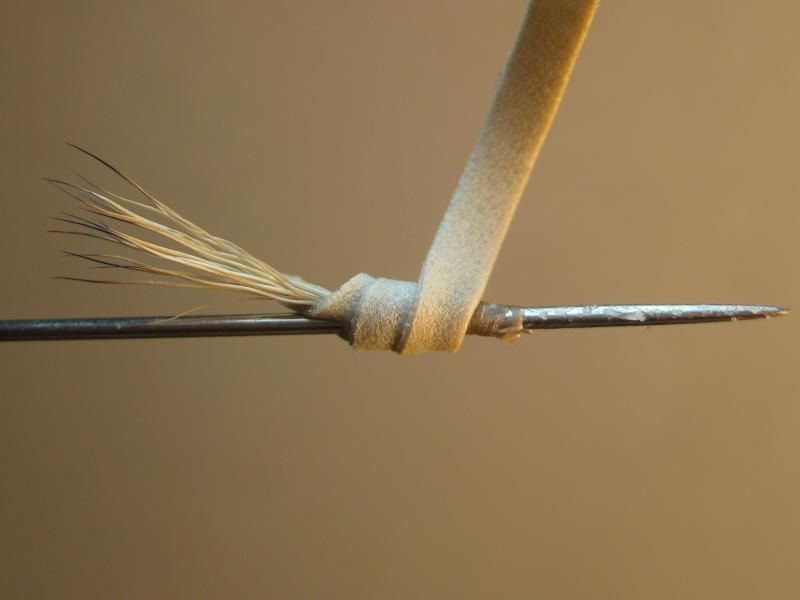
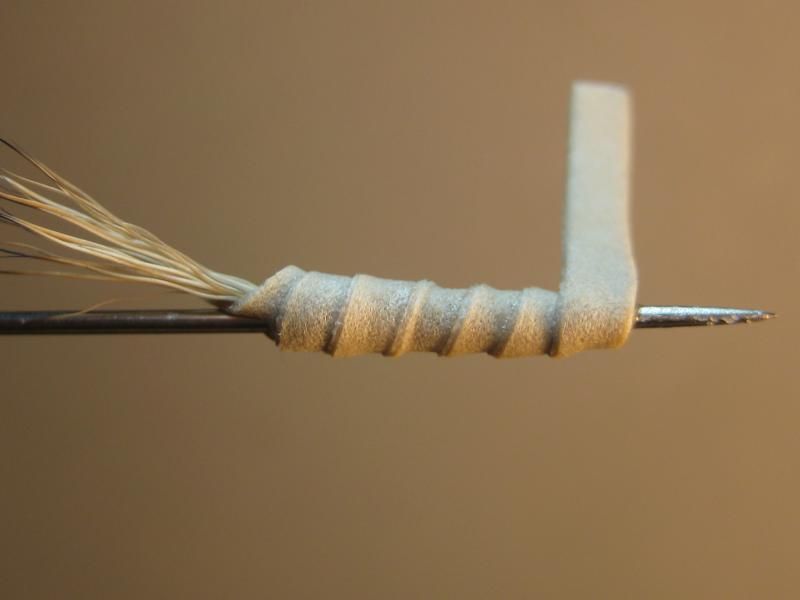
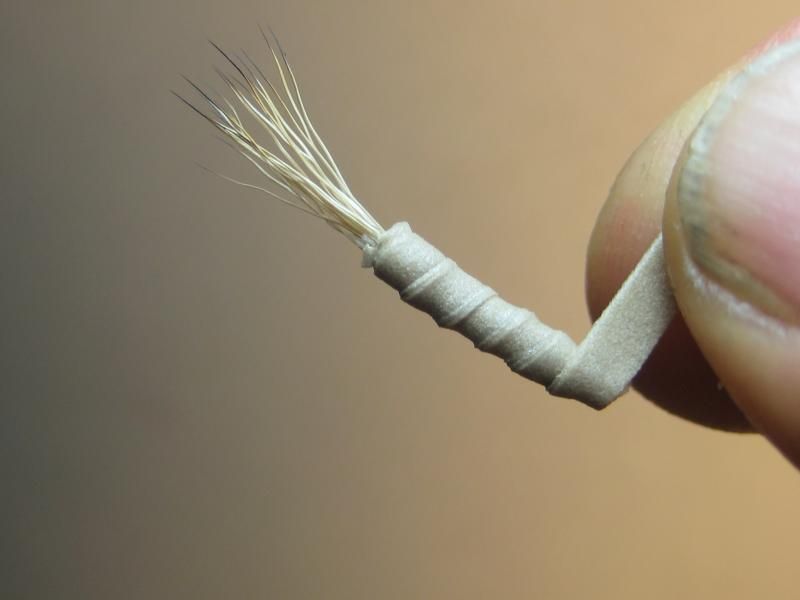
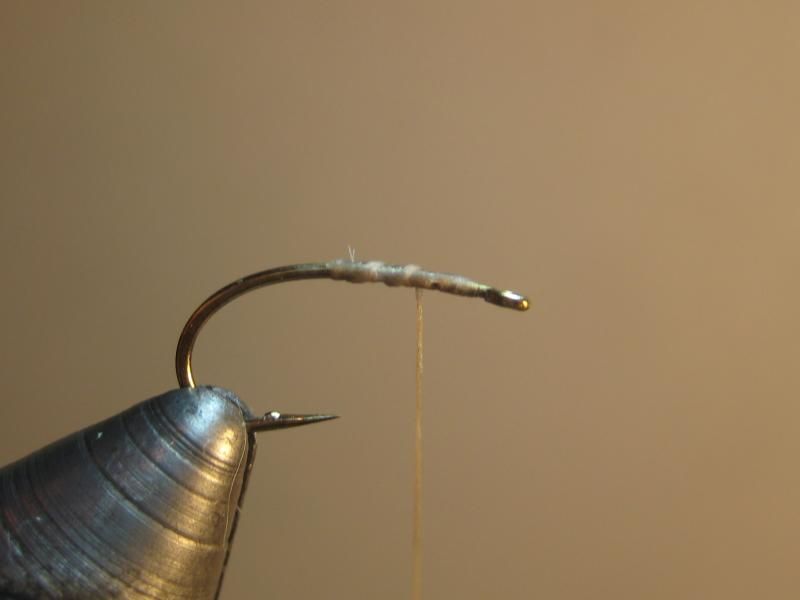
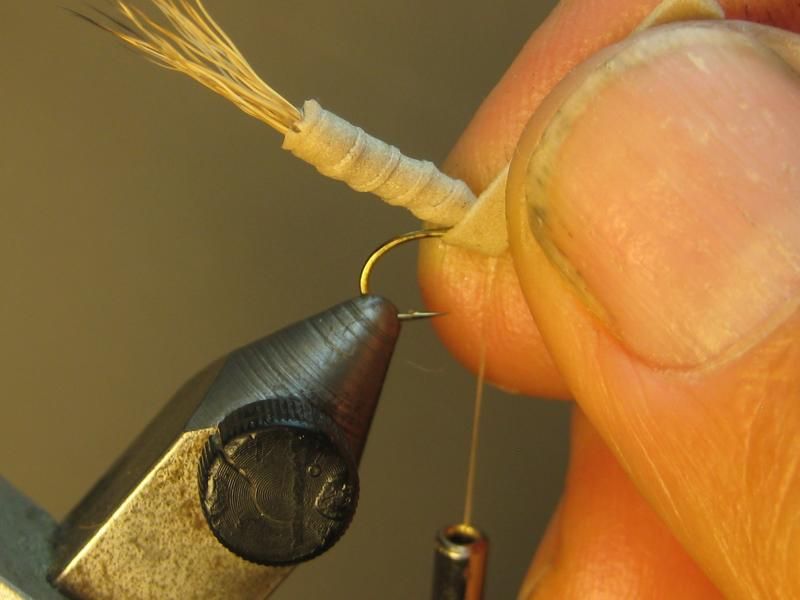
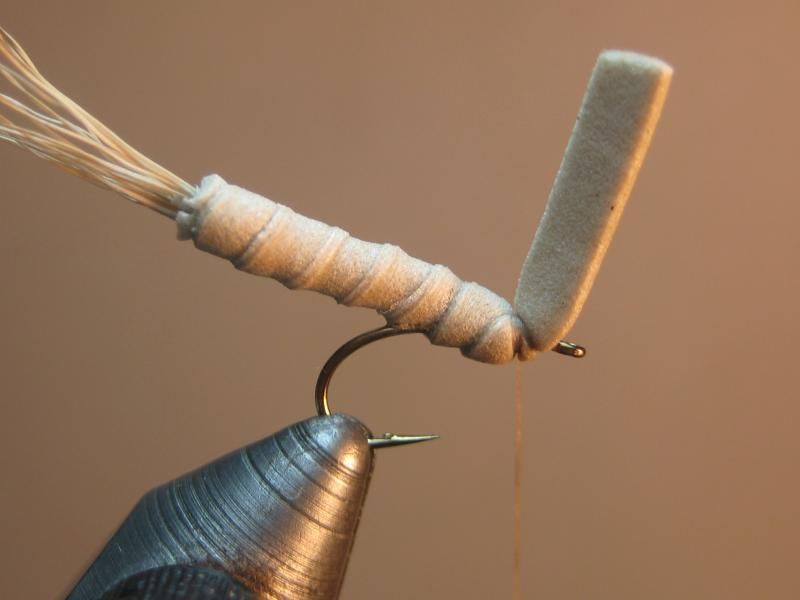
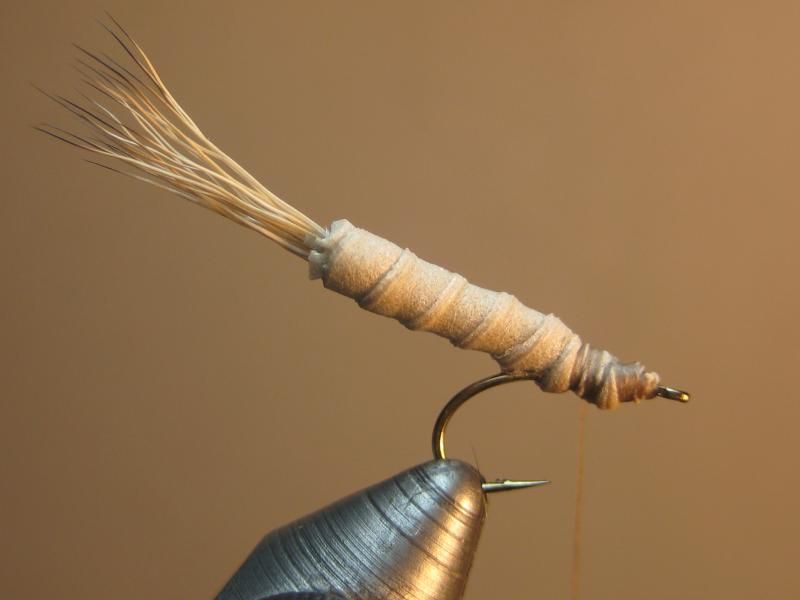
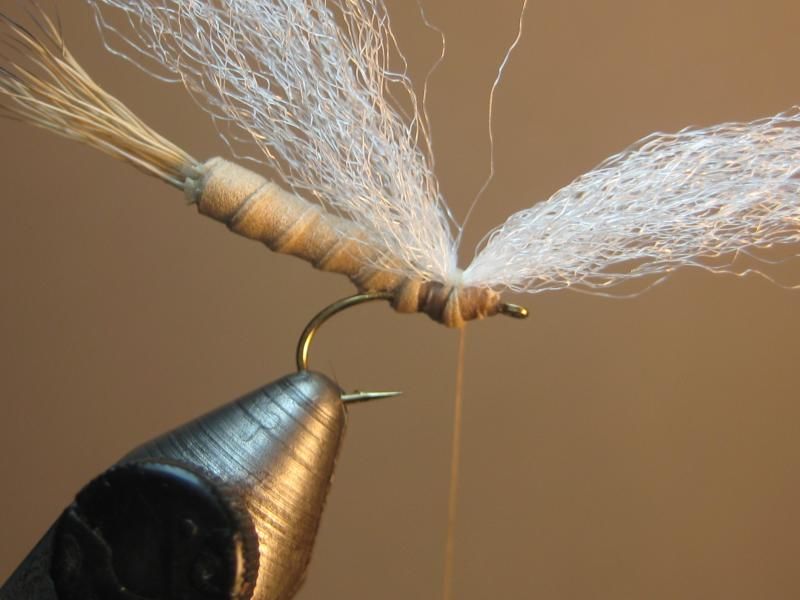
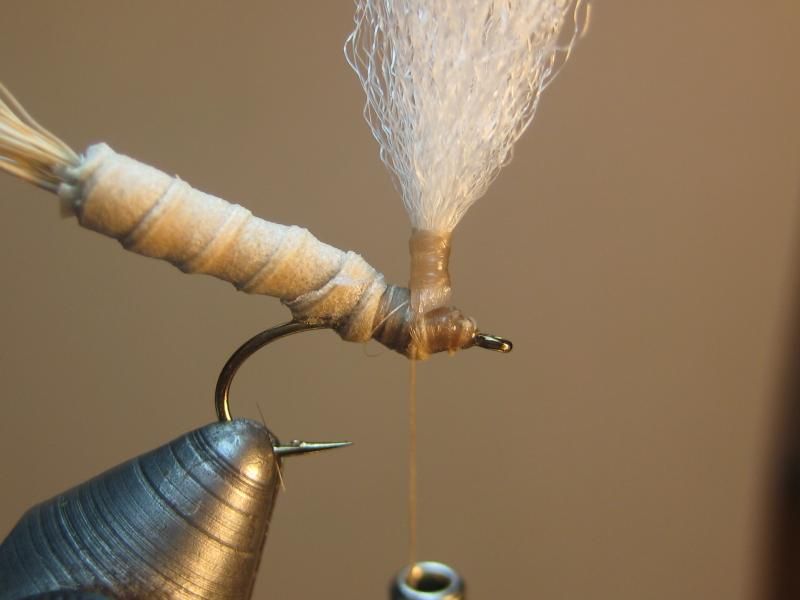
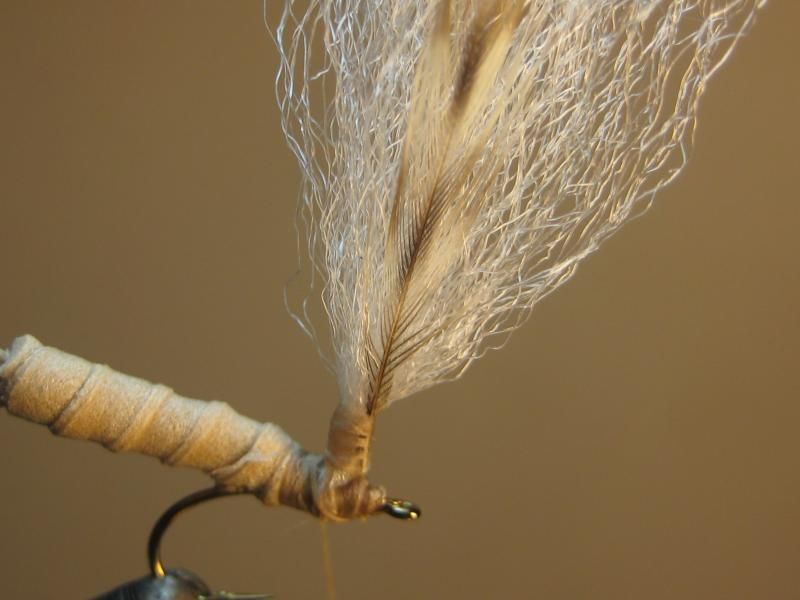
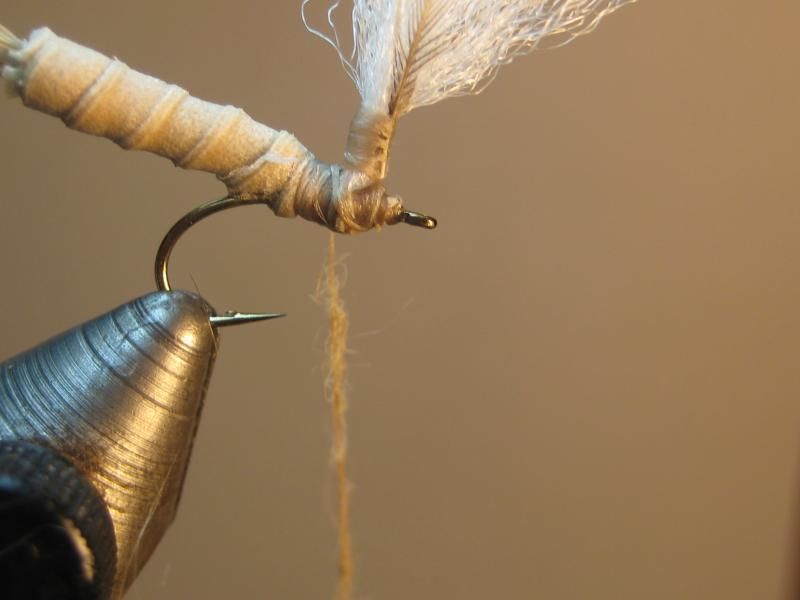
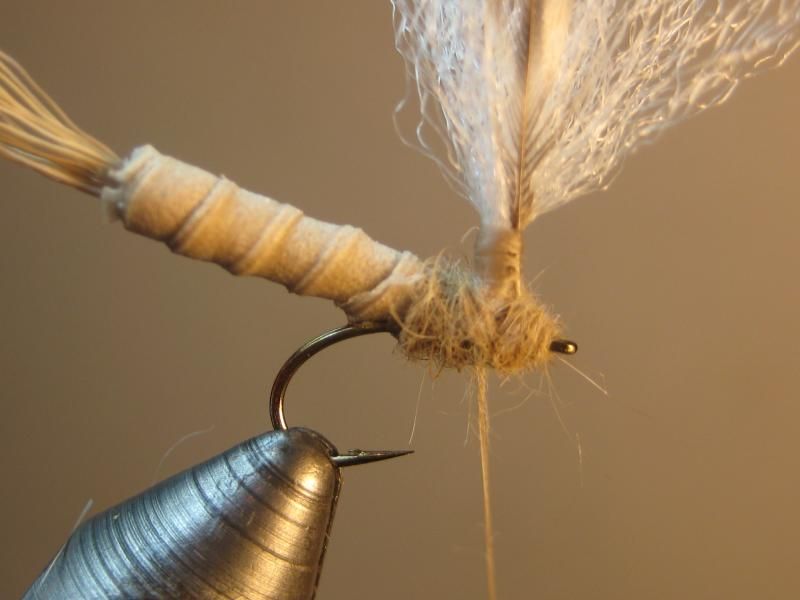
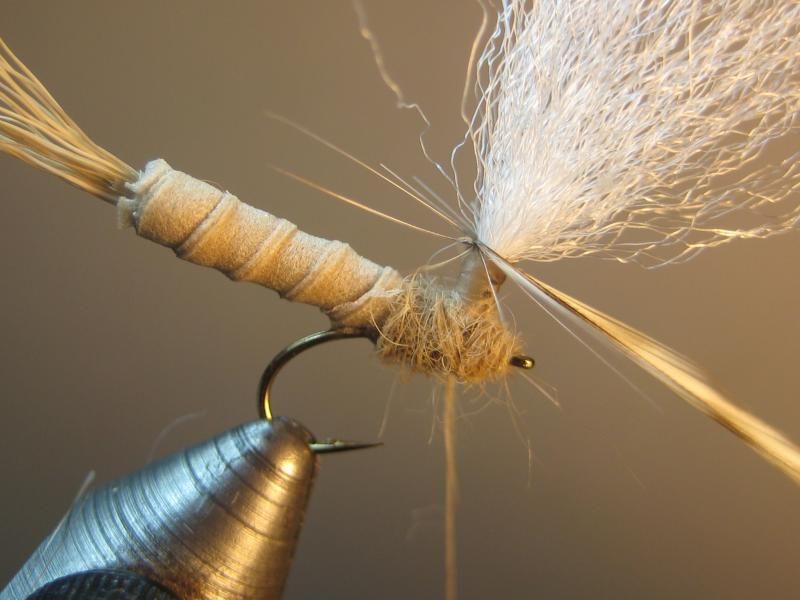
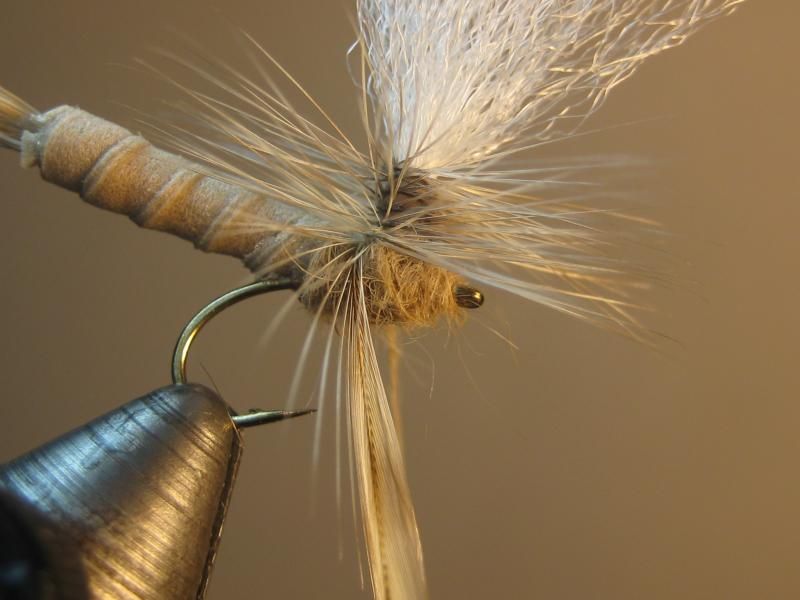
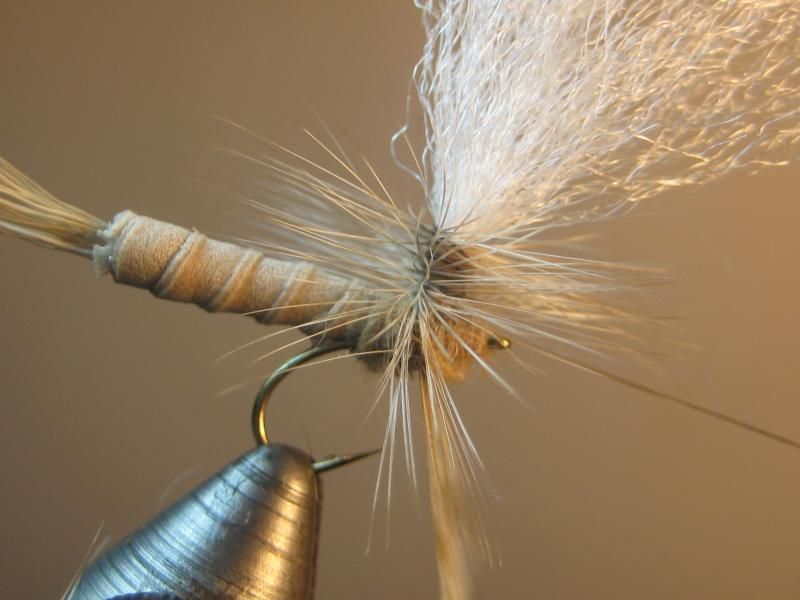
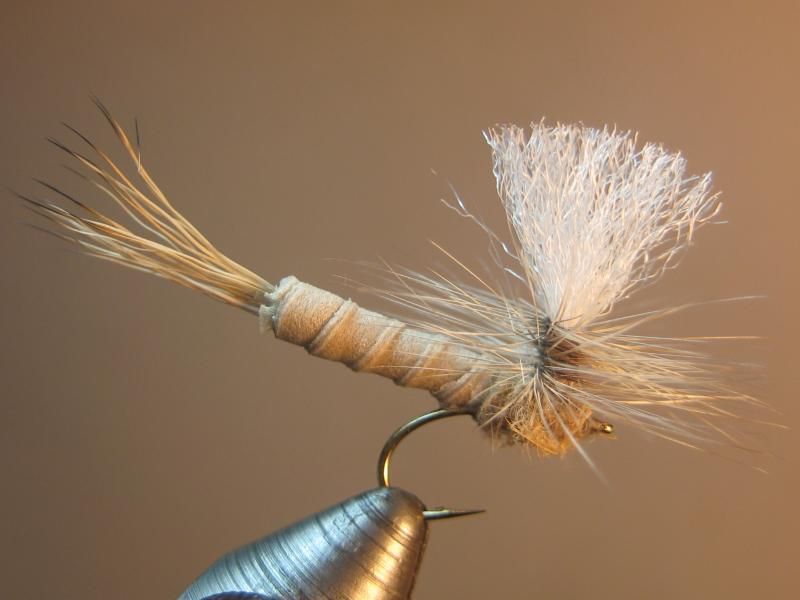
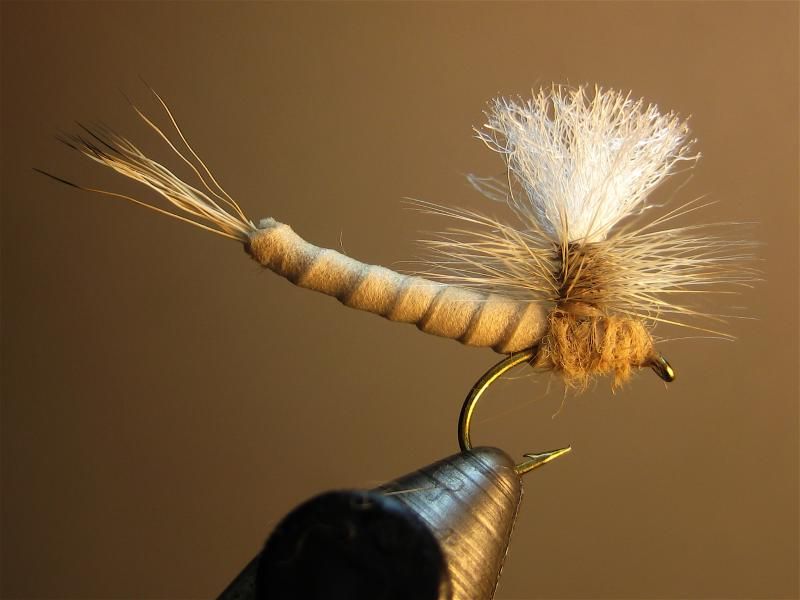
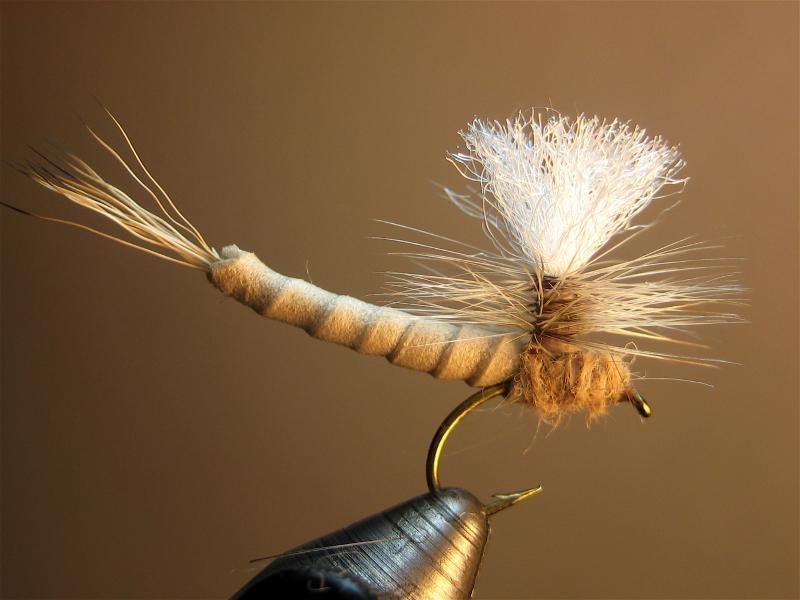
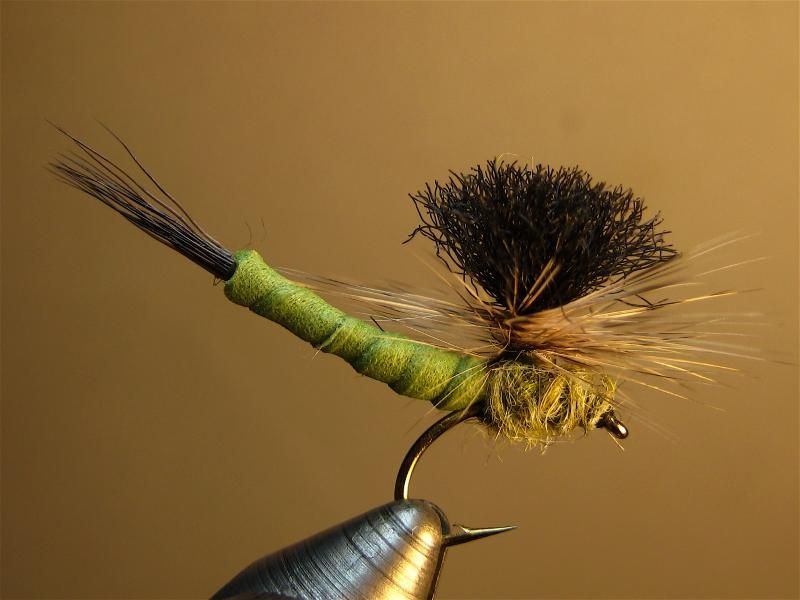
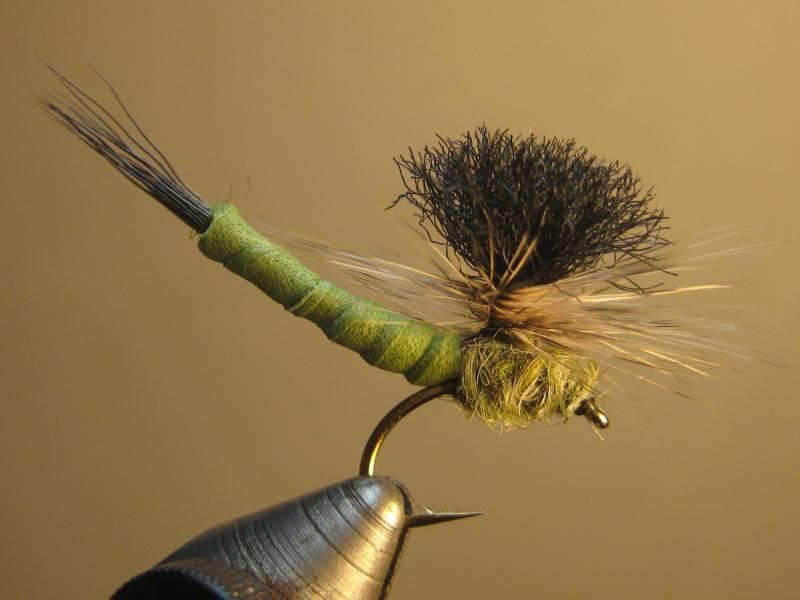
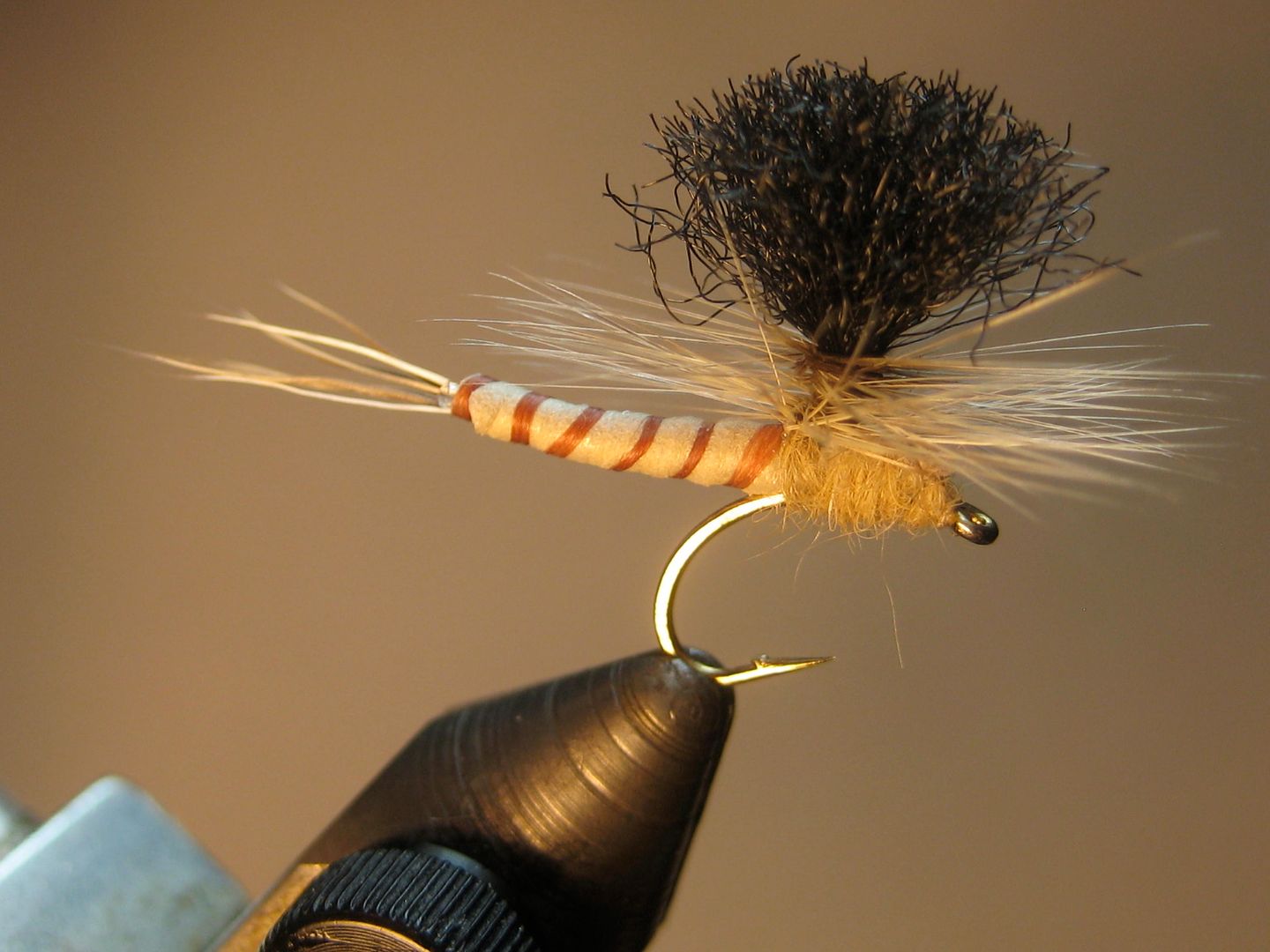
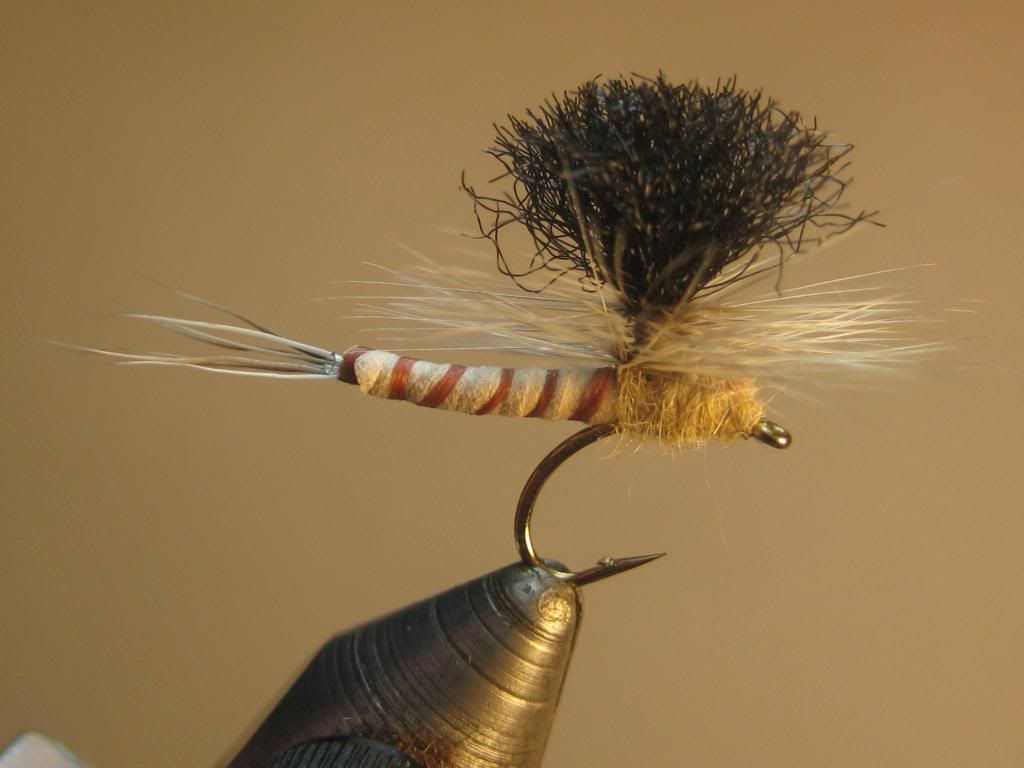
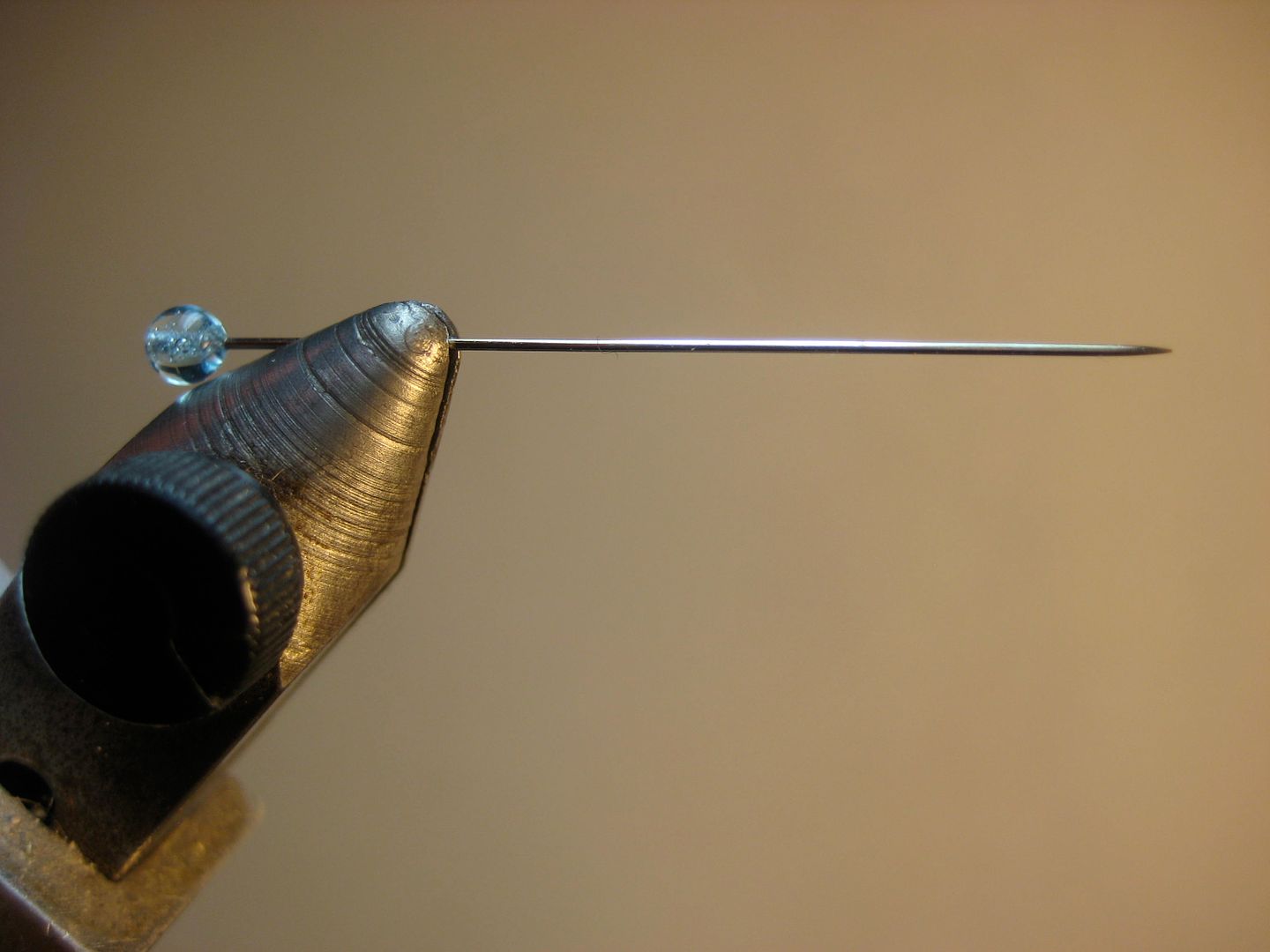
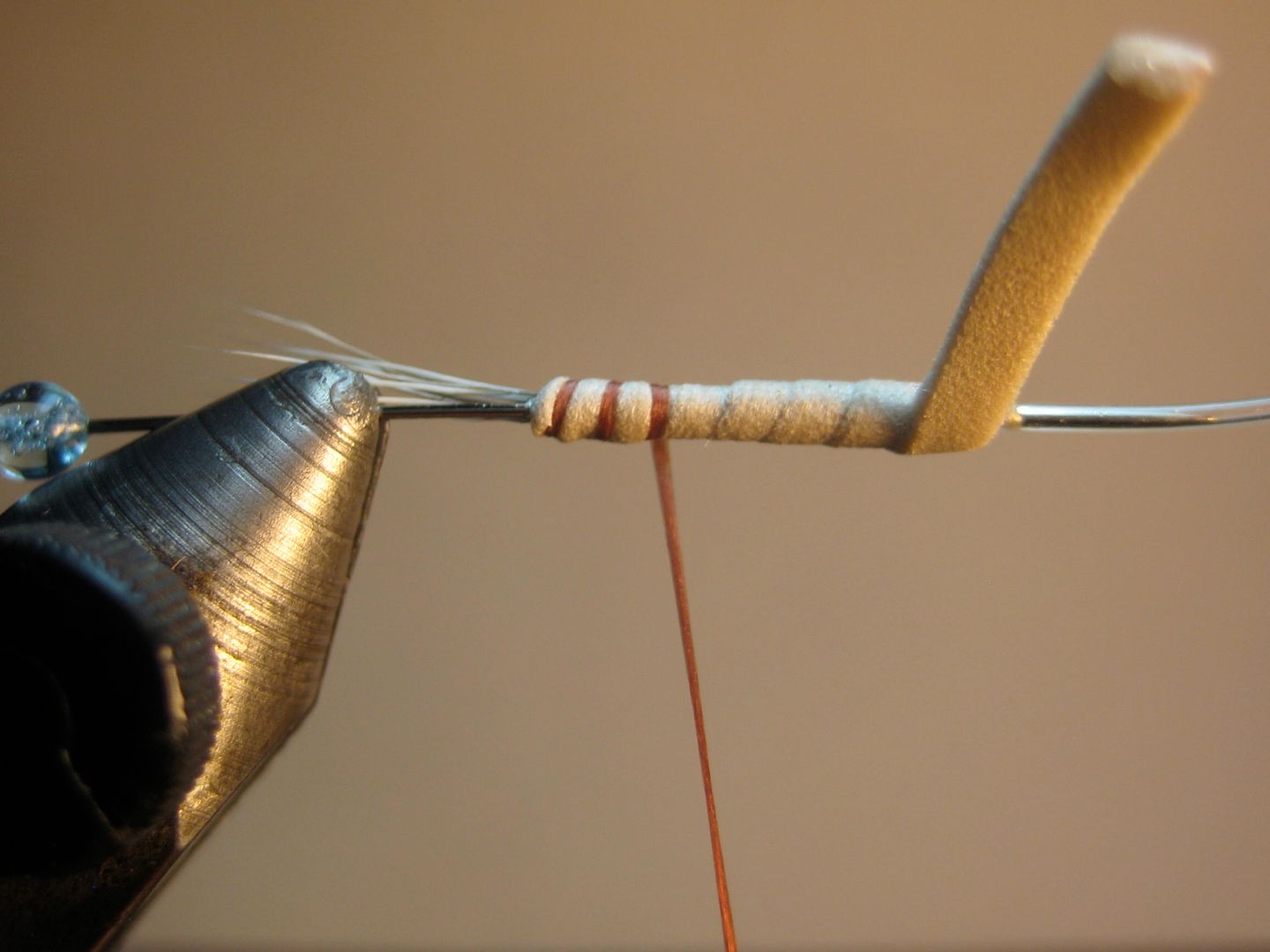
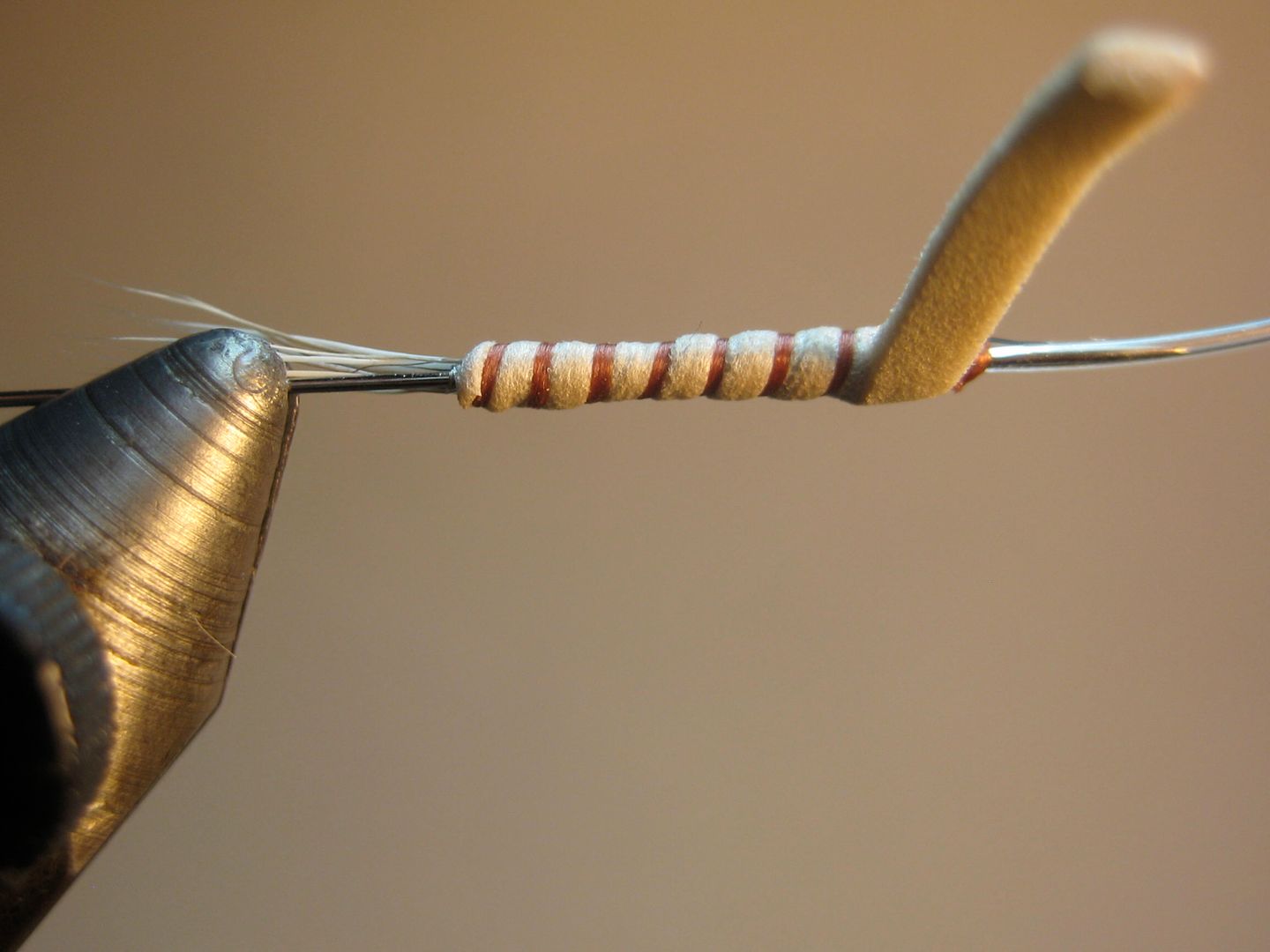
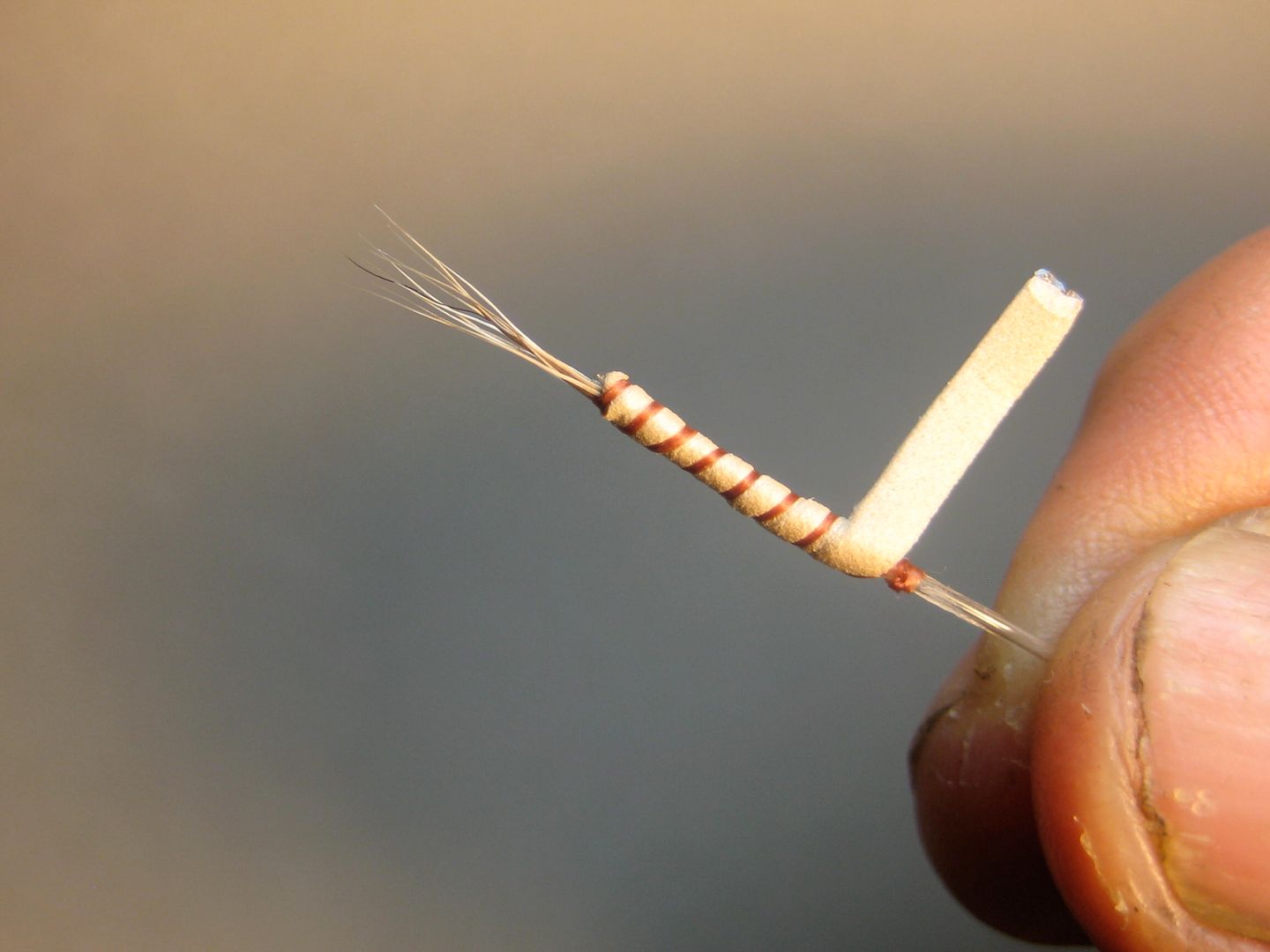
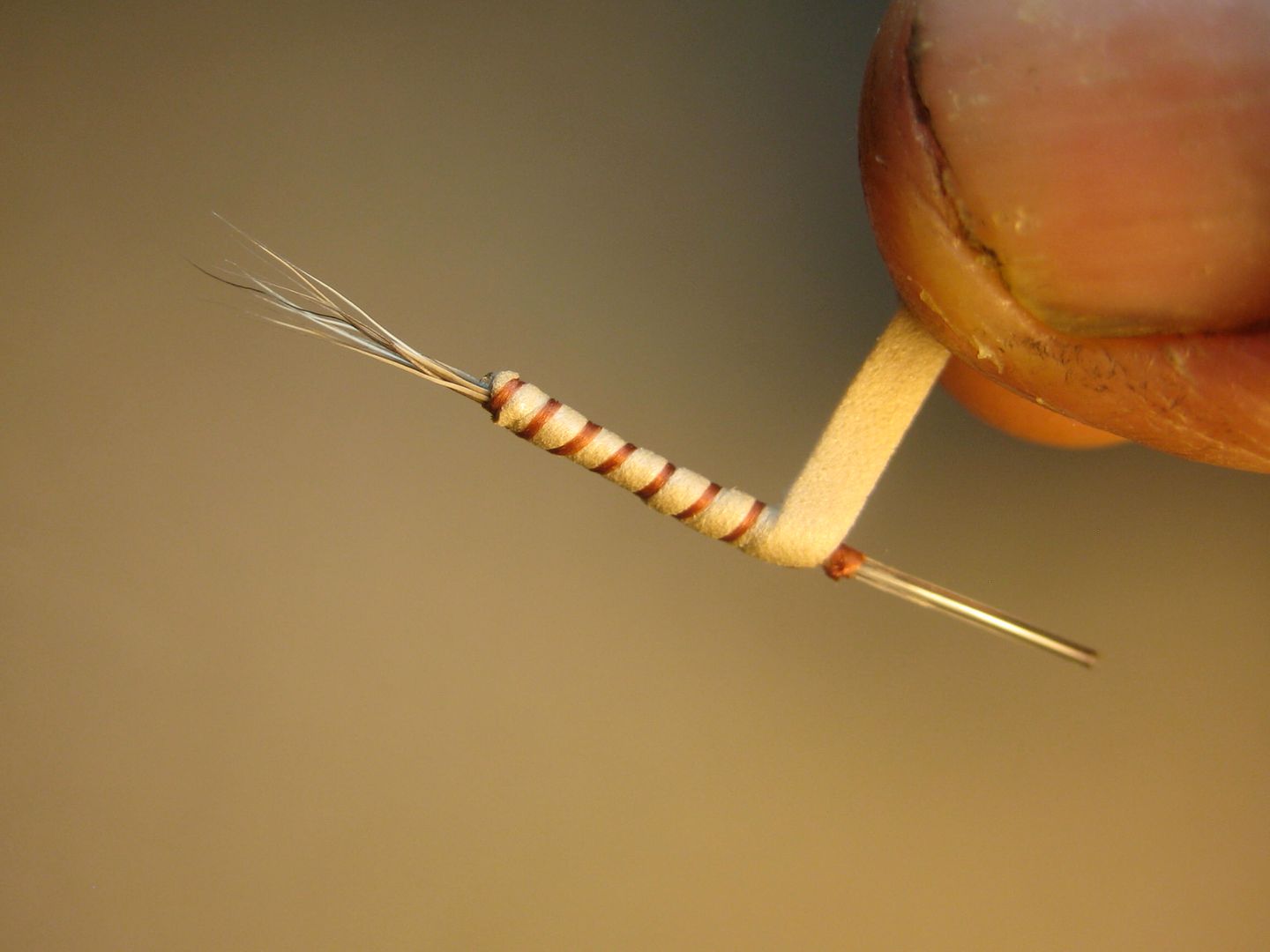
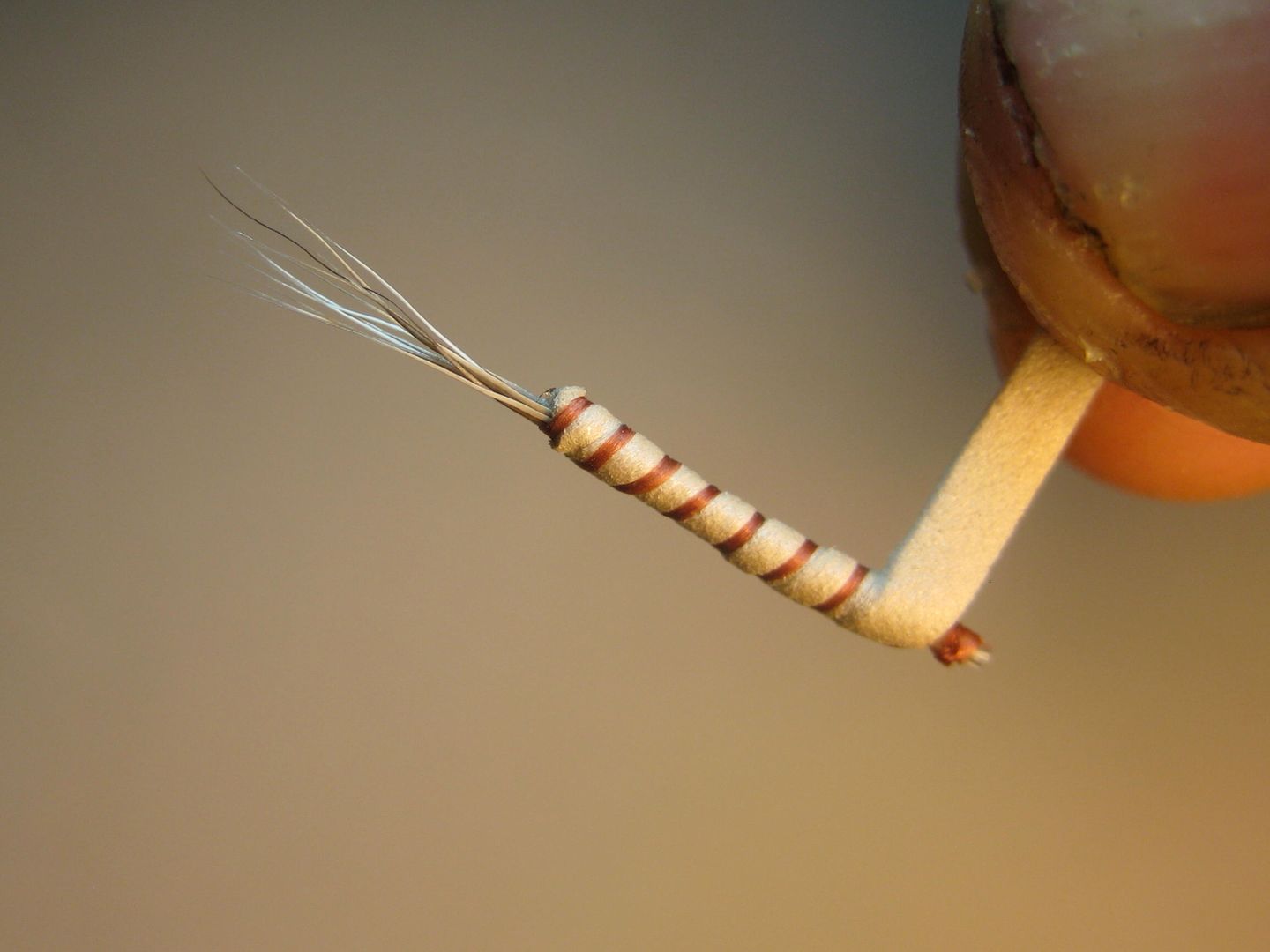
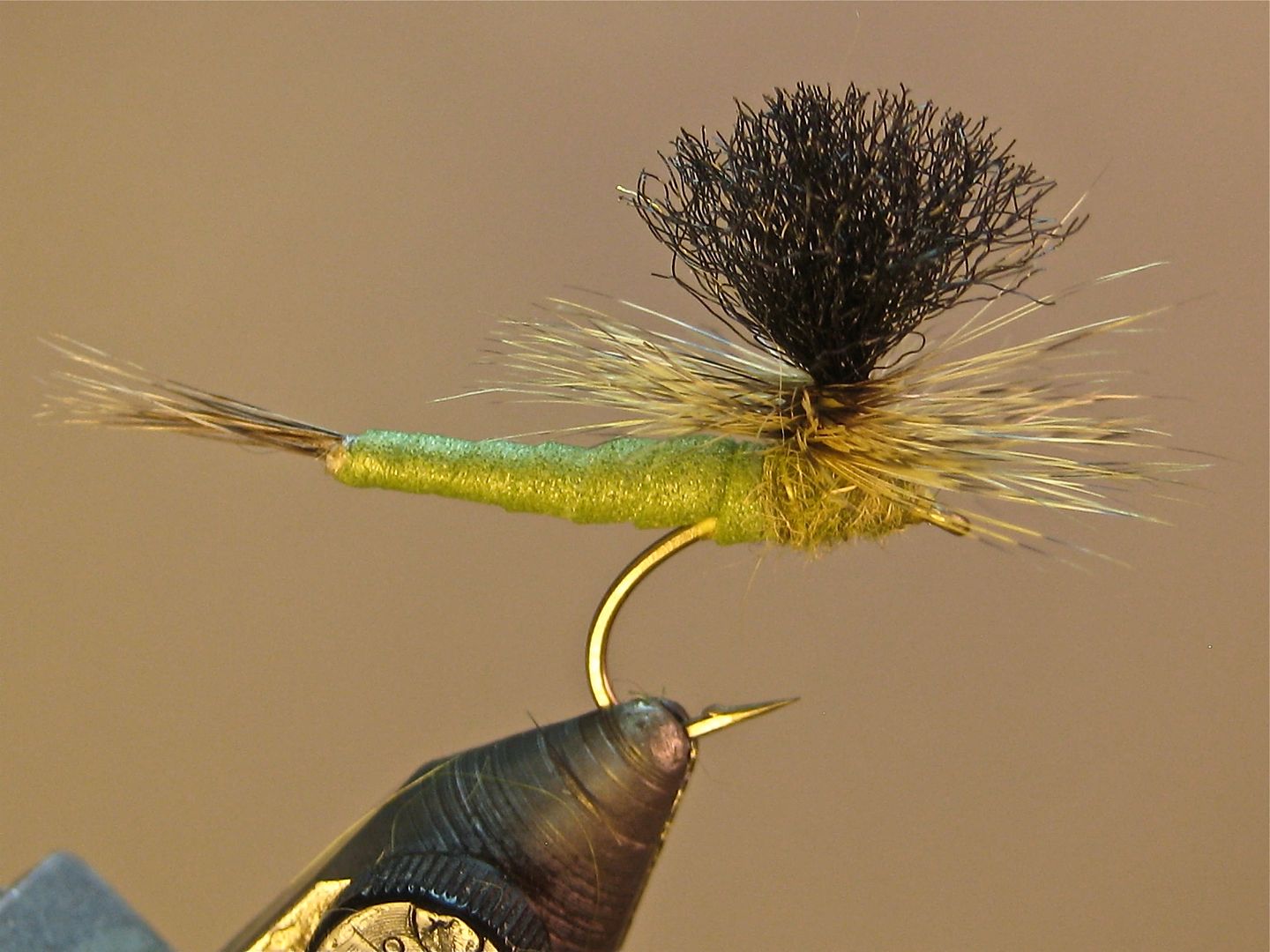
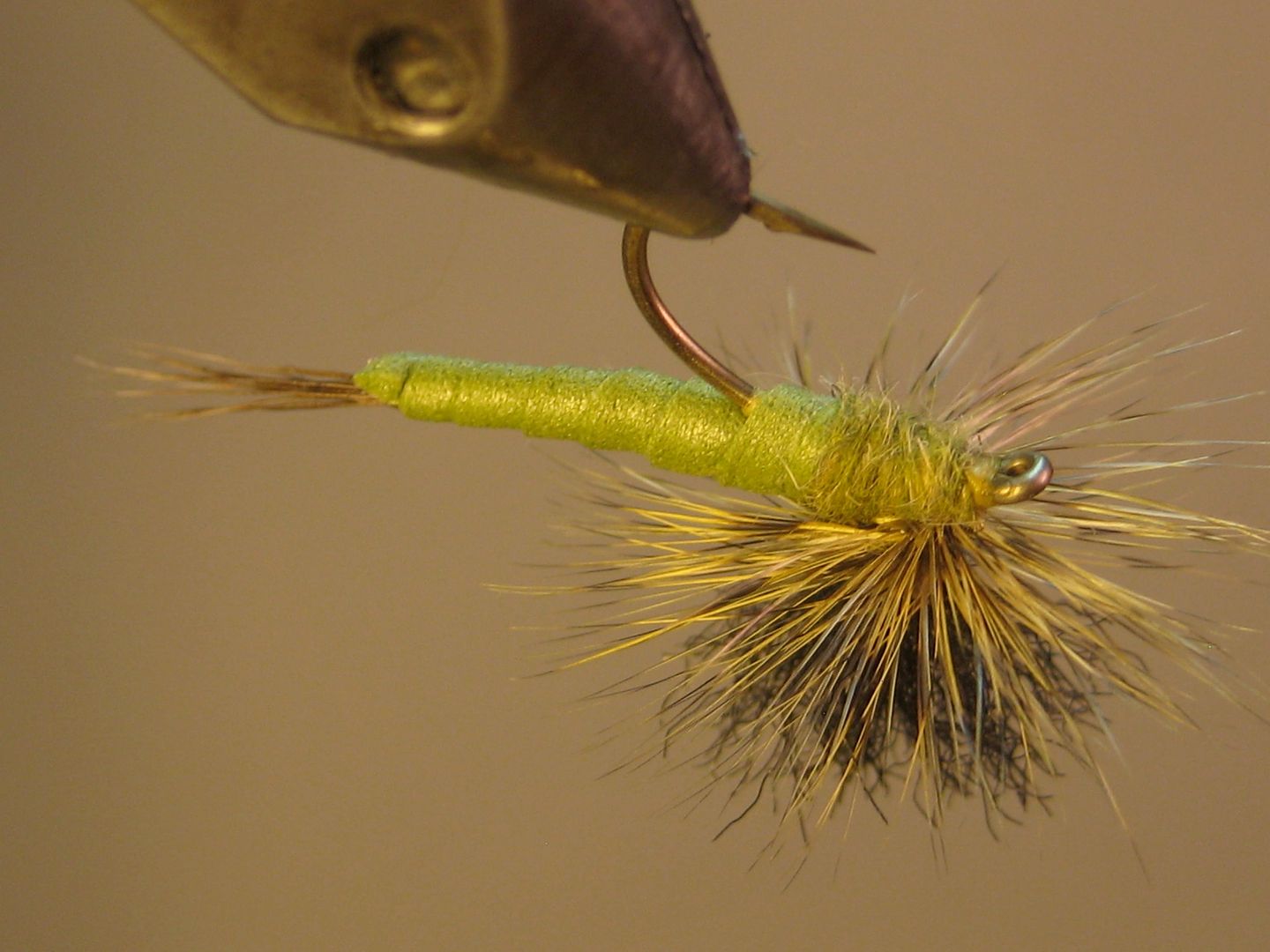
Figured I’d try the Carnage body on a drake. Wasn’t too sure how it would work and looking at the results, I’ve got a ways to go to get a properly tapered body. This is the first attempt but hopefully, you get the idea; pretty raw but even so, it’ll float and I’m going to try find out this week if it’ll fish.
hook - Dai Riki 125 #14
thread - UTC 140 tan
tail - elk hair
body - .5mm foam
wing post - Congo Hair white
hackle - barred cream
thorax - dubbing tan
Part 1
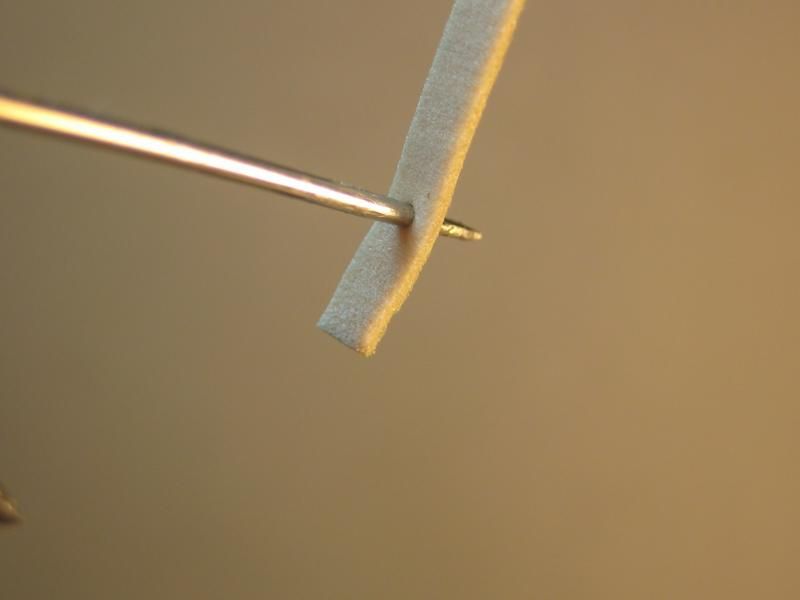
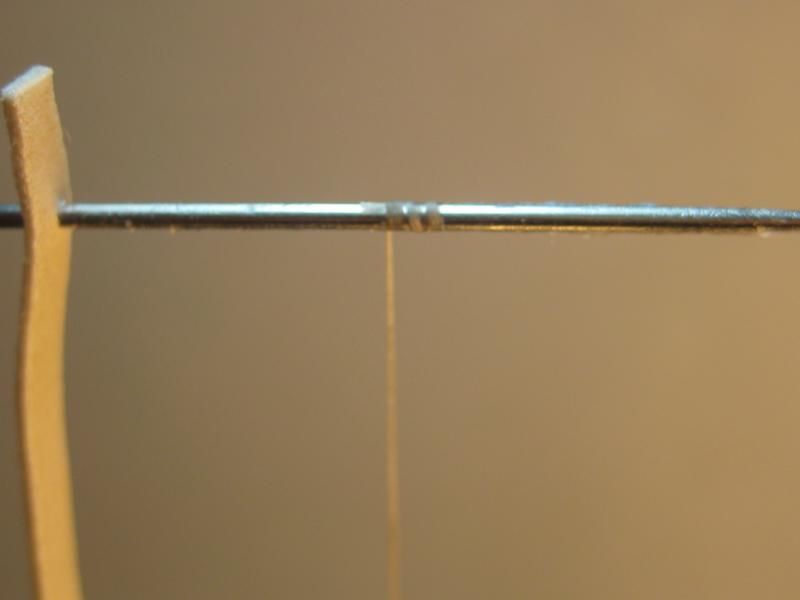
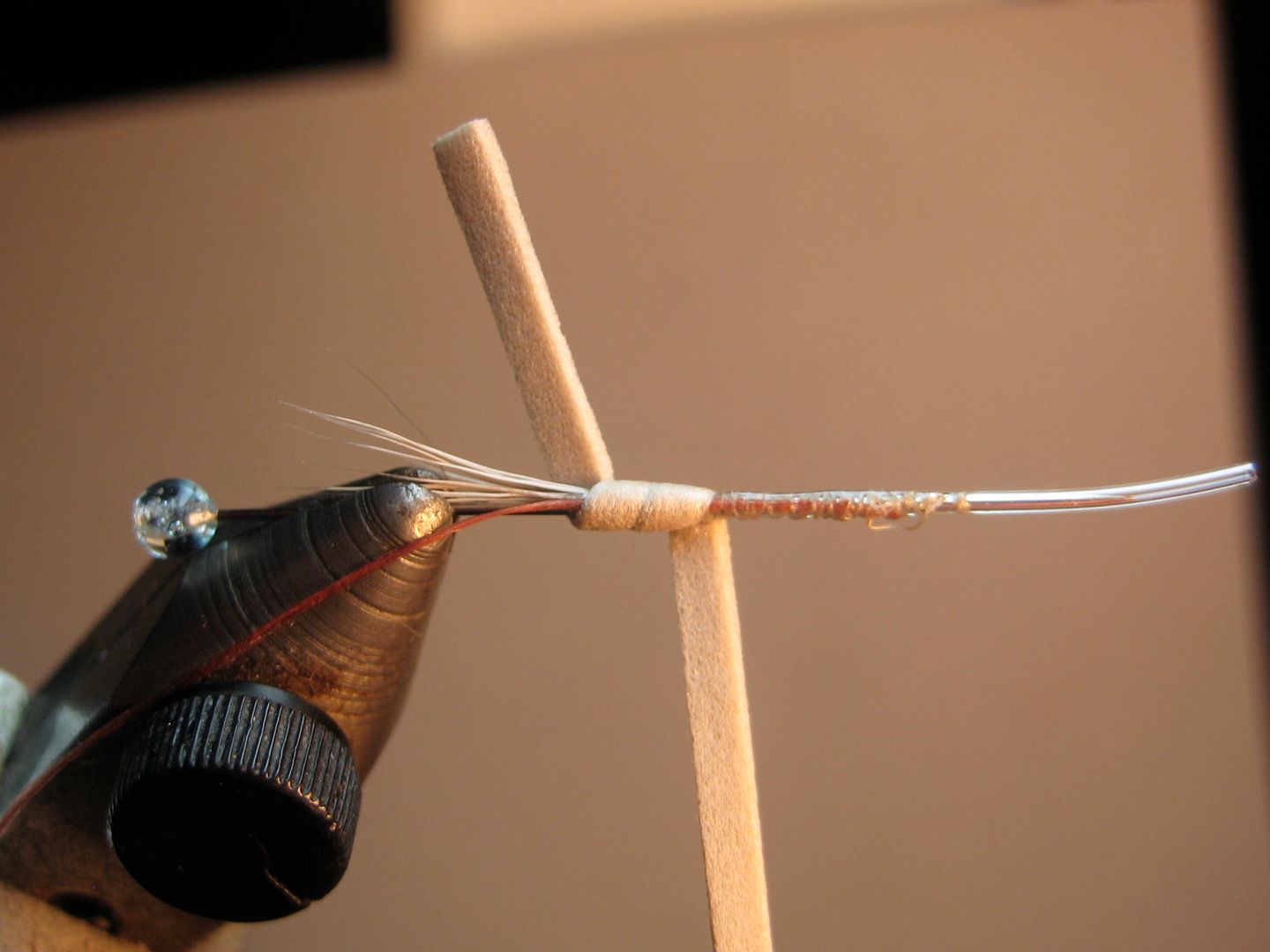
poke a hole in a strip of .5mm foam (1/2 hook gap width)
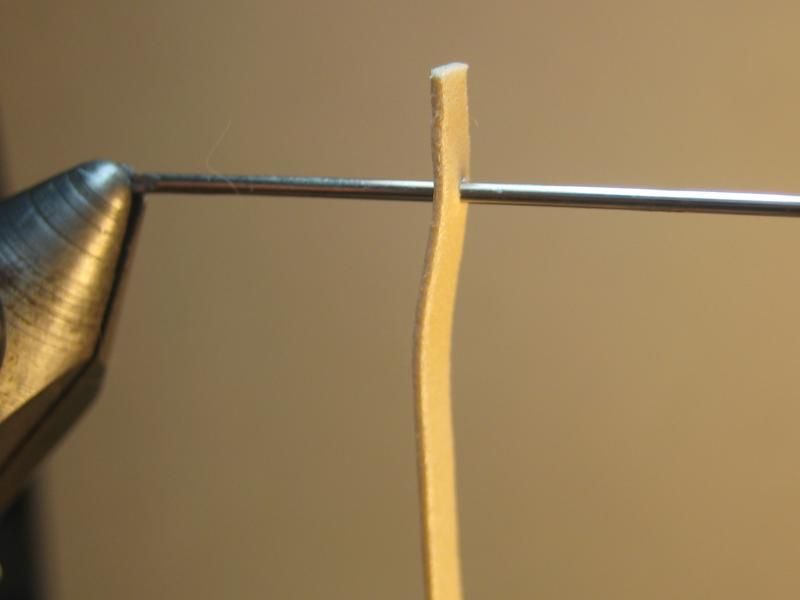
slide on needle (inserted in vise)
coat needle with Mucilin (or wax)
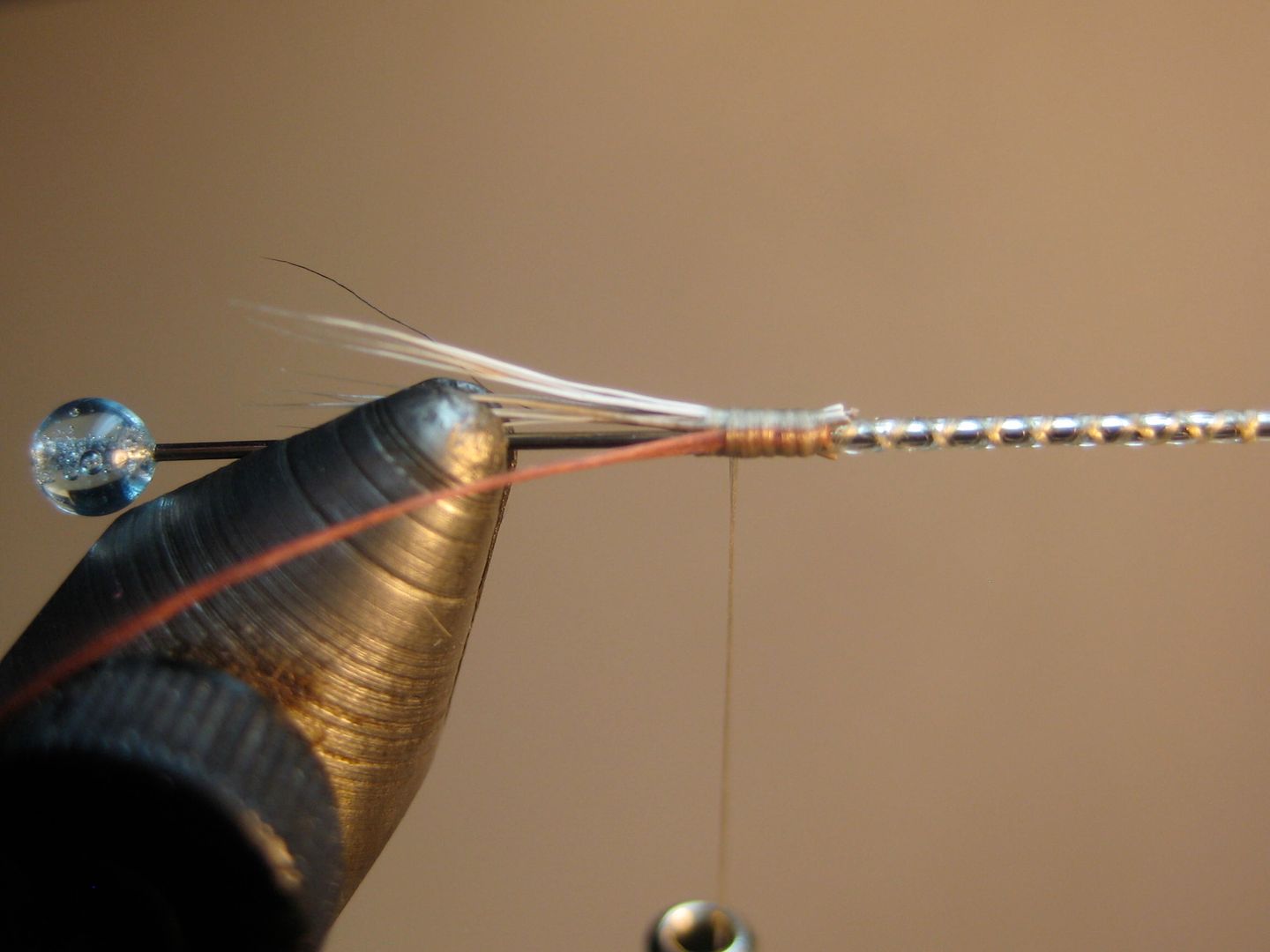
start thread on needle
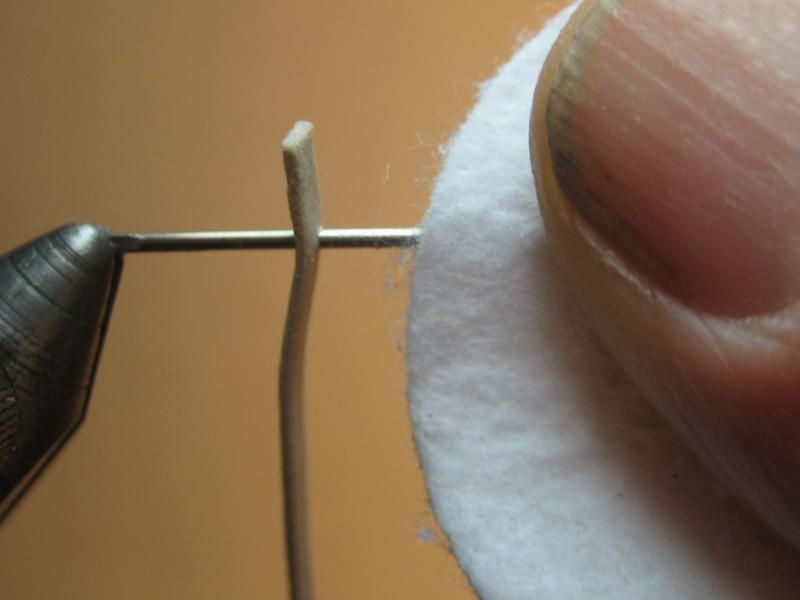
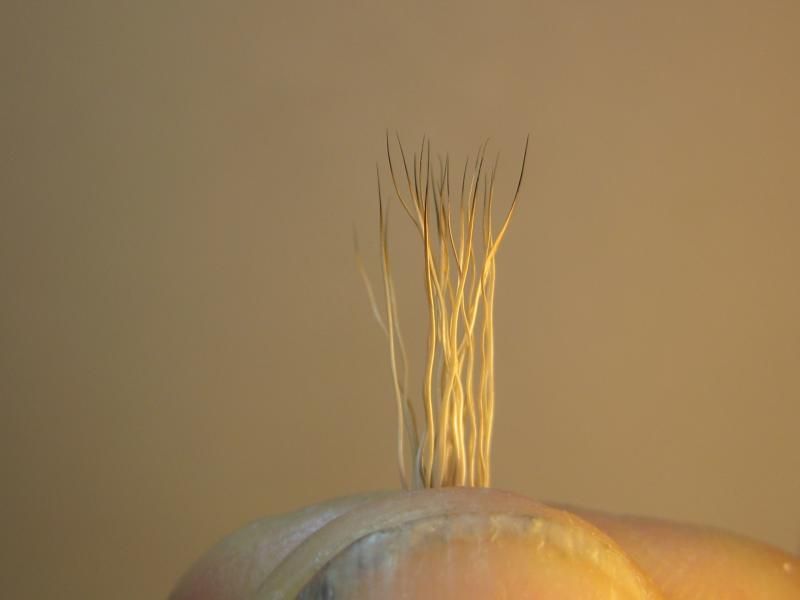
clean and stack a few elk hair fibers
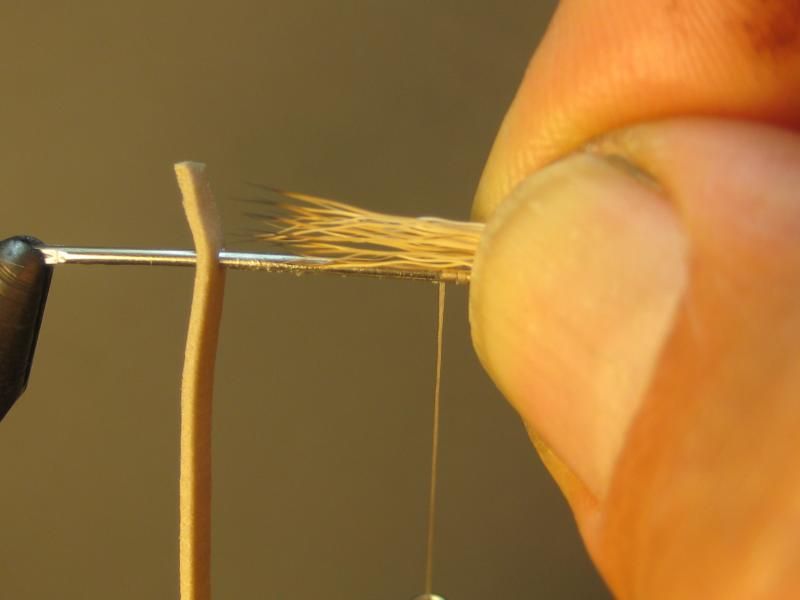
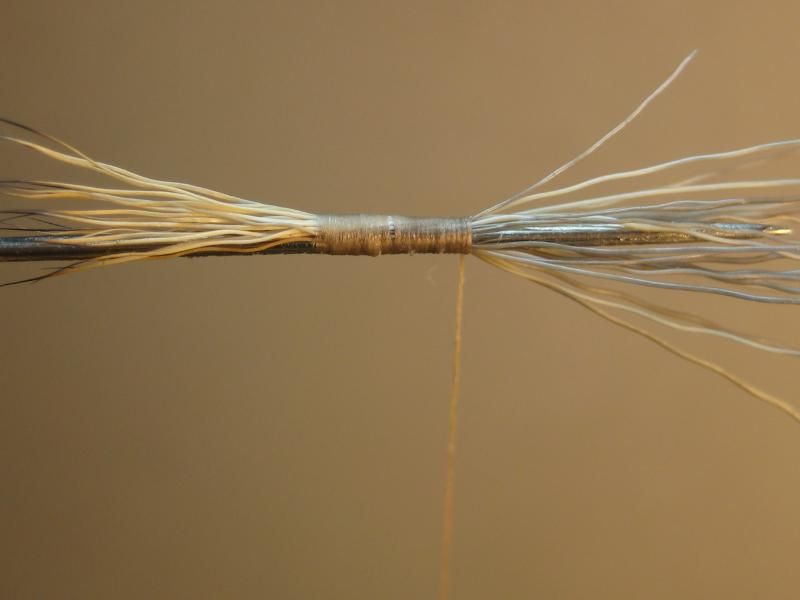
lay fibers on needle and tie in with a few wraps
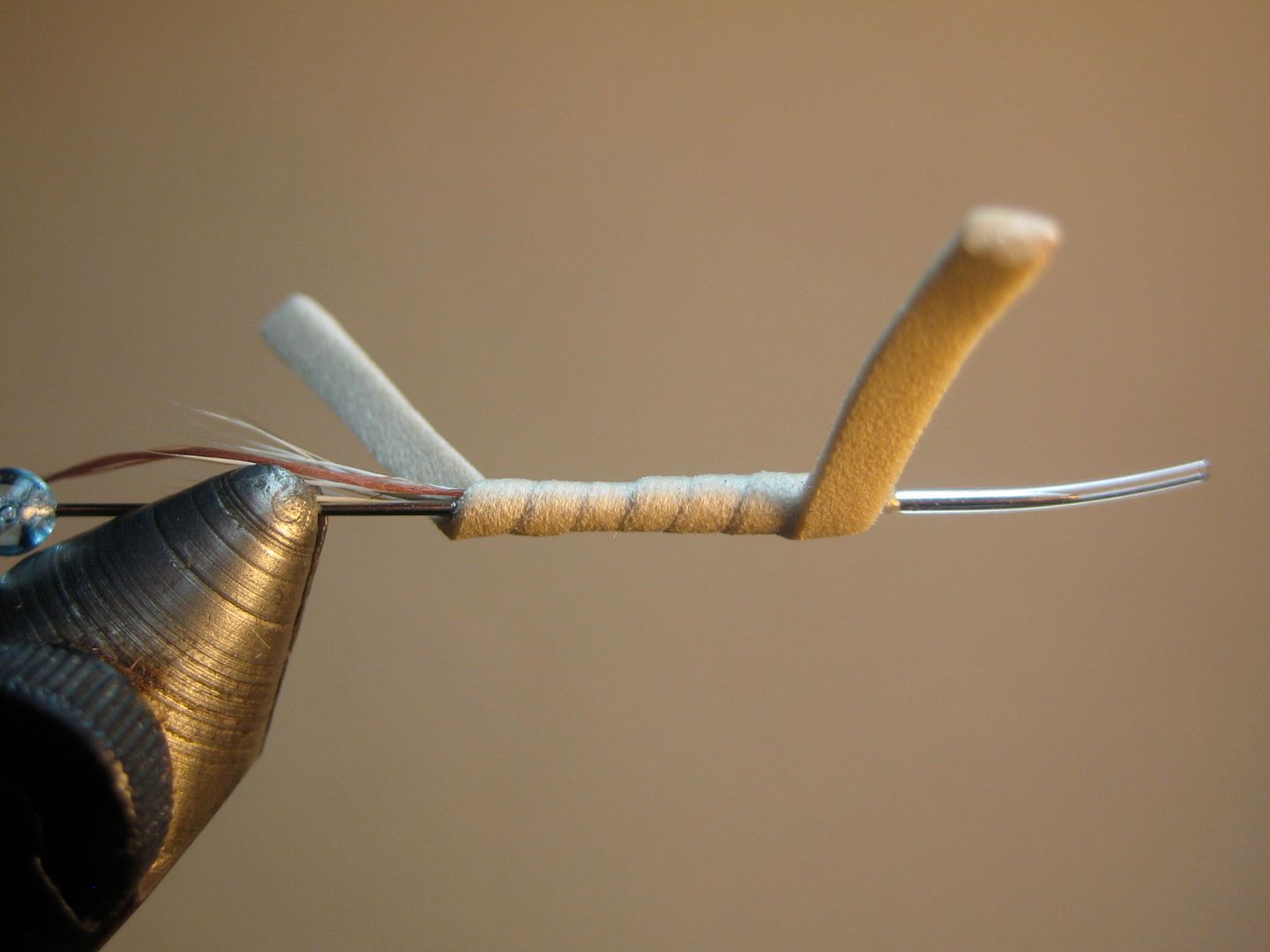
trim butts, tie off thread and slide foam up against tail
apply some dubbing and dub thorax; return thread to position at base of post
start wrapping hackle from the top of the post down
let the hackle hang down; take 2 turns of thread at base of post, trapping hackle
half hitch x2 at hook eye, SHHAN, trim wing post and you’re done
Need to work on body taper; wider turns to start, closer together to make it a bit thicker at the base - I think. A few less tail fibers would probably be in order, too; I’ll play around a little. Don’t know that I’d go much smaller than a #14.
Stretching the foam, starting the initial wraps as wide as possible with lots of tension and very little overlap, then decreasing tension and increasing overlap created the taper I was looking for. Also switched to the Dai Riki 135 (scud hook) to get a little more weight on the underside.
Took it out for a test drive and it landed upright and floated like a champ, even during a downpour. Didn’t catch anything on it (managed a very nice squawfish on a foam skwala) but I’m not sure there are any trout in the part of the stream I was fishing anyway.
Looking at the pattern, very nice by-the-way, and I wonder if it floats as well as you describe because of the effect of the parachute hackle, or the body material, or both? It just seems that when the foam is compressed, as it appears was done as it was wound along the shank, it would lose its floatation characteristic.
I’m pretty sure it’s the foam that’s doing most of the work. Although thinner than regular 2mm craft foam, it really isn’t compressed much; the first couple of turns stretch it out a bit, but after that tension is relaxed. The hackle is more for aerodynamics and helps the fly land upright.
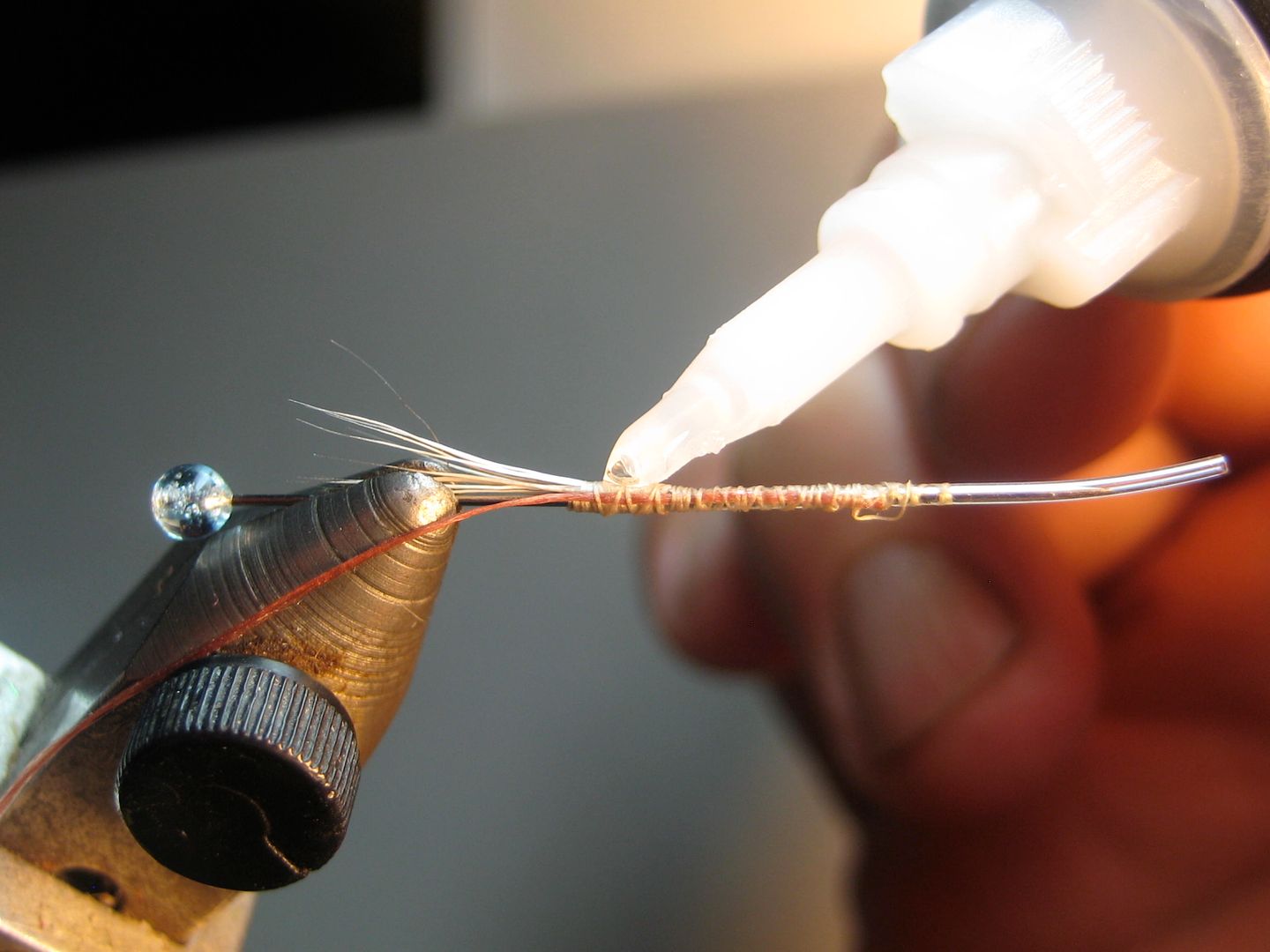
Drakes were even more fragile than the hoppers. After stumbling upon the heat-shrink tubing idea for hoppers, which probably wouldn’t work well on a mayfly except maybe Hex or mutant Labrador monstrosities, I gave the Hareline tubing (standard size) a try for a Fall Drake. A bit crude, kinks to be worked out, but it’ll fish; SBS to follow
btw, the dark wing made a huge difference for me on the days I was down in YNP; flat light made seeing anything a challenge, but the black showed up very well.
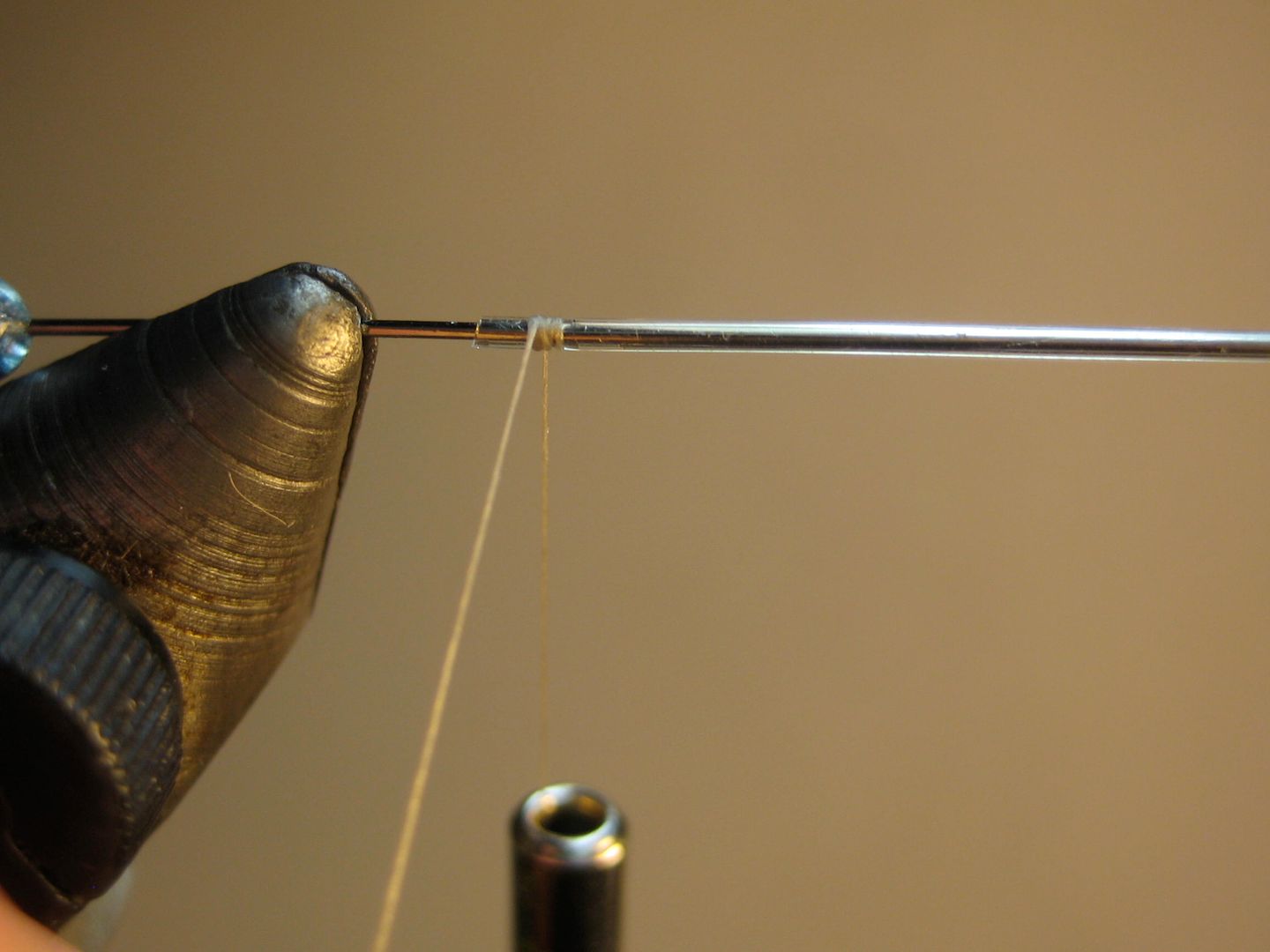
Insert pin/needle into vise (not sure what size it is, but it’s very thin)
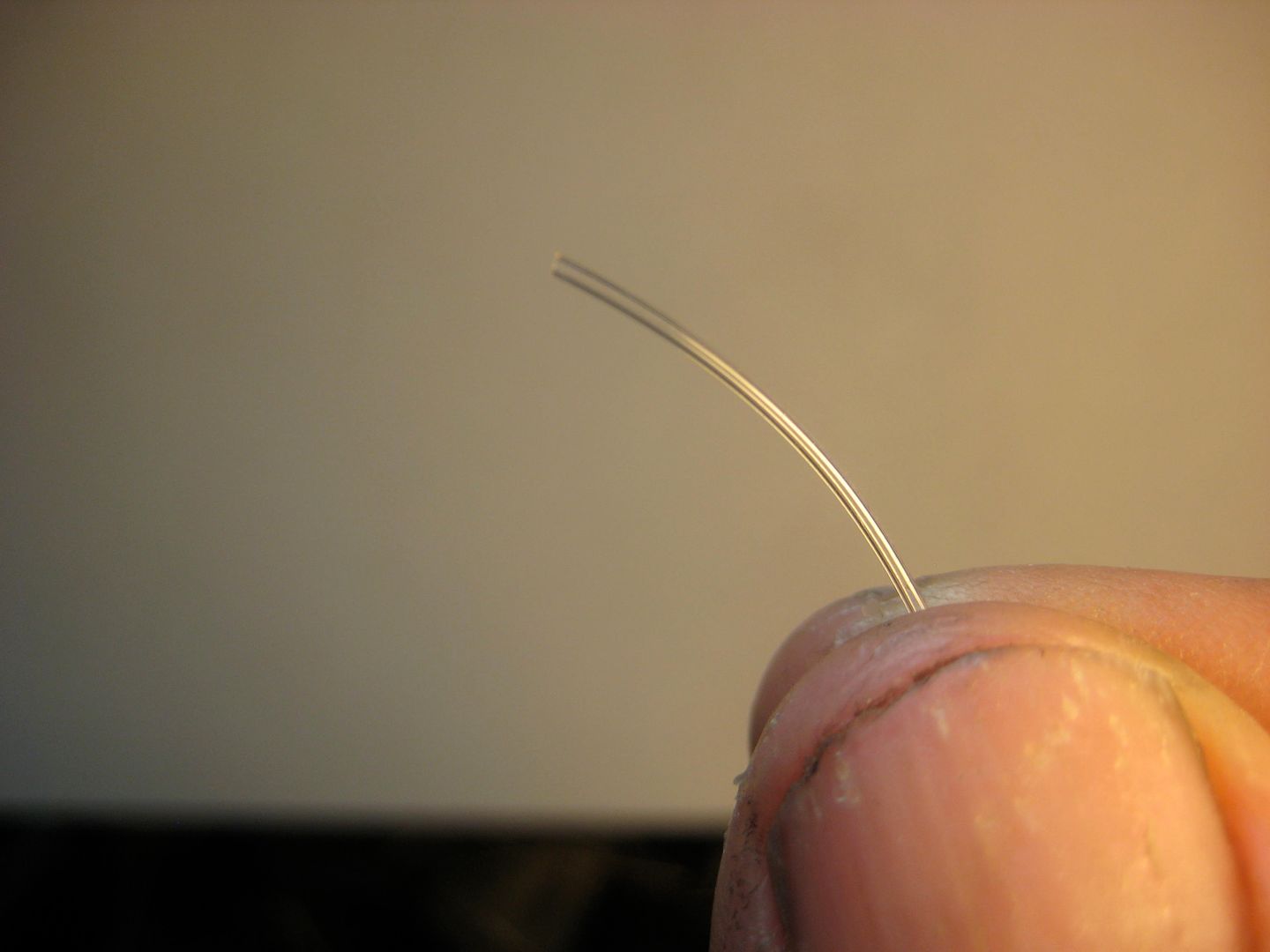
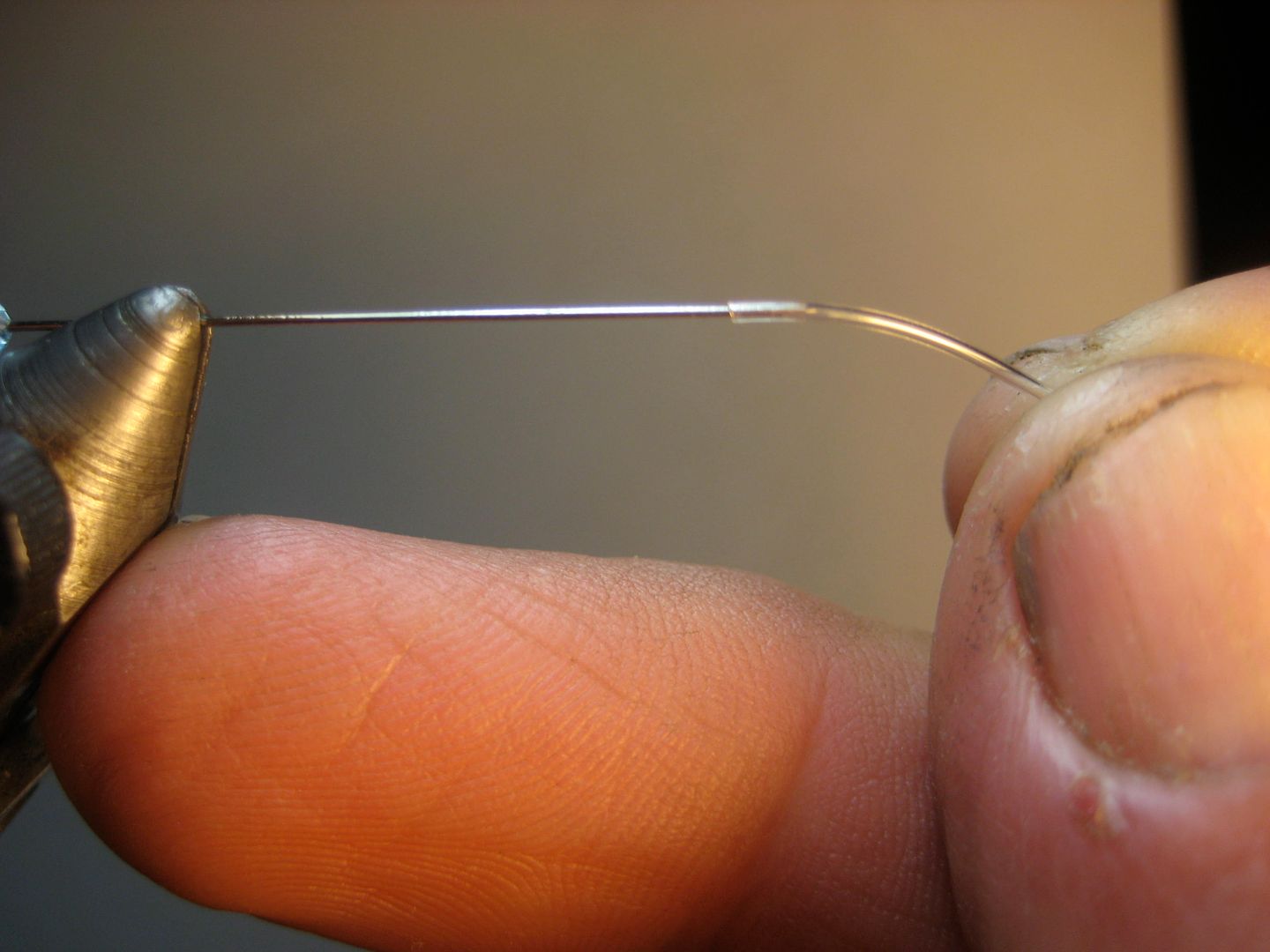
take some tubing and slide it on to the needle (sorry for the dirty fingers, changed front/rear pads and rotors this morning)
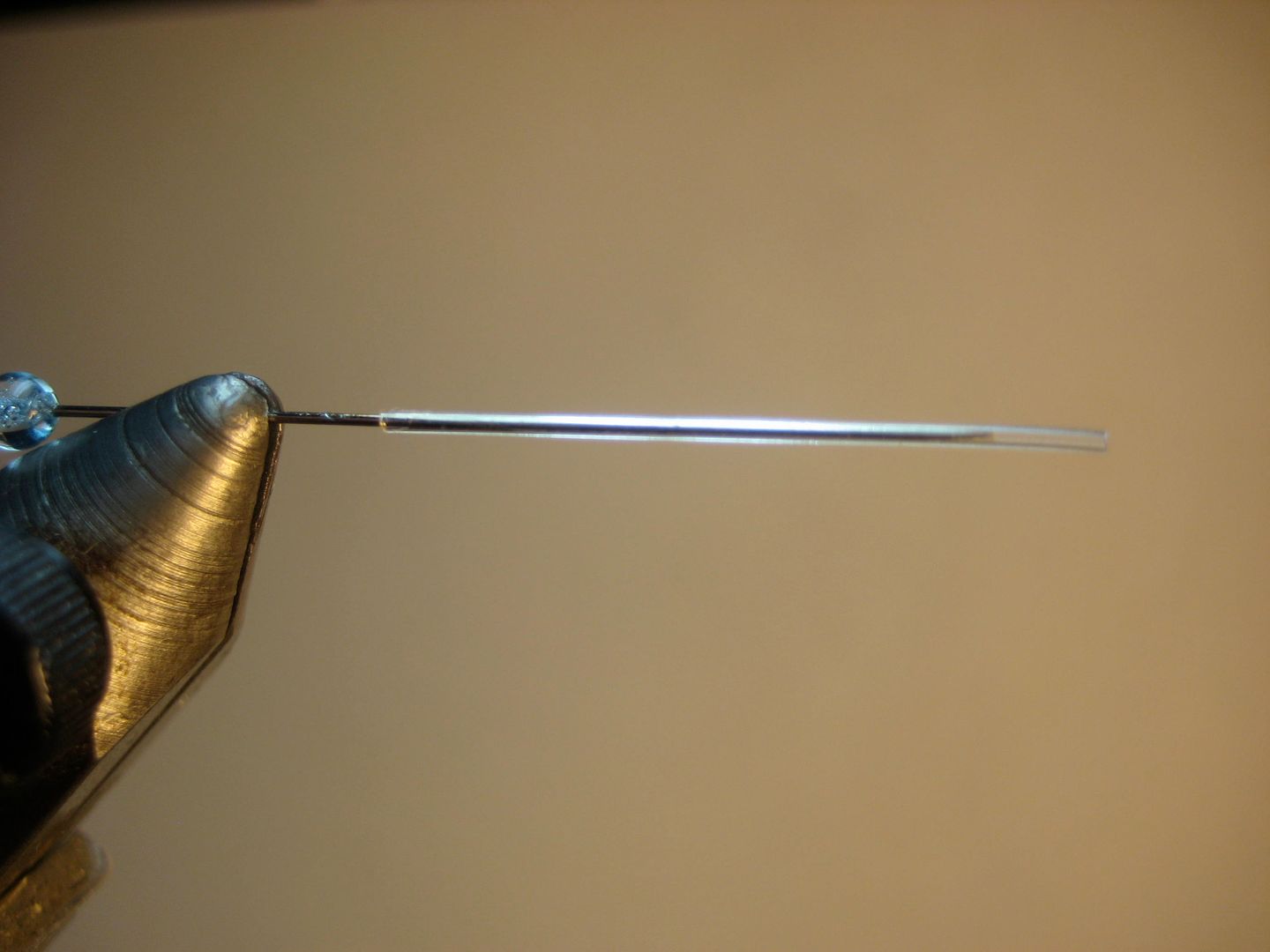
trim tubing, leave a bit extended past the tip of the needle (makes it easier to grab)
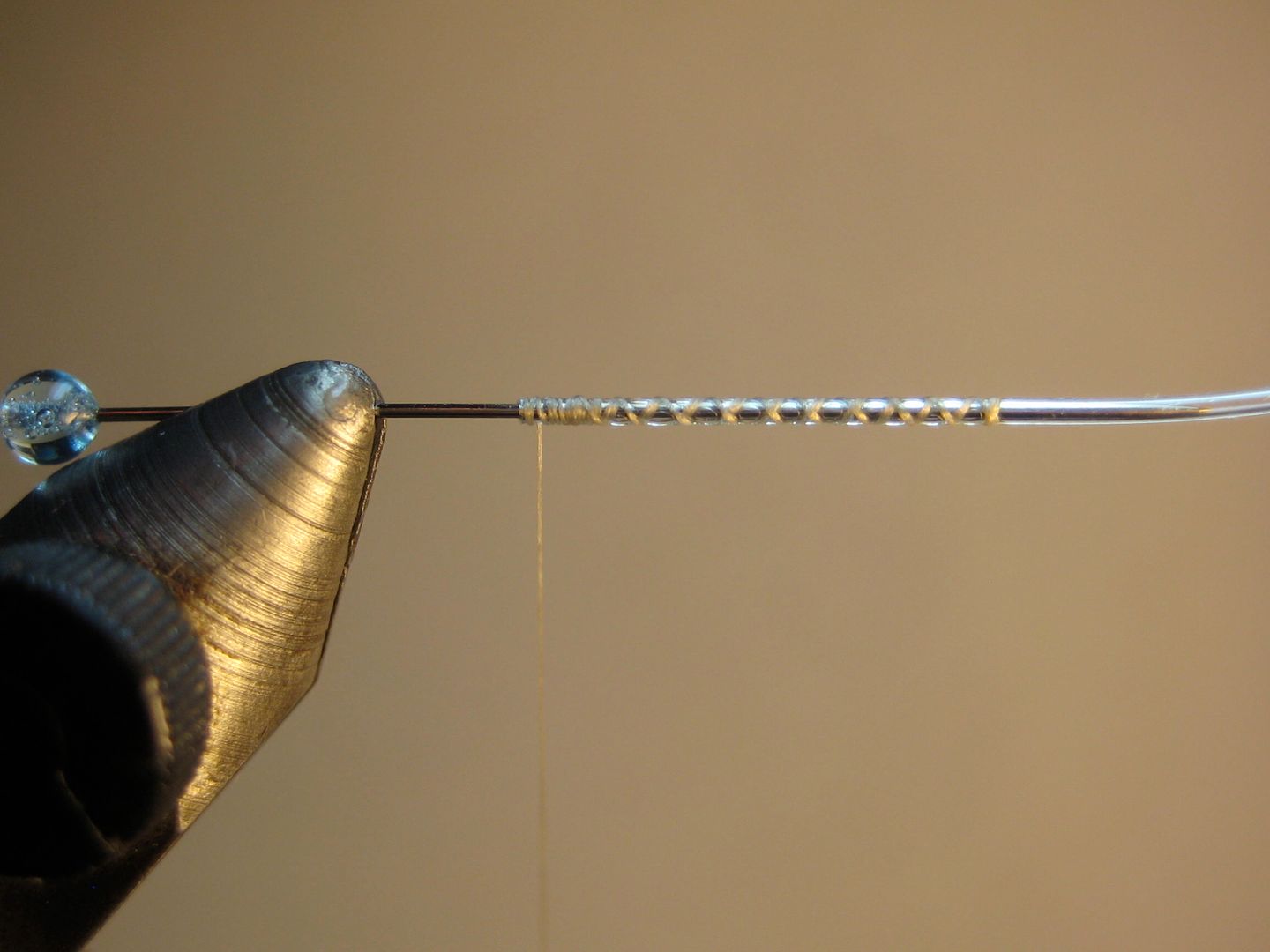
start thread back where the tail will be tied in, then spiral wrap tubing to help anchor it to the pin, otherwise it just rotates
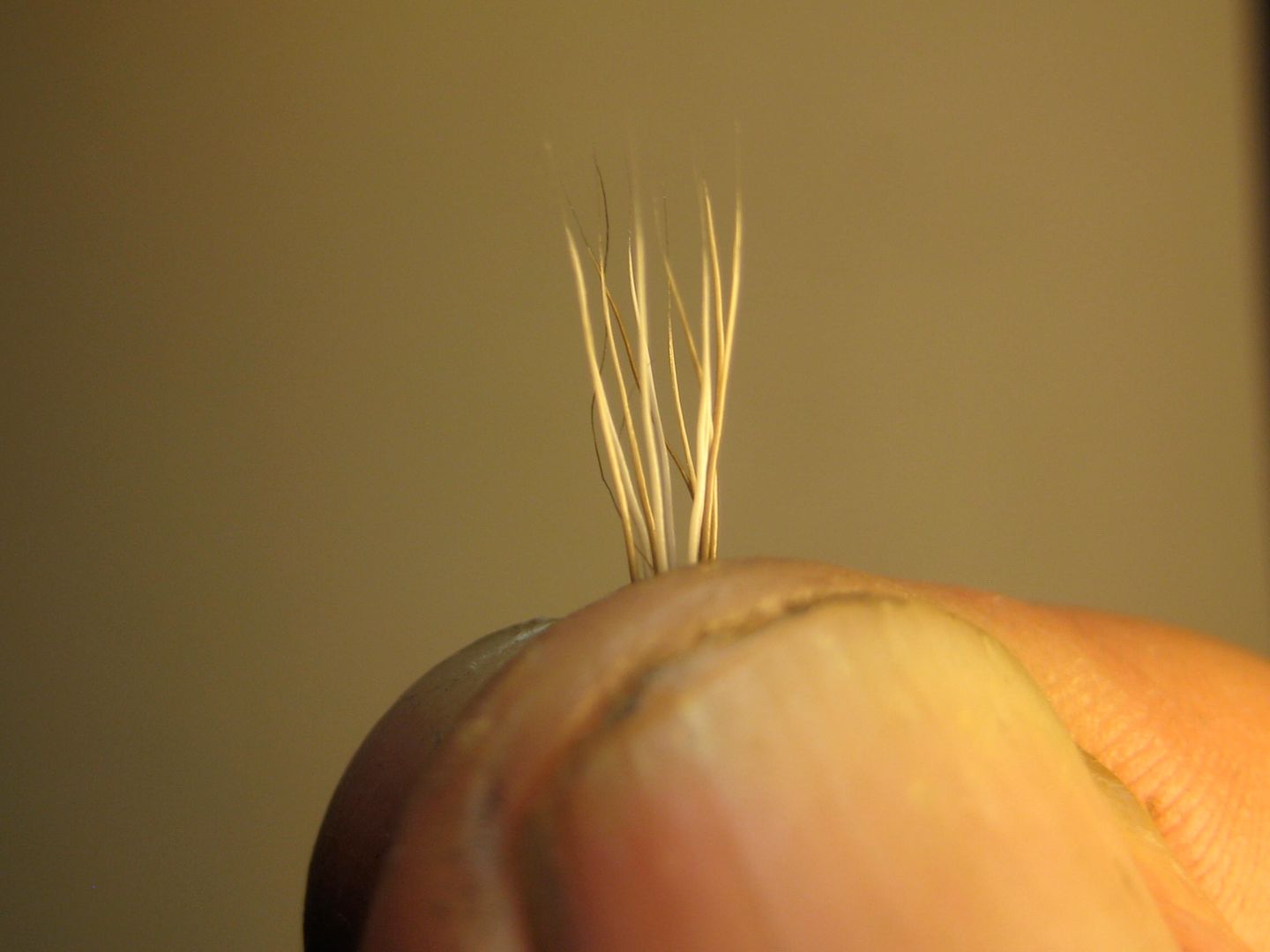
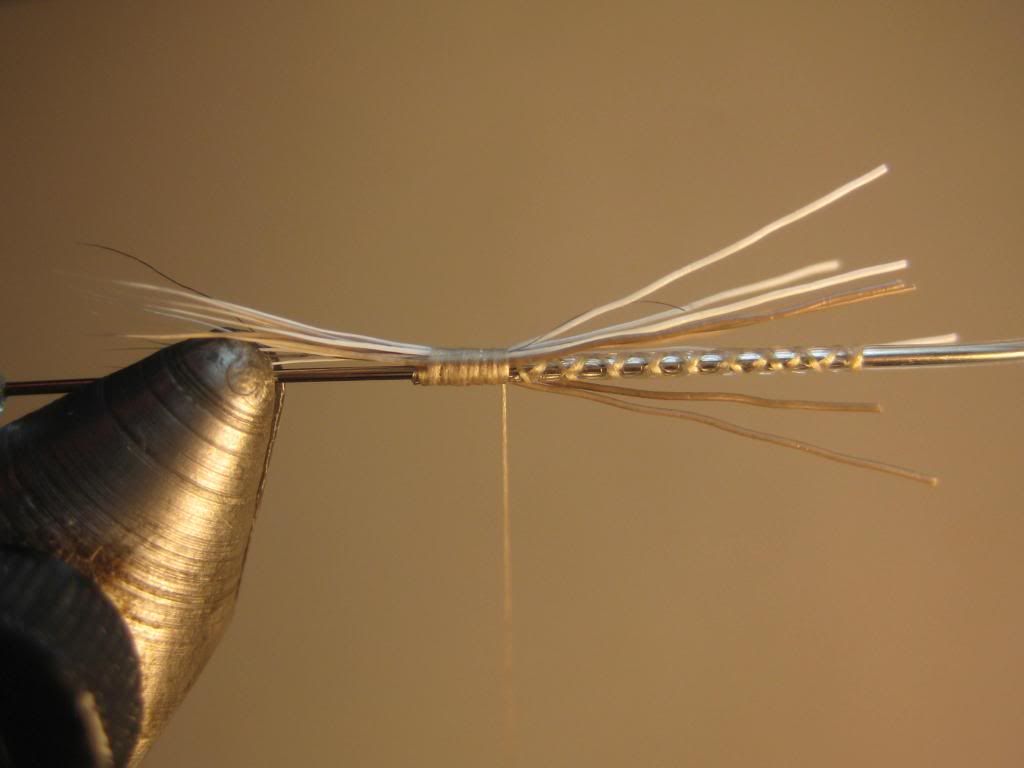
stack a few moose body hairs for the tail and tie them in; hackle fibers tend to suck up Super Glue (capillary action) and I’m not crazy about how that looks