Just back to Manchester after a week’s holiday trip to Edinburgh. No fishing for me, and no fly tying either. However, the other day we stopped into the local library to let our daughter play in the play area. I had a brief nosey around and by total coincedence found myself in a section of books that included fly fishing! I picked one, the title and author of which I’m ashamed to admit I’ve forgotten, and had a look. It was a daily diary of a years fishing by the author. I only had a chance to read one or two entries, but in it he listed the dressing of a north country spider fly that he had particular luck with, a buzzard and grouse.
It was a body of buzzard herl, ribbed with primrose silk, with a turn of grouse hackle. I have no idea what colour the buzzard would be, but I imagine it to be brownish (which makes me think pheasant tail hurl as a substitute). It’s an English book, so it would be a UK buzzard of some sort.
Anyway, as I picture it in my mind’s eye I see it as a very fishy looking pattern, especially tied small, size 16 say.
Anyone who has some spare buzzard laying around can feel free to tie one up and post a photo!
Jeff, Thats an interesting sounding fly. Our buzzards in the desert are mostly black and grey. Occasionally come across lost feathers under trees where they roost. I’ll try to ty one up. Jim
Was is buzzard, or bustard? Bustard was rather common in traditional salmon dressed flies, as well as wets. Now it is pretty expensive and harder to get.
You can get ostrich and emu herls in tons of colors. They are both similar to peacock, but with longer softer “fuzz”. I’ve never worked with bustard, but someone else may have a sutible substitute suggestion for you. Or you can google it and see what you come up with.
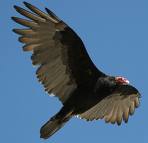
Our “buzzards” are vultures. In Europe, buzzards are buteos (broad winged hawks), a group which includes red tailed hawks in this country. So, I’m guessing brown is correct.
Our critters here in the desert are turkey vultures. But they are black and grey. I’m old school cowboy. When you see those vultures circling around you know they are on the trail of a corpse of some sort. Just ask Gene and Roy.
Now, my apologies for straying from the purpose of this thread. Jim
It’s my understanding that Buzzards here in US are a federally protected species. For my money, it certainly wouldn’t be worth getting caught with the feathers of a federally protected species just to tie up some flies that you can use substitute feathers for. Just a thought…
It was buzzard, but as it was a UK book, this refers to a hawk rather than the North American use for a vulture. Hawk feathers were commonly used in New Zealand fly tying in matuka style patterns, but they are now protected and I don’t think you can use the feathers anymore. From what Donald indicated, sounds like that is the case in the UK as well. The hawks in New Zealand are generally brown, with the feathers used in most hawk flies being quite a light ginger. NZ had a range of “hawk” patterns, but I’m not sure how common they were in the UK.
As admirable as Messrs. Autry and Rogers (nee Sly) were, they are not the most reliable guides to wildlife behavior. Vultures (and true buzzards for that matter) circle to gain altitude; they’re trying to stay in a thermal. My other hobby is fly radio-controlled sailplanes, I spend a lot of time watching vultures, hawks, and the occasional eagle.
They may indeed use the altitude to search for food, but they may just as likely be returning to a nest site, or migrating.
If you see vultures circling, it is not a sign that there’s something dead nearby. If there were, the vultures would already be eating.
I have a Brahma Hen neck that is about the color of the feathers on the Common Buzzard. When I get back home I’ll tie up a few (with English Grouse) and post a photo.
I’ve joined up at the local library and took out the book where I found this pattern. It’s “Once a flyfisher” by Laurence Catlow, first published in 2001, ISBN 1-87367-48-1. It’s written in diary format (with dates, etc) and looks to be a good read.