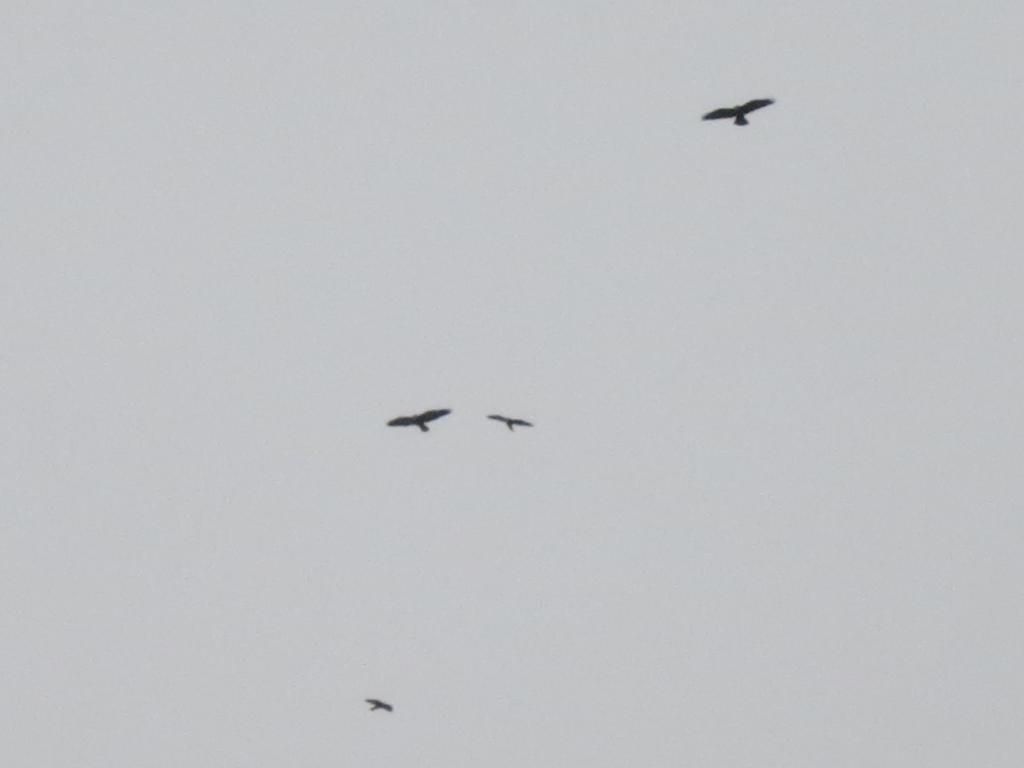
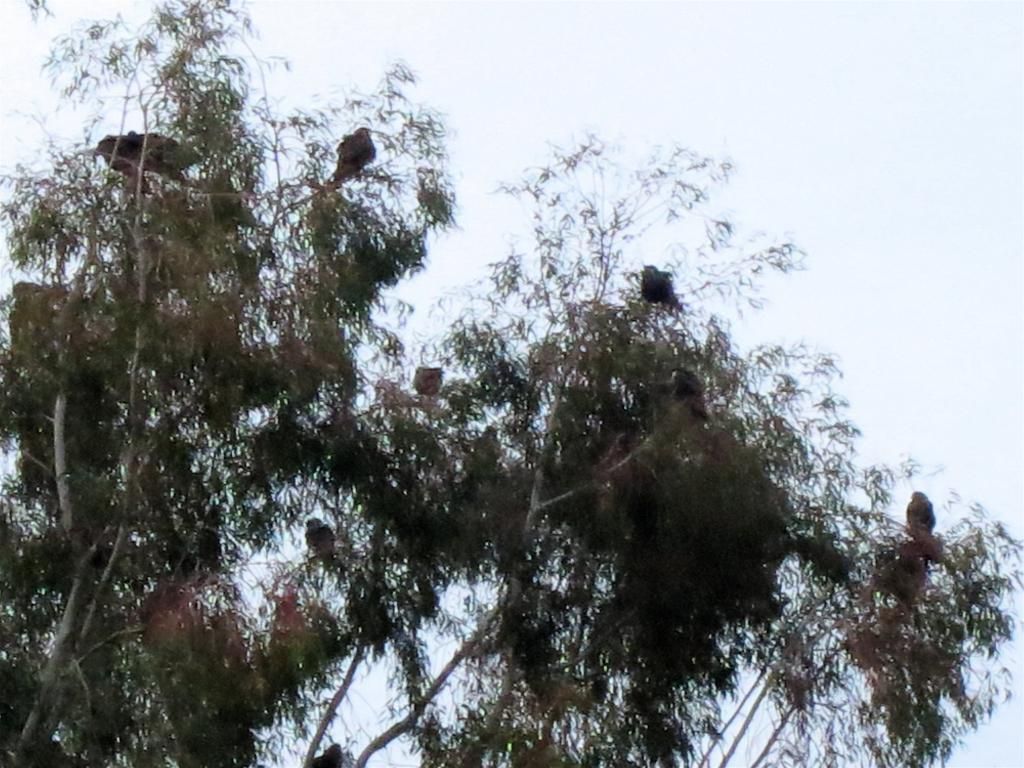
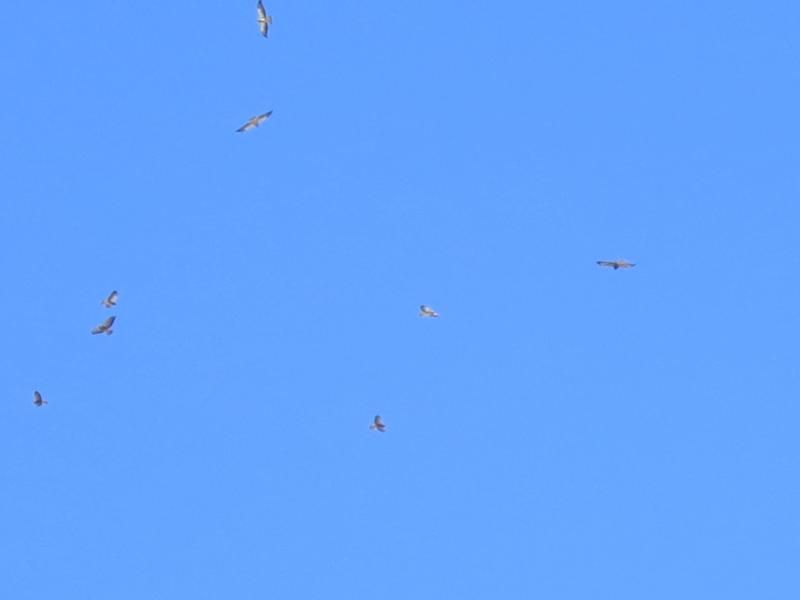
Had over 100 Swainson hawks come in for the evening roost (we’re a major stop on their migration route from South America to their breeding grounds in the US and Canada). Sorry for the crummy pics but I couldn’t get any closer without flushing them from the trees (which I did; luckily, they came back) and our P&S doesn’t have the best optics. Right around dark a pair of Great Horned owls which have been living in these trees started hooting and most of the hawks bolted and headed off to another part of the community we’re staying at. The migration’s really just starting to pick up steam and should peak over the next 3 weeks so, hopefully I’ll get some better pics. Pretty cool birds, when not breeding, their diet consists mainly of insects ; beautiful plumage.
I think it is a pretty neat thing to experience something most people never have the opportunity to see.My problem is most of the time no camera but that’s OK,I capture it in spirit.
They’re pretty birds, not as big as redtails, but good-sized. They spool up in “kettles” in the morning, mixing with turkey vultures, and then head up the mountain valleys on their way northward to their breeding grounds.
The High School I teach at had a Swainson’s Hawk monitoring project for years. Built nest boxes, checked numbers, etc. we are a stopover for them too.
Easy to ID…the leading edge of the wing is white (there is a dark morph of the bird, but is uncommon) in adults. They eat a lot of insects like hoppers…which led to a drastic reduction in their numbers in Argentina in 1996. Over 20,000 birds died in a small area after eating insecticide-laden (monocrotophos) hoppers…
They are coming back strong out here, but we have a smaller population than the midwest and plains states
I got lucky with birdwatching this year. We came to Borrego Springs this winter so my wife could spend some time with her mom and just happened to hit the Swainson migration, then we head up to Montana in April (where her mom lives) and I’ll be spending a week on the leks working Montana Audubon’s Sage Grouse study.
While they eat plenty of hoppers and such when available, it is not exactly correct to call them insectivores… A lot of ground squirrels have found they are called raptors for a reason. I have spent hundreds of hours watching them under several different sets of conditions. The only things I ever saw them eat were ground squirrels, lots of them.
Had 2 Swainsons directly overhead 100’ apparently feeding (flying ants?) this morning. I’m guessing flying ants because I’d seen a few throughout the morning; could have been something else - the hawks appeared to partially extend their talons to grab the bugs and then reach their head down to eat; pretty cool.
One had dark chest/light body, the other was all dark body. Forgot the camera; last time that happens.
Saw about 200 kettle up this morning during what appeared to be a blizzard midge hatch (sorry, no pics; wife’s in Great Falls on family matters and took the good camera); I’m thinking a Buzzball or Griffith’s Gnat would have been effective.
Also saw a roadrunner about 20’ up in a tree; didn’t know they flew that high, I’ve only seen them hop up into some bushes.
As a kid we got into trouble catching bats on flies on long cane poles. My grandmother did not mind getting rid of the bats, it was drowning them in her rain barrel (her only source of drinking water) that bothered her…
Got a few shots from this morning’s departure. Unfortunately they were up about 500’ by the time they flew over and even with a passable zoom on this little P & S I was doing this handheld, so quality is what it is
side by side with examples of light and dark morph; interesting to see the color variations