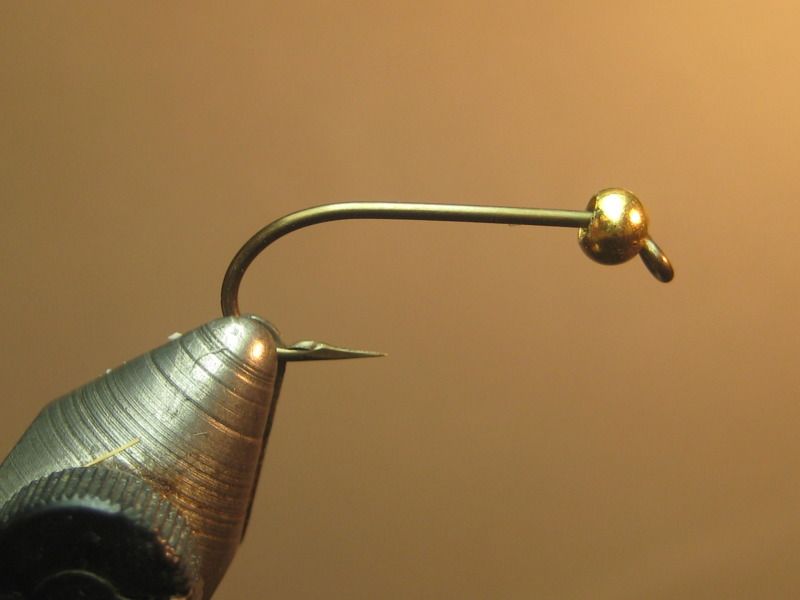
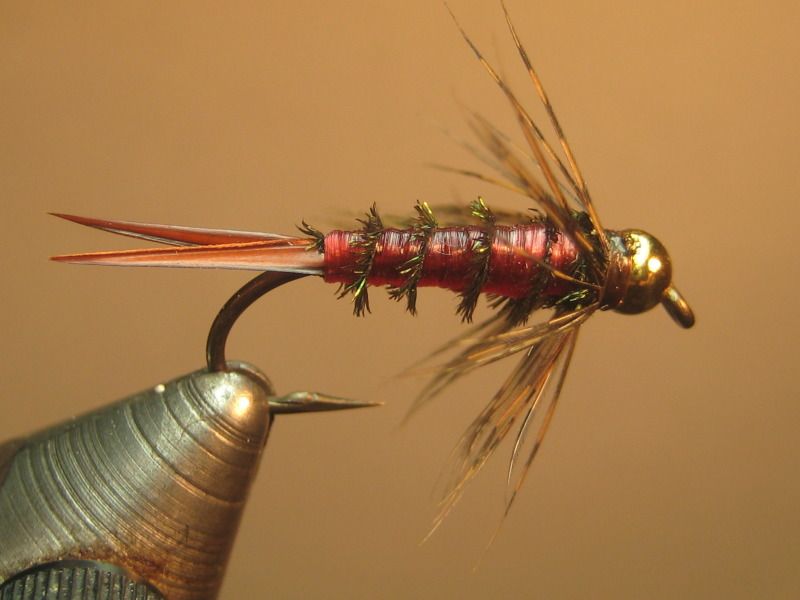
Found this fly while poking around the flyboxes at Kingfisher’s in Missoula (nice shop, love their rolling material racks). S’posed to be a good bet on Rock Creek; turns out it was.
hook - Mustad 9671 #12
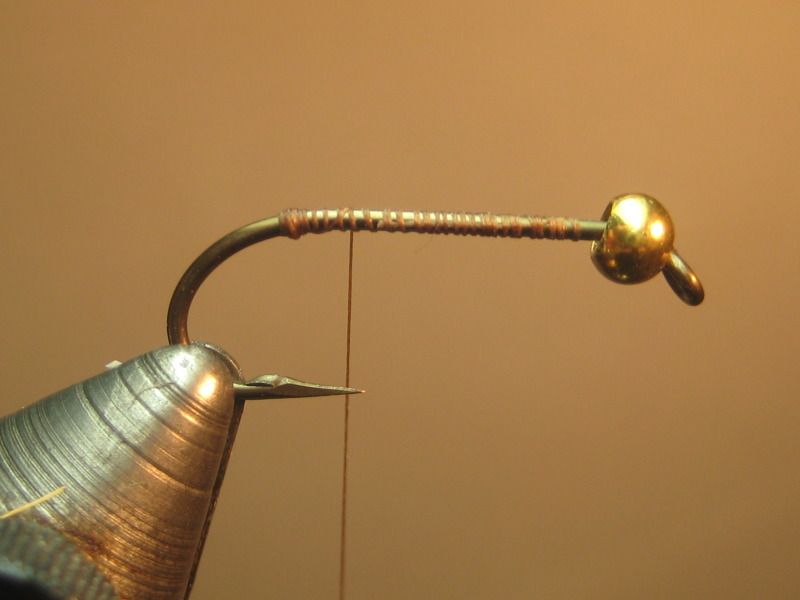
thread - Uni 8/0 camel
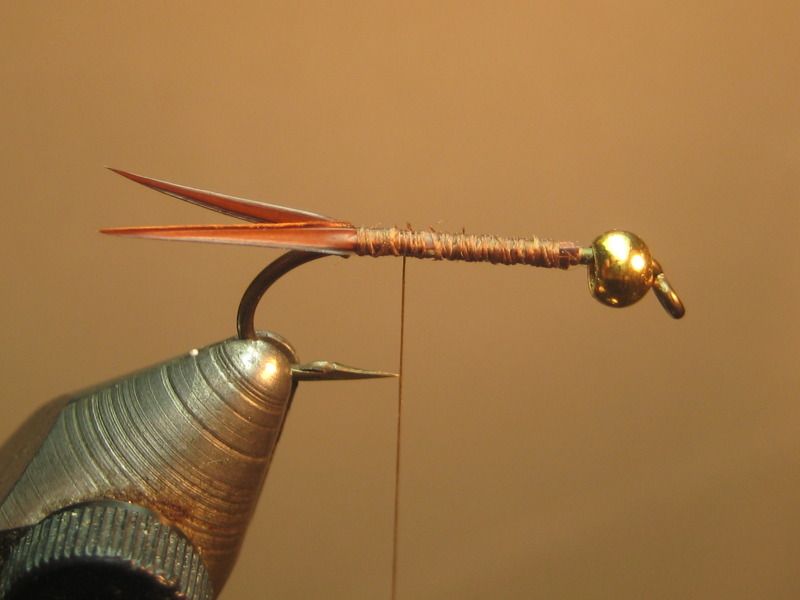
Tail - goose biots brown
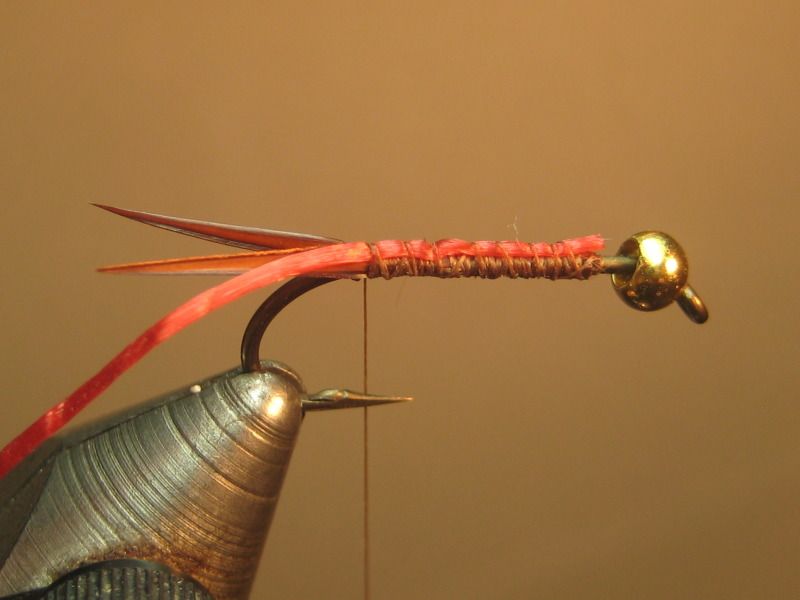
body - Super Floss red
rib - peacock herl
hackle - Indian hen back
head - 1/8 brass bead
Mash down barb and slide bead on shank
start thread, wind to bend and create thread ball
tie in biot tails (extend a little less than shank length) tight against thread ball to divide; trim tails and create thread underbody
tie in Super Floss (original pattern called for regular floss but it tends to darken up too much for my liking when coated in cement; Uni-Stretch is better and easy to work with but I wanted to see how the spandex stuff would work)
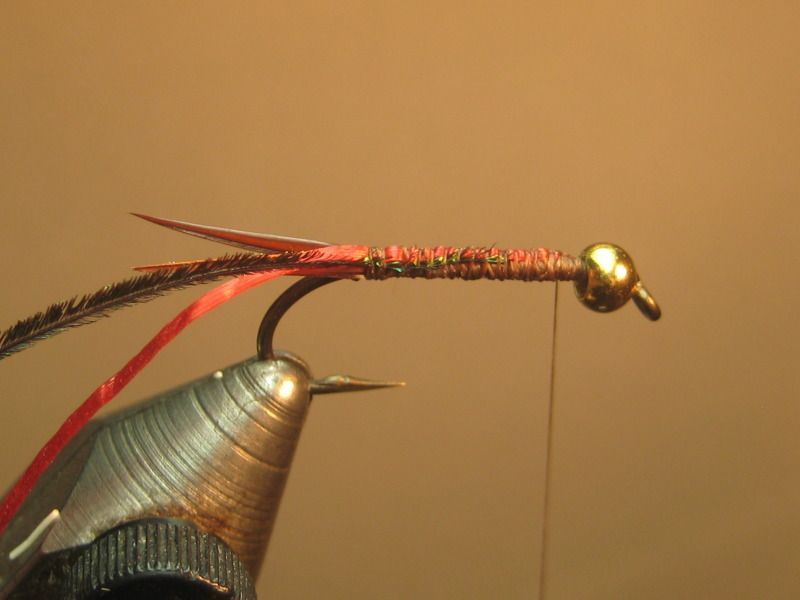
tie in peacock herl
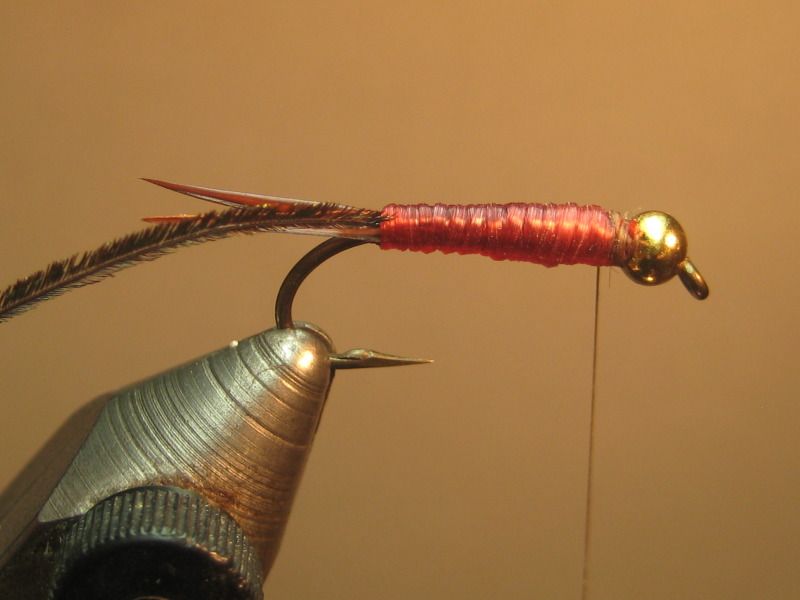
wrap Super Floss, try to create tapered body
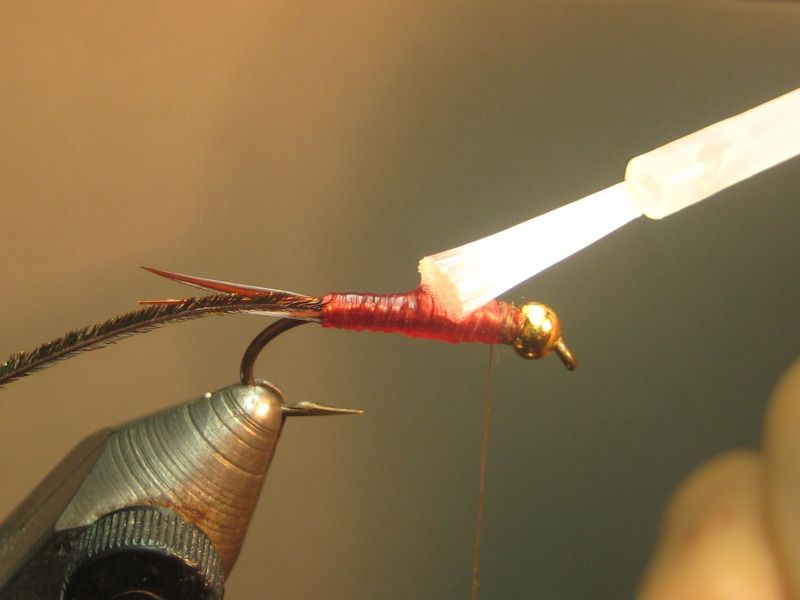
coat with Sally
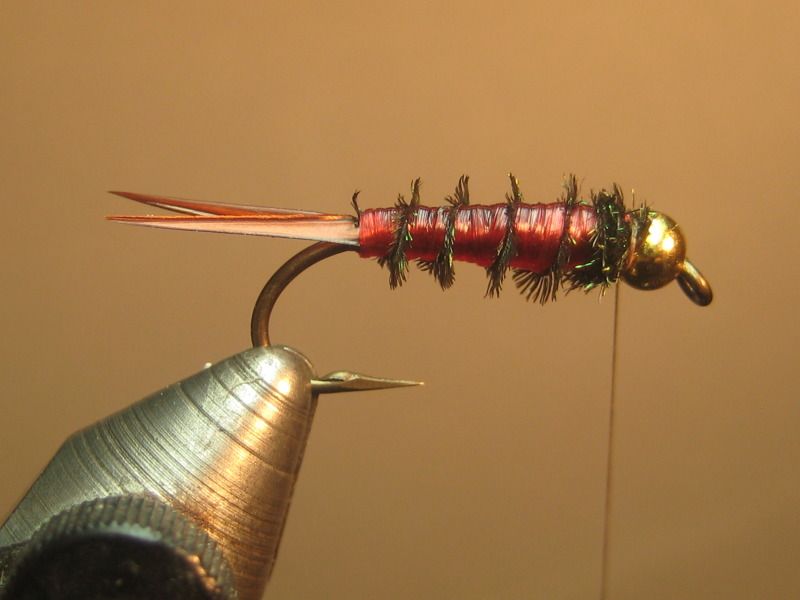
spiral peacock up body while cement is still wet (to tell the truth, counter wrapping with x-small copper wire would probably create a more durable fly; next time)
prep a hen back feather; couple wraps of hackle (keeping it sparse), tie off, a bit more Sally and you’re done
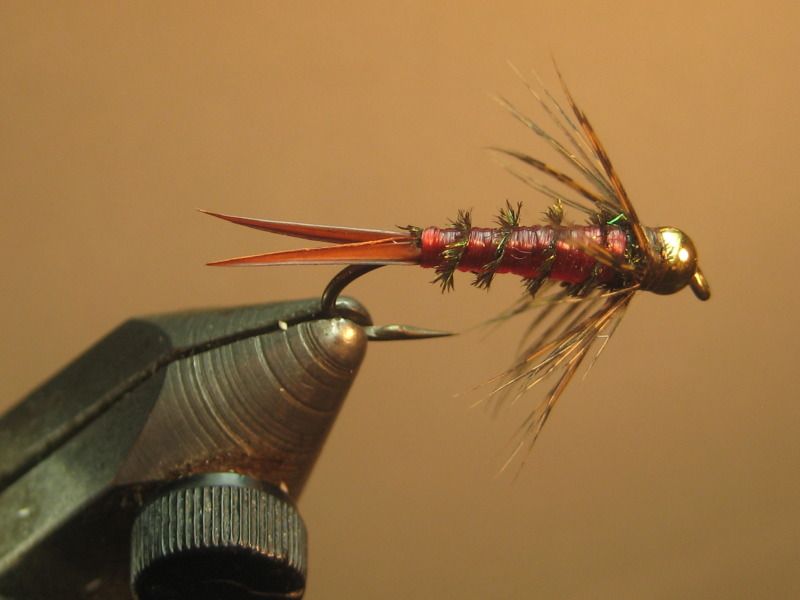
top view (kinda)
If it’s going to be fished (and lost) amongst the rocks, I like to keep them simple. Originally tied by Darryl Smoot for the Yakima River.
Nice fly. Just commenting to prompt some discussion. Was there a reason you tyed in the body material first and the rib second? I was taught the reverse order. Also, you mention about counter-wrapping with wire. If you do that, I would suggest this sequence:
Tye in wire at tail followed by body material.
Wrap body material to thorax.
Tye in the peacock where body material ends and wrap it to the tail.
Secure peacock with a wrap of wire and, in open wraps, wind the wire toward the thorax to where body material ends.
This will secure the peacock and make the fly much more durable.
For most ribbing, I would tie it in first; in this case, I didn’t think it really mattered since it’s all for show and not re-enforcement of the body (the reason I suggested counter wrapping with the x-small wire). Tying the peacock in at the head and spiraling to the back, then counter wrapping with the wire (same sequence as hackling an Elk Hair Caddis) would work fine.
I think Allan was referring to the fact that most tiers tie material on the hook in the reverse order of being used. Thus, since the body material is wrapped forward before the peacock herl, the peacock herl would be tied on the hook before the body material is tied in.
Allan, please correct me if I got this wrong.
Byron
BNope. The way you describe it was what I was talking about. Your explanation was a little clearer than mine. With this pattern, just 2 materials, it probably doesn’t matter at all.