I am one of those guys who can’t win a free Pepsi no matter how many
tabs I pull off on the inside of the caps. So, when a travel agent
friend of mine called and said he had two last minute cancellations for
a tarpon trip to Belize I thought he was jerking my handle.
For those of you who fish destination spots you know what has happened
but for the rest of you this is how it works. The travel agencies take
your money and make reservations at whatever lodge you want to fish and
about two months before you arrive the money is paid to the lodges and
your guides are hired. Should you cancel earlier than 45 days before
you are scheduled to leave you get most if not all your money back. if
however, you cancel with less than 45 days to departure, you are just
out of luck. For those considering trying a destination fishing trip
you can buy insurance against this unfortunate occurrence and need to
check it out.
Well, Wayne assured me over the phone, that it was indeed true and a
party of four had canceled at the last minute and if I wanted to take
two spots all I needed was a current passport and a friend. I and my
partner Tom Wolf didn’t give it a second thought, we were there. With
only four days to departure I had to pack and tie the flies. I
frantically emailed all my buddies who were avid tarpon fishers and
asked them to scan their favorite flies and email me the images.
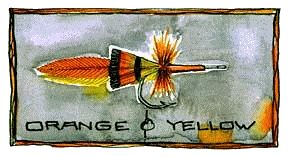
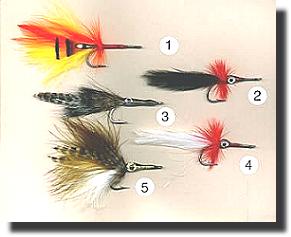
Yes, your scanner is one of the best tools to transmit fly images. The
tarpon flies that I am using for this article were done on a flatbed
scanner, so see for yourself. Within a few hours I had some response
and so spent the better part of three days tying flies and part of a
fourth day getting an extension on my April 15th taxes. Priorities
being what they are, I figured Uncle Sam could wait.
Last minute air travel is a nightmare so we were stuck with a red eye
from Seattle to Houston. Then an early AM. flight from Houston to Miami
and a mid morning hop to Belize. Once on the ground in Belize City we
would catch an island shuttle on Mayan Air to Ambergris Caye and a ten
minute water taxi to El Pescador Lodge.
On the Tarmac in Houston our American Airline flight experienced
electrical problems and we were forced to disembark and take another
flight. I was promised in Houston that American Airlines agents were
busy making our connections via another carrier in Miami and not to
worry, we would be in Belize to make the connecting flights.
Upon arrival in Miami no such arrangements had been made and we were
put up at a local Best Western and offered a couple of free meals. we
had a beautiful view of a tar paper roof and spent our time practicing
our Bimini twists. Time creeps by slowly when you are looking at tar
paper and not coconut palms.
Armed with 200 class tippets, that had Bimini’s on both ends we made
our flight the next morning, only to wait once again on the tarmac,
while a maintenance man came and fixed a ceiling panel that had fallen
down just prior to take off. Tom and I spent the two hour flight
arguing over which one of us had the skunk on him.
At Belize City, El Pescador Lodge has a person meet you and help you
find the connecting flight via Mayan Air. The island hop is in a small
commuter plane that often drops other passengers off at other small
islands. The thrill of a small plane landing on short runways, cut from
the mangrove swamps with a brisk trade wind blowing is one that can be
repeated a couple of times before finally reaching Ambergris Caye. From
the window of the low flying plane I strained to see fish. Impressed by
so much water that was so shallow, two hundred square miles of water
that looks to be waist deep.
From the air you can get a better feel for
the geography than from a map. Twenty or so miles from the mainland
lies a seemly continuous coral reef. Eons of endless wave action has
ground up the old corral and deposited it on the inside of the reef
producing the shallows. At some point in the past mangrove took root
and in the quiet water among the roots, sand and debris built up until
an island started. The birds that use the mangroves for shelter help
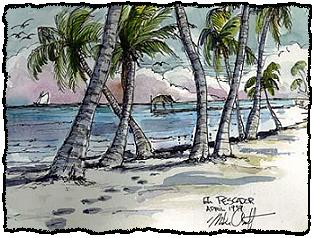
fertilize the sandy soil for the other late comers like the coconut
palms and shore grass. Through time the islands grow and new ones
start.
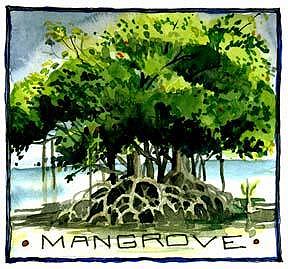
All the fish use the convoluted roots of the mangroves for shelter and
as a huge incubator for their young. Baby tarpon are found in the
mangroves in large numbers as well as snapper, needlefish and
barracuda. When they get large enough they move off to the flats and
become part of the cycle of resident fish.
Once every year starting in June larger tarpon move up the coast and
find their way into the flats. They arrive until September and then
move off, leaving the flats again to the numerous resident tarpon.
These were what we came to hunt.
When you disembark from the plane on Ambergris Caye you find yourself
in the small but colorful town of San Pedro. Once again El Pescador has
arranged for you to be met, and you, and your bags are loaded into a
small van and you are taken several blocks to a waiting water taxi. It
is a very nice feature for the resort to walk you through all the
airports while you are in Belize. Especially if you are like me and get
lost easily even in my own airport in Seattle, WA.
The water taxi takes you up the east side of the island, between the
coral reef and Ambergris Caye. I was amazed at how shallow the water
was, with barely a hint of the tropical turquoise you see in all the
travel posters. At the dock we are met by Ali Gentry one of the
brother-sister team that are the current owners of El Pescador. A quick
check-in and off to the bar.
By this time of the day it is mid afternoon and the guides and fisherman
have returned. Like most lodges, fishermen gather around the bar,
participating in the ritual of comparing the days catch, lying,
exaggerating and poking fun at their partners. Tom and I piled right in
and found that the fishing had been fabulous until the day before we
arrived. The winds had picked up and churned up the finer sediment
that comprises a lot of the flats. When the flats get murky the tarpon
stay in deeper water and don’t come to the flats in any numbers.
Undaunted, we eat at the lodge and turned in early to put together our
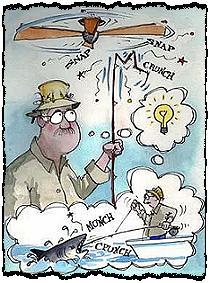
rods. The number one eater of rods back here in the states is the car
door, but in the tropics it is the ubiquitous ceiling fan.
Manufacturers of these devices pride themselves on making quiet
unobtrusive appliances. They do rest up their on the ceiling quietly
spinning away, waiting for a rod to come with in range before they
pounce. Should this happen to you DO NOT write the manufacturer and
tell them a great white shark, you were fighting, followed the fly clear
up through the guides and chewed off the end of you rod. It has already
been used.
Coffee is ready a 6 AM in the dining room, breakfast at 6:15. From
the menu Tom and I picked a ham and Cheese omelet. The guides arrive at
7 AM. and we load flies, rods and ourselves into the boat. We are
discouraged to find that the winds are still kicking up sediment in the
flats so tarpon are probably not going to be on the days menu. We boat
back to San Pedro and take a channel in the mangroves through town to
the west side of the island.
Not ten minutes from San Pedro, Abby, our guide tells us he sees a
school of permit. Staking the boat while I tie on a green Merkin in a
size 6, Abby directs us on the long and slow retrieve the permit like.
When I’m ready he poles into range and directs me where to cast. On the
third cast one of the permit peels off the school and picks up the fly.
WOW! A permit on the third cast, one leg of my Grand slam down, kept
flashing through my mind as the permit made a long run into the
backing. Just as he was in range of the boat the hook pulled out much
to the delight of Tom, who was now convinced he knew which of us had the
skunk on him.
It must be five miles to the tarpon flats known as the Savannah
Flats. Zipping over the flats, startling a needlefish here and there
into skipping across water so shallow you are convinced that the man who
sells lower units must be the islands fist millionaire. Just before we
get to the flats we see three pelicans start to dive into a school of
bait. Abby changes direction and we come upon a school, a big, school
of Jack Crevalle. They have a school of sardines on the surface and
are busting them all over the place.
A cast into the school brings an instant hookup. So many jacks
that we put aside our fishing etiquette and both start casting to
the school. Doubles, and more doubles as more and more pelicans
arrive as well as another boat, no doubt attracted by
the birds. Hook two fish, fight, and land them, Abby fires up the motor
and we intercept the school again. The fish don’t care what pattern we
are using, only that it moves.
After an hour, maybe more, it was over as fast as it started. The
pelicans went away and so did the other boat. Abby says the tide is
right to look up on Savannah flats so off we go. The flats have that
look that glacial steams have, a milky green. We run to the leeward
side of the flats and they are better but still not good. With Tom on
the bow and Abby on the pole we drift in classic fashion down the
leeward side of Savannah flats without seeing a fish.
Just before lunch Abby says let’s try for bones. While Tom and I ate
lunch provided by the lodge, Abby took us back towards San Pedro. A
little north of town where the mangroves are busy making more island
there are a series of small bays and inlets that proved to be ideal for
bones. At the mouth of the first bay we came across a school of bones
so big that it made the bottom turn a dark gray. As bonefish were new
to both of us, Abby helped us pick out some flies. Thank god I had
emailed my tarpon friends that were familiar with Ambergris Caye, for
they had advised we tie some very small and sparse Crazy Charlies.
These bones had a real preference for sparse flies and we had plenty of
them.
Abby was careful to instruct us to cast to edge of the school only and
we did, following the school, much like the jacks except with a pole.
It was hook up after hook up until we lost count of how many we had
landed. They weren’t big fish, running to two pounds, but they were
agreeable. Abby said that now that we had the technique down he would
take us for the big ones if the wind didn’t lay down tomorrow.
Back at the dock around three in the afternoon we found that the other
anglers didn’t have any luck finding tarpon that day either. We poured
down a few beers and compared notes at the bar, served up by Roberto
Narvaez, El Pescador’s amicable bartender. A little tipsy we turned in
under the breeze from the evil rod eating ceiling fan.
Day two was the same as the first, too much wind. We found another
school of Jack Crevalle and tried surface poppers on them with great
results. Later spending the afternoon looking for solitary but larger
Bones. Much more challenging than the 2 pounders but more rewarding
when you got it all right. Again the sparse Charlies in pink, tan, and
white, in a size 6 were the hot flies.
Day two also brought my camera to an end. Either humidity or heat caused
the control chip to loose it. I am going to have to make do with my
sketch book…bummer.
Day three and the winds are subsiding. Today is the day. Again we
cut through the swamp next to town and head for Savannah flats. Tom had
first watch on deck and the morning hours made for slow going. We
spotted a few but were not able to make our shots. The wind was still
blowing about 12 knots when lunch time came. While Tom and Abby ate I
took the deck for the second watch.
About half way through lunch three tarpon showed up at 11 o’clock
going to 10 o’clock. Everyone came to attention when I started my cast.
The cast was easy and good, laying the fly about six feet in front of
the lead fish. I started the long retrieve that I was told works so well
for tarpon and just like it should, the lead fish pulled in behind the fly.
Staying about four feet behind the fly the fish followed the fly until it was about forty feet
from the boat. Then with a burst of speed closed the distance in a heart
beat. I saw the silver flash and set the hook hard, using both a rod
and strip set. I had to duck as the fly line, leader and fly came
zinging past my head. I knew instantly what had happened. I had let my
salmon instincts take over. When salmon fishing you strike on the turn
when sight fishing. With tarpon you want, no, NEED to wait until you
feel the fish. I had done the classic pre-contact set. Stupid, I
thought! Buck fever!
We saw 30 or 40 fish that day but failed to turn another, only
getting shots at about four of them.
That night I forced myself to go over again and again in my mind just
how it was supposed to be done. When I’m learning a new technique I
find that this helps a lot.
Day four found me with first watch again on Savannah flats. Abby
spotted a loner coming down the flats at 10 o’clock heading towards 9
o’clock. It was big, maybe five feet long. Abby was excited and I was
going to get only one shot. I dropped my fly from my hand, and shook
out some extra line while instinctively calculated the windage for a 15
knot wind, and let fly. Before the fly hit the water I knew I had blown
it. My heart sank as the fly settled in the wind right above where the
fishes dorsal fin was passing only a foot deeper. I retrieved the fly
quickly not expecting a second chance, but the fish must have heard or
felt the fly land on the water as he went about six feet and did an
about face.
Going downwind now, I knew I’d get a second chance. The
second cast uncoiled right above the fish letting the wind carry it
downwind to the strike zone. As the line uncurled, the fish not finding
anything, again turned back on his original course. Damn! My fly
landed twenty feet behind him instead of the six feet I had planned. My
knees started to knock from the excitement as I striped in for a final
desperate cast. I loaded the rod and quartering upwind let go with all
I had, the fly still fell a foot or two short but at least it was in
front of the fish.
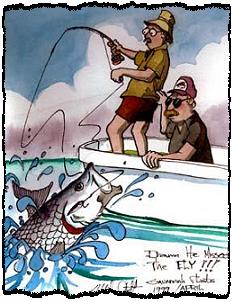
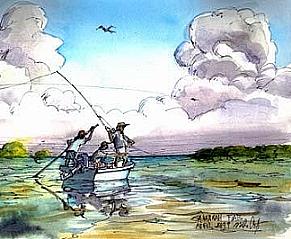
“An eighty pounder” Abby kept saying. I started the
retrieve and watched as the shadow of the fish pulled in behind the
fly. In the clear water I could watch the fish follow, and follow, not
closing on the fly. I watched my loop eye leave the water and come to
my rod tip. Out of options I had no choice but to pull the fly around
the bow of the boat, the fish was still following not ten feet from the
boat. The second the fly changed direction from the new angle imparted
by the rod tip he made a blinding fast slash at the fly. I never felt
the contact I had visualized the night before. What I had left, in the
sixteenth of a second that this all happened, was an image of a huge
head next to the gunwale slopping water into the boat and framed in the
bright reflection of his huge gill cover, was my fly on the outside of
his mouth. The damn fish had missed the fly.
If you are interested in this region, stay tuned for the rest
of the story and the flies next time.~Mike Croft
Part 2
Originally published May 10, 1999 on Fly Anglers Online by Mike Croft.
Part 2
That was it. It was a magic moment. The fish wasn’t hooked but I sure
was. I like hard fishing just not impossible fishing. This was proving
to be as hard as it gets, but it was far from impossible. I made up my
mind to become a tarpon fisherman. Damn, am I ever a sucker for a
challenge.
An hour later, after Tom had missed one I was back on deck when a
school of six came by. cutting right across the bow at about ninety
feet. They were moving from right to left. It was perfect, I dropped
the fly in the water, loaded my back cast and let fly. It wasn’t a
perfect cast, two feet short but in front of the fish just the same. I
let the fly settle as the first of the shadows came within the strike
zone and started my retrieve. The first shadow went by unfazed, as did
the second and third. I thought I might be out of the strike zone as
the forth and fifth also passed by my offering. The six fish however,
peeled off from the school and pulled in behind the fly. like the
others he paced the fly. I closed my eyes, not wanting to let what I
saw influence my hand. I concentrated of the long strip. Strip.
Strip. And then I felt him. I gave him as hard a line set as I could
not caring if I broke my class tippet, While I opened my eyes. I was
looking at him face to face not twenty feet away. I only had time to
make a ring with my left forefinger and thumb to allow my line to uncurl
from the deck without tangling on me or the boat.
The tarpon hit the water at a dead run and I watched and prayed that
the line would not foul. A split second later I was into the backing.
I knew that one set was not enough and so when at last he changed course
and the backing wasn’t going to cut off a finger or two, I grabbed it
and set again. He felt the hook for he came instantly out of the water
and when he went back in my line was slack. I was in shock. I stripped
my line back to the boat and double checked my leader and fly. There it
was, the point was bent over, just like what happens when you hit a
rock. Impossible since I sharpen each fly only after it is tied on.
The fly hadn’t hit a thing but the fish. I walked back and showed it to
Abby and he said that it was my bad luck to have hooked him on the
inside of the check. An area so hard, a hook will hardly penetrate.
Great, I thought, a fish with a mouth like a cinder block.
Nothing I had read had prepared me for how hard the fishes mouth was
or how exciting the fishing is. On the way back to El Pescador that
night Tom looked over and said, " You know if they rated fishing like
they do white water, this would be listed as class five fishing."
Truly, I thought. But I’ll be back.
The next two days the wind raged, and Savannah flats turned a milky
green. The tarpon stayed wherever it is they stay when the wind blows.
We kept a lonely vigil on the flats but were not deterred. Abby asked
us if we wanted to go for bones, he thought we were nuts to stay on the
flats. “No,” we told him, “We are here for tarpon.”
The last day went by and we only saw one tarpon jumping in the
distance.
Fishing: It was truly one of the most exciting trips I have been on.
When the weather turns bad there are permit and bones in the shallows.
Most destination resorts have only one kind of environment to fish. El
Pescador has four. On a calm day you can cross the reef and fish for
Dorado, sailfish and Barracuda. If the wind makes up, you can fish the
flats for bones and permit or for an extra $25 dollars for gas, you can
make a 25 mile trip up to the Belize Mexican boarder and fish the
channels through the mangrove swamps.
Tom and I did this on the windiest day. It was a superb outing and
worth seeing while you are there. In these swamps the baby tarpon
live, along with barracuda and resident snapper. It makes a great
and beautiful back up trip. The big attraction is, of course the tarpon
flats. We never had a perfect day weather wise, but on our best days
we would see 40 to 50 fish, about a half dozen you could get cast to.
The wind wasn’t a detriment but an added challenge. None of the
best things in life come easy, anyway.
Tarpon: There is a year around fishery for tarpon as this area has a
permanent tarpon population. May through September is when the larger
migratory tarpon arrive. These are the ones over 100 pounds. The
resident fish will range commonly up through 60 pounds. You should be
armed with flies in the 3/0 range for flats fishing. And number 2 for
the mangrove channels that the local guide like to call rivers. For the
big flies you should have these colors; red and black, orange and
yellow, red and white, and a natural color like you find in the
Cockroach. These four colors are a must, but by all means take
extras. The baby tarpon up the rivers like a red and white, red and
black, and cockroach type flies as well. Remember that the smaller fish
will want smaller flies, a size 2 is a good size. Also remember that
these river tarpon live there, they know every root and hiding place so
don’t expect to land a lot of them. Expect to loose one fly per fish
and tie your flies accordingly.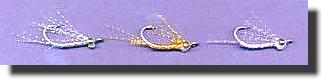
Bonefish: There were thousands of bonefish. Most under three pounds
although I saw one that might have gone ten. I didn’t cast to it as I
mistook it for a small nurse shark until it was too late. Another
lesson learned the hard way. Sparsely tied crazy Charlies are the key
here, in sizes 6 and 8 with white, tan, and pink the preferred colors.
Permit: We only hooked one, and he was on a small olive Merkin size 8.
I would stay away from the bigger sizes here also.
Jack Crevalle: We could catch these everyday, and often limbered up our
arms on them while the tide would get right for the flats. The jacks
had a preference for flashy flies with a lot of white in them. It is
not uncommon for the school to get tired of a fly so change colors and
you can keep working a school. When they tire of poppers, go
sub-surface.
Barracuda: Large, and I mean real LARGE, barracuda work both side of
the reef and wire leaders are a must. Of more interest to us were the
smaller barracuda that would come willingly to a popper fished in the
deeper channels of both the mangroves and the flats. The poppers should
be small about the size you would use for small largemouth bass. Color
was not critical.
Ladyfish: The nickname for these is “poor man’s tarpon” it is
unfortunate that they are so overlooked as they are a favorite of mine.
Found in the same channels and cuts that the small barracuda are, they
are suckers for clousiers tied on long shank hooks in size 6-4. They
are a schooling fish and when you find one you usually will find more.
Snook: There are some around and I expect that there are more than
people know about. It is just that there is so much other fishing that
these have probably been ignored by the local guides.
Guides: At one time Belize was British Honduras, as a result English is
spoken virtually everywhere. The guides speak and communicate very
well, with several having attended universities in America. On a scale of
one to ten the guides at El Pescador are a 10. They will help you spot
fish, suggest flies, instruct you on retrieves and pole the boat so that
you feel like you are part of a Chet Renson painting. As I do on all
trips, I insisted that the guide fish too. I watched on the third day
as Abby picked up my fly rod and fired off a 100 foot cast
effortlessly. Fear not these guys know their stuff.
Digs: El Pescador Lodge; a white two story lodge and dock surrounded
by coconut palms with a nice view of the sunrise and the reef. This
lodge has been around for 30 years and is currently owned by Ali and
Logan Gentry, daily operations are done by the good humored and
gracious Judy Williams. The rooms were good, clean and well
ventilated. Showers were in every room. And yes, they have a switch
for the rod eating ceiling fans if you are smart enough to use them.
There was no evidence of hurricane Mitch that narrowly missed the area
last year, this surprised me as I expected to see some evidence of wind
damage.
Food: Breakfast is American style with Bacon, ham, eggs, omelets, French
toast etc. all the coffee you can drink and fresh squeezed orange
juice. I usually cringe when I am told that the food will be buffet
style, but I have to hand it to the cooks at El Pescador, each and
every meal was superb. The food was a real joy at the end of the day.
The lodge also offers a lunch menu to be taken on the boat and these
orders are done by Roberto the bar tender.
Beer: They only have one brand in Belize, a local beer that everyone
enjoyed. A bottle of Belikan Beer was damn good after a day on the
flats.
Sun Block: Coming from the state of Washington, where the lack of sun
means you can burn if someone is using flashbulbs at a family dinner. I
am going to go one step farther and recommend a brand.
Bull Frog, holds up well, real well in the salt water. A number 35 will
let you get a little color without burning and is the least rating I
would take. For the most part sun block is an absolute necessity. I
have seen what can happen if you miss a spot. Expect to burn within an
hour. I also suggest you take you Bull Frog with you on the boat.
Hats: A broad brimmed hat will shade your forehead, as this is the one
place you want to skip the sun block. As you sweat, the sun block will
get into you eyes and it burns.
Sunglasses: Polarized sun glasses are a complete must for flats
fishing. Without them you can expect to be fishing blind.
Rods: Tarpon rods in 10 and 12 are standard issue while rods for bonefish
should be 6 or 8 weights.
Lines: At Ambergris Caye you will find that most of the water
is only three feet deep. This makes your choice of lines easy. Ninety
percent of your fishing will be with floating, weight forward lines.
There are occasions that an intermediate sinker may prove useful.
Learn how to tie on eighty and hundred pound shock tippets. Learn
and practice you Bimini and Huffnagle’s before you get there. Without
them you will only be able to fish for Bonefish and permit. Make your
tarpon leaders about the length of your rod. Your
bonefish leaders should be about 10 to 11 feet long with about eight
pound for your tippet.
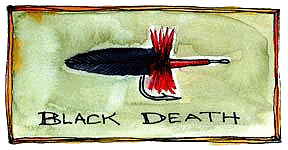
Flies: Flies should be on 3/0 and 2/0 hooks. The four most popular
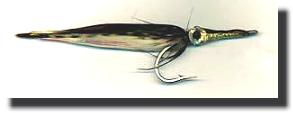
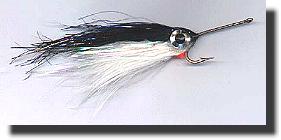
patterns are shown in the photos. I was also testing a new fly developed for
Mexico, (shown below) in an attempt to see if the resident tarpon would respond to
more realism. It accounted for two of the three fish I turned so I have
included it as well.
It was a great trip! If you have questions, feel free to email me.
~Mike Croft
Originally published c. 2002 on Fly Anglers Online by Mike Croft.