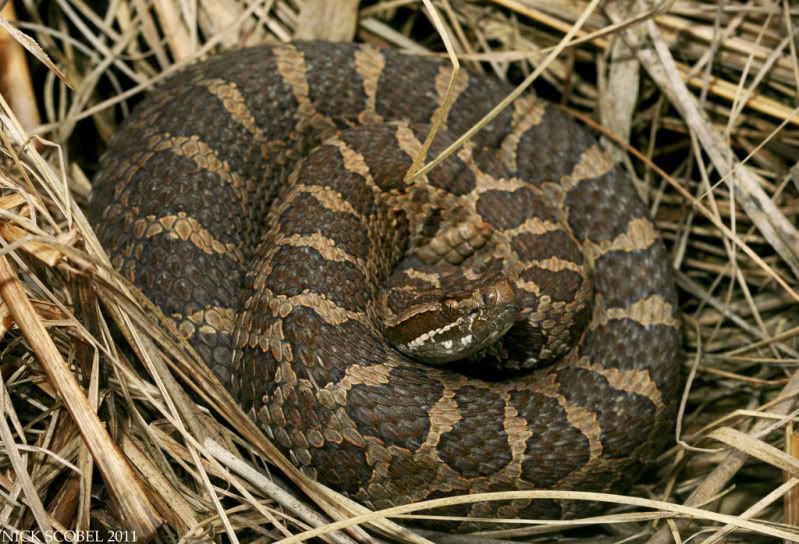
Anglers in Wisconsin should know their poisonous snakes before they go out in the field. The two venomous snakes that live in Wisconsin are both rattle snakes. They are the Massasauga Rattle Snake and the Timber Rattle Snake. Both are endangered species and very misunderstood. They will not confront you and will attempt to escape when cornered. The other snakes in this article are snakes that resemble poisonous snakes you may encounter. They are dangerous to the angler and to uncontrolled pets. I recommend seeking immediate medical attention for you or your pet when bitten.
The Massasauga “not pictured here” is the smaller of the two and grows to about 20-30 inches in adulthood. The Massasauga has brown back markings and triple rows of brownish-black side patches . The body markings are edged in black. The tail has five to seven dark rings and a grayish rattle. They live in river bottom forests and nearby fields. Massasaugas also like prairies and lowlands. They eat frogs and other small snakes and sometimes dine on rodents.
The Timber Rattler is typically 36-56 inches as an adult. It has a solid gold colored head . Its body is marked with black or dark brown cross bars. The tail is black and the rattle is typically tan in color. These snakes live in the bluffs of western and southwestern Wisconsin. In the summer they move to the forests. They are prolific rodent eaters. They will move back to the bluffs to winter.
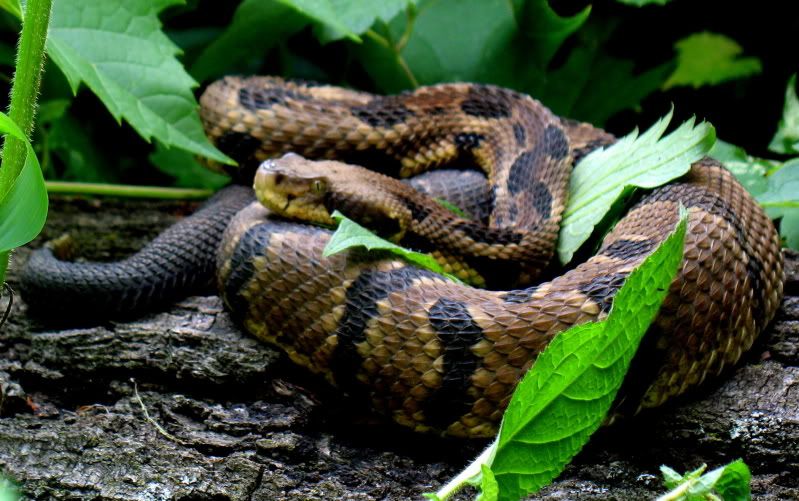
Photo by: Scott Hale
This Timber Rattler was hiding in the weeds. You will never forget your first sighting of a rattle snake.
Another local resident is the Northern Water Snake. It gets 24-40 inches long. It is a very common snake in Wisconsin. It lives near permanent lakes and rivers and loves to eat frogs, crayfish and smaller fish, both dead and alive. It has grayish brown patterns on its body. This snake is often mistaken for a Water Moccasin and incurs the wrath of many anglers. Water Moccasins are not residents of Wisconsin.
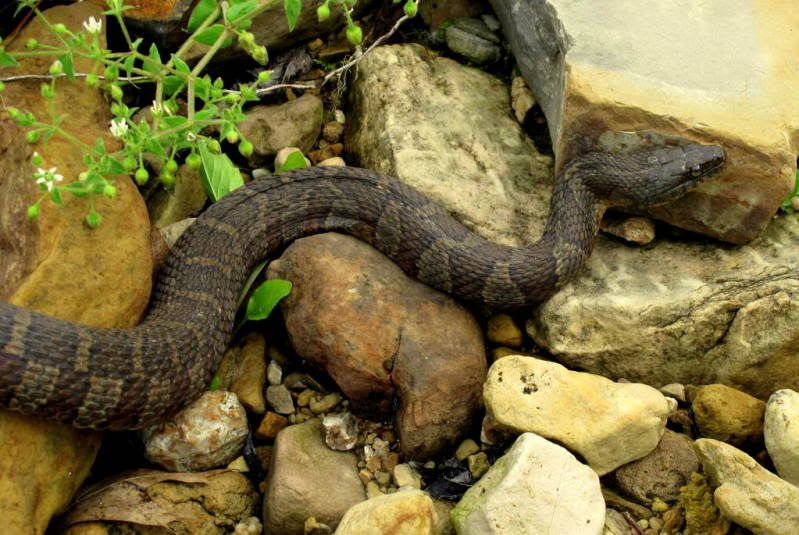
Photo by: Len Harris
The northern water snake is very common in Wisconsin. They are often mistaken for water moccasins and killed.
The Bull Snake is the largest of all Wisconsin snakes. It reaches 50 to 80 inches at adulthood. It has a bad reputation because of its nasty demeanor. It also resembles a rattle snake and receives the fear and disdain that comes with the possibility of being poisonous. Bull snakes are endangered and illegal to kill. Their heads have the classic diamond shaped pattern. Bull snakes have heavily patterned heads and a pointed tail with no rattle. They are good for rodent control.
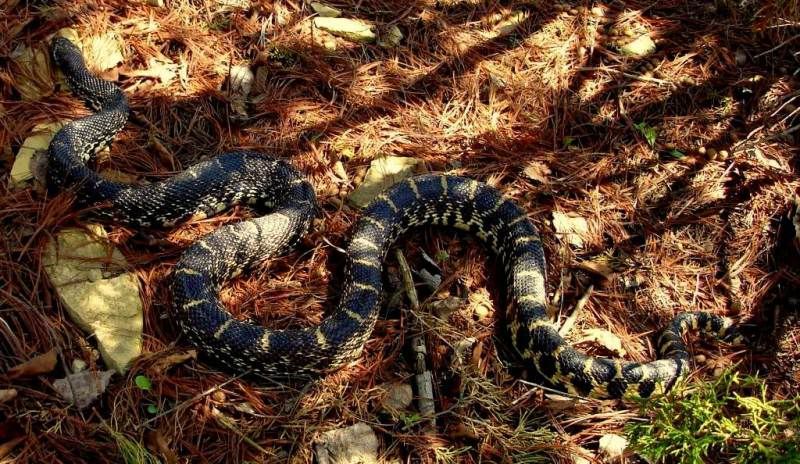
Photo by: Len Harris
The bull snake is the biggest snake a Wisconsin angler might run in to while fishing. They are very testy and are often mistaken for rattle snakes.
The Gopher Snake is a sub species of the Bull Snake. They are also an endangered species. They too are often mistaken for rattle snakes. They are much smaller than their cousin the bull snake. They have pointed tails and no rattles. They only grow up to 40 inches as an adult. Their demeanor is much more laid back than their much larger cousins. The best way to identify them is the mask across their eyes. They are prolific rodent eaters and hence their name, the Gopher Snake.
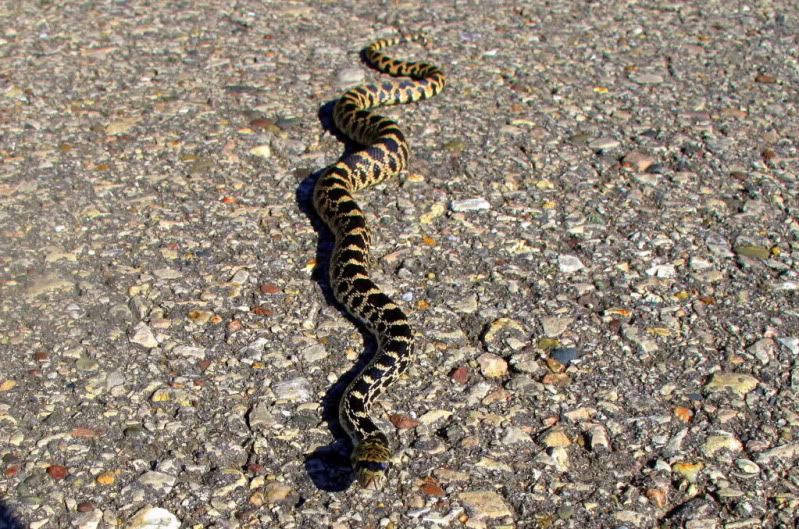
Photo by: Len Harris
This gopher snake posed for me on the edge of the road. I took a few photos and left it alone. Learn your snake species in your fishing area.
Snakes in the wild should be given a wide berth. They typically will crawl away from you way before you are even close enough to see them. Your pets are in particular danger and need to be controlled around snakes. Many people only see a snake when it is dead alongside of the road. Venomous snakes can still transfer their venom after death so don’t play with them. I know I am sounding like a broken record but if you think your pet or yourself have been bitten please seek immediate medical attention.