Bruce Richards wrote book titled “Modern Fly Lines” that was part of the Lefty’s Library Series. Some of the books in that series were later released separately but I don’t think that book was.
As you and I have discussed before Bob, you can’t cheat physics when the fly lines being compared are made of comparable materials. That is materials of relatively the same properties of density for the core, inner and outer coatings, flexibility, etc. With identical rods and casting motions, the tapered lines will behave differently than non tapered lines as I noted. That doesn’t mean that level lines cannot be used because I used them for years but they perform inferiorly for casting and fly presentation. When you get into specialty lines such as bass bug tapers or on the opposite end of the spectrum with spring creek tapers, these will far outperform level lines in those applications.
The robust taper of a bass bug line can deliver a heavier air resistant fly much easier than the comparable level line. A longer spring creek taper can deliver small flies more gently and with less disturbance than a level line. We have been discussing generally about a standard tapered line vs a level line, but that ignores the actual choices available to the angler in custom tapers that will outperform a standard tapered line, never mind the level fly line. Can you imagine a spey caster using a standard level line for example?
Level floating line at the tip can float higher for the reasons I discussed above and hairwing is correct in that. But now with dual coating technology at the tips of modern fly lines, that advantage of an old style level line floating higher at the tip than an old style tapered floater is not as great as it was with standard coatings. That is why level lines have virtually disappeared from the market. Even though they were far cheaper, no one wanted them.
Silver,
I agree completely. The effect of the taper is at the end of the cast. The steeper (shorter) the taper, the more energy in the turnover with a level line being at the top of the pack. As the loop unrolls, the energy in the part of the line turning over and stopping is transferred to the moving line. With a tapered line, this energy dimishes as the line becomes lighter in the taper. This helps dissipate energy preventing too rapid a turnover with small flies and facilitates a softer presentation. With big flies you want more energy in the final turnover too keep them from dropping on the end of the flyline instead of extending the leader. As you said, its all physics.
One little known fact is that the loop speed of a line without a leader and fly will actually increase as the loop unrolls. Adding a leader and fly will decrease the loop speed, the more fluffy the fly (aero drag) the greater this effect. This in the direction of supporting the old addage, “it is the fly that dictates line size.”
I wrote a series of articles a number of years ago. They are here:
http://www.hatofmichigan.org/uploads/Mechanics_of_Fly_Casting.pdf
http://www.hatofmichigan.org/uploads/Mechanics_of_Fly_Casting_2.pdf
http://www.hatofmichigan.org/uploads/Mechanics_of_Fly_Casting_3.pdf
http://www.hatofmichigan.org/uploads/Mechanics_of_Fly_Casting_4.pdf
http://www.hatofmichigan.org/uploads/Mechanics_of_Fly_Casting_5.pdf
I wrote these in a vacuum, not really having read any of the experts. But most of the fundamentals in there are correct. One assumption, “that a caster is trying for a constant acceleration of the line” is somewhat misleading. More realisticlly, a constant acceleration is the minimum you should strive for and most casters have an increasing accleeration curve. This is especially true of distance casting.
The all gets back to athe dilema to what a caster is acutally using in the cast, timing or feel. We all know that it is a mix of both and varies from caster to caster and cast to cast. I have always wanted to understand better what you actually “feel” in a cast and I keep trying to understand that better. Those of us that ply small streams with light rods or cast at night for snook or big browns know feel is an important part of that. Anyway, I ramble. Happens to us old farts.
Bob
Hey Silver nice read.
A couple of quick clarifications.
I think you meant to say I.P.S. ( inches ) in respect to sink rates, not ( Feet ) F.P.S.
Sinking lines start with Intermediates ( I ) , not type 1’s and go up to type 8 as far as I know, not 6.
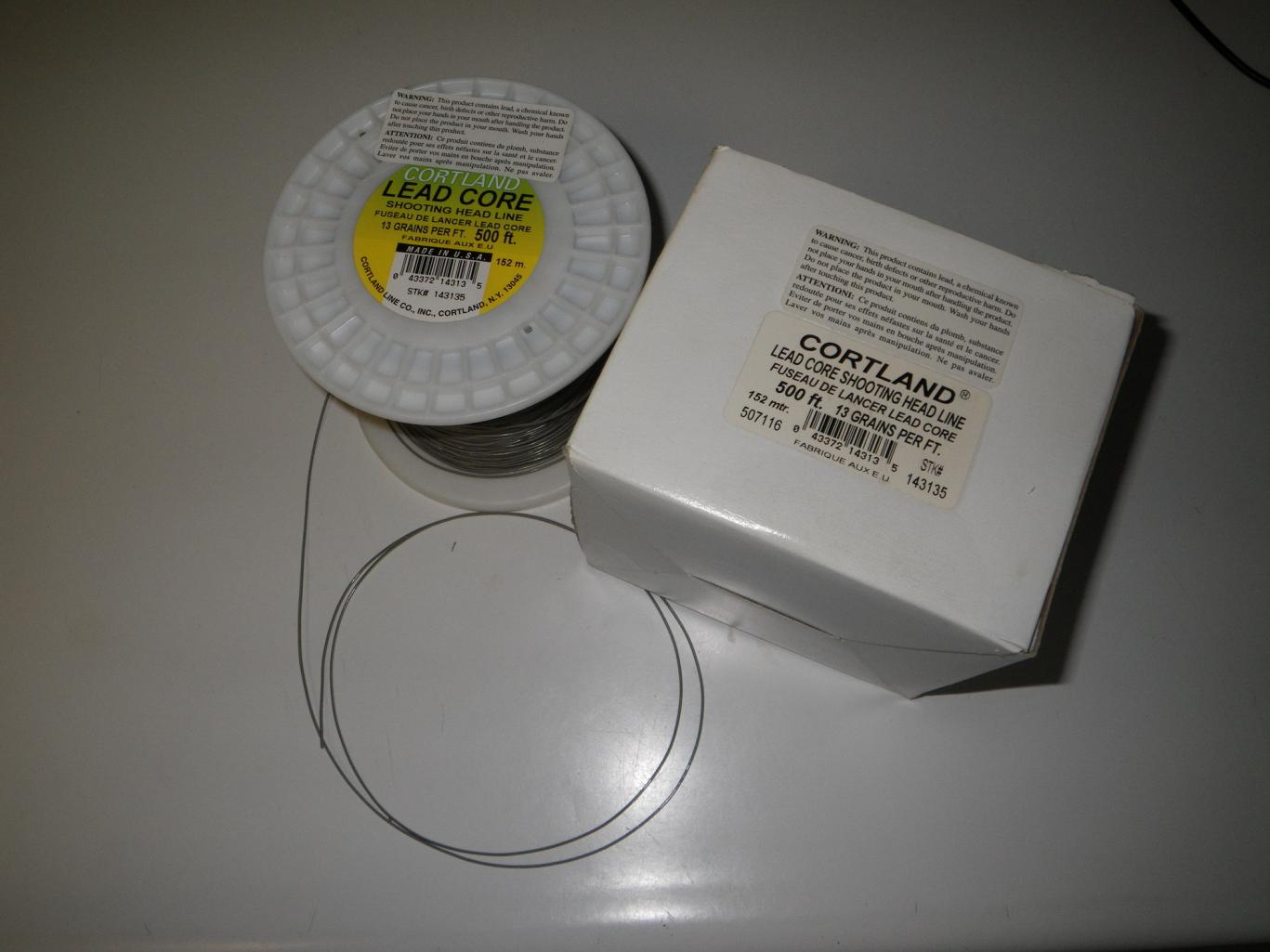
Beyond that we still have very Hi D lines that are sold in bulk or by length, T- 14 and LC-13 etc. and although they are commonly used for making shooting heads - an acquired taste much like artichokes and eggplant, shooting heads are fly lines too. 
Best, Dave
.
Bob,
I would add that the more aggressive the taper, the more quickly the loop speed increases. Hence, the comparison of a fly line taper to a bull whip whose “crack” is the tip breaking the sound barrier.
I think the best on water demonstration of the advantage of a tapered fly line over a level line is to compare how they roll cast. The roll cast limits the amount of power that can be used in the cast to a single forward delivery stroke. By limiting the power, the roll cast is able to demonstrate the most efficient line shape, both for picking up the line and then extending it in a single stroke.
A tapered line causes less of a disturbance over the area being fished because it has a smaller “footprint” over that area. This smaller footprint causes less disturbance when it is picked up for the next cast. It can can be roll cast further because a larger mass is always turning over a lesser mass. And as the bullwhip example demonstrates, for a given Kinetic Energy (KE=MV^2), velocity must increase if mass decreases. It is this relationship between mass and velocity that determines how fast the loop unrolls.
A tapered fly line will pick up more easily causing less disturbance over the area be fished, and will go further for a given cast compared to a level line. That is why I made the comment “Can you imagine a spey caster using a standard level line” in my last post. Spey lines are all about taper design and mass distribution to get that loop to unroll. There is no false casting to add energy or change direction. It all has to be done with on the water variations of a roll cast.
Dave,
You are correct about the IPS rather than FPS. I missed the error before I posted and I do appreciate the correction. I was trying to demonstrate the method of using feet per ten seconds rather than IPS, so I mistakenly used FPS. I think you are right about type 8 lines also. BTW, I make sections of LC 13 in 6 inch increments with loop to loop connections and place them on the end of my floating fly line loop for a quick and variable dirty sink tip. They are not the best to cast but it is a quick and cheap method of keeping streamers at a chosen depth using a floating line. I even like artichokes and eggplant.:eek:
On the attached photo you attached, I assume that is LC 13 but I have always bought it in smaller packages. I can’t imagine having 500 ft of it.
Very nice write ups Silver Creek.
Some of us shooting head users can go through bulk line line LC 13 fairly quickly. I have had as many as 4 30ft LC13 shooting heads destroyed in a day fishing over reefs or around pilings as a result of being dragged over sharp rocks, mussels, clams, barnacles, etc by fairly strong fish. We usually share a bulk spool among several anglers to take advantage of the bulk value.
The best way to get a feel for how different tapers compare is to have a half dozen or so rods strung up with the same fly and leader but different taper lines and cast them side by side over a variety of distances, and ideally wind conditions. The differences, whether subtle or dramatic tend to be more obvious in a head to head comparison.
… “There is a lot of hype
about differences in this front taper and for the
most part, they are exactly that ? hype. Nothing
in the differences in this front taper would be
recognized by any but the most excellent and
sensitive fly caster. There is certainly nothing
here that would instantly turn a bad caster into a
good one. But here is why they are tapered.”… Bob Bolton.
Bob, I cut this out of your article concerning the “Front Taper” and have to agree 100%. I looked at it this way, if a flycaster thinks he will improve his casting with a better fly line and setup, I’d like to give him a shot using somebodies rig like Steve Rajeff, one of the best, and would assume that it was set up with all the understanding of the dynamics Steve could work into it. I doubt there would be any improvement.
I sometimes read and hear from flycasters complaining about “the turnover”. Seems like they all look to taper and leader as the medicine but I think they forget that those parts of the line -leader are what brakes the speed and slows down the turnover and is actually trying to prevent it.
To add to my “Well why?”. As a younger fly fisherman I used wear out a good fly line in six months (both ends because I used the DT).Forking over the cash for a line at that time stretched the budget. It used to bother me when basically only maybe 10 ft of the front of the line was becoming bad and a perfectly fine middle section got tossed away with it. I knew that the middle part would make a great nymphing line but I liked to fish the dry fly and followed the common advise that a tapered line was really necessary. I have a different opinion today, but the caveat, I don’t think I care wear out a fly line today,too damn old.
After my back yard testing turning my 8WF around and using the running line on my 6wt outfit I convinced myself anyway that is a perfectly good way for me and I’m offering the idea to those who would throw out that slightly used one and really can’t afford that new $70 line.Young kids come to mind and so do the flyfishing dads raising a family.
HW,
I have regretted making that blanket statement for years. I had some discussions with Bruce Richards since then and I would word that a little differently now. Remember that I was discussing floating lines only. I made that statement after comparing the tapers of several over-hyped flylines and seeing the difference was slight. So most of the hype was marketing. Bruce set me straight in that radical differences in front taper can be felt by even an average caster. This may not be so evident to the average dry fly fisherman but when you get into salt or casting big big bugs, you can pick the wrong taper.
And certainly when you go wet, which I wasn’t addressing, there is a great influence in taper, density, and such. I still think there is a lot of hype involved, but not so much as I thought before.
Bob
Since I have a life and don’t really lose sleep over the matter, I have always used DT line because it does what I think I want it to do, AND, when one end gets “worn” I reverse it and “VIOLA”…
Mark
Bob
Oops…sorry I highlighted something I agree with. My perspective on this subject is also narrow in that I only considered the floating line primarily used to fish a dry fly in moving water. My opinion though is that this type of line is the basic fly line from which all the others are designed. When we go back a generation or two our choices were much easier to make.Seems it’s way too complicated in today’s catalogs and personally I think it’s not necessary, lottsa hype.
The good thing here is that I think some guys might have got to thinking and gained a little knowledge about the Fly Line so that they can sort out some of the mumbo jumbo they hear. A lot of the math and science both you and Silver posted is way over my head and I will have to spend some time reading and understanding both of your comments. I do have an intuitive feel for the cast and understand the physics only on a common sense level and it is enough for me to get the job done. What did surprise me was that I had actually two fly lines in one and I think before my scientific measuring devices go back to the dungeon I’ll measure up some of the other lines and see what I have.
Thanks to both you and Silver for your enthusiastic comments.
Marco,
One of the fastest ways I know of going to the nether land is to lay my head on the pillow at night and dream of fly lines. I don’t have a bit of trouble falling asleep! If I blink sometime it’s because I was worried about some of your personal VIOLAs  Nighty- Night don’t let the Mayflies bite.
Thanks for letting me look over your shoulder during this discussion. I truly learned a ton about things I’d never even thought about. Granted, most of it was way out of my league but…
Grassman
:idea:My view about fly lines vs fly rods in casting is that on a dollar basis for most of us, extra money spent on a fly line will buy us more casting performance than the same money spent on a rod. I think an extra $30 bucks on a fly line will improve your casting more than and extra $30 on a rod.
Mechanics are more important than rod or line in my view, but I’ll stick to your statement concerning rods and lines and have to disagree. A fly rod with a floppy action just won’t recover from a good power snap. The tip will go where it wants to and so follows the line. Accuracy suffers and loops open up. It will happen with a bad, good or better line. If improvements can be made to the rods action (not cosmetics) it will cast the bad line well.
In my opinion improvements to a fly line will make it fish better but not necessarily cast better at fishing distance.In my own experience I was a happy fisherman with a grin on my face the day I replaced my 8 1/2 ft. Battenkill bamboo rod with a graphite rod (1974). The casting quality between the rods was very apparent to me. The new graphite rod was finally doing to the line what I was trying to tell the fly line to do! The rods changed but the line remained the same. The line was a Cortland 444 DT6F. A very good line at that time.
Within recent years I bought some Sci Anglers lines at Kmart averaging about $10.78 a piece. They are all WF floating design and in sizes from 4 thru 9. I would have preferred the DT design but it wasn’t available on the Kmart shelves. I don’t want to argue costs here but offer the price paid for the line to show that it was a less than better fly line offered by price comparison than what was on the market.Other than being slightly stiffer, the lines fish as well as the 444 and my casting didn’t get worse because of the downgrade.
…of course I present my case, and this is my own intuitive observation and opinion.
Hairwing,
Thanks for this thread! Lots of good information from all the posters. I enjoyed reading about your experimentations. My second rod was an 8 1/2 ft - 8wt Shakespeare Wondernoodle with a level line. What an nightmare to cast! This is not a revelation since I went to double/WF tapered lines and graphite rods, nosiree - I knew I had a lemon from the get-go! I hated that thing! LOL!! You could “make” it do what you wanted (mostly!) but once I got the tools designed to do what I wanted them to do and no longer had to force them - I was/am in nirvana! Todays $25.00 graphite flyrod with a $13.00 WF flyline will cast circles around that Wondernoodle combo (which I think was breaking ALL the laws of Physics!).
Anyway, one of the things that I wanted folks to check into, is that some states have restrictions on how long your leader can be - for instance, in PA’s Special Regs areas - you are limited to an 18ft leader (which is generous for most - but not all folks). I only bring this up because when experimenting with this stuff you may only be able to balance your set-up by having very long leaders. I have no experience with this myself, but thought I’d throw it out there for your consideration. It would be easier to just get rid of this stupid restriction! Too many rules just restrict the good guys and have no effect on the idiots!
Also thanks to Silver Creek for his expertise - for those of us (re-me) who are lacking in a physics background!
Best regards, Dave S.
Dave,
I don’t think it would require a long leader to balance a level fly line . When I messed around I had a 7ft. (or so) piece of dacron 20lb. backing on the end of the line. I experienced no kick in the turnover and would think I could accomplish the same with a 9-12 footer.
Interesting your regs. in Pa. concerning the 18 foot limit. Myself I have become blind to the separation between line and leader when I started thinking about this. What would they do with a horse hair line which is a mono fiber from butt to tippet? I’m not a furler but I thought about weight control; adding more or less to the end of the level line if needed to brake the line speed near the end of the cast.
…and please for all …this is only a discussion. Not an argument.
Has anyone tried the level line experiment ? BTW the rod , reel and line I used is selling cheaper than I bought it for at your local World’s Outfitter for $29.99. That’s a 4 piece rod…reel …backing…and WF line.(4 different models, I just ordered another one.) I’ll let you know the specs. on the flip side of a WF 5 so you can use it on an it-ty bit-ty rod haha.
I wrote
You replied
You will note the “most of us” in bold. There are situations that can be brought up, but I will stand on my statement that for most of us, spend that extra $30 on a line. I bet that new HMG was more than $30 bucks extra. (wink)
I think there is some variation in what is casting “fishing distance”. Only need to cast 30 ft including the leader, no need for a super line.
But at 50 feet plus, I take the better line. Need to throw a bass bug even just 30 feet? I’ll take the bass bug taper rather than the regular run of the mill cheap WF. Need to fish as streamer, give me a density compensated line. Fishing still water for spooky trout - I’ll take the ghost tip line like the Cortland 444 Clear Camo. Fishing for sunfish - buy the cheapo line.
The thing is that a good line will do the easy stuff and the hard stuff. Buy a cheaper line and you can do the easy stuff but the harder stuff is a more difficult. That is the reason I say spend that little bit extra on the line.
A good rod is important to be sure but $30, doesn’t buy you a significantly better rod compared to $30 for a line.
So…back to redefining the “two Taper fly line”.
My kid (35 yrs young) is foremost a mountaineer and fly fishing is just something he enjoys on the side. I bought the 8 1/2’ 5wt. for him because it was 4 piece. It will fit in a backpack better than Dad’s current stock of 2 piece rods. The rod got here Friday and he wanted to try it out right away, so we rigged it for lawn fishing. The rod got two very positive thumbs up from the both of us. That’s $29.99 for a rod…reel…line. Somebody will have to beat me with it to convince me it’s not a high performer. I paid close attention to how the line was doing when we cast it. I haven’t fished “The Millionaires Hole” at the Railroad Ranch for many years, but I certainly wouldn’t be afraid to put this rod and line to work there.
So to get back to the “line flip” question…I measured things up today. The WF5F line that came with the outfit spec’d out to AFTMA tolerances for the first 30 ft… I measured the running line and weighed the back 30 ft. at 96 grains, equaling the 3 weight class. I’m making the conclusion that the running line on a standard WF line is two line weights difference, ie 8 W to 6W, 5W to 3W and so on. I’m still convinced that the level portion of these fly lines work great with some sort of leader to break the speed. When I was thinking about fly line performance I considered the main objection to the level taper being the kick at the turnover of the line. Sure, comparing just fly line tapers without a leader, the level taper will kick over, but you know what…the tapered fly line will do the same.
Well now… I have plenty of 3WT lines at the back of my 5WT lines but no 3WT rods. I ordered one @ $29.99 and I liked the rod I gave to the kid so much in the 5WT I bought another one for myself.
I figure a guy just can’t have too many rods and reels to soothe his soul ! My kid commented that I have a fly rod buying addiction. OK, lately I’ll have to admit it, but really it’s in the interest of scientific experiment and I’m passing my results on to you . The fact is that we really only need one rod.
Silver,
It was an Orvis “Trout” @ 8ft.for 6 weight. Cost was $155 and the HMG was the same. I rented the Orvis for $1 a day and took it fishing. When I returned it to the fly shop I told them “SOLD wrap it up”. The graphite rod was not well received at that time by the established fly fishing community and made me reluctant to buy one.The premium rod at the time was still Bamboo and the cost of the cane rods were three to four times as much as what I spent on the new graphite. In my mind I got a better fishing rod even though it was touted as still being inferior to the bamboo rod and much cheaper. My point remains that the same line went on two different rods but one of the rods outperformed the other.
PS: Haven’t got the 3WT rod yet to see how the level part of the 5W running line works out but will follow up.
Geez. This isn’t rocket science. If you can cast comfortably with a line, do it. If not, find something else. It sounds to me like … Oh what the heck, do or say whatever you want and use whatever line you want if it makes you happy.
Allan