I have looked at a new Hardy cc de France 7 foot 2 pice 4 wt rod and it is gorgeous of course. There are a series of narrow winding bands (red thread) equally spaced along the length of the rod. These look perfect and also looks to me like it must have taken a lot of work to do this. I know the original CC de France was a 30’s design. Are these windings cosmetic or structural? Is it a mark particular to Hardy or this particular rod perhaps? Or a tradition in bamboo rod building? I don’t know boo about boo, so hope that someone here familiar with this rod and it’s history can fill me in.
You are looking at one of Hardy’s most venerable and coveted rods.
A most powerful 7 footer that has been in production by Hardy circa 1911.
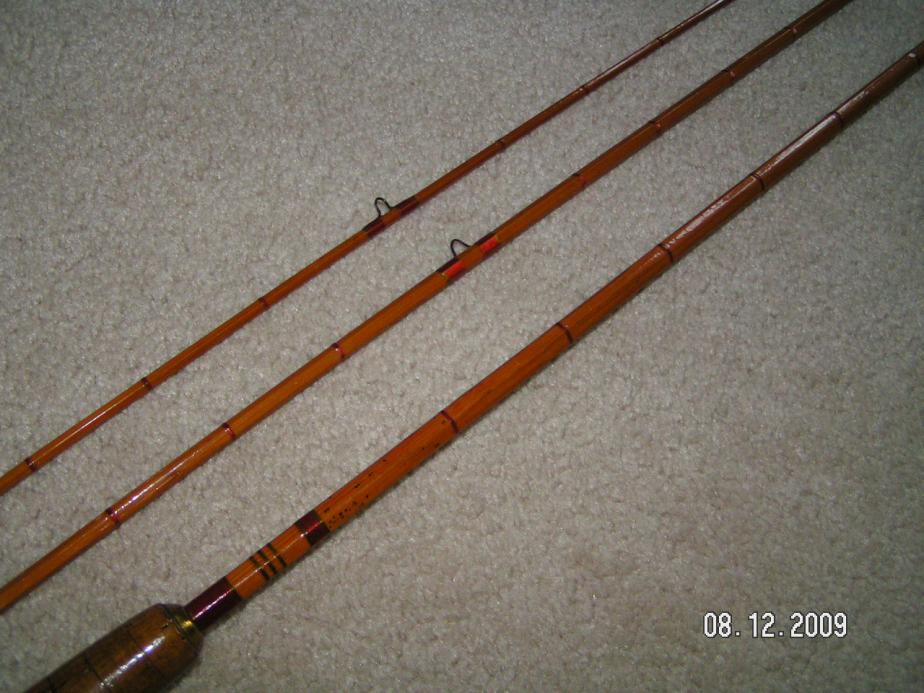
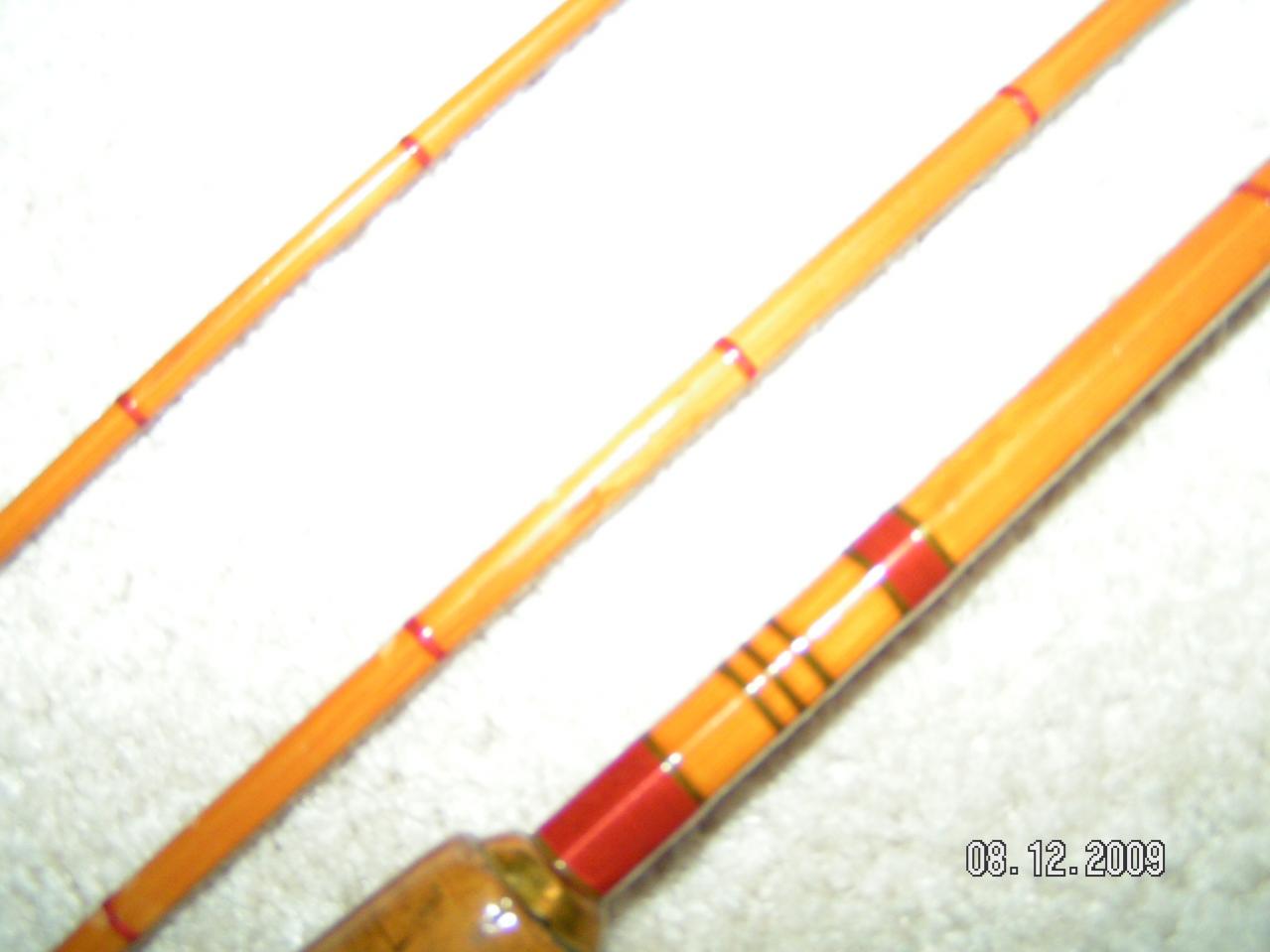
The evenly spaced wraps are called intermediate windings.
I believe they were initially incorporated in the design as structural.
They were a kind of additional bonding of the bamboo strips.
They are cosmetically appealing, in my opinion.
And yes, it does take a lot of work to attain these wraps.
Just ask any restorer as he curses them while redoing an old rod.
As to whether this theory holds any water, I really don’t know.
No, this feature is not limited to Hardy rods.
Many early rodmakers such as H.L. Leonard, F.E. Thomas, E.W. Edwards,
Hiram Hawes, and many others incorporated these intermediates.
Don’t see them too often today. Although some makers offer them as a option to the buyer.
Also, most early rods were glued with hide glue. The intermediate wraps were added as reinforcement. As synthetic glues were developed and adopted by rod makers the intermediate wraps were found to be unnecessary and were dropped.
If you would like to incorperate them into a rod you are building do yourslef a favor and after you complete several of them and the first unfinished wrap is almost on your support take it off and put finish (just a very light coat) on those wraps as it will break your heart to see them unwrap themselves as you wrap on the next one. Also be VERY patient as it takes alot of time to do them and do them correct, especially if you are trying to do them as a 3 or 4 turn.
I’m not sure if this is like what you mean, but it sure fits the description.
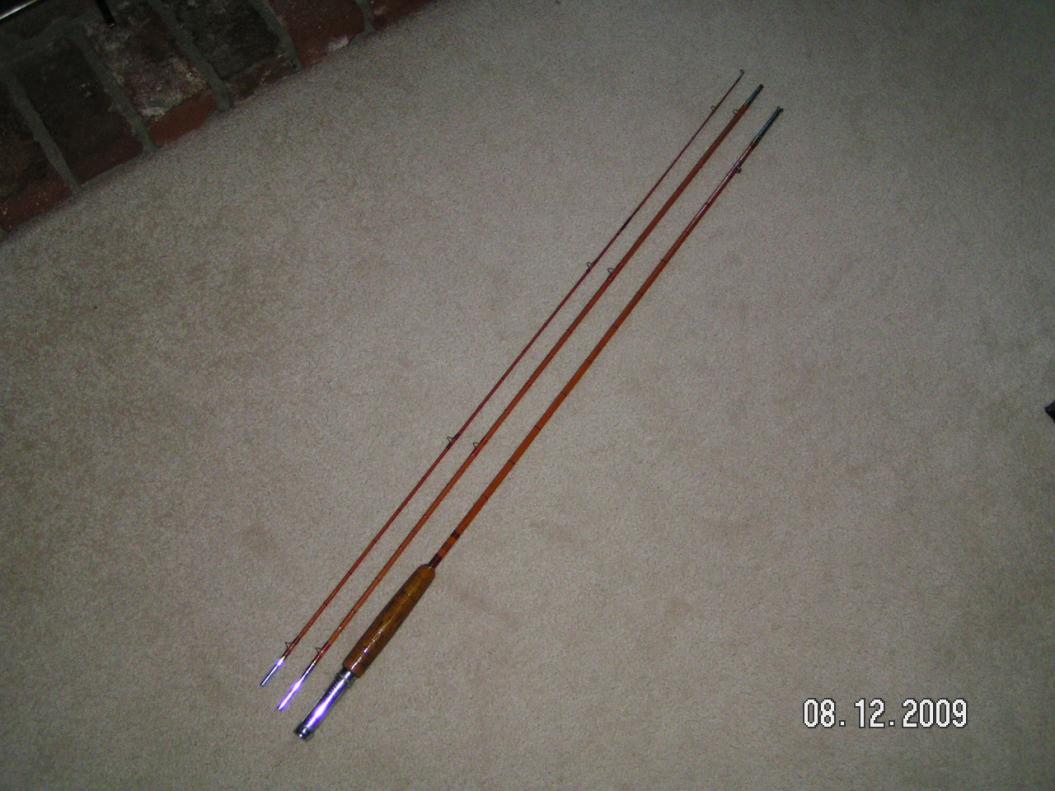
It is one of the rods I inherited from my Grand Father and Dad. I know for sure it dates back to the 1920’s to 1930’s, maybe further back.
I’d be glad to share more pictures with you to offer more detail.
I routinely fish with this rod and others I have from Grandpa and Dad, all Bamboo, except the one Dad made for me from Fenwick blanks for spinning.
It is my belief the intermediate wrappings are to stabilize and strengthen the bamboo making up the rod.
Be glad to offer more pictures for you.
Edit in:
I have other boo’s as well. Be glad to share pictures for you to make like rods from. Like I said, I fish with them.
Each is a unique and a one of a kind creation.
Thanks All for the excellent information. I think you guys nailed it. I appreciate the history and the images too. I can imagine the detailed work put into getting so many thin and evenly spaced windings on a rod looking so perfect. Nice to know the tradition lives.
Yes the CC de France is a work of art and those intermediate wraps, I hope, are just for looks nowadays. From the info above that appears to be the case with modern adhesives (assuming Hardy’s artisans use modern glues). The rod I am talking about is newly issued and it is a 7 1/2 footer; not a 7’ like I originally stated. Anyways I have traded for it and now it is going to be fished!
Well this is my first-ever bamboo fly rod and I am excited; sure enough!
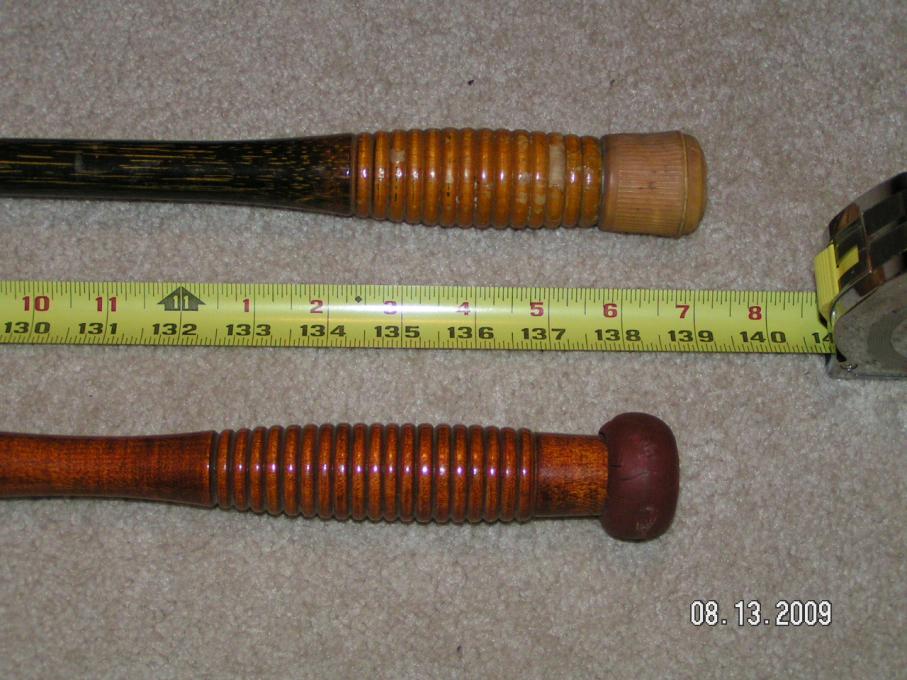
The only other bamboo rod I own is an old 7 foot, one piece beef stick meant for boat or surf in SW I think. It is a Montaque Dreadnaught. I had a fellow semi-restore it. Put new guides and wraps on it.
Does anyone know the meaning of the word “Palakona” ?
Tube?
Old rods like these came with a sock. Some have labels, most do not. I think the ravages of time and probably reapplications of rod varnish wiped out any sign of maker on most of mine anyway.
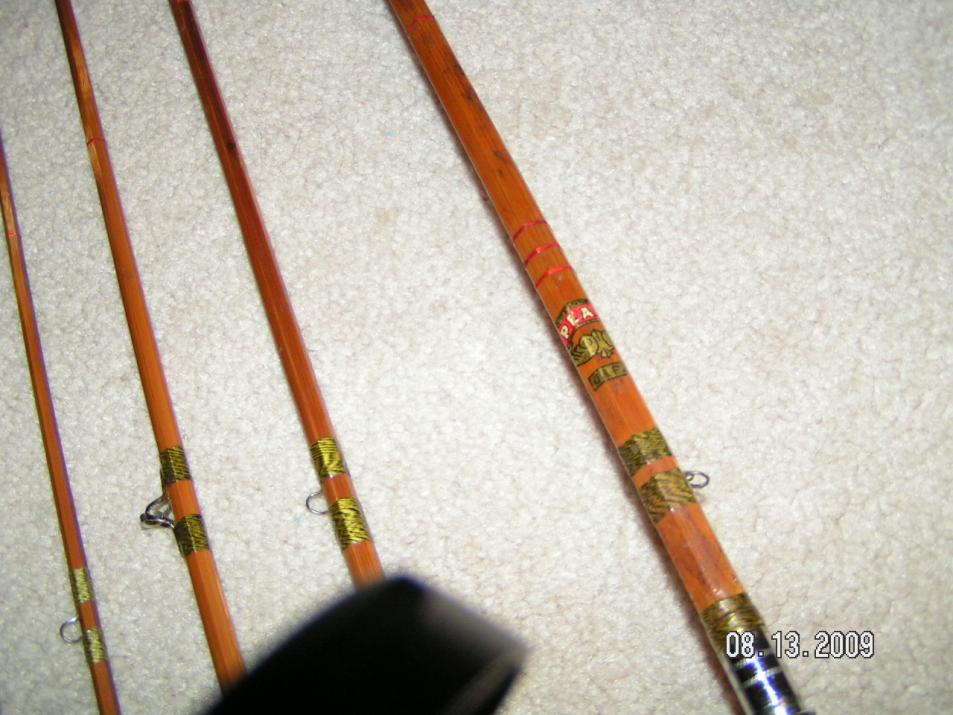
One is marked “Pearl” and Japan. It was crafted in Japan, and I believe before WWII.
The Pearl rod has intermediate wraps of red, and main wraps of a combination yellow/black thread.
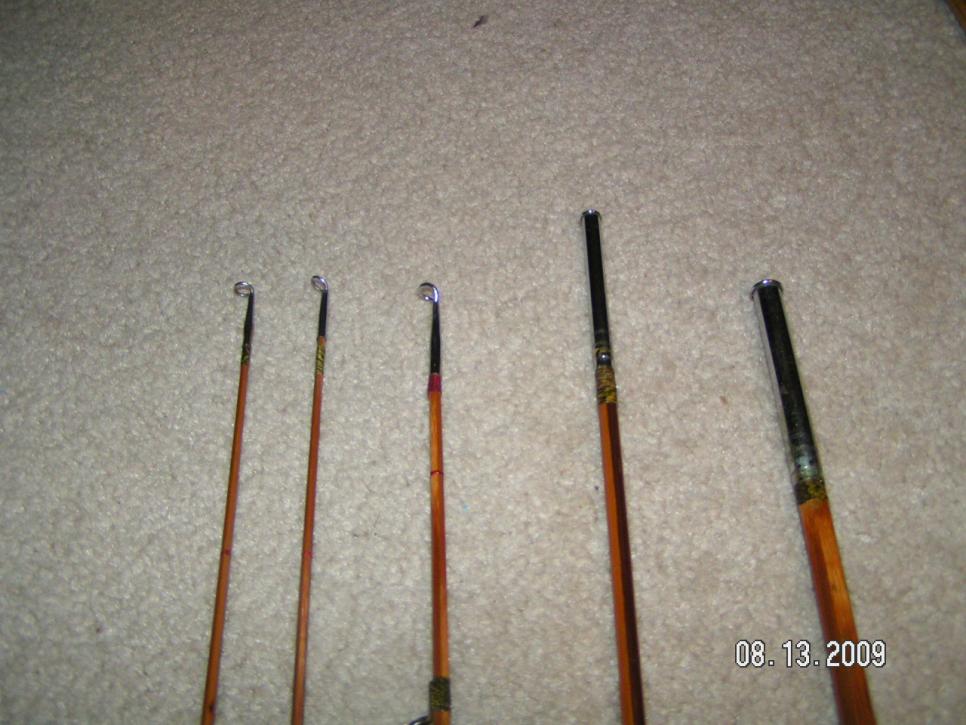
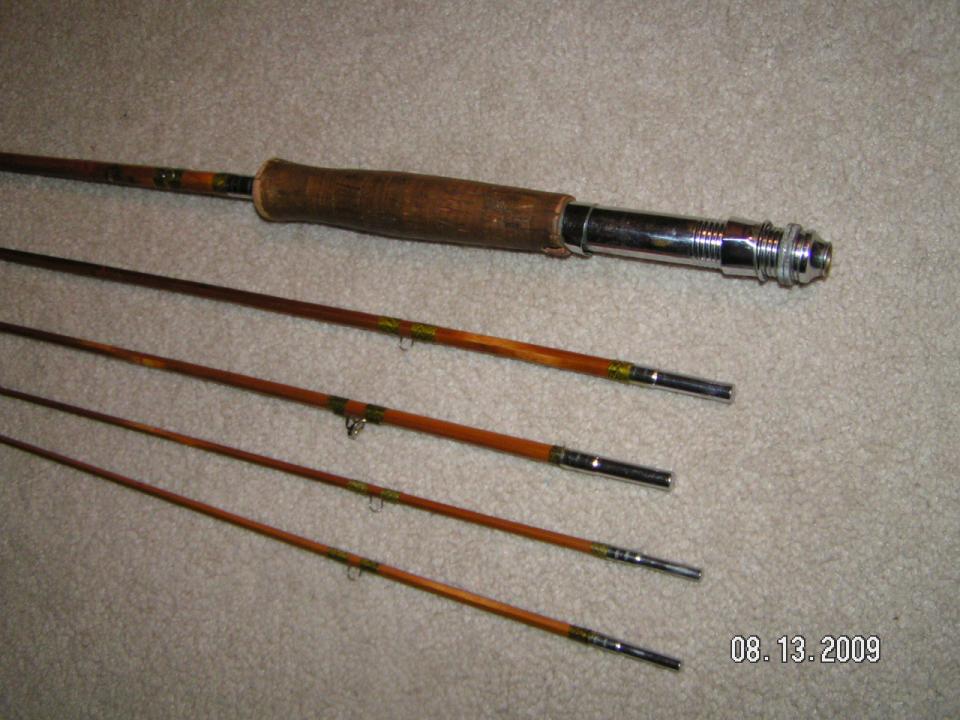
It is a convertible butt where the main section can be configured as a fly rod, or a casting type of reel seat. It has a socket both ways on the butt section.
It also has 3 tips, 2 fly rod tips, and a casting or boat tip. I suppose that was to make a single rod purchase cover many aspects of fishing. A very interesting rod. It was my Dad’s. And has a brown canvas duct bag with two buttons on the flap. Other than that, no weights or type markings like the crazes of today.
You’d pick a rod on it’s feel and action to your arm and hand. Or you learned how to work it when it was handed down to you and your arm adjusted to the whip of the bamboo. The rod learnt you how fish it.
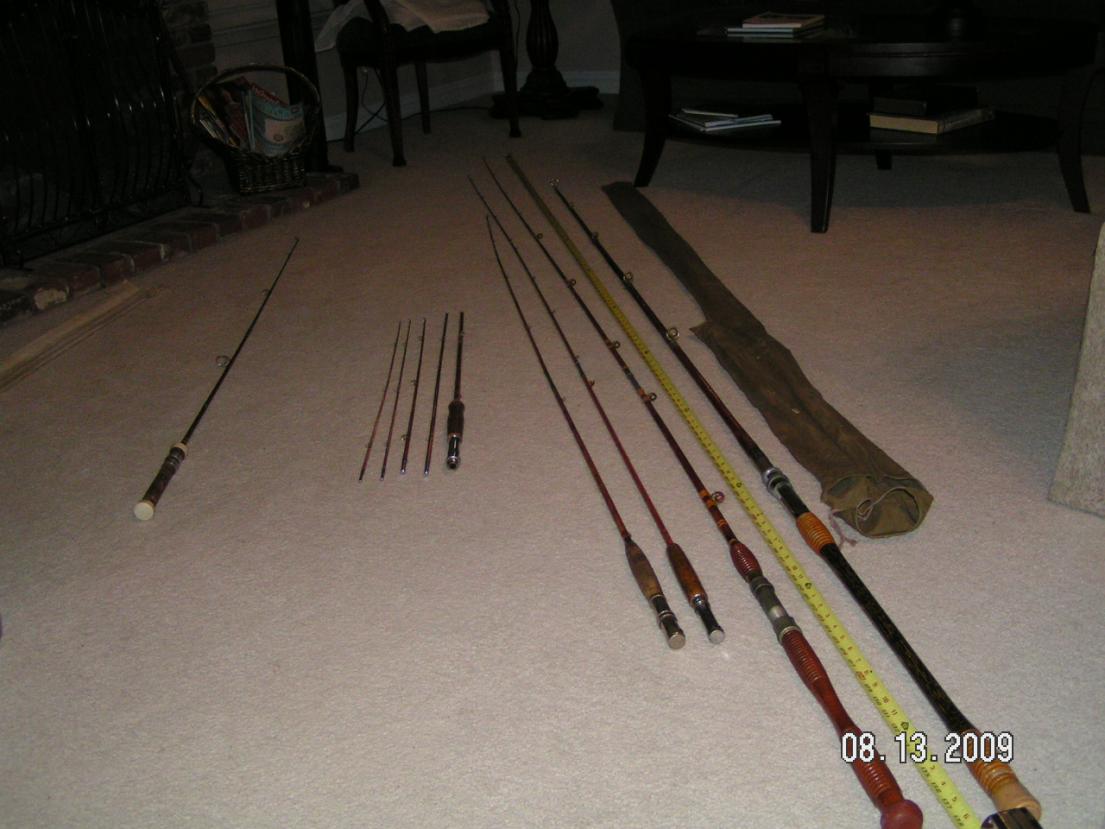
Grandpa’s salmon rod is 11’6" long. No sign of the maker on it that I have found.
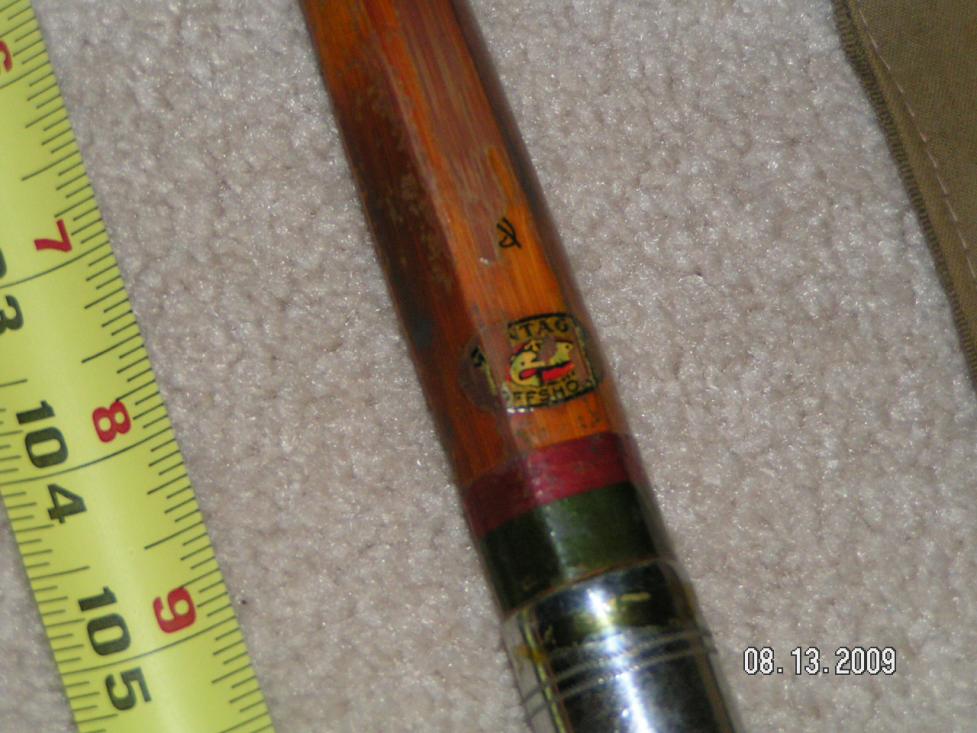
And Grandpa’s Montague Offshore boat rod is a massive work of bamboo.
Then there is Grandpa’s fly rod, Dads Pearl combination rod, and Mom’s fly rod. I’ve never known of any evidence that Mom ever fished, but she and Dad had matching automatic reels for their respective rods.
And an old spinning rod of unknown whozit’s. I think it may have been one Dad snuck into the fishing gear while Mom wasn’t watching back in the 1950’s.
Anyhow, I actually still use these old rods from time to time. But that red wrapped one seems to be my favorite one.
There’s probably been a bunch more that my Sisters have, mostly old fiberglass. But these are some I relish the most.
Glad to share more photos if you’d like. 5 is the limit to any one post.
I have a bunch of Fenwick blanks Dad had to make spinning rods with, and several skeins of thread. I just need to add some reel seats and guides and wa-la!
I’ve been thinking about trying one as a short fly rod for grins and giggles. :roll:
It is inked on the Hardy Bamboo rod. Therefore-I’ll repeat your question: What is it referenced to? I can find all sorts of linkage to “Palakona” and Hardy. Can’t seem to pinpoint the definition of the word. A person? A type of cane? A region where it comes from?
Thanks. One response I got today from an inquirey was as follows:
““Palakona” is just what Hardy called it’s bamboo manufacturing process,
it dosn’t really mean anything other than as a brand designation.”
Ok-I can belive that is fitting. Still though, what is root of that term?
The Term Lakona is popular and is a destination on Papua New Guinea. So in blending these two names- You can get Pa-lakona. That is a stretch…but plausable if there is bamboo there?
Howdy Flymaker…
I’m sured what Bobby said is the straight scoop. Lots of the earlier "Boo rods had intermediate wraps, first for strength, but then later, as adhesives improved, they were mostly for looks. I restore rods, and have seen quite a few older ‘glass rods with these ddcorative intermediate wraps. I just did a restore job on a 7’ 'glass spin rod from about 1960 and it had, in addition to the structural wraps on the guides and ferrules…
46 individual 4-turn decorative wraps in three colors. very cool looking rod upon completion, but,lots of wraps on a rod with only 6 guides…ModocDan
[QUOTE=Sonny Edmonds;312224]Tube?
Old rods like these came with a sock.
Several production companies and some individuals were providing tubes with their rods prior to the turn of the Twentieth Century. Forms of pine or other woods were also in vogue.