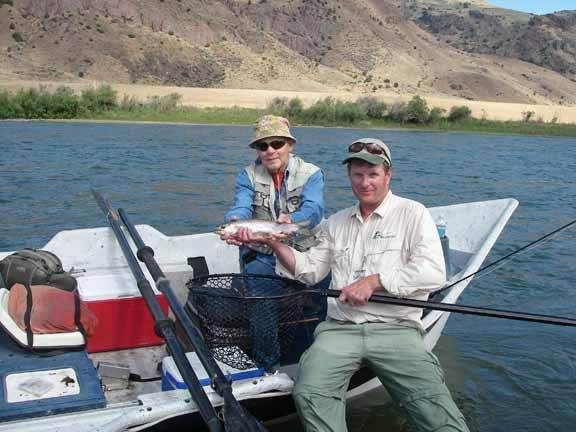
This subject of C & R and related fish mortality came up a few months ago. I read a bunch of stuff ( doing the googling thing mentioned above ) which, by and large, was interesting and not definitive, kind of like this thread, because it is a pretty complicated subject which varies by species of fish and method of fishing.
The concensus in the various studies I read, as I best recall them, dealt with four major factors in fish mortality. In no particular order of importance -
Hooking depth. Any fish hooked deeper than the tongue / gills area has a much greater chance of dying from being hooked. A fish hooked in the corner of the mouth or on a lip has a very good chance of surviving being hooked.
Fighting stress. The longer is takes to land a fish, the more likely a fish will die because of the stress on its system from the fight. The lighter the tippet and the more fun / time taken to land a fish, the more likely it is doomed. Heavy tippets and quick horsing in reduce the fighting stress and give the fish a better chance of surviving.
Handling stress. Out of the water, squeezed, bounced off the rocks, laid on the beach, jerked around while the hook is removed, being dumped headfirst back into the creek, all contribute, along with other factors, to handling stress. A barbless hook that can be quickly removed while the fish is still in the water reduces handling stress to a minimum. RECOVERY time is another factor in handling stress. It can reduce the effects of other stressful handling issues.
Water temperature. Both before and after landing the fish. Marginal or poor water ( too warm or cold, depending on the species ) conditions / temperatures, even with the best of C & R catch, landing and handling practices, alone might cause a high rate of mortality. The fish are stressed by their environment before they encounter the other stresses imposed on them by fishermen and are less able to recover from the combination of forces they encounter.
As I said above, this is my best recollection of the concensus points of the articles / studies that I read some time ago. I didn’t consider those sources dogma, and I certainly don’t represent the above thoughts as dogma.
My own experience is that wild trout, specifically, and large trout, for sure, are not as wimpy as a lot of folks make them out to be.
For example, I caught the same 17" rainbow three times in four outings to one river over the course of a couple weeks. Can I prove that it was the same trout ? No, but I am certain that it was. Same lie, same take, same fight, same size, same escape route, same everything - and it is the only 17" trout I ever saw in that creek.
Another example from last fall. I caught a 20" cutthroat. I did want a picture of it, for a variety of reasons, including showing it with my fishing report on that outing. Admittedly, that fish, which was lightly hooked in excellent water conditions, endured fighting and handling stresses beyond what I would normally expect. It was handled rather roughly, true be told. But I also took extraordinary measures in reviving it. Ten days later, I was present when another person landed the same fish. Can I prove that it was the same trout ? No, but I am certain that it was. Same lie, same take, same fight, same size, same escape route, same everything, including a very unusual and distintive coloring for a cutthroat - and it is the only 20" trout I ever saw in that creek.
The other side of the coin is that I’ve seen small trout which were lightly hooked in excellent water conditions, landed quickly and released with virtually no stress, go belly up quickly.
Recognizing the major elements that contribute to fish mortality and finding a suitable way to deal with them is a very individual thing. I think most do their best, given the power of information.
John