When i have had aquariums and my fish died they would float belly up towards the surface and twitch occasionally.
Anyone tied a fly that imitates this action?
Just wondering
Eric
When i have had aquariums and my fish died they would float belly up towards the surface and twitch occasionally.
Anyone tied a fly that imitates this action?
Just wondering
Eric
I do quite often, but it’s never on purpose:(
Jim Smith
I tie one using foam for the belly and use a little bit of weight(about 3-4 turns of .15 lead) at the head. It looks like a clouser, but with doll eyes so that there is not a ton of weight. I usually use it when water is low and clear. It is deadly if fished right.
Eric,
On a more serious note, I do tie a baby bunker style minnow pattern with polar fiber that has been my top producing bass fly for the past 10 years or so. While I tie it in a variety of colors, olive over chartruese over white or all black are my two most productive color patterns. When I retrieve this fly, I use very rapid 18 inch long strips followed by a 2-3 second pause. When I pause the retrieve, the fly slowly sinks towards the bottom. I tie this pattern unweighted for this purpose. I would guess that between 90 - 95% of the strikes occur when the fly is slowly sinking. It looks like an injured or panic stricken fish that is on its last legs (fins) and it is simply too easy a meal to resist. My best day with this pattern was 84 bass and 9 large bream all on the same fly. It was a bit chewed up and missing an eye, but the fish just couldn’t leave it alone. While this is not a belly-up dead fish fly, it does represent a dying fish so it’s sorta like what you were asking about.
Jim Smith
thanks for the replies and links, I was looking at the tread about fishing the everglades from a yak and this came to mind. Now all I have to do is figure out how to get across the country and find the money to hire a guide for a day or two.
Eric
YUP!
I make a very simple minnow fly;
-I take a long shank hook
It floats on it’s side, and smallmouths hammer it .
Have fun, try diffrent combinations!
chris
Yeah… It’s called the "Swimmy Jimmy. It’s a Kelly Galloup pattern.

Here is a link to the recipe.
http://www.schmidtoutfitters.com/index.cfm?fuseaction=product.display&Product_ID=1895
I understand a cripple, but a “dead” is beyond me?
Trying to match the hatch of a fish kill?
Bob 
Bobby,
When bass are chasing shad in lakes and reservoirs, they often injure quite a few of them…many of these will float to the surface, then begin to sink as they die. There is often a series of diminishing attemps to swim back upwards from these injured fish…this explains why flies and lures that dive then float back up are so effective.
Also, in the winter, shad will die as the water temps drop…bass hang below the schools and eat these dead/dying shad as they sink to the bottom. This is why jigging spoons work so well in cold weather. As do minnow imitating flies that float fished on a sinking line…
Buddy
Here you go, a true “dead fish fly”!
http://www.lightandcolours.com/leon1/displayimage.php?pid=92&fullsize=1
James how about posting a picture of this fly
Like Buddy said, white bass, wipers, stripers,…even bass and catfish will hammer through a school of shad near the surface, and then pick off the dying shad that come sinking back down through the school.
As ice melts off lakes in the north in the Spring, Pike will hammer just about anything that falls through the water below the receding edge of ice. Dead fish that got frozen into the ice during the winter make for an easy meal as they get released. ooooh, YUM! :rolleyes::lol::lol:
Scubatim,
I thought I had a photo of that pattern, but I can’t find it right now. I’ve posted a diving version of the same pattern with a head made from flip flop foam and a lip made from a sequin. The original pattern is the same without the head and perhaps a bit more olive polar fiber over the back. I’ll try to take a photo and post it tomorrow. I hope this helps.
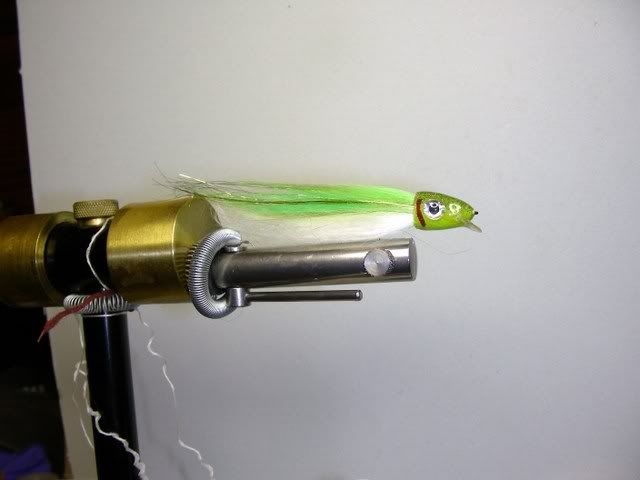
Jim Smith