Q.
I wish to know the entire life cycle of the
mayfly. I have also heard the term wiggler
and would like to know which stage of cycle
this is.
A.
Because there are many variations in the life
cycle of different mayflies in terms of
temperature requirements, unique behavior,
etc., I will present here a generalized life
cycle which fits most, if not all, mayflies.
We’ll start with the eggs, which may be
deposited in various ways but eventually
become attached to the substrate. Embryonic
development within the egg usually takes place
in a few weeks prior to hatching into the nymph
stage. However, it has been shown that the eggs
of some species (often in temperate climates)
pass through a diapause stage; this means that
the egg remains dormant for several months
before hatching. Anyway, when the nymphs hatch,
they undergo numerous molts as they grow, called
instars. As the nymphs grow and mature, they
eventually accrue the necessary number of
degree-days for them to emerge. The initial
adult stage is called a subimago, which is a
winged but sexually immature stage. This is
a short stage lasting as little as a couple
of minutes or as much as 48 hours. Finally,
the subimagos molt again into the sexually
mature adults or imagos.
So briefly, the life cycle is egg to nymph
to subimago to adult; eggs may pass through
a dormant diapause stage and nymphs pass
through several instars.
Don’t hesitate to contact me if you want more
detailed information on mayfly life cycles.
I’d be glad to give you some references to
publications that go into considerable detail.
The second part of your question pertaining to
the name “wiggler” is a bit harder to address.
If you heard this term applied to mayflies,
then the only life stage that would even fit
this description would be the nymphs. Many
move by wiggling movements in the water column
or among the rocks on the stream bottom.
However, the larval stage of mosquitoes
(order Diptera) are often referred to as
“wigglers,” so whoever you heard this from
may have been talking about them.
If you have a question, please feel free to contact me.
~ C. E. (Bert) Cushing, aka Streamdoctor
105 W. Cherokee Dr.
Estes Park, CO 80517
Phone: 970-577-1584
Email: streamdoctor@aol.com
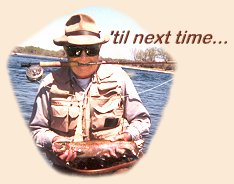
The ‘Stream Doctor’ is a retired professional stream ecologist and
author, now living in the West and spending way too much time
fly-fishing. You are invited to submit questions relating to
anything stream related directly to him for use in this Q & A Feature
at streamdoctor@aol.com.
Originally published November 29th, 2004 on Fly Anglers Online by Robert Younghanz.