Q.
From Steven McGarthwaite: Caddis, are so
miswritten about; for one thing they are
never a nymph. Caddis are egg, larva, pupa,
and adult.
The latest craze in fly tying is the Czech
Nymph, and if you read the articles, they
represent an immature caddisfly. I am having
difficulty telling where a caddis larva ends,
and a caddis pupa starts. They both look the
same to me in the photos I have looked at.
Also if a caddis adult (dry fly) is a size 14
or 16 hook, what size should the pupa or larva
hook be in relation to the insect?
A.
Response: You’re right about the life stages;
even the Orvis catalog advertises “Caddis Nymph”
flies. I suspect that much of this is based on
the fact that fishing immature insect imitations
is generically called “nymphing,” even if you’re
imitating a larva. A quick note: pupa is singular
and pupae is plural; same for larva and larvae.
Caddis larvae are active organisms, found living
in portable or fixed cases, or as free-living forms
without cases. When the last larval instar begins to
pupate into the pupal form, they generally spin a
silk case around their bodies and seal themselves
off from external influences. There is some debate on
the purpose of the pupal life stage, but it is most
generally accepted that it is in this form that they
develop wings and other features necessary for life
out of the water.
Hook size is a hard subject to address. Adult
caddis range from 2 to over 40 mm in length and
the immatures are about the same. Thus, hook
size could range down to a size 24 or smaller
if you were trying to imitate some of the
microcaddis. Hooks for immatures would pretty
much correspond to their body size.
If you have a question, please feel free to contact me.
~ C. E. (Bert) Cushing, aka Streamdoctor
105 W. Cherokee Dr.
Estes Park, CO 80517
Phone: 970-577-1584
Email: streamdoctor@aol.com
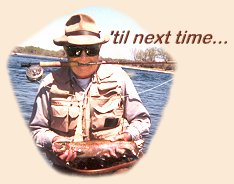
The ‘Stream Doctor’ is a retired professional stream ecologist and
author, now living in the West and spending way too much time
fly-fishing. You are invited to submit questions relating to
anything stream related directly to him for use in this Q & A Feature
at streamdoctor@aol.com.
Originally published February 23rd, 2004 on Fly Anglers Online by Robert Younghanz.