| Sysadmin Note |
|---|
The Madison River begins life at the junction of the Firehole and Gibbon Rivers the confluence of these two rivers create one of the headwater tributaries of the mighty Missouri river. The river was named in July 1805 by Meriwether Lewis of the Lewis and Clark expedition for James Madison who succeeded Thomas Jefferson as President of the United States in 1809.
The Madison River in Yellowstone Park is nineteen miles long and has been called the largest chalkstream in the world. The reason for the river’s rich waters is the enriched waters from the both the Firehole and the Gibbon, both of these rivers receive additional water and enrichment from the hot springs and geysers that run into both of fabled rivers.
Much of the Madison River in the Park is named like the waters of the famous chalk streams, there is the Barns Pools, Beaver Meadows, Grasshopper Bank, Cable Car Run and Baker’s Hole to name a few place.
The river also has an explainable draw besides the many anglers who come to fish the water. There are also those who studied the river and have written about it. Heading the list of authors is the legendary Charlie Brooks and his book The Living River published in 1979 gives great and complete details about this legendary trout stream. Today anglers like Craig Mathews and Bob Jacklin are creating their own legends on the waters of the Madison River.
My first introduction to the Madison River in the park was due to the efforts of Wally Eagle and Neil Travis in 1976. Wally and Neil were friends and after the introductions were made Wally lead us to a place he called Johansson’s Pool, located downstream a short distance from Seven Mile Bridge. Wally explained that this was where he was fishing on June 26th, 1959 when Ingemar Johansson defeated Floyd Patterson to become the Heavyweight Champion of the World.
On day we were fishing the Madison River the caddis were hatching and we enjoyed some excellent fishing on a new river that was new to me and on a very interesting piece of water. I actually spent little time fishing and a great deal of time soaking up the knowledge that Wally Eagle was willing to share about the Madison River in Yellowstone National Park. Over the years I have fished Johansson Pool many times but never without thinking of that long ago afternoon when Wally Eagle shared his knowledge of the Madison River.
Depending on the time of the year, the Madison River can be different rivers to different anglers. I remember fishing the area of Junction Pool a few years ago with my fishing partner Paul Gates. We had spent the morning on the Firehole and had moved down to Junction Pool to see if the small black caddis or midges had started to hatch. We were hoping to end the season with a hatch as this was the final day of the season and tomorrow the season would be closed and the trout would not see another angler until the opening day of the next season far away in late in the month of May.
We found the little Black Caddis hatching and that was followed by Baetis and midges. As we approached the top of the pool we noticed a lineup of anglers about third of mile below us and after watching for a period of time we determined that they were fishing streamers. Surprisingly there was no one fishing the pool but we noticed working fish and began to move into position. Paul went upstream to cross both the Gibbon and the Firehole to gain access to the other side of the pool while I began to work the edges of a back eddy on my side of the pool.
Soon we were both into trout. About this time one of the anglers that had been fishing streamers wander up and asked how we were doing. I replied that the fishing was good and the trout were eating the little black caddis and the emergers. He was shocked that we were fishing dry flies and proclaimed that he would never fool with a dry fly when the large brown were running up out of Hebgen Lake. About that time Paul hooked a large brown trout which turned out to be 21½ inches long. The trout jumped and I couldn’t help making the comment that we were only working the larger trout. The angler was speechless as the trout jumped four different times before Paul could slip the net under him. The spectator finally wandered back down to the lower end of the pool and after a couple of casts he moved on downstream to some unknown point. Throughout the rest of the afternoon the trout continued to rise and we continued to take trout on the surface. Paul’s trout was the largest one that we caught, however we still enjoyed every one of the trout we managed to hook.
On other occasions I to have worked streamers on the Madison in the hopes of enticing one of the larger fall run brown trout and at times I have been successful and at other times the fishing gods have turned their back on me.
In the early season I have fished the Salmon Fly Hatch on the Madison just inside the Park and shortly after that I was fishing the PMD’s hatch in the long meadow above Seven Mile Bridge.
Due to its close proximity to West Yellowstone the Madison River always seems to have its fair share of anglers and often your favorite section is in use by other anglers. Just explore a little bit and you will be able to find an open section where the trout haven’t been bothered by others. Furthermore the number of anglers really means nothing at all. Many of the anglers are unfamiliar with the Madison and are clueless and are no threat to the trout.
From opening day until early July and then from September 10th to the closing of the Park is the time period that I like to fish the Madison River in Yellowstone National Park. However I will tell you that everything changes and a few years ago I spent a couple of days on the Madison in mid-August and had excellent fishing with crickets and fly ants. Therefore fish when you have the chance!
Enjoy & Good Fishin’
| Sysadmin Note |
|---|
| Sysadmin Note |
|---|
“It would be a poor and sorry game if we could lay out rules for every inch of every stream, and we should be thankful that, beyond a certain point, each of us has to work out his own solution.”
E.B. Rice, Where to use the Dry Fly, 1911 October Field & Stream Magazine, Treasury of Trout Fishing, Edited by Leonard M. Wright Jr., 1986
The lower Yellowstone River in Yellowstone Park is that section that runs from Knowles Fall to the park boundary at Gardiner, Montana. This is the section that I choose when I want to fish the Yellowstone and have the majority of water to myself. It is fully loaded with brown trout, rainbow trout, cut-bow’s, cutthroat trout and whitefish. Above Knowles Fall there are no brown trout or whitefish. This section is also fully loaded with insects and the hatches are good in this section.
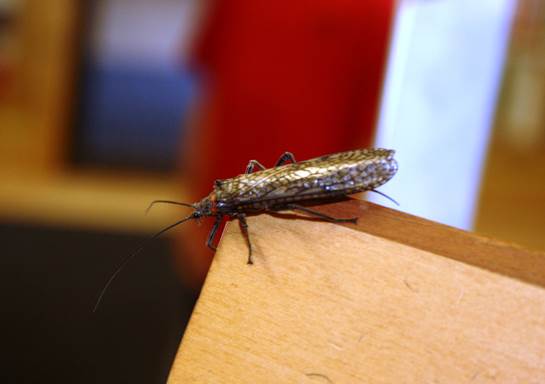
In a normal year you should be able to fish this section around July 10th to the 15th however in 2011 we were not able to get on this section until early August and the best fishing didn’t happen until September. However in 2012 we able to fish this section of the river in early July during the Salmon Fly Hatch. You have to check the local information if you are planning to fish this section. Planning ahead will allow you to arrive with a more complete idea of the water conditions and the hatches during the time period of your visit.
The easiest way to access this section of the Yellowstone is to park at Queen of the Water Access which is located in Gardiner, Montana and then walk upstream Remember, once you enter the Park you will need a Yellowstone Park Fishing Permit. At Queen of the Water’s you will be on the right hand or west bank of the river. If you prefer the east bank you may access the river at another location and that would make it a longer hike and seeing as I am into fishing and not into hiking I have no idea where you might gain access to the east bank, except to go in at the US 89 Bridge over the Yellowstone River in the town of Gardiner Montana. Furthermore being a southpaw, or lefty if you will, I prefer the west bank. Remember this is a big brawling river and you will only be wading the edges, so be careful of your wading and remember fly fishing is suppose to be fun and the fish are the ones that are supposed to be wet not the fly fisher.
From Queen of the Waters to Knowles Falls is about four and quarter miles and many times I never see the Falls. As I fish my way upstream I find plenty of fish long before I reach the Falls and then I turn around and fish my way back down or I hike down to certain locations and fish those areas.
Knowles Falls is fifteen feet high and is very pretty but then I am a sucker for waterfalls. Further upstream you have the majestic falls of the Yellowstone with the Upper Falls being 109 feet in height and the Lower Falls which is 309 feet. Knowles Falls is named for John Knowles who, in 1898, built a cabin in the Crevice Creek area which is near the Falls; the purpose of the cabin was to provide a home since he was mining for gold.
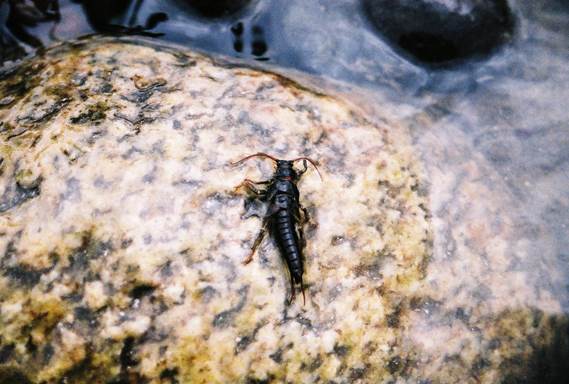
Some years when the snowpack is below normal or the late winter and early spring are warmer than normal this section of the river can be very fishable during the Salmon Fly hatch. It will still be high but the trout are going to be on the banks feeding on the migrating nymphs and later, on the adults that are coming off the streamside vegetation. If you have a chance to fish this section during the Salmon Fly hatch you will swear that you have arrived in fly fishing heaven.
Most of the time I don’t get a chance to fish this section until August or September and my favorite fishing involves using terrestrials. In the west when we talk about this time period the angler’s thoughts turn to hoppers; however in this section of the river I prefer Chernobyl Ants and Crickets. Now if you visit this section of the Yellowstone River don’t over look the may fly or caddis hatches that you may encounter. During this time of year I love to fish attractor type dry flies like Royal Wulffs, H & L Variants, Humpies and for downwing attractors I use Royal Trudes and Coachman Trudes.
For me this section of the Yellowstone River is a fun day where the fishing is always excellent and on some days the catching is pretty good and that is a bonus. As in all rivers, nymphs and their imitations are very effective on the lower section of the Yellowstone however when I go there to fish I use dry flies and try to pick the right days but regardless I never have had a bad day on this section of the mighty Yellowstone.
Enjoy & Good Fishin’
| Sysadmin Note |
|---|
Originally published October 21, 2013 on Fly Anglers Online by Tom Travis. Combined from 2 parts.