THE LAMAR RIVER & SODA BUTTE CREEK
Approximately three million years ago the 3,472 square mile area that we call Yellowstone National Park was the site of some very violent volcanic activity. This action ultimately gave rise to the geysers, hot springs, mud pots and fumaroles. During the past 300,000 years three different Glaciers covered the region. These also contributed to the sculpturing of Yellowstone, which in turn attracts millions of people to the Park each year. Though many travel to view the natural attractions some travel to fish. In 1872 President Ulysses S. Grant signed the bill that created Yellowstone National Park. The northeast quadrant of the park contains the Lamar River and Soda Butte Creek, arguably two of the finest fisheries in the park.
THE LAMAR RIVER
The first to write of the beautiful Lamar River Valley was Osborne Russell, in his Journal of a Trapper. Russell traveled the area from 1834 to 1848. When Russell saw the Lamar River Valley he referred to it as “Paradise Valley”, as many anglers would later agree. Early maps referred to the Lamar as Beaver Creek or the East fork of the Yellowstone River.
The Lamar River is named for Lucius Lamar. In 1885 Lamar was Secretary of the Interior for President Grover Cleveland. Secretary Lamar is credited for keeping the railroads and other unwanted developments such as mining out of the Park.
The Lamar River begins high in the Absaroka Mountains in Hoodoo Basin at 9,200 feet. The basin lies between Lamar Mountain and Parker Peak. For the next 30 miles the Lamar drops 3,000 feet, which is a drop of 100 feet for every mile traveled. Therefore, the upper reaches of the Lamar are only suitable for smaller fish ranging from 5 to 10 inches. The river starts to flatten out at Cache Creek, which is also the official starting point of the Lamar River Valley and runs to the head of the Lamar Canyon. The river that runs through the valley is a classic meadow stream, with riffles, pools, flats and even a few runs. Due to the steep gradients of the upper reaches of the river and the fact that it runs through glacial moraine, which is somewhat unstable, this is one of the last rivers in the park to clear from snow melt. Normally the river is fishable by mid-to-late July. In 2012 it was clear to fish in early July, so it pays to check.
During the summer, hard thunderstorms may cause the river to discolor for a day or two. The flow during run-off can reach a high of 20,000 cfs as it did in 1997 and by October be down to 200cfs. The high flows of run-off, coupled with the geological features of the terrain, means that your favorite riffle or pool may not be there next year. In the valley the river often changes with the season.
The top two miles of the canyon is pocket water filled with cascades, large boulders and fast currents. The river flattens a little a short distance above the point where Slough Creek enters and then continues down to the Yellowstone River in the Black Canyon.
The entire length of the river is 45 miles. The Lamar has excellent populations of native cutthroat trout along with some rainbows and even some cutthroat-rainbow hybrids called cut-bows. Trout vary in size from 10 to 18 inches in the valley with an occasional larger trout. The Lamar has several tributaries; Soda Butte Creek is the largest and will be covered in another section. The other tributaries are Cache Creek which is four miles upstream from Junction Pool where the Soda Butte Creek enters the Lamar. Six miles from Cache Creek is Calfee Creek and yet another mile is Miller Creek. Even further up the Lamar are Mist Creek and the Little Lamar River. There are plenty of back-country campsites, but you must check in at the Back-Country Office at the Park headquarters in Mammoth. For those who wish for solitude, you will find it in the upper reaches of the Lamar. However, once you get above Cache Creek the fish size starts to diminish and continues to do so the higher you go. The Lamar is also a favorite of wildlife and you may encounter moose, black bears, buffalo and grizzlies just to name a few. So obey the rules when traveling in the back-country.
One angler told me that he went to the Lamar and there were cars and motor homes everywhere and decided that he would avoid the crowds. Yes, both the Lamar River and Soda Butte Creek are favored by the anglers yet I have never seen it so crowded that you couldn’t find reasonable fishing room. However, I have also seen the area overrun with cars and motor homes. The reason for this is besides all the natural beauty of the valley and abundance of wildlife, this valley is also home of the Gray Wolf, and Mr. Wolf draws a crowd!
FISHING THE LAMAR
The Lamar can offer the angler anything from size 2 Salmon flies to size 24 Midges depending on the season. On those years when the Lamar clears early, the fly fisher can enjoy fishing the stone fly hatch as the Lamar has an excellent hatch of Salmon Flies and Golden Stones. Next comes the Green Drakes, Gray Drakes, and PMD’s, along with several species of Caddis, Midges, and Terrestrials, to name just a few.
Visiting fly fishers need to have a six weight rod along besides their light line rods. The six weight is for the wind!!! The Lamar River Valley is wide open and surrounded by mountains; hence there can be days when the wind is the biggest challenge. The six weight rod is also good for presenting the Hopper, Cricket and Stonefly imitations in the proper manner. My two favorite rod weights for both the Lamar and Soda Butte Creek are fours and sixes.
Many challenges await the visiting angler. The first of these may be hooking the cutthroat trout. Cut’s are very deliberate risers and anglers are often ripping the hook out of their mouths. Also, despite their reputation for being easy, many will find the Cut’s quite fussy. They often rise and float back with the imitation, carefully inspecting the offering and then return to their holding station. From the time the Lamar clears from the run-off until the Park closes for the winter the Lamar offers challenge that continues and changes with each season. As the water levels are always dropping, the trout are always adjusting their position. Therefore the angler needs to read the water to be successful. If you are not catching trout, move. You may be fishing water that isn’t holding any trout.
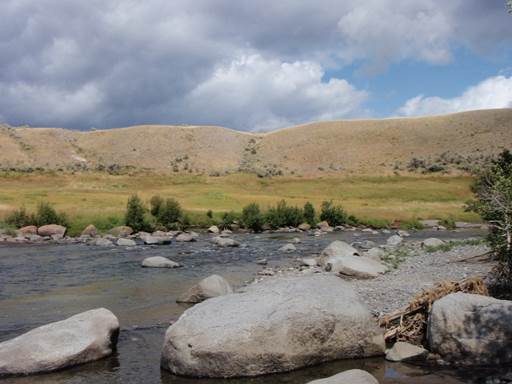
The most popular sections of the Lamar are from junction pool (where Soda Butte Creek enters the Lamar) and the first two miles downstream. The first mile above the canyon and the top of the canyon are also very popular. The center section of the valley is often devoid of anglers. This may be due to the long walk across the open valley floor to get to the river. Yet this section holds many trout and is excellent fishing. The last few miles of the river is visited by few anglers.
Even though the Lamar has the reputation for being best suited for attractor and terrestrial imitations, it also has some very good hatches and those who are ill-prepared are often frustrated. For those who don’t mind fishing with heavy nymphs and streamer imitations I suggest fishing the Lamar Canyon. In this section I have never felt crowded. I suggest having a good supply of stonefly, caddis and attractor nymphs that are suited to the heavy water of the canyon. I have also done well with streamer imitations in this section.
Now let’s take a look at Soda Butte Creek which is the largest of the Lamar’s tributaries.
SODA BUTTE CREEK
Whereas the Lamar River is born in the park and runs its entire course through Yellowstone National Park, Soda Butte Creek begins in Montana and then enters the Park. Soda Butte Creek begins right along highway US 212 just to the east of Cooke City, Montana.
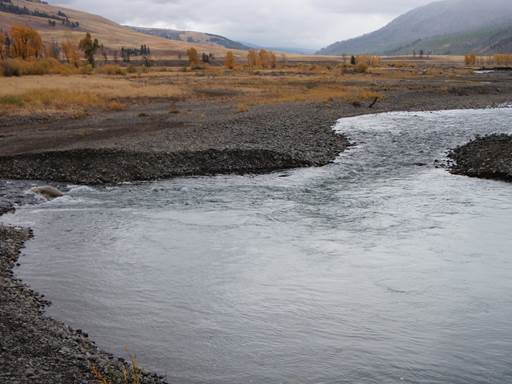
There it flows west and southwest to where it parallels the Northeast Entrance Highway as it enters the park. It continue to flow southwest to where it joins the Lamar River at junction pool at the base of Druid Peak.
From the Park boundary to the junction with the Lamar River, Soda Butte Creek is approximately fifteen miles in length. The upper section of Soda Butte Creek meanders through timber and small meadows, where the gradient is moderate. Then the creek plunges through Ice Box Canyon and enters Round Prairie (which is a huge meadow). Here Pebble Creek and Amphitheater Creek enter Soda Butte.
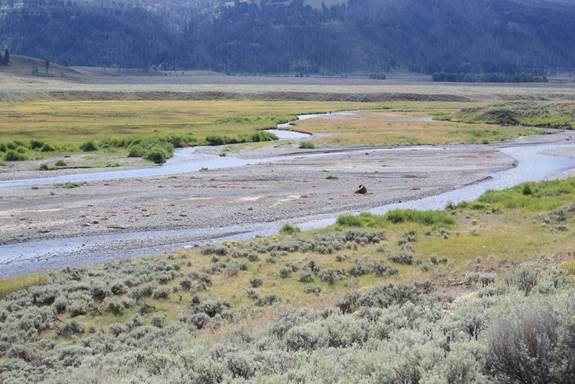
Then the creek tumbles through another short canyon and from there to the Lamar it runs through a valley where the creek is braided with a number of channels. This last section is very much a classic meadow creek. The trout in the creek average between 12 to 14 inches with trout up to 22 inches being reported. While Cutthroat trout are the dominate species, one can still catch Rainbows and even a few Cut-Bows.
However, due to the creek’s reputation for larger trout and the fact that the Northeast Entrance Road runs right along it, it is not the place to expect to fish with no other anglers being about. Soda Butte Creek sees a lot of anglers, yet the quality of the fishery continues, and it is rated as one of the finest small streams in Yellowstone National Park. Soda Butte Creek enjoys the same hatches as does the Lamar River.
The beauty, the wildlife and the quality of the fishing will continue to draw anglers to the Valleys of the Lamar River and Soda Butte Creek. However, there are plenty of trout and lots of room for anglers to spread out and enjoy the fishing.
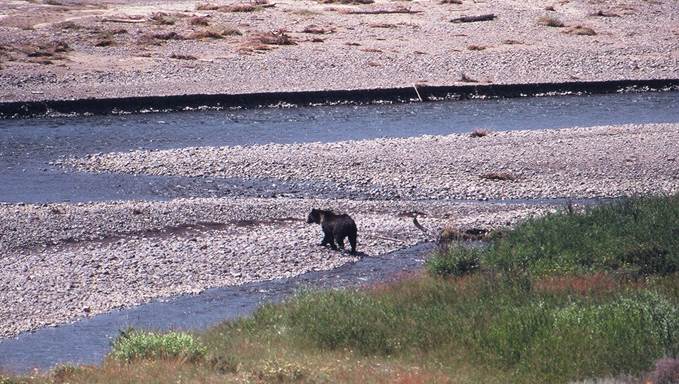
In recent years the population of Grizzly Bears in Yellowstone National Park has expanded and in the past where you had a very low chance of an encounter on Soda Butte Creek or the Lamar that is no longer the case. Therefore anglers need to be prepared with whistles and bear spray and to fish with an awareness of your surroundings.
The Northeast corner of the Yellowstone Park has also become very popular with the wildlife enthusiasts that are hoping to photograph the wolves, grizzly bears and the buffalo, this park of the park has become a favored location for this type of activity. This doesn’t bother the fishing; it does however make the traffic a little slower.
However if you are traveling in the Park obey the speed limits and don’t be in a rush because if are you soon you will be frustrated and most likely miss the beauty and wonder that is Yellowstone National Park.
This area of the Park has good Stonefly, Mayflies, Caddisfly and Midge hatches which will be discusses on some other day, but I would like to make special mention of the great terrestrial fishing found in this section of the Park.
TERRESTRIALS
Grasshoppers (Acrididae sp) Size: 8-14 July 15 to Sept 30
Crickets (Gryllidae sp) Size: 12-14 July 20 to Sept 30
Mormon Cricket Size: 4-8 Aug 10 to Oct 5
Black Ants (Formicidae sp) Size: 16-22 July 15 to Sept 30
Cinnamon Ants (Formicidae sp) Size: 18-20 Aug. 1 to Sept 15
Black Beetle (Coleoptera sp) Size: 12-18 July 5 to Aug. 15
OTHER IMPORTANT HATCHES & FOOD FORMS
Midge (Chironomidae) Size: 16-24 Aug. 15 to Oct. 31
Damsel Fly (Zygoptera ) Size: 10-14 July 1 to Aug. 15
Aquatic Worm (Annelida) Size: 8-14 July 15 to Oct 31
Mice**** Sizes 6-8 Sept 1 to Oct 31
Frogs Sizes 6-8 Aug 15 to Oct 1
Notes of mice, men and trout: In 1998 while fishing the Lamar River during late September, I pumped the stomach of a cutthroat and found a hairball in the stomach pump. Then feeling carefully along the stomach of the trout I could feel the skull of a mouse.
I went back to my truck, changed rods, grabbed a few mice imitations and proceeded to try them. Well, they worked and have worked ever since during the fall of the year. I know you would expect this from Brown Trout, but from Cut’s? It is nice to know that trout don’t read and you can still expect the unexpected. By the way, did you know that a Whitlock Swimming Frog can be a very effective imitation on Park water? But that is story for another time so remember to look for it!
One final note on both Soda Butte Creek and the Lamar River, these streams run through open gravel based valleys and every year the high water of runoff changes and alters the course of both of these stream. Some years the changes are slight but in years like 1996, 1997 and 2011 the changes to the rivers were major and many anglers that I encounter in the months after each of those floods years were dismayed by the changes to the streams. They found that their favorite pools or riffles were gone and frankly didn’t like the changes however the trout hadn’t taken a vacation to some exotic locale. The trout were still in the new riffles and pools that were created by the high water; the problem was that many of those anglers learned to fish these streams by place and not by reading the water and understanding why they were catching trout in a certain place. If you learn about the needs of the trout and learn to read the water, then you will be able to go to any trout stream and be successful.
Enjoy & Good Fishin’
| Sysadmin Note |
|---|
| Sysadmin Note |
|---|
From the Fishing Journal Of Tom Travis, October 9th, 2008
Trip to the Firehole River, Yellowstone National Park with Paul Gates
1 AM, Just finished tying a few flies for the trip to the Firehole, in the morning. The temperature at present time is 29, but it promises to be colder in the morning. September and Early October has provided excellent weather and I am not yet ready for the cold and snows of winter.
6 AM, the temperature is 21 degrees and that is chilly. There go the gardens. Snow is predicted to begin today and continue on through to Sunday night with some area’s expected to receive up to 48 inches. In October 2005 we had a similar storm hit the area, by not with anywhere near four feet of snow.
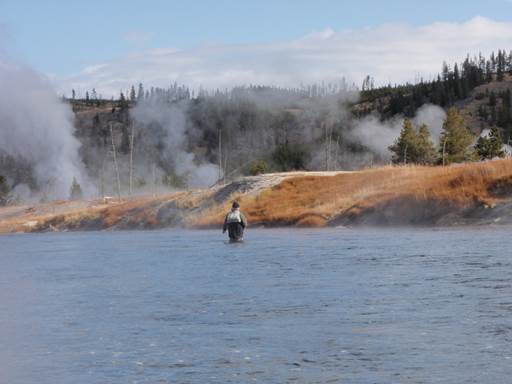
Driving to the Firehole River the air temperatures varied between 20 and 28 degrees. Upon arriving at the Old Iron Bridge it was 25 degrees and calm! The water temperature on the river varied between 56 to 60 degrees bases on where you placed the thermometer. We arrived at 9:30 AM; Paul was first on the water. By 10:45 he had only one trout to a nymph and neither of us had seen many trout!
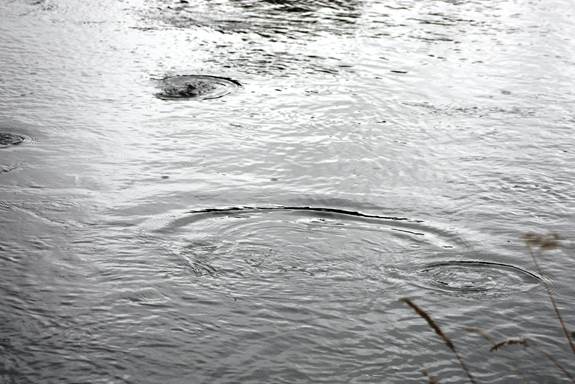
11 AM, we move to Fountain Flats, stopping halfway between the picnic area and the parking area at the end of the road. As we got there the Baetis started to emerge. There were also a few emerging midges, a fair number of small yellow/tan crane fly adults, also a few black caddis and a reasonable number of creamy white aquatic moths. Soon both Paul and I were into the trout. Paul was using a #18 Baetis Dun and #18 Baetis Emerger.
I used several different patterns with success. #16 Black CDC Caddis, Parachute Adams, #18 Spent Adams, and a Pair of Soft hackles, a BWO SH & Tan SH. The trout (Rainbows and Brown’s) were eagerly rising and snow was softly falling. Then the calm was shattered by the icy fingers of ENE wind that began to blow around 6 mph. The wind was also beginning to gust which made the fishing on Flats, less than enjoyable. During the gusts it was impossible to cast upstream to the rising trout. But still we figured that we had terrorized all the trout we could in that section and decided to move upstream.
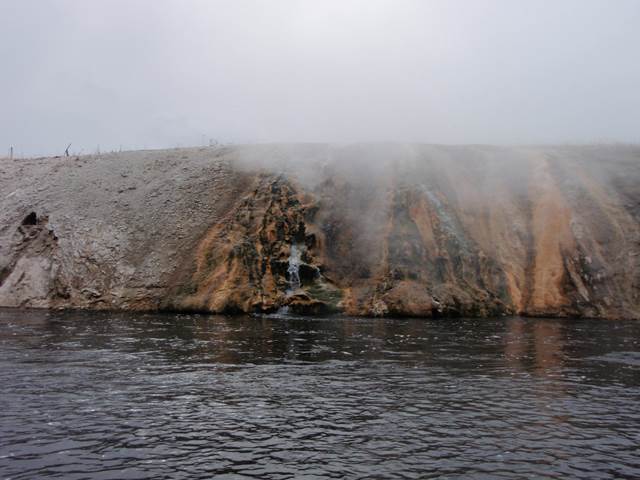
We moved up to Midway, above the bridge where the water from the one geyser runs into the Firehole. Hell, it is right along the road and normally it would not be my first choice. However, did I mention that we had only seen three other anglers. Must be the weather that was keeping people from fishing! We began fishing the Midway section around 12:45 PM and fished until 4 PM. Here, there was Baetis and more Baetis. Paul stay with the same rig he was using and I switched to a #18 Pale Baetis Sparkle Dun. The high bank protected us from the wind, and through the steam of the geysers and the falling snow we had our way with those trout.
We caught more browns than rainbows in this section and few brown’s around 13 inches and one that was 14½, along with the smaller ones. Towards the end of the hatch I got tired of trying to find the Little Sparkle Dun so I switched to a #16 Parachute Irresistible and trailed a #16 Pale Olive Soft Hackle on a 20" dropper. Still they ate it, which was great because seeing that Parachute was a lot easier than seeing that Sparkle Dun.
At 4:30 PM we decided to move down to Madison Junction and finish out the day. But all in all it was a perfect late season day on the Firehole.
Enjoy & Good Fishin’
| Sysadmin Note |
|---|
| Sysadmin Note |
|---|
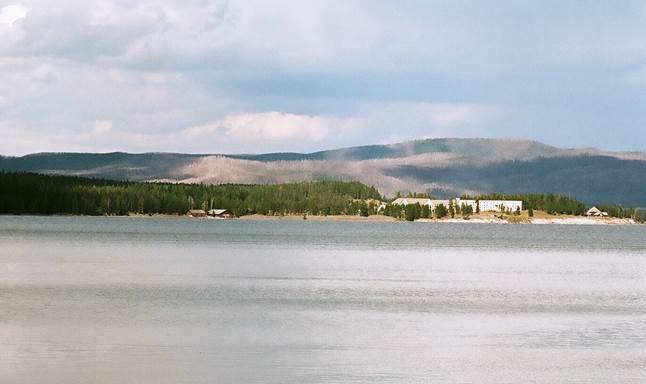
Yellowstone Lake looking at Lake Hotel
Over the years I have had some great adventures fishing the waters of Yellowstone Lake; as a matter of fact 50% of the total angler use in the Park is centered on Yellowstone Lake.
Yellowstone Lake is the largest lake in North America sits at 7,732 feet above sea level and covers 136 square miles with 110 miles of shoreline of which 30 miles is accessible by motor vehicle. The lake is normally frozen over by December and normally thaws during late May to early June, and during the winter the ice cover can be as deep as three feet except in the areas of the hot springs. The deepest place in the lake is 390 feet with an average depth of 139 feet.
Yellowstone Lake was also know Eustis Lake and Sublette’s Lake, however John Colter of the Lewis and Clark expedition later returned to the area as a fur trapper and may have been the first white man to see the lake some time during the 1820’s and he referred to the lake as Yellow Stone as did Osborne Russell who visited the lake in 1834. Russell’s work was later published as Journals of a Trapper in 1921 and by 1839 Yellowstone Lake appeared on maps of the Oregon Territory by the U.S. Army.
The lake opens for fishing on the 15th of June and closes on the first Sunday in November each year, however I strongly urge you to check the regulations as there has been changes over the years.
Most National Parks do not require a fishing permit, but you must have one in Yellowstone. The money for the fishing permit stays in the Park and is used to enhance and protect the fisheries of this great park! Currently the fishing permit is $45.00 per season, $25.00 for seven days and $18.00 for three days. [2013 costs] For those who would like additional information may go on line to www.nps.gov/yell/index.htm or www.yellowstonenationalpark.com you may also go Wikipedia and search angling in Yellowstone National Park.
West Thumb is a very active geothermal area with geysers, fumaroles and hot springs alongside the lake and even in the shallows of the lake. I mention this because on a cold fall day I always head to West Thumb and after gauging the wind and wave action I will position myself to fish in the water that is being warmed by the geothermal activity and enjoy much better fishing than I would in other sections of the lake.
Sometimes I wade and fish the shoreline but most of the time I use a float tube, but before you follow my lead and show up with a float tube you will need a boat or floating craft permit which is available at the Back Country Office in Mammoth. Make sure that you have an approved PFD. Don’t forget, the fine for not having a PFD is $100.00.
You can rent watercraft at Bridge Bay and West Thumb Marinas or you can bring your own, but just remember to get your watercraft permit that is good for the season. When you fish Yellowstone Lake please take the time to do so safely, check the weather and be aware of the weather change while on the lake. This is a big lake and the winds can create dangerous situations and if you end up in the water remember is water is cold and hypothermia is a very real danger. If you are using a float tube dress appropriately and periodically go to shore and warm up. Fishing is supposed to be fun and not a thrilling danger sport.
You can also fish the lake by wading the shoreline. Just proceed slowly and carefully or you may find yourself observing the trout in their world. Generally that means a bruised and battered ego, but regardless a dip in the lake will give you pause.
The big question with a lake of this size is where are the trout going to be? The cutthroat trout are fairly evenly concentrated around the shoreline of the lake and the reason is that’s where the major portion of the trout’s food is located.
The major weedbed are comprised of Richardson’s pondweed and are located in 2½ to 25 feet of water. In the early season the shallow water will warm up a little quicker than the bulk of the deep water in the lake. Even with the reduced cutthroat numbers you can still find plenty of trout along the shoreline. The lake has heavy populations of Daphnia and the trout feed heavily on these tiny crustaceans.
Many years ago I guided a couple of English clients on the lake and as soon as the stomach samples showed the mass of Daphnia they produced patterns to imitate a cloud of these tiny creatures and the trout were after them with the first cast. It was the first time that I have seen patterns of this type.
The lake also has good scud populations of Gammarus lacustris and Hyallela Azteca, also there are good Midge and Aquatic Worms populations.
There is also damsel and dragon Flies in the lake, and caddis and mayfly hatches, but these hatches are not lake wide and they are confined to certain locations therefore the angler needs to be observant and prepared. The single largest mayfly hatch on the lake is the Speckled Dun [Callibaetis nigritus].
Also the lake has several minnows and cutthroat trout will feed on these minnows; They are Longnosed Suckers [Catostumus catostumus], Long Nose Dace [Rhinichthys cataractae], Red Side Shiners [Richardsonius balteatus hydrophlox], Lake Trout Minnows [Salvelinus namaycush] and of course Cutthroat Trout Minnows. I have had some simply outstanding fishing on Yellowstone Lake with streamers.
There many great places in Yellowstone Lake that are good to fish and like everyone I have some favorite places and these places have serve me well since 1976, they are Gull Point, Mary’s Bay and West Thumb.
There are lake trout in the lake and all lake trout caught by anglers must be KILLED under the current regulations; and I will relate my favorite places and times for lake trout in another column.
When I fish Yellowstone Lake I like to go prepared and therefore I always go with weight forward floating line, sink tip type III or IV and a type III uniform sink line. These lines will allow several different options in the manner in which I present the selected imitations. As for a recommendation fly rod I strongly suggest a six weight. Yes there are times and hatches when a four or five weight would be fine, however many times heavier flies, sinking lines and wind must be taken into account and therefore that is why I suggest a six weight fly rod of 8½ to 9 foot length.
In the early season the water temperature is still very cold and this means figuring out where the trout are and at what depth are they holding and then presenting your imitation at the proper angle and depth. Then manipulate your imitation slowly since nothing in the cold waters of the early season moves quickly!
Remember the trout in the lake are constantly moving and not holding in a prime lie or feeding station as trout in a river. Therefore when I go to fish the lake I go early, often leaving my home in Livingston long before the sunrise, since normally the mornings on the lake are calm which makes spotting the trout much easier.
That is one of the reasons that I like Gull Point or Mary’s Bay. Both have high ground which with the aid of a pair of binoculars allows me to spot trout and spend more time fishing where the fish are, rather than wasting time on where the trout are not.
Generally later in the day the breezes will arise putting a chop on the water and this makes spotting trout more difficult. In that situation I will look for an area that offers some protection from the wind.
As the season progresses and more insects become active in the lake the angler can use attractor or searching dry flies or wet/dry combinations to locate trout. During the time period of mid July to early September I have had excellent fishing with ant and beetle imitations during the windblown afternoons. Also a size 12 Chernobyl in black or tan is a very effective searching pattern on the lake.
I have much more information to impart and adventures to share with you but I will leave something for another time. But I will leave you with this thought; Yellowstone Lake is still worth fishing and there are still plenty of cutthroat trout for the observant and thoughtful angler to catch.
As I have stated earlier I generally fish the lake using a float tube, however I know that many are not comfortable in float tubes and would not care to bring a float tube with them on a trip that involves flying. I do know that several area fly shop rent float tubes and many times I have simply waded the shoreline of the lake and enjoy some very good fishing.
Enjoy & Good Fishin’
| Sysadmin Note |
|---|
| Sysadmin Note |
|---|
Trout Lake lies in the Northeast Corner of Yellowstone National Park. To reach the trailhead for the lake the angler must pass by the Gardner River, and pass by Blacktail Ponds cross the Yellowstone and Lamar Rivers, drive by the turn off to the legendary Slough Creek and drive along both the Larmar River and Soda Butte Creek. Not many anglers can pass up such storied waters for a hike into a lake without giving in to the impulse and stopping to fish one of these fabled waters.
The trailhead to Trout Lake is across from the base of the Soda Butte Canyon, so if you have arrived at the Pebble Creek Campground you have gone too far. The hike to the lake is short about half mile however is a rather steep hike up through the pine forest. The lake sets in a depression at 6962 feet and is back dropped by the towering heights of Mount Hornaday which rises to 10,003 feet without a doubt Trout Lake is one of the most scenic places in the Park. As a historical note, Mount Hornaday was named in 1938 for William Temple Hornaday a world renowned naturalist who championed the cause of saving the American Bison from extinction.
The angler can fish the shores of Trout Lake but many carry in their float tubes and I have seen some carry in canoes, though that is something that I would not care to do. The lake is twelve acres in size and has a small creek running into it. Opening day is for the lake is June 15th however the area right around the inlet doesn’t open until July 15th to protect the spawning cutthroat trout.
Wildlife is open found around the lake with bison being the most common however I have also encountered moose, mule deer and elk around the lake. When I first began to fish Trout Lake in 1977 you would occasionally see a black bear but for years grizzly bears were never a problem in the last few years plenty of grizzly bears have been seen in the area. That is true of many places in the Park therefore I always have bear pepper spray and a whistle. Some use bear bells but I don’t. Today the angler may find more people at the lake to watch the river otters who have taken up residents there in the past few years.
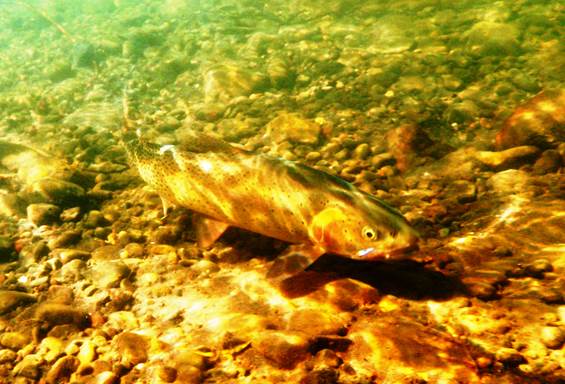
Trout Lake is very rich with excellent populations of leeches, scuds, midges, caddis and mayflies. Some of the caddis hatches are outstanding as is the Callibaetis and midge hatches; furthermore from late July to early September the terrestrial fishing on the lake can be outstanding. Due to the richness of the lake the cutthroat trout will run between fourteen and twenty inches the rainbow and rainbow-cutthroat hybrids called cuttbow’s will range between sixteen and thirty inches and for years is was the large trout that drew anglers to the lake.
According to the fishing regulations for Yellowstone National Park you may begin your fishing day at 5:00 a.m. and your fishing day must end at 10:00 p.m. However I would suggest that you do your fishing during the daylight hours. Pushing the limit and walking out of Trout Lake in the dark may not be a wise move, since bumping into a grizzly bear in the dark or even in the iffy light of dusk may ruin your whole day. Use common sense and be safe. Fly fishing is supposed to be fun not a contact sport with wildlife!
As I said, Trout Lake is an extremely rich therefore the trout are seldom easy the angler must be prepared with several fly lines; I would have a floating line, Sink Tip type III or IV and a Uniform Sink Full Sinking Fly Line Type III or IV. I prefer a six weight rod system for still water fishing.
On Trout Lake I always have my midge selection of worms, pupa’s, emergers and adults. I also go prepared with scud, leech, damsel and dragonfly imitations, and if the fishing is slow I often go to a type III Uniform Sink Full Sinking Line and fish a dragonfly nymph and a scud slow and deep.
The lake has good Callibaetis hatches but the evenings of mid-July to late August offers some good caddis hatches and the fishing during the evening can be exciting. For the hatches at the time of your visit check with a local fly shop and with the fishing outfitters who are permitted to operate in the Park.
A trip to Trout Lake is well worth the effort and a place that I visit several times a year.
Enjoy & Good Fishin’
| Sysadmin Note |
|---|
| Sysadmin Note |
|---|
For many anglers who are visiting the West for the first time, the Gallatin River typifies their idea of western rivers. This is especially true if they view the river for the first time in the canyon stretch along US 191. The Gallatin River in this section is a brawling, moderate size, freestone, mountain stream. The Gallatin is 120 miles in length from its headwaters in Yellowstone National Park to where it joins with the Madison and Jefferson Rivers at Headwaters State Park near Three Forks, Montana to form the mighty Missouri River. Much of the river is easily accessible to anglers since US 191 runs right along the river over much of its course. The river was named by Meriwether Lewis in 1805 for Albert Gallatin who was the Secretary of the United States Treasury from 1801 to 1814.
The Gallatin originates in the northwest corner of Yellowstone National Park where it begins as two branches on the north slopes of Three Rivers Peak and these feed Gallatin Lake which sets at 9,500 feet. From this lake, where the water is clear and very cold, the Gallatin is born. The Gallatin River can be first seen from mile marker 22 on Highway 191, at this point Fan Creek enters from the north, then Divide Creek joins from the south and then Bacon Rind Creek runs in from the west. These creeks greatly expand the flows of the river.
The Gallatin is a small, friendly stream that is easy to fish as it meanders through the high open meadows. It is a classic combination of riffles, pools and flats, with many undercut banks. There are good populations of trout in this water, with rainbows, browns and cutthroats. The trout average 9 to 12 inches, however trout from 12 to 16 inches can be taken and even a few up to 20 inches. The run‑off starts in May and this section of the Gallatin is usually fishable by mid‑June, long before the lower river will clear to fish. During late June and throughout July, there is a good diversity of insects on the Gallatin, including stoneflies, caddisflies and mayflies however the hatches are seldom heavy. This is not uncommon with this type of stream like the upper Gallatin. The hatches are generally sparse in nature and this keeps the trout from becoming too selective. This section of the Gallatin receives very little fishing pressure as many anglers think that the trout are small and sparse, but this is not the case.
During August and into early September there are good terrestrial insect populations and the trout will feed quite readily on Beetles, Ants, Hopper and Cricket imitations.
Unlike the water further downstream, the Gallatin River in the Park is easy to wade with a nice gravel bottom without the slick uneven rocks that you can encounter further down the river. The upper Gallatin is one of those rivers that are truly fun to fish and seldom will you have trouble finding the trout. Over the years I have spent countless afternoons fishing this open and seldom crowded stream and have treasured every hour that I have spent on this delightful stream.
Choosing effective fly patterns is seldom a problem during the hatches as long as common sense is applied. If there is no hatch then your favorite attractor patterns, both dry and wet, will generally work well. There is a great deal more of the Gallatin River to fish beyond the boundaries of Yellowstone National Park but that will have to wait for another time and place.
Next time you want some small stream fishing that is uncrowded and fun give the Gallatin River inside Yellowstone National Park a try. You may also find yourself sharing the water with elk, deer and the occasional moose. Remember to stop and get your Yellowstone National Park Fishing Permit before fishing the waters in the Park, and check the opening dates and other regulations that pertain to fishing in Yellowstone. Generally the season runs from Memorial Day weekend in May to the first Sunday in November.
Enjoy & Good Fishin’
| Sysadmin Note |
|---|
Originally published Jan 28, 2013 on Fly Anglers Online by Tom Travis. Combined from 5 parts.