| Sysadmin Note |
|---|
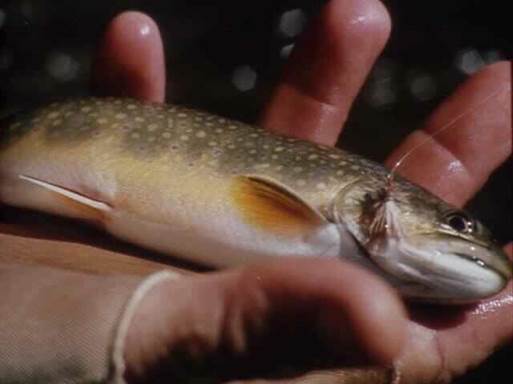
Once upon a time in the magical kingdom of trout there lived a speckled fish called the brook trout. This special trout was desired by all, he inspired the creation of fly patterns and the methods to outwit this special trout. With the proper tactics and imitations thousands of the special speckled marvels were caught and killed. However in those days no one thought that the special trout would ever suffer any change as they never had in previous years. The brook trout inspired the pen of wonderful authors to flow across the pages much like the musical river rambles and glides through the woodland.
This magical trout kingdom did exists, it is now called the United States of America and from the time that the first people travel by ship to these shores to begin a new life the brook trout was the only trout to be found in the streams in the eastern U.S. But nothing ever remains the same. Yes, we can point the finger at overharvesting and the destruction of critical habitat, but regardless of what caused the decline, by the 1880’s some had noticed it and decided to introduce the brown trout.
As a pure historical note: 4,000 brown trout eggs were sent from England in 1882 to W.L. Gilbert of Plymouth, Mass. Most of the eggs died in the crossing; only twenty five hatched and only three reached maturity. None were released in public water or used as brood stock. Thus ended the first brown trout sent to America.
Then some brown trout were sent to Fred Mather on Long Island, NY. 80,000 brown trout eggs came from Friedrich Von Behr of the Black Forest. Behr was the President of the German Fisheries Society. So, like many Americans, the brown trout is an immigrant from Europe. He soon obtained his green card and before long Mr. Brown trout would become a full citizen of the United States.
In 1883, 80,000 brown trout eggs arrived in New York Harbor on the German steamship Werra. Fred Mather quickly transported them to his hatchery at Cold Springs Harbor. Rearing and keeping some for brood stock, Fred Mather planted them in the Spring Creek of Long Island and in streams around the area, including the Beaverkill, Willowemoc and the Esopus in 1884.
Fred Mather didn’t bring the brown trout to America on a whim; he had seen the start of the decline of the brook trout fisheries due to poor forestry practices and pollution being discharged into eastern streams. Fred Mather knew that the changing habitat would destroy the native brook trout and also knew that the brown trout could withstand warmer water temperatures, and could also withstand a certain amount of pollution.
When Mather brought the 80,000 eggs to his hatchery at Cold Springs Harbor and began to start his stocking program, neither the state of New York nor the Federal Government kept track of stocking. Nobody seemed to care in those days. In 1888 browns were introduced to the Brodhead’s in PA. During this same year they were shipped to the Pere Marquette River in Michigan. How well did the browns fare in this new land? By 1900 brown trout of over 20 inches had been taken in the waters of the Catskills. The rainbow trout were soon to follow and the Magical Kingdom of the Brook Trout was forever changed.
The brook trout never disappeared from the waters of the east and Midwest, but they also never regained their glory, but for many the brook trout was still the magical trout of their dreams and the glory of their youthful fishing adventures.
I to have a special place in my heart and memories for the Speckled Magical Trout, their color always bring fond memories to mind and I know that I am not alone in this fondness for brook trout.
In the 1890 brook trout, the magical speckled fish from the east was widely stocked throughout Yellowstone National Park, and today populations of those trout can be found in several streams and ponds around the park. Among the locations where brook trout are located is the Gardner River and its tributaries above Osprey Falls.
Many years ago I was guiding an elderly grandfather and his two grandsons ages nine and eleven. He requested that we fish on Soda Butte Creek if possible; as I knew the age of the grandsons I had extra rods and reel along just in case. However they both were able to cast and were very careful with the gear that their grandfather had provided for them.
We left Livingston around 6:30 A.M and after several stops to photograph Big Horn Sheep, Elk, Antelope and Buffalo we arrived on Soda Butte Creek by 9 am. We had taken our time as this was the first trip into Yellowstone National Park for the grandsons. It was fun to see the Park through their eyes and I could tell that is was a special day for Walt who was their grandfather. Their father worked for the state department and they had spent most of their young life in the Middle East. Now they lived in New York City and their grandfather was a resident of Long Island. They had both learned to fly fish last year and were very excited to be in Yellowstone Park fly fishing on Soda Butte Creek with their grandfather.
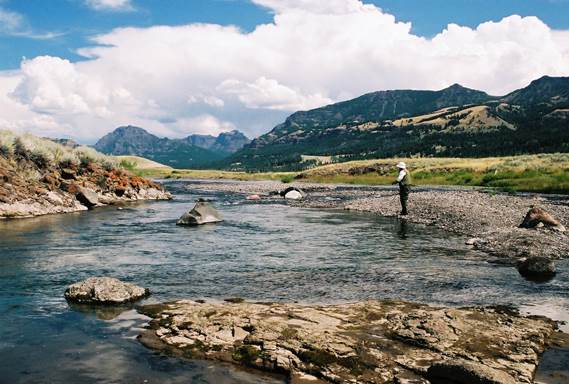
Soda Butte Creek
We fished from 9:45 am until 2:00 pm and the fishing was outstanding, Walt caught a few fish but spent most of his time working with first one and then the other grandson. I switched back and forth between the two boys and we had great time and took lots of pictures. As soon as the fishing stopped the boys were hungry and we when off to a lunch of burgers, salads and fruit and those boys ate like hungry trout during a green drake hatch.
During the lunch Walt and I began to talk and he explained his love of brook trout and how they were the trout of his youth and how much fun he had with those speckled magical trout. Then he said that he wished that there was somewhere in Yellowstone where he could introduce his grandsons to brook trout. I explained that the Upper Gardner River held brook trout and on occasion you could catch a decent fish of twelve inches plus, however most were in the six to ten inch range.
Walt excitedly asked if we could fish the Upper Gardner in the early evening, I told him we could leave for the Upper Gardner as soon as lunch was over and that the Gardner River was on our way back.
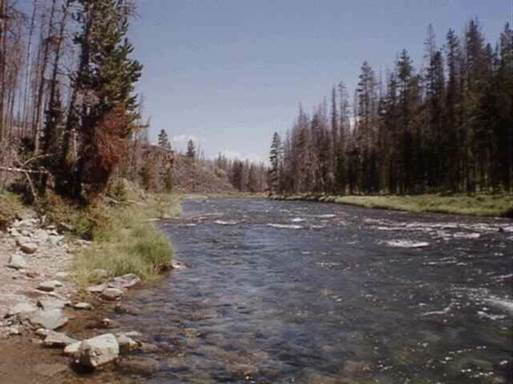
Upper Gardner River
We left Soda Butte Creek and drove to the Upper Gardner River, pulling in a Sheep Eaters Cliffs and fishing the river from the bridge upstream towards Indian Creek Campground. Once we were on the river he asked me to take his rod and catch a brook trout, which I did and even though the trout was small I placed it in the net and Walt took the net and showed it to his grandsons and explained this was the magical trout of his youth. The boys noticed that the brook trout that I had caught was much smaller than the trout that they were catching earlier in the day. Their grandfather explained that the size of the trout really doesn’t matter, large or small the angler still has to fool the trout into eating and it was the joy of fly fishing not the size of the trout which was important. I thought of many anglers I wish could have heard this talk and information that Walt offered to his grandsons.
There were caddis on the water and soon we had the boys rigged up and they were catching fish and laughing and talking to their grandfather. Walt had a gleam in his eye and a glow of satisfaction because he was able to pass on a very important lesson on trout fishing to his grandsons. Nothing could be better.
We fished for a couple of hours and finally we could see that the boys were running out of steam and we packed up and headed for Livingston. One minute they were talking and laughing about the magical speckled trout that they had caught and suddenly there was silence. We both glanced back and the boys were sound asleep, no doubt dreaming about the magical speckled trout that they had fooled. We chuckled and continued to chat as I drove back to Livingston.
I continued to guide Walt and his grandsons for many years after that day on the Upper Gardner. On that day we didn’t catch any trophies, however we did turn two young anglers into true fly anglers. That day stands out as one of the best days in my guiding career.
Good night my friends and may your dreams be filled with magical speckled trout in a magical stream that wanders and glides among the woodlands and fields.
Enjoy & Good Fishin’
| Sysadmin Note |
|---|
| Sysadmin Note |
|---|
Do you want to catch an Arctic Grayling in Yellowstone National Park? If so your destination is Grebe Lake which also happens to be the headwaters of the Gibbon River.
Grebe Lake is a 156 acres set on the Solfatara Plateau at 8028 feet, from the trailhead off the Canyon Road it is easy three mile or possibly three and half mile hike through the meadows and the lodgepole pine forest, this area was burned over in the massive fires of 1988. On the same plateau sets Wolf Lake which is two miles west of Grebe Lake and Cascade Lake which sets three miles east.
Prior to 1907 there were no fish in Grebe Lake as a point of interest during the exploration period of Yellowstone Park which went on from 1870 to 1890’s is was discovered that there were no game fish above Gibbon Falls. Grebe Lake was named by J.P. Iddings a geologist working with the Arnold Hague Geologic Survey in 1883. He chose the name because of the Western Grebes he found on the lake.
In 1907 rainbow trout were introduced into Grebe Lake and was followed by the introduction of cutthroat trout in 1912 and in 1921 Arctic Grayling well introduced to the lake. As a point of interest the original stock of Arctic Grayling came from Georgetown Lake in Montana.
From 1931 to 1956 there was a fish culture operation run at Grebe Lake due to this operation the Lake was closed to fishing until 1944 during the operation of the hatchery 72,000,000 Arctic Grayling eggs were produced and used to stock grayling in many other park waters. Like other hatcheries in Yellowstone this hatchery was closed in the late 50’s.
Over the years I have made many trips into Grebe Lake and I always bring my float tube with me which make fishing the lake much more efficient.
I almost always see Moose at the Lake and on occasion a Black Bear or Grizzly Bear will wander through the area around the lake there a four Backcountry camp site to use them you must contact the Backcountry Office at the Park Headquarters at Mammoth. Over the years due to the Arctic Grayling Grebe Lake has become very popular and seldom do you have the lake to yourself if you don’t wish to carry a float tube you are able to fish a great deal of the shoreline around the lake just be aware of the Moose and give them their space.
Years ago I was on the lake in my float tube and I noticed a pair of anglers working around the shoreline and they were approaching an area where a rather large Bull Moose was bedded down. I called to the anglers and warned them that they were approaching the moose, they chose to ignore me.
Within a short period of time the moose chased them into the lake where they were standing in neck deep water and then when they tried to move to shore the Bull Moose would stand and move towards them. They ended up having to move a third of the mile through chest deep water before they could exit the lake, as they were not wearing waders during this encounter they were soon on the trail back to their vehicle and their day was over on Grebe Lake.
The lake opens for fishing on Memorial Day weekend and closes on the first Sunday in November however in late May and into early June the trail may still have considerable snow on it therefore you should always check with the Backcountry Office for the latest conditions. I generally make my trips into Grebe Lake in July and August the lake has good Callibaetis, midge and damsel fly hatches. Also because there is a good meadow around much of the lake the terrestrial fishing is also excellent.
Now I will share with you the items that I take with me for a day trip into Grebe Lake I will discuss tackle and other items that you need to ensure your safety. From a safety point of view I always carry a small compact first aid kit, bear spray and whistle if I am taking my float tube then I will need my air pump and a PFD and don’t forget you will need a watercraft permit to use your float tube in Yellowstone National Park.
With a float tube you will need fins and warm garments to wear under your waders the water is never all that warm. A few bottles of water or a purifying unit and some lunch, I suggest food items with high protein as you will be hiking over six miles and then waking around the lake or kicking in a float tube all endeavors which requires lots of energy. You will need a good backpack with a good frame I always pack everything in the backpack including the float tube.
Now for the tackle, I will put together boxes of flies which I feel that I may need on the lake the first is nymphs; My nymph box will include scuds size 14-16, besides the gray/olive scuds I also use pink scud Size 12-14, damsel nymphs size 10-12, dragon fly nymphs size 8, Callibaetis nymphs size 14-18, midge worms size 16, midge pupa size 16-20, Assorted soft hackles size 12-16, hare’s nymph size 12-16, bead head prince nymphs size 12-16, dark olive woolly bugger size 8-12, pink woolly bugger size 8-12 and a selection of leech imitations.
I also put together a dry fly box which contains foam pink ants size 14-18, happy face black beetles size 12-16, pink beetles Size 12-14, Dave’s hopper size 8-10, Dave’s cricket size 10, blue damsel fly adults size 12-14, Callibaetis duns, emergers, spinners sizes 14-18, midge emergers and adults sizes 16-20, Goddard caddis size 14-18 and an assortment of attractor dry flies sizes 12-16 and muddler minnows size 8-12.
I always carry a third box of flies which is a mixture of many things, which at time help me solve problems that I might encounter the contents of this box is varied and contains wets, nymphs, emergers, dries and streamers sort of a junk box of flies.
I carry an Orvis Frequent Fly Seven Piece Pack Rod which is an 8½ foot for a six weight and I carry a floating line and extra spools loaded with a sink tip and uniform sink full sinking type III line. I carry nine foot 3X and 4X leaders and various tippets. The tippets, floatant, nippers and all the rest of need tackle items are attached to my lanyard which always goes with me.
I also carry Bull Frog Sunscreen/Insect Repellent the sunscreen is always needed and the insect repellent will keep you from being a Yellowstone National Park blood donor when the mosquitoes show up and they will!
Now l will discuss the fish of Grebe Lake and I offer you some insight into fishing this delightful lake. Now I have fished for grayling in Alaska and in various streams in the United Kingdom and I have talked to many anglers from Europe and Scandinavian who constantly fish for grayling and with the reading I have done on the subject of grayling fishing I have developed some methods that are not often used in the lower forty eight states when fishing for grayling.
One thing that I have learned is that grayling are suckers for Pink Flies at certain times when there are no hatching insects on the water, this addiction to Pink Flies is just not for surface flies but also with subsurface patterns that is why I carry the pink scuds, woolly buggers and soft hackles.
During the hatches the grayling will rise freely to surface flies however the angler will often miss the first few fish or they will strike to hard and rip the hook out of the grayling’s mouth. Their mouth is very soft and a hard strike will often rip the fly loose.
Also their mouth is shaped differently than that of a trout and with a quick strike will often take the fly away from the grayling. Many of the grayling caught in Grebe Lake will run between 10 to 13 inches but grayling between 13 to 15 inches is not uncommon and on occasion I have landed 16 inch grayling.
Besides the grayling Grebe Lake also holds rainbow trout and the angler needs to be observant as to what type of fish is rising so the hook set can be adjusted. Like any lake there are times when the angler will need to use a sink tip or a full sinking line. Those are the situations that any angler can encounter on any fishery and these problems can be solved by the angler who keeps an open mind and is observant.
However, in my experience Grebe Lake is an excellent good time fishery where most anglers will catch grayling and a few rainbows and have a good time.
Years ago Neil (FAOL Editor) and myself took a friend of ours named Old Joe into Grebe Lake, Joe had never caught a grayling and had never been in a float tube and by the end of the day he had accomplished both goal and we all had a great time, it was one of those trips that will live in the memories of those involved forever. Joe has long since gone to fish those trout streams in the sky but every time I drive by the trailhead or start down the trail to Grebe Lake I remember that memorable day and smile at the memory.
So if you want to catch a grayling without traveling to Alaska or Europe give Grebe Lake a try I am sure that you will enjoy a day on this beautiful lake located in the center of Yellowstone Park.
Enjoy & Good Fishin’
| Sysadmin Note |
|---|
| Sysadmin Note |
|---|
September and October are two of my favorite times to fish the wondrous water of Yellowstone National Park and I always have the same problem on day-off from guiding anglers. Where should I fish today? Should I travel to the Lewis River, is it too early for the big brown in the Lewis Channel, are the large brown beginning to run in the Lower Gardner, do I run down and fish the Madison for the brown trout moving up out of Hebgan Lakes or do travel to the Firehole to fish the Black Caddis and Baetis Hatch? As you can see it can be a tough decision however as much as I love to chase the big trout I also love to dry fly fish and as the days grow cooler I know the summer is ending along with the major hatches.
Also as I grow older I find that I really like to fish large dry flies and that usually send me down the road to fish Soda Butte Creek in the Northeast corner of the Park and I can also spend time on the Lamar River or Slough Creek as all of these water offer hatches of large fall drakes. A trip to Soda Butte is a mere 110 miles from my house in Livingston Montana and in the fall with the shorter days and cooler nights I don’t have rush off at dawn to get there, I can take my time and arrive around 10 AM.
I understand that some might think of trip of that distance a major undertaking but here in Montana it means a nice drive of around two hours. The speed limits in the park are strictly enforced and speeding will get you a hefty ticket!
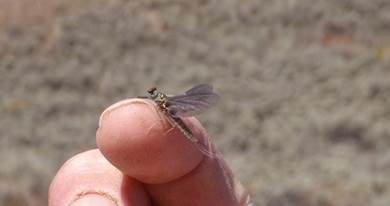
Now, you might wonder what are the insects that entices me to this area, well there is still excellent fishing with Hoppers, Crickets and Ants and yes there will most likely be some small Baetis on most days however it is the Gray Drakes, Green Drakes that draw me to these waters. Depending on the day the hatch will begin between 11 AM and 12 Noon.
As I am there to fish dry flies that mean that I rig up with a dry drake imitation and a suitable nymph imitation but as soon as the duns begin to appear I switch to my favorite dry imitations which are either a dry flymph or a dry soft hackle. Over the past few years I have been tying a certain number of my flymphs and soft hackles on dry fly hooks and have used suitable material on the bodies to ensure that these imitations float regardless of the fact that I am using soft hackles for the collars.
At first I used them as a trailer behind a regular dry imitation but I soon discovered that the dry flymphs and soft hackles float very well and are easy to see on the water. Therefore, I often fish the soft hackle or flymph imitations as a single fly and this is also a time of the year when I enjoy using my Tenkara Rod. However, if the wind become obnoxious I will switch to a five or six weight rod of eight and half foot in length and the single best piece of advice that offer to the angler is to be observant and aware of what is going on in relation to the insects and the feeding trout and be guided by your observations!
Now the idea of fishing soft hackle as dry flies is far from new, the late Sylvester Nemes often fished his creations on the surface of the water as did the late W. C. Stewart in 1857 as did James Chetham in 1681. Now as far as I am aware the flymphs of James Leisenring are generally fished beneath the surface of the water however I have found them to be highly effective when fished on the surface film as a dry fly.
The following are a couple of my favorite dry soft hackles and a couple of my favorite dry flymph patterns.
Gray Drake (Dry) Soft Hackle
- Hook: TMC 2487
- Sizes: 10 to 16
- Thread: 12/0 Dark Dun
- Abdomen: Gray Turkey Biot, wrapped
- Thorax: Dubbed, Beaver fur dyed gray
- Hackle: Hen Grizzly or Natural Gray Hungarian Partridge, 1-1/2 to 2 wraps
Green Drake (Dry) Soft Hackle
- Hook: TMC 2487
- Sizes: 10 to 16
- Thread: 12/0 Dark Dun
- Abdomen: BWO Turkey Biot, wrapped
- Thorax: Dubbed, Hareline UV Dark Olive
- Hackle: Hungarian Partridge dyed Black or Black Hen Hackle, 1-1/2 to 2 wraps
Gray Drake (Dry) Flymph
- Hook: TMC 101 or 100
- Sizes: 12-16
- Thread: 12/0 Lite Dun
- Tails: Hen Grizzly Hackle Fibers
- Abdomen: Gray Turkey Biot, wrapped
- Thorax: Dubbed, UV Hareline Gray
- Hackle: Grizzly Hen Hackle, Two turns
- Collar: Grizzly After-shaft Feather,
Green Drake (Dry) Flymph
- Hook: TMC 101 or 100
- Sizes: 12-16
- Thread: 12/0 Black
- Tails: Black Hen Hackle Fibers
- Abdomen: BWO Turkey Biot, wrapped
- Thorax: Dubbed, UV Hareline Dark Olive
- Hackle: Black Hen Hackle
- Collar: Grizzly Olive After-shaft Feather,
Fishing Notes
When I am fishing these patterns as dry flies I grease the leader and tippet but I use no floatant on the flies, after taking a trout I wash and dry the imitation and then I dust the imitation with Frog Fanny which totally dries the imitation and then it’s ready to fish again. Standard false casting will keep the imitation dry between trout as long as you are targeting individual trout and not trying for a twenty foot drift. Remember to grease that leader as a sinking leader will draw the imitation under the surface and the method that I employ calls for the imitation to be on the surface of the water.
Tied with materials which will allow the imitation to float on the surface film you still get the movements of the soft hackle fibers in the surface film this action imitates the struggle of the insect to emerge and it is this action that I believe makes these patterns so successful.
I use patterns of this type during many different mayfly hatches and it has been effective when other imitations have failed. Now I still use many other patterns, just remember no pattern is a cure-all!
Enjoy & Good Fishin’
| Sysadmin Note |
|---|
| Sysadmin Note |
|---|
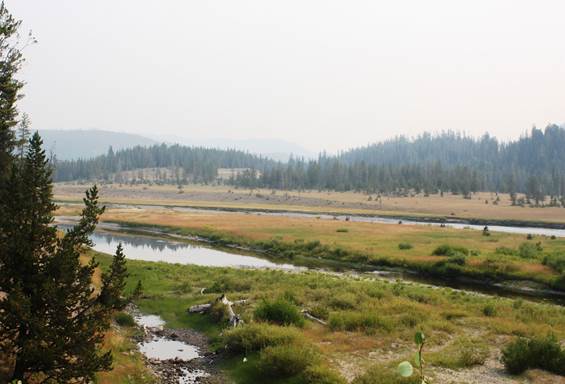
Those anglers who haunt the northern half of Yellowstone National Park are often unaware of the fine fishing offered by the Snake River. Now that is not to say that the trout in the Snake River are under-fished; many anglers who visit the Jackson Hole Area fish the Snake River both in and out of Yellowstone National Park and the river is easy to access from the South Entrance to the Park.
The Snake River is the longest and the largest tributary of the Columbia River at 1,078 miles, however it begins within the boundaries of Yellowstone National Park. The Snake River has its birthplace in the West Slope of Two Ocean Plateau and runs for some forty miles through the park. The upper section of the river is small and swift and drops at a steep rate; in places it falls 200 feet in one mile of river thus holding small trout and a long tough hike or horseback ride to reach this section. This section of the river holds little interest for me, however if your desire is for long tough hikes to remote locations by all means follow your dreams. But first check with the Backcountry Office for your camping permit and talk to the rangers. Remember this is Bear Country therefore go prepared!
The river begins to slow and become friendlier to the angler as it draws near to the confluence with the Heart River. Remember the Snake River drains a large area therefore plan your trips to the area accordingly. If you arrive too early in the season the river may be high and murky and you still may encounter snowfields in place. Therefore, I limit my trips to the Snake to late July to early October and try not to attempt trip during an early fall snowstorm. Cutthroat trout and whitefish are the primary species found in this section of the river with an odd brown and brook trout being reported. The fish size ranges from seven to seventeen inches. Traveling to this section still requires a long hike or horseback trip. As with any trip in the park the scenery is spectacular. Years ago I made this trip via the Heart Lake trail and then traveled south to the Snake River. The trip was well worth the effort and memories of that trip are indeed very special to me.
The next section of the river is from the confluence of the Heart River to confluence with the Lewis River. In this section much of the river runs through a meadow except for one canyon which is about two miles in length. Here again a hike is required to reach this water and this section receives little pressure, however the fishing in this section is good and during August and early September the terrestrial action is outstanding.
The next section is from the confluence with the Lewis River to the Park Boundary and receives the most fishing pressure. This section of the river can be reached by an access just inside the south entrance of the park. One September I pulled into the access, which is also a picnic area, to have an early lunch and watched several anglers preparing to hike up the valley of the Snake River. After the anglers had departed I noticed some action straight out from the parking area, and after a quick meal I spent the afternoon fishing within sight of the boundary marker and had the river to myself, every angler I observed was head upstream.
Though the cutthroat trout are the dominant species there are plenty numbers of whitefish some of which a huge, also an occasional brook, lake and brown trout. Furthermore there is a fall spawning run of brown trout which travels up out of Jackson Lake.
The Snake River enjoys a number of good hatches throughout the season and I suggest that you check with the fly shops in Jackson Hole for the latest information on the hatches based on the time period you are planning your trip.
When I visited in September I spent the day fishing ants and hopper imitations and had excellent fishing. However, the Snake is the one river in the park where my experience is limited and I always check with friends from Jackson Hole and do a little bit of collecting and observation when arriving on the river. I often fish the Lewis River below the falls in the morning and the Snake River in the afternoon and have always enjoyed my time on both rivers.
The Snake River in Yellowstone Park is a river that is always on my summer list of places to fish and most years I am able to get down to the south end of the park for a few days each summer. Put the Snake River in the park on your list and you won’t be disappointed.
Enjoy & Good Fishin’
| Sysadmin Note |
|---|
| Sysadmin Note |
|---|
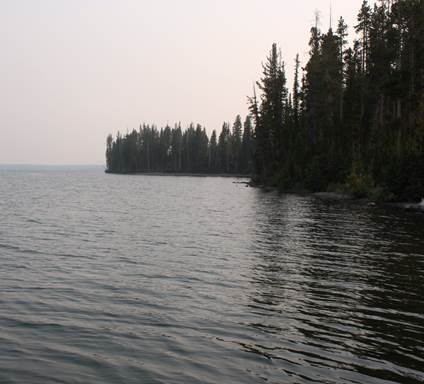
Lewis Lake and the Lewis Channel offer the angler the chance at some of the best trophy fishing that can be found within the boundaries of Yellowstone National Park. In this coverage I break down both fish the lake and channel in separate sections.
I will start with Lewis Lake which is named for Meriwether Lewis one of the Co-Captains of the famous Lewis & Clark expedition of 1893 to 1806. The lake covers 2716 acres making the third largest in Yellowstone Park and has a maximum depth of 108 feet meaning that the lake is approximately 2.5 miles wide and 3 miles in length.
Lewis Lake originally contained no fish; however in 1890 3,350 brown trout and 12,000 lake trout from Lake Michigan were stocked in the lake, brook trout stocked in tributary streams found their way to the lake. The Lewis River enters the lake in the Northwest corner also in the north end of the lake some small tributaries enter the lake and there are some submerged hot springs in this area. Note at any point where tributaries enter the lake are good places to find brook trout. The deepest water is along the eastern shoreline the northwest section of the lake is shallower and there are also weed beds along southwestern shoreline.
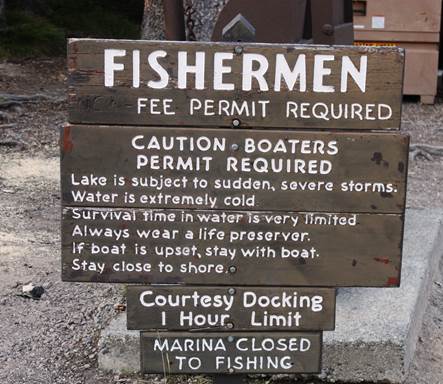
Ice out generally occurs in Mid-June, but that will depend on the type winter and the current weather cycles. Lewis Lake does have a good modern boat launch at the Southern of the lake where the campground is located and motor craft are allowed on the lake. However before dropping any watercraft including float tubes into the lakes or ponds of Yellowstone Park make sure you get a boat permit and make sure you have all the required safety equipment including PFD’s for the float tubes.
Now a word of caution the water temperature in Lewis Lake is always cool and therefore hypothermia is always a concern. Even a moderate wind can create a vicious chop and storms can show up quickly over the mountains making the lake dangerous to floating craft. Thus by being forewarned you can remember to be observant to the conditions of the day. NEVER TAKE SAFETY FOR GRANTED!
The big draw at Lewis Lake are the large brown trout and lake trout that reside in the waters of the lake and the first month from ice-out and then again in the fall from mid-September to closure of the park is the prime time for these large fish.
However the summer angler can have great days fishing the lake by wading, using a float tube or boat catching brown trout, lake trout and brook trout between 12 to 18 inches. In the summer the main hatches are Callibaetis, midges and caddis, also during August and September terrestrial imitations can be quite effective. Due to the normal weather patterns of the summer the best fishing is during the morning hours before the winds rise for the day and then again in the evening as the winds lay down. I have had some really excellent fishing during the hatches on Lewis Lake.
However many of the anglers that I encounter even in the summer are using Sink Tips, Full Sinking and even Shooting Heads to place large streamers and leeches deeper in the water column hoping for a true trophy. I am not against streamers by any mean and have taken some truly large brown trout and lake trout from the waters of Lewis Lake.
The Lewis River Channel
The channel is roughly four miles in length and is the headwaters of the Lewis River which runs out of Shoshone Lake and the first month after ice out and again in October when the brown trout gather to spawn are the prime times for the trophy brown trout and lake trout found in the waters of the two lakes.
The first mile from the outlet at Shoshone Lake is approximately thirty to forty feet in width with a cobble bottom, steady current and two to three feet in depth. Below the first mile is a three to four hundred yard stretch of wonderful spawning gravel which attracts a lot of attention from the brown trout. Below the gravel section the river is deeper water with a soft bottom with plenty of down timber which harbors plenty of large trout.
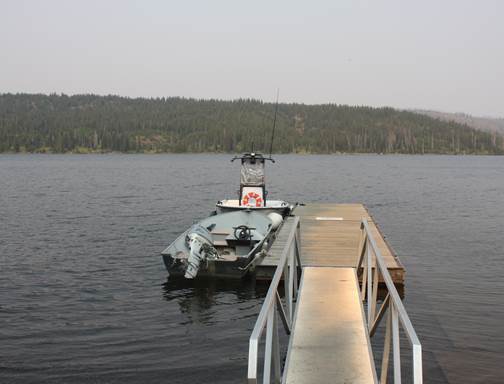
You can take your motor boat across Lewis Lake to the channel but there is no motors allowed in the channel, from there it’s walking, although some anglers do the channel with canoes as paddle crafts are allowed. You can also check the maps and hike into the Lewis River channel.
The summer brings pale morning dun, Callibaetis, green drake and Baetis hatches along with caddis and midge hatches also some excellent terrestrial fishing and of course streamers and leeches are always worth trying.
However in the fall streamers, sink tips and full sinking lines are the call of the day. However late fall can bring autumn snows and very cold temperatures. Therefore watch the forecast and go prepared.
I have fished the Lewis River Channel during the summer and enjoyed some excellent hatch fishing and I have seen some of the largest mosquitoes anywhere in the park, and there are clouds of them. During the fall it is trophy time!
In the next installment I will discussed the various methods and patterns for streamer in both the Lewis River channel and Lewis Lake.
Enjoy & Good Fishin’
| Sysadmin Note |
|---|
| Sysadmin Note |
|---|
Methods & Patterns for Streamers Fishing on Lewis Lake and the Lewis Channel
The trophy fishing that is available to the angler fishing Lewis Lake and the Lewis Channel often over shadows the fact that these bodies of waters fish very well throughout the year and that during the months of summer there is excellent surface fishing, however this selection is about fishing streamer and therefore we will move into this subject manner immediately. Both the lake and the channel contain excellent numbers of brown and lake trout between fourteen and twenty inches and being top of line predator fish streamers are always effective regardless of the time of year.
You might wonder what minnows are available to the trout and in Lewis Lake and the Lewis Channel they are; brook trout, brown trout, lake trout, Utah chub, long-nose dace and red-side shiner; along with various stoneflies, dragon fly nymphs and leeches.
Let us take a moment and discuss the types of fly lines, leaders and rods that are best for fishing streamers in the waters we are discussing.
When I go fish Lewis Lake or the Lewis River Channel I always take a six weight rod and a floating line that will allow me to fish any surface action I might encounter. I know that midge or Baetis hatches might be better fished with a four weight but the six weight is still the best all-around rod which will handle and number weather conditions and moderate fly sizes. However, once I begin to seriously fish streamers I want a rod that will handle a wide variety of streamers of various weights and sizes and I want to able to deliver the imitations with a variety of fly line types at various depths of the water column. Therefore my choice for a streamer rod is a nine foot for an eight line and I prefer a fast powerful rod. I carry with me a weight forward floating line, two or three sink tips of different sink rates. I also carry a full selection of uniform sink full sinking fly lines and a nine weight shooting head system.
As for leaders I prefer Maxima as it is strong and stiff and will deliver the imitation to the water and not to the back of my head! I build my own, and I know that there are stronger materials that the trout supposedly don’t see, but I believe that if a large streamer doesn’t scare the hell out of the trout they are not going to pay any attention to the leader. Finally this system works for me and I am a firmer believer in not screwing with success!
Now that I have covered the tackle we can cover some of the methods that I have found to be effective on the lake. I have waded the shores of the lake; I have fished out of float tubes and boats all with good results. Years ago my first trip to Lewis Lake occurred during early August and the friend I went with had a powerboat, however they were lure fisherman and they told me that the only way to catch trout during the summer was to troll slow and deep. They trolled for over two hours and caught nothing. I also trolled with an intermediate sinking fly line and caught one 17 inch lake trout on a white woolly bugger and I also caught a fat 15" brown trout.
Since that day I have spent many days on Lewis Lake and I have learned that there is wonderful fishing on the Lake all through the season and all the angler has to do is find the zone in the water column where the brown trout and lake trout are feeding in other words find the bait and you will find the trout. Early mornings often find the prey fish cruising in the shallow edges of the lake, chasing minnows, and leeches and picking off various nymphs. Also gain knowledge of when the bait fish spawn and when the fry hatch out, once again its knowledge which allows you to make informed decisions.
As the day warms the trout will move off the too deeper water therefore the angler need to understand the various fly lines and their sink rates knowing which line to choose to reach the desire depth. The angler needs to be governed and directed by the personal observations of the day and to form a plan to fish the lake and move through the progressions smoothly and confidently.
There is more to using streamers in stillwaters than tying on a woolly bugger, muddler minnow or a zonker and casting willy-nilly. Streamers can be used as both imitative patterns and as attractors. But the first step in understanding the proper use of streamers in the stillwater environment is understanding the food chain. If there are forage fish (minnows) such as dace or fathead minnows present in reasonable numbers then you may be using the streamer as an imitative pattern, providing that the trout species in the stillwater are of the type that prey an forage fish as a matter of course.
If the trout contained in the stillwater are not known as predator types, (not all are) then you still may use an imitative pattern relying on the trout’s reputation of being an opportunistic feeder. At times both imitative and attractor style patterns can be employed to entice the trout into striking by playing on their natural responses of anger, curiosity, territoriality and hunger.
Therefore, the stillwater angler needs a complete understanding of the trout, the food forms available, and how and where the trout will feed on these food forms during the various seasons. This goes right back to the “Formula for Success”. The stillwater angler who follows the “Formula” is going to know what forage fish are contained within the stillwater being fished and how the trout feed on them.
Anglers often think that the forage fish are located in some secret area of the stillwater. This simply is not true. Forage fish are in many of the areas you already know about. Let’s take a look at some of the prime locations where the trout will find and feed on forage fish.
I call these prime locations: fishing the edges, hedges, ledges and current lines. These are the same areas that contain the bulk of the aquatic life forms. Therefore the forage fish are also found in these areas as they also prey on various aquatic life forms in the food chain and are, in turn, preyed upon by the trout. Now we will examine each of the prime locations.
EDGES:
When fishing moving water, many are fully aware that trout are often found on the edges of the stream and many pages have been written about using caution when approaching the edge of a stream. The same is true of stillwaters. Anglers who charge up to the shore and start beating the water, have generally spooked several trout that might have been taken if care had been taken with the approach. The edges hold plenty of aquatic food forms and often you can find trout that have caught the forage fish in shallow water and are almost herding them as they charge and feed on the minnows.
HEDGES**:**
Simply put, hedges refer to the weed beds, both floating and submerged, and the lanes between the weed beds. These weed beds may be clearly visible to the angler in two to four feet of water, or they may be deep, five to fifteen feet below the surface. Either way, they are full of various forms of aquatic life. Once again, the minnows also feed in this area and thus are preyed on by the trout.
LEDGES:
The ledges are the drop-off edges and edges off of steep banks. Once again this is a collection point for various aquatic forms along with the minnows and the trout. Some drop-off edges and rocky ledges are obvious, others have to be searched for and identified for what they are.
CURRENT LINES:
Current lines are natural collection points for many members of the aquatic food chain, including minnows and trout. The obvious current lines are where a stream enters or leaves the stillwaters. Others can be created by spring holes in the bottom of the stillwater and still others are created by the wind. Current lines created by the wind are constantly changing with the changing directions of the winds.
Therefore, the angler must be aware of what to look for under the varying conditions. I watch for slicks, foam lines, the shoreline in the direction the wind is blowing, on the downside of rocky points, bars, shoals or trees that are in the water, and also on the downside of floating weed beds.
Once the angler has determined what types of minnows are in a stillwater and where they may be found, we can gain an understanding of how the trout feed on these minnows and how the minnows swim and react when being chased. Once we determine the depth of water we need to be fishing in, then we can select the proper line, leader, pattern and presentation method that will allow us to place the fly in the trout’s feeding lane and keep it there for the optimum period of time.
50" Maxima Dropper Leader for Sink Tip & Shooting Tapers
This leader is used to deliver big fly combinations such as a streamer a nymph, a pair of nymphs or a pair of streamers. Generally I use this leader with 7 to 10 weight fly lines. Don’t worry about spooking fish with this leader as the flies will already have done that, if spooking the fish is to be a problem.
Note: The entire leader is constructed of Maxima material as it is very stiff and will turn over those larger flies. The butt is looped with a ½ inch perfection loop, and the tippet is joined to the last section of the leader using double surgeon loops. A dropper loop, ¼ inch long, is placed in section #3. The dropper strands are 6 inches in length and have a ¼ inch perfection loop in one end. The droppers are also placed on the leaders using the loop-to-loop method. I will make several dropper strands and tippets ahead of time when using this system.
| 12" | Butt Section | .020-M |
| 7" | Section 1 | .017-M |
| 5" | Section 2 | .015-M |
| 5" | Section 3 | .013-M with a 1/4" dropper loop placed in the center of the section |
| 5" | Section 4 | .012-M Looped with double surgeon’s loop |
16" tippets that are looped on one end with a double surgeon’s loop. The tippets can be .010-M, .009-M or .008-M as you desire. The dropper strands should be made from .010-M.
Remember, the correct leader is the one that is the right length and diameter and allows you to present the imitation in the proper manner. When the proper leader is being selected the angler must consider the tackle being used i.e. floating line, sink tip or others. The size and weight of the imitation must be factored in along with the type of water being fished and the techniques to be employed.
The ice had just gone off Lewis Lake, which is near the south end of Yellowstone National Park. One of my friends dropped by for a visit, informed me of this fact, and suggested that we lay aside those mundane tasks like painting the fence, trimming the hedges and bathing the dog, and amble down that way.
As he stated, “Just after ice-out those trout will eat anything and even you should be able to foul hook one”. Nice guy huh!! But half the fun of a fishing pal is the verbal jousting that goes on, and I fully realized that my time would soon come as he always leaves something behind. Last time it was his vest!!! Now, as you might have gathered, it didn’t take a lot of arm twisting for me to agree to a 3 day trip starting the next morning. Being a somewhat organized person I got the gear out that I would need, and double checked to make sure nothing was missing.
The next morning as we were gearing up, I noticed my friend frantically searching through his gear bag, looking for his reel as it turned out. I offered to loan him one of mine. He said “If you loan me your reel and sink tip what will you use?”
I told him that I had already planned on using my shooting head (sinking shooting taper) and it wouldn’t be any problem. He promptly asked if I was going to “fish or hunt?” With that comment I realized that he had no knowledge of shooting tapers or how they worked and why they were the right choice for certain stillwater angling situations. I asked if he were interested in expanding his angling horizons, (trying very hard to keep a straight face).
He said “Of course,” and for me not to be such a wise guy!!! Now it was time to get serious, or as serious as the two of us ever get when fishing together. Therefore, I explained about the shooting taper systems and how, when and why they were the right choice. Here is what I told him.
Before we start using a shooting taper system we should understand what they are, what they will allow us as anglers to do, and when to use them. Shooting tapers are either floating or sinking. The floating taper is 30 foot of weight forward floating fly line and is used for long distance casting, like the Ultra 3 Floating Shooting Taper WF8F that I prefer to use.
The sinking shooting tapers, also called shooting heads, are 30 foot weight forward of sinking line. Heads come in various sink rates. Take an ST8S, for example. There are four sink rates. They are:
- Wet Cel Intermediate/I, ST9S: Sink rate of 1.50-1.75 inches per second, slowest sinking.
- Wet Cel II, ST9S: Sink rate of 2.25-2.80 inches per second, fast sinking.
- Wet Cel III, ST9S: Sink rate of 3.25-4.25 inches per second, extra fast sinking.
- Wet Cel IV, ST9S: Sink rate of 3.75-6.50 inches per second, super-fast sinking.
To get the line to the proper depth, the angler makes the cast, and then does a countdown prior to starting the retrieve. Example: If the angler was using the Wet Cel IV, ST8S and wanted the line to sink 72", the count would be 15. Therefore, the angler should have a complete set of heads as we are never fishing the stillwaters at the same depth. Oh sure, you could use a Wet Cel I with a slower sink rate and the count would then be approximately 36 to reach 72". Now that seems to me like the angler would spend a great deal of time counting down instead of fishing. The point being to use the proper line for the situation. Sinking shooting tapers allow the angler to make long casts and cover the water at various depths effectively.
For a reel system, I use the SA System II 7/8 as it will hold 200 yards of 20 lb. backing, 100’ of floating shooting line, or 200 feet of amnesia shooting, plus the appropriate shooting taper and leader.
The System II reels have a strong, smooth drag system, and spools that are easily changed. Also, they are durable and can be used in either fresh or saltwater, which is great for me as I have many uses for my 8 weight system.
To be able to cast long distance with a shooting taper system, I want a rod that is fast and powerful. My personal choice is the Orvis PM10 908. This is not the rod I would choose for long leaders, fine tippets and small flies as it would lack the feel that I need. But for making long casts with a shooting taper system where the leaders are seldom termed delicate, this rod is great.
Now that we understand that a shooting taper system will allow us to make long casts and cover the water from the surface to almost any reasonable depth, we need to take a look at when we would use this system. Seeing as how the “When’s” and “Whys” could fill several chapters in a book, I will just hit the hi-lights.
I have found that there are four major stillwater angling situations where I prefer to use shooting taper systems rather than conventional type fly lines.
- Ice-Out: Just after ice-out the trout will move into the shallows and along the drop-off edges and begin to feed heavily. This is not sight fishing and I have found that they will often follow the imitation for a long distance before taking.
- Summer Dog Days: Often during the summer months the water temperatures will rise in the shallow sections of the stillwater. When this happens the trout will move into deeper water where the water temperatures are cooler. During this period the trout continue to feed but often times they are doing so in deep water off submerged weedbeds.
- Summer Situations: At times throughout the summer the angler may find the trout randomly cruising and feeding on the surface taking a little of this and a little of that.
- Late Season: During the late season the hatches have waned and the water temperature in the shallower sections is beginning to drop. The trout will once again head for deeper water to find food and warmer water temperatures.
Now that we have listed the four situations, taking each individual situation, we will talk about why the shooting taper systems are the right choice along with how they allow the angler to present the imitations at the proper angle and depth to be effective.
Ice-Out:
When the ice first goes out, the trout will move towards shore and actively feed. Anglers often assume that moving towards shore means shallow water, but that is not always the case. Often the trout are feeding along the edge of a drop-off in several feet of water.
Also, during this time period there is generally no major hatches in progress and trout are randomly cruising, feeding on a little of this and a little of that. Under these conditions I prefer to use a shooting head to be able to make long casts and effectively cover the water.
The type of shooting heads you would use would depend on the depth of the water to be fished. One of my favorite patterns to use as a searching fly this time of the year is a woolly bugger. The woolly bugger is suggestive of several stillwater life forms that trout feed on. It could be a leech, minnow, damselfly nymph, or maybe it just looks alive and therefore must be something to eat.
After deciding on what sink rate I want and choosing a suitable head I will station myself parallel to the shore or drop-off edge and make a long cast, count down, and then begin my retrieve. I suggest starting with a slow, darting retrieve. Due to the cooler water temperature the trout may not elect to chase a faster moving imitation.
After the completion of each cast I will move my next cast about 3 degrees away from the parallel base line until I have covered the water in that area. Then I will move down the shoreline, reposition myself and start over.
I guess I should mention that I am fishing out of a float tube. Some anglers will also use boats. But I find boats to have too high a profile and way too noisy.
Summer Dog Days:
Often times during the hot months of summer the trout move out of the shallower sections of the stillwaters to find cooler water temperatures. During this time period they will often be feeding along the edges of submerged weed beds in several feet of water.
Once I determine what depth I want to present the imitation at, I will choose a sinking shooting taper with the appropriate sink rate and attach a 4 foot leader. This will often be a 6 foot tapered leader that I have trimmed down.
My favorite choices for searching patterns during this time of year are scuds, leeches, minnows or damsel fly nymph imitations. After drawing straws, flipping a coin or otherwise deciding on the imitation I will make a long cast, allow the line to sink to the desired depth and begin my retrieve.
As the water temperatures are in the normal range for trout activity I will vary the retrieve depending on what imitation I am using. Often times the angler may not know exactly where the submerged weed beds are. Hence, they are searching and using the long distance cast to spend more time fishing and less time casting.
Summer Situations:
At certain periods during the summer the angler will find the trout randomly cruising and feeding on or near the surface. This often happens when there are terrestrials on the water or when there is a multitude of spent insects mixed with terrestrials.
The angler who chases these cruising trout can quickly become very tired and frustrated. What I prefer to do is use a floating shooting taper line, make long casts and then creep and twitch the imitation back. This method is very effective and allows the angler to spend more time productively fishing and less time chasing trout to fish to!
Late Season:
As the hatches of summer draw to a close and the water temperature starts to cool in the shallow sections of the stillwater, the trout will once again move into deeper water in search of food and warmer water temperatures.
Once again the angler will have to decide on what sink rate is required and select the proper shooting head. As we are often making long searching casts to likely areas, we find the shooting taper system will help us accomplish this with a lot less work. My favorite patterns for this time period are leeches and streamers.
Simply put, the shooting tapers are the proper choices for these angling situations as they allow the angler to present the imitation in the most effective manner. This means that the angler must fully understand both the capabilities and limitations of the tackle to be able to select the proper tackle for any angling situation.
Oh, you might be interested in how the fishing trip to Lewis Lake turned out. Well we had pretty good fishing, but the hi-lite of the trip happened on the second day, when I noticed that my fishing companion seemed to be slowly sinking into the lake. With very little comment I pointed out that he might want to kick to shore or start swimming. I found out that he had deflated his tube over the winter and failed to check it before we started the trip. The inner tube was weather-checked and slowly leaking air.
I check over my inner tube every year and leave it partially inflated during the winter so it won’t weather check. He learned a valuable lesson on equipment maintenance and I have a funny story to tell that had a happy ending.
Leader Formula for Shooting Tapers:
This leader is used to deliver large (size 1/0 to 8) wet imitations when using a sinking shooting taper system on stillwaters. The material I prefer for this type of leader is Maxima.
| Butt Section: | .020----10" with a 1/2" Perfection Loop |
| Section #2: | .017----6" |
| Section #3: | .015----5" |
| Section #4: | .013----4" |
| Section #5: | .012----3" with a 1/2" Double Surgeon’s Loop |
| Tippets: | .010 .009 .008----20" with a 1/2" Double Surgeon’s Loop |
I use the loop-to-loop method of joining the leader to the line and the tippets to the leader. This is a strong system and allows me to pre-tie tippets and rapidly change them while fishing.
When I need leader with finer tippets I will trim down a 6’ leader and loop on the appropriate tippet. For this I use Umpqua or Orvis Super Strong leaders and tippet material.
Due to the amount of information that I have imparted in this selection I am now going to conclude this column and continue this discussion on streamer methods and pattern in Part 23 of the Yellowstone Park Chronicles.
Good Fishin’ & Enjoy
| Sysadmin Note |
|---|
| Sysadmin Note |
|---|
In the previous article of the chronicles I began the discussion on the methods and patterns that I employ when fishing Lewis Lake and the Lewis Channel. I realize that the last article was beginning to stretch into a small booklet and decided to continue the dialog in this section of the Chronicles.
As to fishing Lewis Lake there was one method which I failed to cover, and that is trolling with flies. Obviously to troll flies in a lake you need a floating craft of some sort, as for fly lines this would depend on the depth at which you wish to present the imitations. Now as far as I am concerned the most important or critical aspect of trolling is the speed at which the imitations are trolled.
First off, when I have decided to troll I have also laid out a plan or path if you will that I intend on following and I start at the slowest speed when using a motor craft, then I will slowly increase the speed of the troll. If I still have no results I then change lines and go deeper in the water column. Trolling flies in a lake is not a new method anglers have been doing this for over a century with a great deal of success. Trolling flies can also be accomplished out of float tube, canoe or pontoon paddle craft.
Note: If I am targeting larger lake trout I will use a ten or twelve weight rod and a 550 or 750 deep water express sinking shooting taper backed to 200 feet of amnesia once strip out the amount of line which you wish to troll go slowly and allow the line to straighten out, stop for a moment or two and allow the line to sink using a countdown method and then proceed at the speed you have selected. At certain times of the year the larger lake trout will hold in deep water and remember parts of Lewis Lake is 108 feet deep.
I have taken many brown trout and lake trout on Lewis Lake using this method I might also add that these methods are also effective on all the lakes and ponds in Yellowstone National Park, just adapt the method to the water being fished.
Now moving on to fishing streamer in the Lewis River Channel because this streamer fishing in a river I am going add a selection that I have previously written on streamer fishing. Now the selection contain information on rainbow and cutthroat trout which I was inclined to remove, then I decided that this information would apply to other rivers in Yellowstone Park and decided to leave it mostly complete.
FISHING STREAMERS WITH A SYSTEM
Here in the West, talk of streamer fishing often brings to mind fall, large flies, big rivers and Brown trout. Each year I meet many anglers who are frustrated and fishless, simply because they are fishing the imitations in the wrong places, using tackle that doesn’t allow for a proper presentation.
There are many times of the year that streamers are effective. The angler must understand why the trout take streamers and where and how to effectively present them. Gaining an understanding of the trout, tackle and presentation methods needed for successful streamer fishing, takes focus and organization. Therefore, I will explain how I use the “Formula for Success” to master the angling skills and gain the knowledge base necessary to be a successful streamer fly fisher throughout the year.
RESEARCH
The angler that desires to become a more knowledgeable and skilled streamer fly fisher, should first research the topic by reviewing books and magazine articles dealing with streamer fishing. Talk with fly shops, guides and angling friends who successfully fish streamers, with an eye toward learning what tackle, patterns and presentation methods are used with success. Then the angler can properly prepare and obtain the tackle and patterns, and can practice and master any presentation skills needed for success.
I also suggest that you review the video material available. There is a section on streamer fishing in 3M’s “Fly Fishing for Trout” with Gary Borger. There is also a section on streamer fishing in 3M’s “Advanced Strategies for Selective Trout” with Doug Swisher. In this video, pay close attention to the line control and mending Doug uses to control the angle and plane of the presentation. If you need to review a certain casting method, I suggest reviewing 3M’s “Basic Fly Casting” or “Advanced Fly Casting” with Doug Swisher. I also suggest that the prospective streamer fly fisher review 3M’s “Fly Fishing for Pacific Steelhead” and “Advanced Fly Fishing for Pacific Steelhead” with Lani Waller. These two tapes hold a wealth of information that can be applied to streamer fishing for spawning trout, such as how to properly fish for larger fish and mending and line control used when fishing various lines. Some of the reading the water techniques will also apply to streamer fishing. Once the angler has gained a basic knowledge of the tackle, patterns and presentation methods used, then it is time to study the trout.
THE TROUT
The study of the trout has to be broken down into species. On my home waters here in Montana, this means brown, rainbow and cutthroat trout. Each species has spawning runs during different times of the year and each will move to the streamer differently. So much more must be understood if the streamer fly fisher is going to be successful.
BROWN TROUT
There is no sense in listing the scientific name for the brown trout, as the taxonomy boys will more than likely change it next year. Therefore, to avoid confusion, we will just refer to it as “brown trout”. During the greater part of the year, a brown trout will establish a territory in which it will live and feed. This territory will be aggressively defended against all comers. Thus, one of the reasons the brown takes the streamer is its minnow-like shape. The brown will hit it not only as a food form, but also in the aggressive protection of its territory. brown trout are very predacious and feed actively on aquatic insects, terrestrials, minnows, crayfish and even smaller trout if they are unwary!
The brown trout prefers the shaded banks, undercut banks and deep pools and tends to prefer overcast to bright days when surface feeding. For a better understanding of holding water, feeding lies and prime lies, I suggest 3M’s video “Nymphing” with Gary Borger. Territories are established based on the size and strength of the trout. Therefore, the best water will generally hold the largest trout. So it is very important that the prospective streamer fly fisher learn how to read water and understand where the trout will be.
For those who need to learn more about how to read water, I strongly suggest reviewing 3M’s video “Anatomy of a Trout Stream” with Rick Hafele. Rick and his friend Henry will show you what to look for, how to read the water and find the trout.
The habits of the brown trout and the various reasons as to why the streamers are taken remain fairly constant throughout the year, except during the spawning seasons. During the spawning season the brown trout will leave their territories and start to gather in the deep pools to migrate to their spawning area. This gathering will start as much as 60 days prior to the actual spawning. During this migration period, the browns will continue to feed. While they won’t expend much energy to chase a minnow, they seldom turn down an easy meal. This makes line control, fly speed, angle and depth of the presentation very important to the streamer fly fisher. During a two to three week period, prior and during the actual spawning, the brown’s food intake drops to almost zero. But during this time, streamers are still very effective as the browns become very protective of their redd (nest). The brown trout will spawn during autumn to mid-winter, depending on the climate and water temperatures.
From about mid-September to January, there are brown trout gathering, migrating or spawning somewhere in the area. This allows for some excellent streamer fishing and a reasonable chance to hook into a legitimate trophy-sized brown.
RAINBOW TROUT
The rainbow trout is not as aggressive, nor as territorial, as the brown trout. “Bows” are, in fact, very efficient insect eaters and don’t search for the larger food forms as often as the brown. This is not to say that they don’t, or won’t, eat minnows. Often this will depend on the food sources available. During the spawning period, they go through the same cycle as the browns, and at that time will become very aggressive. Often times, larger rainbow will opportunistically follow other species of spawning fish to feed on the eggs. The angler should remember this when fishing in the fall for Browns. Most species of rainbow are spring spawners, though there are a few exceptions to that rule.
CUTTHROAT TROUT
Of all the trout, cutthroats seem to feed on minnows the least, but there are times when a few can be taken. Often it is the larger “Cuts” that the angler will pick up on streamers. During the fall, as the insect activity declines, the cutthroat will become very aggressive and feed on minnow life forms. They, like all trout, become very aggressive during their spawning cycle. The cutthroats here on the Yellowstone are primarily tributary spawners, and spawn during May and June when the waters are high with snow pack run-off. Therefore, the cutthroat spawning runs are often not of great importance to the streamer fly fisher.
Once the angler has established an understanding of how, why and where the various species of trout are feeding on minnow life forms, then proper selection of tackle, patterns and presentation methods can be made for the angling situation at hand, thus ensuring a greater success rate.
The angler now needs to set up a system to handle these situations. In the next section, I will explain my system for streamer fishing and how, where, and what I use to master the various streamer fishing problems. We start the discussion with the tackle systems needed to effectively fish streamers.
TACKLE SYSTEMS FOR MEDIUM SIZED RIVERS
This is the system that receives the most use throughout the year and is used on rivers like the Madison, Jefferson, Gallatin, Beaverhead and Big Hole. This is an 8 weight system. It allows the angler to cast large flies under almost any condition and present the imitation at the proper angle and depth to be effective. I prefer the new hi-tech models of rods, as they offer the strength and line speeds needed to effectively fish the larger streamers. My personal favorite is an Orvis PM-10 908-4, a 4 piece 9’ for an 8 weight. This rod has a 1-1/2" fighting butt.
For reels, I prefer the SA System II 7/8. This will hold 150 yards of 20 lb. backing, plus the full line. It has a smooth disc adjustable drag that will handle anything from salmon to bonefish. I carry several lines in my 8 weight system on extra spools for my SA System 7/8.
LINES FOR THE 8 WEIGHT SYSTEMS
-
Mastery Wet Tip V, WF8F/S, with a sink rate of 6 inches per second. -
Mastery SLS Sinking Line V, with a sink rate of 4.75 inches per second. -
Mastery Clear Intermediate Sink, WF8S, with a sink rate of 1.65 inches per second. -
Wet Cel IV Shooting Taper, ST8S, with a sink rate of 4.75 inches per second. -
Wet Cel IV Shooting Taper, ST9S, with a sink rate of 5.00 inches per second. -
Ultra Floating Shooting Taper, ST8F -
Mastery Distance Floating Line, WF8F
I know that seems like a lot of lines, but they each have their use in presenting the imitation at the proper angle and depth for effective streamer fishing, as I will explain in the next section. This 8 weight system can also be used for fishing big nymphs and drys, as well as being used to fish for bass, bonefish, steelhead, salmon, snook and stripers.
The SA System II Reel and spools are made of precision cast, high-silicon aluminum and are protected from corrosion with a hard matte, black, polyurethane finish for use in either fresh or salt water.
SUMMER MONTHS ON WESTERN RIVERS
During the summer season, the rainbows and browns are back to holding and feeding in established territories and are behaving in a normal manner. During this time of the year, I believe that trout take a streamer for three main reasons: hunger, anger and curiosity. The first step in solving this riddle is “observation” on the part of the angler. Observing a situation and being able to select the right tackle, pattern and presentation method to be able to move the trout is important. The following will be examples of using the proper tackle and presentation methods to fool the trout with streamers
DOWNSTREAM FLUTTER
Several years ago, while fishing the Madison, I was sitting along the bank resting after a somewhat marginal morning of nymphing. After resting for a while, I noticed that a minnow of about 4 inches in length was holding behind a large boulder that was very close to the bank. The minnow was down about 18 inches from the surface, and was darting back and forth in the current pocket behind the boulder. I had drifted a nymph behind that very boulder several times before I had waded ashore to rest, and I remember thinking to myself about the minnow “you’re safe, nothing hungry here”. I sat there for about 10 minutes watching the minnow dance and dart around, when a brown trout about 17 inches long came out from under the edge of the bank I was sitting on and just clobbered the minnow.
Well, needless to say, that left me open mouthed and it definitely jumped up the heart rate. As slowly and carefully as I could, I backed away and moved upstream to attempt to take that brown. As I had been using a floating line and long leader for the nymphing, I selected a streamer and put a small lead shot just above the fly.
I cast downstream, let the fly swing in behind the boulder, and kept working it back and forth, all to no avail. A little while later, my wife showed up. I had her hold the rod and keep working the fly while I carefully moved downstream to take a look to see if I could figure out why I couldn’t entice that trout. What I saw was that, even with the split shot, the fly was very near to the surface because of the speed of the flow. I told my wife to add another shot. This still wasn’t putting the fly where the minnow had been. We took a lunch break and during this time I decided to switch lines.
I put on a sink tip and a 4 foot leader of my own design. On the leader, I placed two copper sleeves, one 12 inches down from the tip of the line and another at 24 inches. After I regained the proper position in the river, I made a cast and let the imitation swing into the boulder pocket once again. Remembering how long the minnow had darted and danced in the pocket before the Brown had taken it, I was prepared to wait. I would jiggle the rod tip from side to side and raise and lower it to imitate the dancing and darting of the natural. My third cast had just settled into the pocket and I was starting to work the rod tip, when the brown savagely struck. Now, after spending all that time solving the problem, I would like to tell you that I played and landed that brown. But, alas, I was surprised and struck back a trifle too hard and broke the brown off. Sound familiar?
Since that day, I have used this method, which I call the Downstream Flutter, many times with success. In this situation, I don’t think that the trout take the streamer because they are hungry, but because it angers them. What line you use will depend on the type of water to be fished. In very shallow flats, I will use a WF8F. In slow pools, I would use a Mastery Clear Intermediate WF8S. In deep, heavy water I would use a Mastery Wet Tip V. On all of the sinking lines, I use a 48" leader and may add additional weight to the leader to keep the fly in the proper plane. This is a very effective technique, which has produced many very nice fish over the years. Some I have even landed!!
CHASING MINNOWS
One afternoon, while fishing dry flies on the Big Hole, I noticed several minnows darting and skipping across the surface in the tail of the pool I was working. I never saw what was causing this commotion, but I realized that the minnows were being chased by a larger trout. I selected a small, unweighted Muddler Minnow and soaked it for a minute or two before using it. This would allow the fly to sink 3 or 4 inches under the film, and I could skitter it on the surface by simply raising the rod tip while stripping the line. I am glad to say that I was able to hook three Rainbows of modest size. These trout were chasing a school of minnows that they had herded into the tail of the pool. I have used this method several times and often use a Mastery Clear Intermediate line to keep the streamer in the proper plane.
SCULPINS IN THE SUMMER
In the West, the sculpin minnow, which looks like a baby bullhead, is one of the prime food forms for larger Brown trout. Sculpin, unlike most fish, have no swim bladder, so when they get swept in the current, they will dead drift along until the current brings them close to the bottom and then they will dart behind a rock or other obstruction. In deep, slow pools, they will move 6 to 10 inches and then rest, move and rest. Often times I have taken browns using sculpin imitations in many different water types. The key to success is using the right fly line, which allows you to present the imitation at the proper depth.
Here are a few of the angling situations where I have been successful.
SHALLOW WATER
Often times, late in the day, I have seen sizeable browns chasing sculpin in shallow water. Many times the back of the trout will even be out of the water. If the water is flat and slow moving, I will use a Mastery WF8F line and a long 10 or 12 foot leader. The pattern used would be an unweighted Sculpin Bugger. Cast into the area the trout is working, and when the fish moves close, move the line in short, sharp 2" strips, three strips and then pause.
If the water is moving at a fair rate, but is still shallow, then I will use a Mastery Clear Intermediate line, 10 foot leader and an unweighted imitation. This way the line will bounce down along the bottom, but the long leader will belly up in the water keeping the fly from snagging. In shallow moving water, I like to cast up and across to the trout and let the fly dead-drift.
FISHING HEAVY RUNS, DEEP POOLS AND BACK-EDDIES
For years I had watched anglers, fishing sculpin as live bait, take many large brown trout out of these types of waters. It was only on rare occasions that I would move any of these trout on a fly during the summer. The problem was that I wasn’t using the lines that allowed me to put the fly down and keep it there.
In heavy runs I now use a Mastery Wet Tip V Sink Tip with a sink rate of 6 inches per second. This allows me to get the imitation down and keep it there, yet still allows me to control and mend the line. I prefer to fish the sink tips upstream, allowing the sculpin imitations to dead-drift back towards me. I also use this line when fishing drop-off riffles (riffles that plunge into the head of a heavy run and drop off). In this water, I will cast up and across. When the fly and tip reach the drop-off, I will then stack mend until the fly is down. There is generally a current cushion at such places, and the larger trout love to lie there, expending little or no energy, and let the currents bring them all kinds of good things to eat.
In slow, deep pools, I prefer to use a Mastery SLS V WF8S. This line has a sink rate of 4.75 inches per second and sinks in a uniform manner throughout the length of the line. With a short leader, I am able to keep the pattern down where the trout are for the longest period of time during the cast. While using a Mastery sink line, I will cast up and across, allowing the fly to go down and bounce along the bottom dead-drift. As the line starts to swing, I will start a creep (hand over hand) retrieve. After the fly and line are straight below me, I will slowly raise and wiggle the rod tip. Many strikes come at this point.
For fishing the reverse currents of back-eddies, I will use either a Mastery Clear Intermediate line or a Mastery Wet Tip Sink Tip, depending on the depth and speed of the currents. Often times, there will be a good trout laying at the extreme point of the back-eddy currents, just letting the current bring dinner right to him.
DRIFT BOATS AND STREAMERS
Often during the summer months, we will spend part of the day fishing streamers into the banks out of the drift boat. Depending on the depth and current speed, I will use one of three lines: a weight forward floating, a sink tip, or the Mastery Clear Intermediate. Generally I am fishing two streamers while doing this, or a streamer chasing a nymph. Trout will often respond to the two-fly cast, as it appears that a minnow is trying to feed in their territory, along with the fact that trout will seldom turn down an easy meal that is placed right in their face.
The angler who fishes a particular piece of water often enough, will soon discover that certain color combinations are better than others. An example of this is the Yellowstone River east of Livingston, Montana. In this section of the river, the color combination of black and yellow is every effective. Often I will use a black Western Feather Streamer or black Flash-A-Bugger as my lead fly, and place a small yellow Marabou Muddler about 15" up the leader on a short dropper. Another combination that is effective is a black Woolhead Sculpin chasing a wet hopper.
Often some of the largest trout are taken on streamers, and the angler who ventures afield with an 8 weight system and a knowledge base of why, when and where the trout will feed on streamers, will generally be the angler who is taking those larger trout. Also, there are times when drys and nymphs have failed, for whatever reason, and the angler who can, and will, work streamers, will take trout when others are frustrated and fishless.
BROWN TROUT & SPAWNING SEASON
Starting in late September and continuing until the first of the year, somewhere in the Yellowstone area there are brown trout spawning. The dates of the runs vary from river to river. During this time period, the browns will continue to feed, but they often take the streamers more out of anger, than out of hunger. To be effective, the angler has to reconsider the habits of the Brown trout and where they will be located, why they are taking the imitation, and how to present the imitations at the proper angle and depth. The angler must also consider how the water temperature will affect the trout and the presentation. Once these problems are successfully solved, the angler will enjoy a much higher success rate.
BROWN TROUT ON THE MEDIUM SIZED RIVERS
On rivers like the Madison, Jefferson, Big Hole and Beaverhead, the angler will again use the 8 weight system. Where and how this system is used will differ from the months of summer. As the time for spawning draws near, the brown trout will leave their territories and start to collect in the runs and pools. Often anglers are fishless and frustrated because they are using summer methods on the spawning Browns. Now we will explore those differences and what the angler needs to do to be successful.
FISHING THE POOLS & RUNS WITH SHOOTING HEADS
As the water temperatures begin to drop and the days begin to grow shorter, the Brown trout will leave their established territories and start to collect in the pools and runs in preparation for the annual spawning run. To effectively cover the water in these areas, the angler should use full sinking shooting taper fly lines. I prefer the Wet Cel IV, ST8S, with a sink rate of 4.75 inches per second. In some situations, where the pools are very deep, I’ll use an ST9S, with a sink rate of 5.00 inches per second. The reel is set up with the appropriate amount of backing, (at least 150 yards) then using back-to-back nail knots. I then attach 200 feet of Amnesia shooting line.
Amnesia is a monofilament that, once stretched, has no memory, hence the name. The Amnesia can then be looped and the shooting taper attached using the loop-to-loop system or, as I prefer to do, the Amnesia can be needle knotted to the shooting taper. On 8 and 9 weight shooting tapers, I use a 4 inch butt section of .022 Maxima leader material with a perfection loop. There are stronger materials, but I use the Maxima because it’s stiff and will turn the fly over. The leader I employ is also made from Maxima and is no more than 48 inches long. To attach the fly, I use a Duncan loop, which allows the fly a certain natural freedom of movement, while also acting as a mini shock tippet for larger trout.
The shooting tapers allow the angler to thoroughly cover the water with both the distance of the cast and the depth of the presentation. These Brown trout are holding in deep water, and the angler must get the imitation down to their level and keep it there. As the season progresses, the Browns begin to migrate upstream toward their chosen spawning area. Because they are moving they can, and will, be found in all sections of the pool. The angler must learn how to recognize the pool and be prepared to thoroughly cover the water. The method I use is to start at the head of the pool and work all the way through to the tail. By the end of the second pool, you have a good idea of where the trout will be holding in the pools on that day. Then, for the rest of the day, spend your time working the most productive sections.
The method I use to cover a streamer pool with a shooting taper is to start at the head, and cast across and slightly up. Mend the shooting line immediately. Drop the rod tip, follow the progress of the drift and begin the retrieve. I work the imitation back until the butt of the shooting taper is at the tip of the rod and then I move down five paces and do it again until I have covered the entire pool.
The two casting techniques that the angler must master to effectively fish the shooting tapers are the single haul and the double haul. These techniques allow the angler to generate line speed, allowing for longer casts which means the angler can cover as much of the pool as possible. The speed of the retrieve will depend on the water temperature, depth of water and speed of the current.
There are no set rules to follow, but here are a few items of information that I consider when selecting a retrieve. The first is water temperature. When the water temp is between 50 and 58, I will use a fairly active retrieve. As the water temperature drops to the 42 to 50 degree range, I will slow the retrieve down to a crawl. Once the water temperature drops below 42, I will dead-drift the imitation and bounce the rod tip to impart a small amount of movement and flutter to the imitation.
The retrieve used will also depend on the depth of the water and the current speed. In a heavy, fast run I may crawl the imitation, even if the water temperature is up, and I will increase my up-angle on the cast to allow the imitation to run as deep as possible. By casting up and across, and then mending, the angler is attempting to move the streamer broadside throughout the pool. This allows the angler to put the imitation in front of as many trout as possible. Often times the single, most important factor in why the Brown trout hit the streamer is ANGER. The imitation comes fluttering into their face when they are often concerned with things other than dinner. (You know, kinda like having your girlfriend’s little brother along on a date.)
When fishing sinking shooting tapers, I prefer to use full dress Western Feather Streamers, all feather streamer imitations or patterns with rabbit or marabou, something that moves and breathes in the water creating the illusion of life.
During the fall and early winter, the streamer fly fisher will also pick up a few rainbows and/or cutthroats that have followed the browns to feed on the eggs. There are a few streams which have strains of rainbows that are fall spawners and the angler will find both browns and rainbows during the same period, which is, of course, an added bonus. There are other lines and methods that the angler can employ during the brown trout spawning run which I will cover in the next section.
LEADER FORMULA FOR SHOOTING HEADS
This leader is used to deliver large (size 1/0 to 6) streamer imitations when using shooting heads, sink tips and the Mastery SLS sinking lines. Don’t worry about spooking the trout because the leader is short and heavy. If the trout isn’t spooked by the size of the fly, then it’s doubtful that the leader is going to do it.
I prefer Maxima leader material.
Butt Section: 10" of .020 with a 1/2" Perfection loop
Section 2: 6" of .017
Section 3: 5" of 015
Section 4: 4" of .013
Section 5: 3" of .012 with a 1/2" Double Surgeon’s loop
Tippets: 20" of .010 with a 1/2" Double Surgeon’s loop .009, or .008
I use the loop-to-loop method of joining the leader to the line and the tippets to the leader. This is a strong system and allows me to pre-tie tippets and rapidly change them while fishing.
FISHING WITH FLOATING SHOOTING TAPERS
There are times when fishing wide, shallow pools that I prefer to use a floating shooting taper. This system is set up like the sinking tapers, except that the shooting line is also floating. This floating shooting line has a diameter of .029, which is smaller than the running line of a conventional floating line, thus allowing for a longer cast. Often, when using a floating shooting taper, I am fluttering and skipping the imitation across the surface, much like I talked about doing in the section on Shallow Water Streamer Methods in Part I. Here I feel the trout take the streamer out of anger or curiosity.
My favorite patterns for this are the Muddler Minnow and various color variations of Marabou Muddler Minnows. Often times this method attracts the trout that are looking up and makes them respond.
MASTERY SLS SINKING LINES
This is often the line I will use while fishing a slow, deep run that isn’t very wide. The Mastery SLS sink lines will allow the angler to present the imitation at the proper depth and angle for the longest period possible during the cast.
INTERMEDIATE SINKING LINES
I use this line while fishing the tails of pools and side channels where the browns are doing the actual spawning. Often a heavier line will cause you to spend too much time hung up on the bottom, and floating lines don’t allow for the proper angle of presentation.
SINK TIPS
I prefer to use sink tips for fishing plunging riffles, heavy narrow runs and shoots where I need to cast upstream to get the imitation down. The sink tip allows for better line control and “feel” in this situation. Often times the angler must decide what line will allow for the best presentation, feel and control for any given situation, and there will be some trade-off in depth and angle of presentation to achieve this.
NOTES ON FLIES AND LEADERS FOR SINKING LINES
Often times when using sink tips, SLS or Intermediate sinking lines, I will use a two fly cast to entice the trout. It will often be a minnow (streamer) chasing an egg pattern or feather streamer chasing a smaller egg-sucking leech. Both combinations can be very effective. For brown trout, I prefer patterns with very little sparkle or flash on them, as the browns seem to shy away from this pattern type, where rainbow trout will often be attracted by the sparkle and glitter. A little flash is ok, but don’t overdo it.
When fishing your favorite section for spawning brown trout, change the imitation after each pass, looking for the pattern that moves them today!!
MAXIMA DROPPER LEADER FOR SINKING LINES
This leader is used to deliver big fly combinations such as a pair of streamers or a streamer chasing a nymph or egg. The leader is tied with Maxima leader material because it has the proper stiffness, diameter and strength to do the job. The leaders, droppers and tippets are all connected using the loop-to-loop system, which allows for quick changes and proper angle of the imitations during the presentation. This is a 52 inch leader.
Butt Section: 9" of .020 with a 1/2" Perfection loop
Section 1: 8" of .017
Section 2: 6" of .015
Section 3: 5" of .013 with a 1/4" dropper loop placed in the middle of the section
Section 4: 4" of .012 with a 1/2" Double Surgeon’s loop
Tippets: .010, .009, .008 20" - with a 1/2" Double Surgeon’s loop
Dropper Loops: .009, .008 - 5" with a 1/4" Perfection loop
With this leader system, I tie several dropper strands and tippets and place them in my leader wallet. Then I can change quickly on the stream.
FISHING BIG WATER IN THE WEST
Rivers like the Yellowstone and Missouri are big waters, and both hold heavy populations of Brown trout. Because of their size, rivers of this type often frustrate the angler. They ask “Where do I fish?” and “How will I ever get the fly down?” It is true that large rivers offer the angler a new series of problems that must be mastered to be successful.
TACKLE FOR BIG WATERS
Because of the width, depth and current speeds, the angler needs additional tackle to be successful. In many situations I still use my 8 weight system. But for covering the larger pools on rivers like the Yellowstone, the 8 weight system will not handle the job. For this I prefer a 10 weight system. My favorite rod for this is the Orvis PM-10 9010, 9’ for a 10 weight. This rod is strong enough to generate the line speed needed to cast the heavier shooting tapers and larger flies. With this rod I use the SA System II 8/9, with 250 yards of 20 lb. backing and 200 feet of Amnesia shooting line.
Lines for the 10 weight system are:
-
Wet Cel IV Shooting Taper, ST10S, with a sink rate of 5.20 inches per second. -
Wet Cel IV Shooting Taper, ST11S, with a sink rate of 5.60 inches per second. -
Mastery SLS V Full Sinking Line, WF10S, with a sink rate of. 5.50 inches per second.
These lines are needed if the angler is going to be able to effectively present the imitation at the proper depth and angle in these larger pools and runs! When fishing the tailouts of pools, drop-off riffles, flats, side channels and back-eddies, the 8 weight system will handle the task nicely. But for covering the pools, the 10 weights are a must.
Several times each Fall, anglers ask what flies are working for the spawning browns and, once armed, head for the river only to return at day’s end to complain that the flies didn’t work.
After talking with these anglers, I soon discover that they were using 6, 7 or 8 weight systems and these systems simply do not have the weight to get the imitation down to the trout’s level and keep it here. The 10 weight system has other uses such as for Atlantic or Pacific Salmon, steelhead and many species in the salt water.
Knowing where the trout are, having the right imitation, and knowing how to properly present the imitation will be to no avail if you don’t have the proper tackle. That is why it is important for the angler to thoroughly understand the capabilities and limitations of the tackle being used.
I use the same leader system on the 10 weight lines that I use on the 8 weights, with the exception that the butt section on the lines is .025 instead of .022 Maxima.
TIPS ON FISHING BIG WATERS
The techniques used to fish the larger rivers are the same used to fish the medium sized rivers. The biggest problem that anglers have is the ability to read the water on these larger rivers. This comes from study and experience, and I strongly recommend that anglers venturing west for trophy trout spend a couple of days with a good guide. Make sure that the guide you engage is thoroughly versed in the techniques of streamer fishing that you wish to learn.
RAINBOW TROUT IN THE SPRING
During the late months of winter and into spring, the rainbow trout will be making their annual spawning migration. The techniques used for the brown trout are the same used for rainbows, but there are a few points the angler must remember. The water temperatures have been cold, down in the low thirties, and as the water warms, the activity level of the trout increases. Therefore, the angler needs to know what the temperatures have been for the week before fishing. This knowledge, and knowing what the temperature is on the day of the trip, will allow the angler to use the proper retrieve.
Example: The water temperature has been holding at 36 and then warms to 41. For approximately a one week period, the trout will be very active. But, if the water temperature has been stabilized at 41 for weeks, the activity level of the trout will decrease. Once the water warms again, the activity level will increase and so on, until water temperatures are back in the normal range for trout activity. During the spring, the imitations used on the rainbows tend to have a little more flash to them.
CONCLUSIONS
There is streamer fishing throughout the year here in the west, and the angler who masters the techniques needed to be successful will find that larger fish can be taken more consistently. This is not saying that streamers are the only way to fish, but that these methods add another set of tricks to the bag, which will help the angler become a more complete fly fisher. The way for the angler to master these methods is through the “Formula for Success”, which is Preparation, Location and Presentation.
I hope that this information will assist in helping you to become a more complete angler.
Once again I am approaching booklet size so I will continue the discussion on streamer fishing and method in Part 24 of the Chronicles.
Enjoy & Good Fishin’
| Sysadmin Note |
|---|
| Sysadmin Note |
|---|
In this selection I will continue with the information on fishing streamers as related to Lewis Lake and the Lewis Channel.
In a previous article there was information on brown trout, rainbow trout and cutthroat trout of neither of the last two are found in the waters we are currently discussing however the lake does contain brook trout and lake trout therefore I will share the information on their spawning cycles.
Brook Trout
Brook Trout were first stocked in southern end of Yellowstone Park in 1893 and though Lewis Lake was not specifically stocked, brook trout made their way from the tributary streams into the lake. Brookie’s are Fall Spawners going through their cycles from mid-September to early November and they spawn in fine gravel stretches of moving water and they create redds as other trout species. However, they can and will successfully spawn in the shallow water gravel along the shore of the lake and will spawn around submerged spring holes in the lake.
They mature quickly and many brook trout reach spawning maturity in their first year, the only live three to six years and become active as the water reaches to forty degrees. The brook trout eggs hatch between February and April depending on the water temperature and the harshness of the winter. When the ice first goes off the lake the brookie minnows are often targeted by the hungry lake and brown trout.
Most of the brook trout caught in Lewis Lake are small in size, however four years ago I took a 17 inch brook trout while trolling streamers during the fall and, according to John D. Varley and Paul Schullery in 1983 volume entitled Freshwater Wilderness, the largest brook trout ever recorded being caught in the Park was a 5½ pound monster taken in Lewis Lake in 1924.
Lake Trout
The lake trout were first shocked in Lewis Lake in 1890 and the fingerlings came from Lake Michigan, prior to 1890 there were no fish in Lewis Lake, Shoshone Lake or their tributaries. Lake Trout can live for thirty-five years, however in the waters of Yellowstone Park it has been determined that they only live 15 to 20 years.
Lake trout become sexually mature from five to seven years of age, in the Yellowstone Park waters that means between sixteen to twenty inches. They spawn in the fall between mid-September to December and they spawn in the rocky rubble in water from ten feet deep to one hundred feet deep. They don’t build redds but rather they are scatter spawners with the eggs and sperm being broadcast over the bottom where they fall into the bottom rubble. The fry hatch in about 113-116 days at 41 degree water temperature, which means the fry are hatching out between January to early April depending on the actual spawning time and the harshness of the winter weather cycle.
The young lake trout like other young trout eat aquatic insects, plankton, snails and minnow smaller than themselves however once they reach fourteen inches they eat only larger insects, leeches and small fish. They prefer water temperatures between 38 to 56 degrees.
In Lewis Lake look for the lake trout on the lee shore from the predominant winds!
Because all of the trout species of Lewis Lake will feed on minnows I am going list the information on the Utah Chub, Longnose Dace and Redside Shiner.
Utah Chub
The Utah chub was introduced to Lewis Lake in the 1950’s or the early 1960’s; the exact date and reasons for the introduction is not clear though bait fisherman are blamed.
Some rail at the introduction of non-native species into the waters of Yellowstone National Park, however the Utah chub has been a boon to the lake trout and large brown trout found in these waters.
The Utah chub can live for up to ten years and reach 10 inches in length. They spawn in July over the weedbeds and bottom rubble in the shallower water. They are broadcast or scatter spawners and the eggs hatch in 10 to15 days depending on the water temperature. The young eat plankton and aquatic insects and in turn are preyed upon by the brown and lake trout .
I have often taken both brown and lake trout early in the morning or late in the evening using chub fry flies or small chub minnow imitations in the area of the weedbeds from mid-July to mid-August. The fact that both trout eat the minnows has been confirmed by checking the stomach contents on the lake trout and by using a stomach pump on the 14 to 18 inch brown trout.
Redside Shiner
Again it appears that these minnows were introduced during the 1950’s to early 1960’s and it appears that they were introduced by bait fishermen. Redside shiners live four to six years and reach seven inches in length.
Though the redside shiner are listed at preferring water temperatures between 50 to 70 degrees but they have thrived in waters on Lewis Lake and the Lewis Channel and since their introduction they have spread through Shoshone Lake as well.
The redside shiners spawn in July and will spawn in both moving water and over vegetation in shallow shoal water in lakes. They are also scatter or broadcast spawners in warmer water they will hatch within three days but normally it take 6 to 12 days in the cooler waters of Lewis Lake. They become sexually mature by their third year and a three inch female may produce 1,800 eggs and five inches female could produce up to 10,000 eggs.
Upon hatching the fry live for several weeks in and around the weed beds and even the adults will form loose schools around the weed beds where they are preyed upon by the trout of the lake.
Longnose Dace
This minnow reaches sizes of six to seven inches and line four to seven years and the colors will vary according to their habitat. They become sexually mature at two years and they are considered broadcast spawner and spawn over gravel in the tributary stream and in the inflows and outflows of Lewis Lake. They spawn in June or when the water reaches 50 degrees.
Longnose dace are found throughout Lewis Lake but the heaviest concentrations are found in the inflows, outflows and off the mouths of the tributaries.
There is little known about the habits of the longnose dace in Lakes except that they are generally found in shallower water of fifteen or less.
Knowing the habits of the baitfish is important for the stillwater angler who wishes to be successful on Lewis Lake, but I encourage you to go further, learn what the minnow life looks like, learn how they swim and imitate them accordingly.
The next issue of the Chronicles will be used to cover the Streamer Patterns that I use on Lewis Lake and the Lewis River Channel.
Enjoy & Good Fishin’
| Sysadmin Note |
|---|
| Sysadmin Note |
|---|
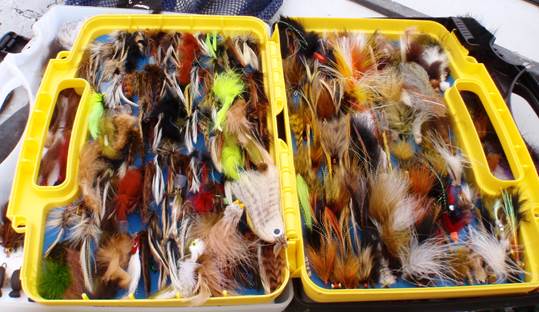
Fly Patterns for Lewis Lake & the Lewis River Channel
Streamer flies often seem to be tied to catch anglers as well as trout. Some of us, me included, seem to have that dreaded disease called “collectoritis”, which sometimes leads us to acquire impractical patterns. But impractical or not it sure is fun and I don’t believe that any angler ever has enough flies.
There are some important factors that the angler should consider before rushing off to the local fly shop or sitting down at the tying bench to lay in a stock of streamers. First we should consider why trout take streamers. What type of waters are we going to be fishing in–shallow, gentle flows or deeper, heavier water? We should also find out if there are any special patterns for certain times of the year. Next we should find out what minnow forms are available to the trout in the waters we will be fishing and what are the popular local patterns. It would be silly for us to tie or buy a bunch of smelt imitations if there were no smelt in the waters we are fishing. Then we need to decide what tackle will be required to present these imitations at the proper depth and angle to be effective. Once these questions are answered the angler can then make the proper choice on what streamers will be required.
I believe that trout take streamers for three main reasons: Hunger, Anger, and Curiosity. I think that hunger is something everyone can readily understand. Often when streamers are mentioned the angler thinks of brown trout, but rainbows, cutthroats, and brook trout will also feed on minnow forms.
Anger comes in two forms. Trout will hit a streamer because it has invaded their territory. Trout will hit streamers during the annual spawning cycle in defense of the redd (nest), or because it is “in their face”.
Curiosity can be recognized as those lazy swirls after the streamer. They rolled on it or bumped it simply because it looked like something to eat, but they really were not hungry. Or, in the case of some of our creations, maybe it was a “What was that?!!”
Now that we understand a little bit about why trout take streamers we need to investigate what minnow forms are available to the trout on the waters we are going to fish.
We covered the minnows in the last selection of the chronicles and the following is just an example of collecting the needed information.
Longnose Dace (Rhinichthys cataractae): This minnow is found in large numbers in most of prime trout streams and lakes in Yellowstone Park and are heavily preyed on by the trout. The coloration will vary from black to light olive on the back and upper sides, with silver to yellow on the belly with a very dark lateral stripe. In some rivers there will be a faint to very pronounced mottling noticed. The experts think they spawn in the late spring and summer but little of the life history has actually been studied. They will vary in size from .03 inches to 6 inches and live 5 years. They feed on small forms of aquatic insects and are constantly moving about in search of food, which brings them to the notice of the trout.
- Byford Zonker (Sizes 2‑8) There are many color variations and some variations are excellent imitations for the Longnose dace and Longnose sucker. This pattern could be classed as both an imitation and attractor. Used periodically throughout the year.
- Black Girdle Bugger (Sizes 2‑8) This is a general attractor pattern which is effective throughout the year.
- Western Feather Streamer (Sizes 1/0 to 6) This is an excellent general minnow type attractor. There are various color variations. This pattern has proven to be one of the most effective of the streamer patterns due to its shape and life‑like movement in the water. This pattern can be tied with a conehead if it is being fished in deep runs and pools.
- Full Dress Western Streamer (Sizes 2‑8) This is a series of feather streamers designed to imitate several different minnow forms. Generally used in the spring and fall during the spawning runs.
Now that we have covered the local patterns, let’s talk about what items the angler or tyer should consider before buying or tying a streamer selection. The important elements for a successful pattern are shape, color, movement, balance, durability and what I call cast‑a‑bility. Now let us examine each of these elements needed for a successful streamer pattern.
SHAPE: The shape or silhouette can be influenced by several factors: the material being used to construct the patterns, the type of water the imitation is to be fished in and of course whether or not the pattern is an imitation of a particular minnow or just a general attractor. The shape can also affect the cast‑a‑bility of the pattern, just as the materials used in construction can affect the sink rate, which in turn will affect how the pattern is presented. For shape follow the lead taken with known effective patterns of the same type or imitate the shape of the natural as close as possible.
The type of water may influence the overall shape. In heavy water you may want a fuller and heavier wing so the fish will be able to see the fly. In smoother water you may want the imitation to be dressed a little more sparsely.
COLOR: Some claim that color is of no importance. But if that is the case why not tie everything in black, white or maybe hot pink. Studies have shown that trout do indeed see color. Now the color they see in 6 feet of water may indeed vary from what we see while holding the imitation in our hand. When tying flies that imitate a certain minnow I try to match the color of the natural as close as possible. When tying attractors I try to use colors or combinations of colors that have been proven to be effective on trout in a given stream. Often the tyer must mix and match several materials to give the overall appearance of color that is desired. When working on new patterns I always put the finished fly in a tank to see if getting it wet will change the overall color. Some materials turn very dark when they get wet and may change the overall shade to something you didn’t want.
MOVEMENT: Use materials or combinations of materials that will move and flow in the water. This movement is what creates the illusion of life and attracts the trout. More often than not flies that are stiff and lifeless are ignored by the trout. What movement you create will, in part, depend on what you want the fly to do and the type of water you will be using it in.
BALANCE: This is how you want your fly to sink in the water and what you want it to do when you are retrieving. Example: if you put the weight forward on a flash-a-bugger, it will sink nose first and dive nose first on the retrieve. If you place the bulk of the lead back toward the tail it would dive tail first. Think about what you want your pattern to do before putting the lead on the hook so you can balance the pattern to act properly in the water.
DURABILITY: Make sure you have flies that are constructed with materials and tying techniques so they stand up under the abuse of fishing. Make sure that heads are glued and well finished. Nothing will upset you more than to make a dozen casts and have the fly fall apart.
CAST‑A‑BILITY: Once I watched an angler try to cast a 1/0 Whit Matuka Sculpin that was weighted with .035 lead fuse wire with a 6 weight rod. Well, you could say that he had an encounter of the wrong kind with his fly. When weighting a fly take into account the type of line and rod you will be casting with and balance the fly accordingly. Also take into account the water absorbency of the material you are using and adjust accordingly. Example: Weighting a Woolhead Sculpin with 20 wraps of .030 lead wire may make the imitation heavier than you wish to handle as the wool head, wool body and rabbit strip wing all will soak up water.
CONCLUSION: If the angler takes the knowledge of the trout, the food forms, the tackle, and the imitations and mixes them together the end result will be increased success while fishing streamers. With streamer flies there are two basic styles: imitations and attractors. Some are used as both. The angler will learn that success depends on learning what combination of patterns will make the trout respond during the various seasons.
I hope this assists you in tying or buying better streamer imitations. Now I will list the patterns for the first four imitations that I have discussed in this section.
TRAVIS BLACK GIRDLE BUGGER
- HOOK: Tiemco 5263 Weighted
- SIZES: 2 to 8
- THREAD: Black 6/0
- TAILS: Black Marabou
- BODY: Black Chenille
- LEGS: Six, three per side space out through the body, white super floss or white round rubber
- WING: Black Marabou
- COLLAR: Black hackle, tied back
BLACK BYFORD ZONKER
- HOOK: Tiemco 300
- SIZES: 2 to 8 Pattern tied so the fly rides point up
- THREAD: Black 6/0
- WEIGHT: Lead wire tied along the bottom of the hook shank and then looped to form body shape
- BUTT: Black thread
- BODY: Black Mylar piping
- WING: Black Rabbit strip, pliobond to body,
- THROAT: Rabbit fur
- OVERWING: Four strands of black Krystal flash, two per side
- HEAD & EYES: Epoxy coated, painted yellow with black center
NATURAL & PEARL BYFORD ZONKER
- HOOK: Tiemco 300
- SIZES: 2 to 8 Pattern tied so the fly rides point up
- THREAD: Gray 6/0
- WEIGHT: Lead wire tied along the bottom of the hook shank and then looped to form body shape
- BUTT: Gray thread
- BODY: Pearl Mylar piping
- WING: Natural Gray tan rabbit strip
- THROAT: Natural gray tan rabbit fur
- OVERWING: Four strands of Pearl Krystal flash, two per side
- HEAD & EYES: Epoxy coated, painted yellow with black pupils
NATURAL ZONKER
- HOOK: Tiemco 300
- SIZES: 6 & 8
- THREAD: Black 6/0
- BUTT: Red 3/0 mono-cord
- BODY: Silver/Pearl tubing, shaped
- WING: Natural Brownish gray rabbit strip
- COLLAR: Grizzly dyed brown
WHITE BYFORD ZONKER
- HOOK: Tiemco 300 SIZES: 2 to 8 Pattern tied so the fly rides point up
- THREAD: White 6/0
- WEIGHT: Lead wire tied along the bottom of the hook shank and then looped to form body shape
- BUTT: White thread
- BODY: Pearl Mylar tubing
- WING: White rabbit strip
- THROAT: White rabbit fur
- OVERWING: Four strands of Pearl krystal flash, two per side
- HEAD & EYES: Epoxy coated, painted Yellow with black pupils
CONEHEAD WHITE MARABOU MUDDLER MINNOW
- HOOK: Tiemco 300
- SIZES: 6 & 8
- THREAD: White 6/0
- CONE: Gold, metal
- TAILS: Red hackle fibers
- BODY: Flat silver Mylar tinsel
- UNDERWING: Six strands of Pearl krystal flash
- WING: White marabou
- OVERWING: Six strands of Peacock hurl
- COLLAR: Natural deer hair tips, spun
- HEAD: Natural deer hair spun and clipped to shape
TRAVIS LIGHT SPRUCE WESTERN FEATHER STREAMER
- HOOK: Tiemco 700
- SIZES: 1/0
- THREAD: Hot Red 6/0
- TAILS: Four, two per side, matched Badger hackles
- TOPPING: Four, two per side, Pearl Krystal flash
- BODY: Two to four badger hackles wrap forward by the tips
| Sysadmin Note |
|---|
| Sysadmin Note |
|---|
Yellowstone National Park Sunset
Traditions
When I was a kid there was always an Open Day of the fishing season and a Closing Day of the fishing season. The first day of the season was full of mystery and promise of the season that was just beginning and trying out new patterns and maybe even a new rod or line that was obtained over the long winter.
Closing Day was filled with both happiness for being on the water and sadness that to it was to be the final day and a long winter of no fishing stretched before me. Normally on the last day I fished until dark and I could no longer see to properly fish.
As grew up and moved away from the streams of my youth things began to change and I answered the call of my country, entered the military and for a few years the chances to fly fishing were few and far between. After the military I finally ended up in Montana where I have lived fly fishing and guiding other fly anglers.
However, when I first arrived in Montana I asked when the fishing season began and was told that the major rivers and spring creek were open all year long. Yes there was an official opening and closing day on the smaller tributaries but even some of them were open for fishing for whitefish and you had to release the trout, which I did anyways. I took full advantage of the year round fishing and soon had to divide my time being fishing, fly tying and writing during the winter months. I know it is a tough life, but I was more than willing to follow this course.
But still I missed the tradition of opening and closing day. Then I learned that the fishing season in Yellowstone National Park had an opening day and closing day and for over thirty years I seldom missed fishing in the Park on either day.
I know it sounds silly but the anticipation of opening day in the Park normally means a late night in the fly tying room as I know the sleep will not easily come to me. For those of you who get excited on the day before a fishing trip will understand and for the rest of you there is no way for me to explain the eager excitement that flows through me.
Many of those Opening Day adventures took place on the Firehole River, this is a river that pulls me back year after year and there is something very special about the famous stream that has deeply drawn me to its waters year after year. There has been a year now and then when I strayed to other water but I admit that the Firehole River is my top choice for opening day in the Park. The Park Fishing Season Opens on the Saturday of Memorial Day Weekend and in the earlier years it closed on October 31st a few years ago the closing day was changed to the first Sunday in November. On some years it gives us an extra week of fishing in the Park however I will admit that some of those closing days have been a testament to the willingness and fortitude of the angler to endure rough weather to enjoy that final day on the water in Yellowstone Park.
For opening day in the Park I normally choose the Firehole and I have spent many of the closing days on this outstanding stream. However I have also fished the fine Baetis Hatch found on Soda Butte Creek or the Lamar River and I have fished the final day of the season on the Lewis River Channel or in a float tube along the shores of Yellowstone Lake.
The final day in the Park still brings certain sadness with the knowledge that I will not be able to fish these waters until spring and the wonderful memories of the years I have been blessed with the opportunity to fish these waters with good friends and the wonderful adventures we have shared. So there is something good to be said about traditions and I hope I will be able to continue the tradition of opening and closing day in Yellowstone Park for many more years.
Fires and floods may change the landscape but the true essence of fly fishing the waters of Yellowstone Park never changes and the water contained within its boundaries should be on the Bucket List of every fly angler who enjoys the sport.
Now the season is closed and the trout are resting and the anglers are eagerly anticipating the coming of Opening Day!
Enjoy & Good Fishin’
Originally published September 09, 2013 on Fly Anglers Online by Tom Travis. Combined from 10 parts.