Sometimes I'm painfully slow when it comes to product
reviews. I like to look hard at all the features and
look for anything I might have missed before I put pen
to paper with a recommendation or complaint. This is
especially true when it concerns something as important
to me as a fly vise. I know a few guys have been waiting
for this review, so here is what I found in my test
drive of the Peak fly tying vise.
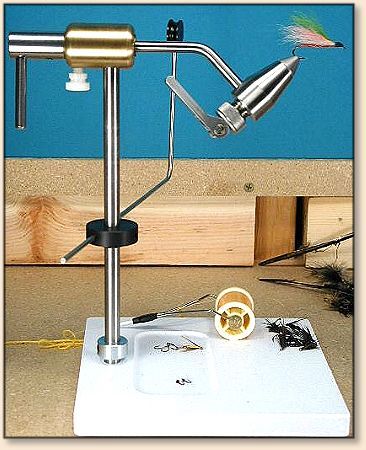
I tried all three sizes of jaws in my testing. Hooks
were placed in the jaws and bent to either the breaking
point or until they bent in a complete circle. As long
as I stayed within or close to the appropriate hook size
range for the jaws I was using, nothing slipped at all.
I had to exceed the suggested hook range for the jaws
I was using by several hook sizes before I could get
a hook to slip. However, I'm picky about vise features.
I would prefer to see the insides of the jaws scuffed
a little so I wouldn't have to use as much pressure
on the arm as I used for the larger, oversized hooks.
I'm not saying I had to use a lot of pressure, certainly
not enough to harm a hook, but I'm one of those guys who
believes jaws hold hooks easier and better if the inside
surfaces are scuffed or grooved rather than smooth.
That said, none of the appropriately sized hooks
slipped anyway, so maybe my desires and concerns
are unfounded.
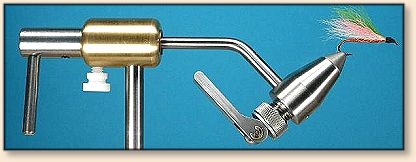
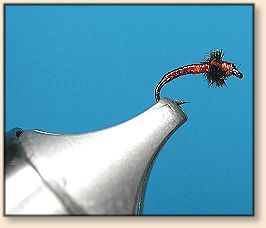
I tried the medium or regular jaws on hook sizes from 22
to 2. It held all those hooks without any slipping.
Hooks started slipping at size 1/0 so I changed to the
magnum or saltwater jaws. Those jaws held the biggest
hook I have (4/0) without any slipping at all. The
midge jaws held every hook I tried from size 28 to
size 8. Not one hook slipped in the midge jaws until
I tried a size 4. In other words, if you use the right
sized jaws, you shouldn't experience any problems
with hook holding grip.
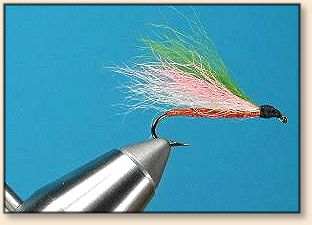
This vise is one of the most precisely machined vises I
have tried. There is no wobble or play at all in the
rotary mechanism, and the rotation is smooth as a baby's
backside. Jaws are easily changed by removing a c-clip
and loosening an allen screw. There is an indent in the
bottom of the jaws that the allen screw fits into to keep
the jaws from rotating or wobbling inside their housing.
With that indent, alignment is automatic. The precision
machining of the jaws and their forcing cone keeps even
tension on hooks at all times.
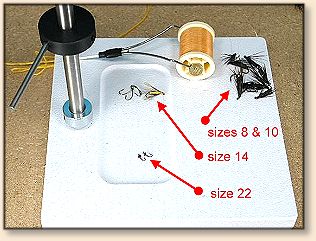
The pedestal base is wide, solid and has a tray machined
into it to hold hooks and flies. At about seven pounds,
it won't slide or tip over on your fly bench. Everything
is either stainless steel or brass, so it should last a
long time. The jaws are hardened to withstand years of
repeated use and possible abuse.
The thing I like most about this vise is the price. At
about $120 US, it's the best bargain I've found in a rotary
vise with an all-metal design. I also like the heavy, large
base that won't move or wiggle on the bench. The machining
is precise and the cosmetics are very nice. Compared to
several big-name vises in the under $200 price range, the
Peak vise is the better-built vise.
I mentioned the smooth jaws were a concern of mine.
Scuffing the insides of the jaws before the hardening
process might increase hook-holding capabilities with
less jaw pressure, which in turn might increase the
life of the vise. Since the vise held hooks of the
appropriate sizes very well, my concerns may be
unfounded. Another thing to watch is the delrin
screw that keeps the vise head from turning.
Eventually this screw will wear out and need to
be replaced. I don't know if it will last one year
or ten, but eventually it will wear out, so I would
buy a second screw right away and keep it as a spare.
The positive side of that delrin screw is that it can
be tightened slightly to provide gentle pressure on
the shaft but allow full rotation of the head without
scarring the shaft. I prefer it that way.
Would I buy this vise? Yep. It's more comfortable
to use than my Danvise; and at the price, a lot of
vise for the money.
For contact:
Peak Fishing
599 W 71st St
Loveland, CO 80538
(970) 622-9601
E-mail: Kurt@peakfishing.com
Website: www.peakfishing.com
~ Al Campbell
|
