The Ethics, Perhaps, of Fly Fishing
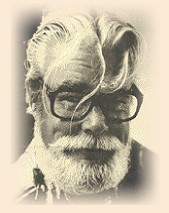
By Ed Zern
I agreed to write something about the ethics of fly-fishing because
I hadn't thought much about it at the time, and it's always pleasant
to be able to impose, or try to, your own ideas and ideals on other
people, especially from a stance that makes back-talk difficult.
But now, faced with a blank sheet of paper and forced to think about it,
it seems to me that all the problems of living and dying and of work
and play are ethical problems, and to attempt to separate out the
ethics of fly-fishing is akin to prescribing a special inflection
of voice to be used when addressing bishops or billionaires or
Internal Revenue agents. And perhaps it isn't really ethics that
we have in mind, but rather attitudes, a code of behavior, a concern
for tradition and a hope for conservation of both fish and values.
Perhaps, too, in my own case I tend to confuse ethics with
aesthetics (and perhaps ethics is the aesthetics of behavior.)
Since such an approach is highly subjective I can hardly do better
than to set down some of my own beliefs about fly-fishing; and
"ethical" attitudes I have would grow out of these:
1. The essence of sport is skill, and the voluntary imposition
or acceptance of arbitrary conditions demanding skills. There is
nothing immoral about shooting sitting ducks, but the sportsman
shoots them flying, and may decline shots that require little skill.
2. Fly-fishing generally requires more skills than fishing with lures
or natural baits; fly-casting generally requires more skill than
spin-casting or bait-casting; fly-fishing encourages development
of collateral skills, in insect identification and imitation, in
streamcraft and in fly-tying. It is therefore a more sporting way
of taking those fish which sometimes feed on insects on or below the
surface of the water they inhabit or on small fish imitable by
streamer flies. (The fact that skilled fly-fishers may be able
under certain conditions to take more fish than the bait or lure
fisherman is irrelevant; the honest man is often able to accumulate
more wealth than the thief, but this is a shoddy argument for
honesty.)
3. Fly-fishing, or any other sport fishing, is an end in itself
and not a game or competition among fishermen; the great figures in
the historic tradition of angling are not those men who caught the
greatest number of fish or the biggest fish but those who, like
Ronalds and Francis and Halford and Skues and Gordon and Wulff
and Schwiebert, made lasting contributions of thought and knowledge,
of fly patterns and philosophy, of good writing and good
sportsmanship. There have always been men who could accumulate
a larger number of dead fish than other men, because it was important
to them; but no one remembers who they were, or should.
4. One of the greatest privileges of the fly-fisher is to release
his catch, not out of sentimental avoidance of the act of killing
but out of awareness that in most waters of this continent, capable
of sustaining a fish population from season to season, a game fish
is for more valuable as sport or the promise of sport than as food
for belly or vanity.
 5. There can be no fly-fishing without pure waters in which game
fish can live; there can be no such waters without proper management
of watershed forests and farmlands, or without control of pollution
through erosion or industrial or human waste. Therefore, the
fly-fisherman should be deeply concerned with measures to conserve
or restore pure waters, and will involve himself when possible in
efforts to promote such measures, recognizing that they are inseparable
from the conservation of all renewable natural resources. He will
bear in mind the legend of the African chief who said, "This land
belongs to my people. Some of them are living, some of them are
dead, but most of them have not yet been born." ~ Ed Zern,
- Random Casts, 1966.
5. There can be no fly-fishing without pure waters in which game
fish can live; there can be no such waters without proper management
of watershed forests and farmlands, or without control of pollution
through erosion or industrial or human waste. Therefore, the
fly-fisherman should be deeply concerned with measures to conserve
or restore pure waters, and will involve himself when possible in
efforts to promote such measures, recognizing that they are inseparable
from the conservation of all renewable natural resources. He will
bear in mind the legend of the African chief who said, "This land
belongs to my people. Some of them are living, some of them are
dead, but most of them have not yet been born." ~ Ed Zern,
- Random Casts, 1966.
Credits: From The Best of Ed Zern published by
The Lyons Press.
Lighter Side Archive
|