Our next stop was the Mayan ruin Xunantunich (Maiden of the Rock), just
two miles from the Guatemala border. Towering above the local landscape,
this ruin sits on top of a limestone hill that gave the former residents a view
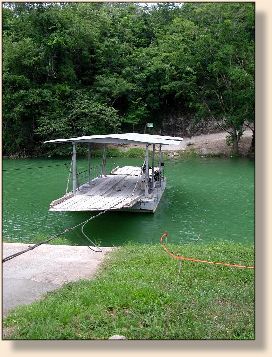
of the valleys below. Modern access to the site is via a hand drawn ferry
that provides transport to the only road leading to the ruin.
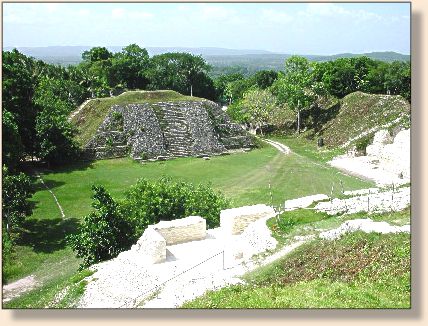
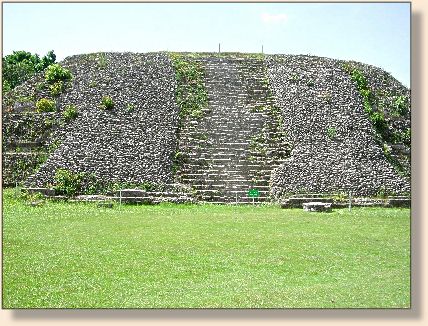
El Castillo (the tallest pyramid at Xunantunich) is a limestone structure that
rises 130 feet above the main plaza of the ancient city and 250 feet above
the valley below.
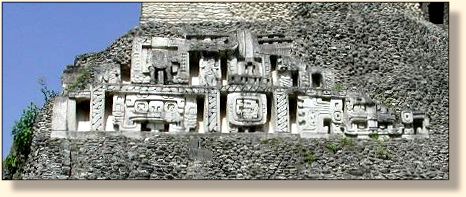
A beautiful stucco frieze, supposedly dedicated to a sun
god, is visible on both the east and west sides of this pyramid. Excavation
and restoration of this site is only partially finished and new mysteries are
uncovered on a regular basis.
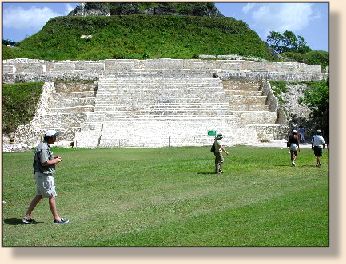
So far archeologists have discovered at least 12 layers of building on this
tallest pyramid. It seems that as new generations of royalty took power,
they often had the pyramid rebuilt over the earlier versions. We may never
know what secrets are buried in those rock walls.
Much of the Mayan civilization is a mystery. Their society seems to have
been held together by a variety of factors that include social, economic and
religious influences. It is also known they occasionally went to war with
each other. Each of the many ruins was a place where people lived,
shopped, held religious rituals (including human sacrifice according to
archeological discoveries) and enjoyed the security of walled cities.
Xunatunich is important because it was one of the last inhabited cities of
the Mayan civilization. No one really knows why the civilization crumbled
when it did. It may have been disease or economic factors. Maybe a
drought or earthquakes or some other factor of nature was at fault. It
may even have been a situation where their religion fell apart or maybe
an uprising of the lower class brought the civilization to an end. There
are a lot of mysteries awaiting answers.
One thing we do know, people lived in or on each of the pyramids. Most
of the time, they lived in wood or wood and stone structures. Commoners
lived on the ground, but the royalty lived in elevated status on the pyramids.
In the case of the Mayans, the royalty may have been the religious leaders
since the pyramids had religious significance as well as social significance.
At Xunantunich, El Castillo was the pyramid that housed the people at
the top of the social structure. It was one of the last strongholds of a
unique civilization that spanned 2500 years and ended mysteriously
around 1540AD.
|

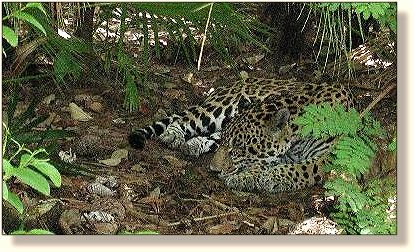
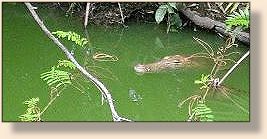 Although it isn't big, the Belize Zoo is home to specimens of nearly all
the land animals native to the country. Mostly jungle species, some of
the most colorful birds I have ever seen are on display in the zoo.
Although it isn't big, the Belize Zoo is home to specimens of nearly all
the land animals native to the country. Mostly jungle species, some of
the most colorful birds I have ever seen are on display in the zoo.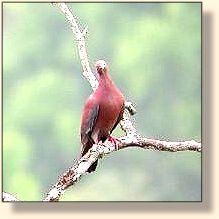 Several types of toucans and storks along with many rare and colorful parrots and
macaws can be observed and photographed in their native habitat. Other
animals include peccaries, tapirs, jaguars, ocelots, crocodiles and monkeys.
It was an interesting and informative tour.
Several types of toucans and storks along with many rare and colorful parrots and
macaws can be observed and photographed in their native habitat. Other
animals include peccaries, tapirs, jaguars, ocelots, crocodiles and monkeys.
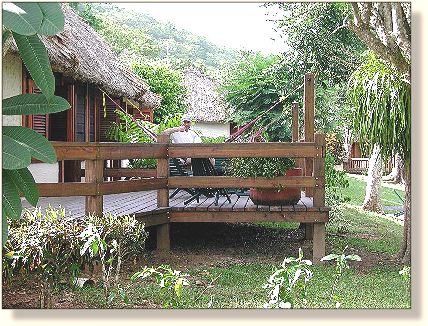
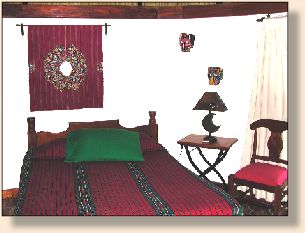
It was an interesting and informative tour.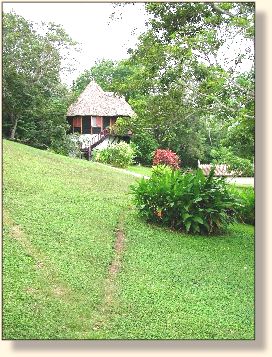 Not far from Xunantunich is a pleasant place called Chaa Creek Resort.
That's where we spent the night during our jungle tour. The resort offers
tours of local Mayan ruins, bird watching expeditions, canoeing and kayaking
on the Macal River or just a pleasant place to relax. It's a wild bird sanctuary
on the banks of the Macal River with a resident population of more than 240
species of exotic and rare birds. It also has a large population of rare blue
butterflies.
Not far from Xunantunich is a pleasant place called Chaa Creek Resort.
That's where we spent the night during our jungle tour. The resort offers
tours of local Mayan ruins, bird watching expeditions, canoeing and kayaking
on the Macal River or just a pleasant place to relax. It's a wild bird sanctuary
on the banks of the Macal River with a resident population of more than 240
species of exotic and rare birds. It also has a large population of rare blue
butterflies.
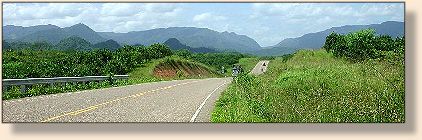
 Belize has two paved major highways. One travels east to west, the other north
to south through the country. Other roads are gravel and sometimes a rough ride.
After a comfortable night at Chaa Creek, we traveled by van across these highways
on the scenic route through the jungles of the Mayan Mountains. I witnessed more
different types of trees on the hillsides of the Mayan Mountains than anywhere else
I've traveled.
Belize has two paved major highways. One travels east to west, the other north
to south through the country. Other roads are gravel and sometimes a rough ride.
After a comfortable night at Chaa Creek, we traveled by van across these highways
on the scenic route through the jungles of the Mayan Mountains. I witnessed more
different types of trees on the hillsides of the Mayan Mountains than anywhere else
I've traveled.