Fishing and Collecting the Oldies
Goodwin Granger and Wright and
McGill Rod Companies
By Tim R. Mullican
My interest in bamboo fly rods began as a result of being introduced to my brother's
hobby of collecting old fishing lures. About 10 years ago, my younger brother showed
me his collection of old Heddon lures while I was visiting with him during my summer
break from teaching. "These are getting hard to find around here anymore," he said.
"Keep an eye out for these when you go back home."
With those parting words, a virtual obsession with collecting old fishing tackle began.
For a while, I had good luck with finding old lures for him. However, very quickly I too
began to get hooked on the hobby. Because I had become a fan of fly fishing while
attending graduate school in Idaho, I naturally was drawn to vintage bamboo fly rods.
The first bamboo fly rods I acquired were a pair of lower-end production
rods made by Horrocks and Ibbotson. Their durability immediately became
suspect when I noticed each of them had tips that had been broken. My
reservations about using bamboo rods were reinforced when I broke a
tip while false casting with a post-WWII Japanese rod that I had bought
at an antique shop for $30. I later learned the bamboo used in these
Japanese rods was not the Tonkin cane preferred by most makers after
the turn of the century. Instead, the cane used was from a different
species that is much more brittle than Tonkin cane.
My opinion of the durability of bamboo rods turned around 180 degrees
after I traded my brother a couple of glass-eyed Heddon lures for a 9'
model 9050 Granger Special fly rod made after the take-over by Wright
and McGill. Even though the one tip was short by about an inch, I
became enthralled by the rich brown color of its cane, the glassy
finish, and its arrow-straight shafts. I could tell immediately
by flexing its tip that the durability of this rod was vastly
different from the cane used in the bottom-of-the-line rods made
by companies such as Montague, Horrocks and Ibbotson, and even
South Bend. [Authors note: this is not to say that these other
companies did not make high quality rods, many of their higher-end
rods were built just as well as any of the classic rod makers].
Today, I have no reservations about fishing any of my Granger fly rods, even for the large
Rainbows in the tailwater fisheries of the Missouri River that can grow as large as Steelhead.
Last summer, I landed two Rainbow trout weighing close to 2 ½ pounds each in the Black
Hills of South Dakota on an 8 ½' Wright and McGill Granger Special that has numerous
repair wraps as a result of abuse by a former owner. This rod, which I found lying under
a heavy bucket of ice fishing tackle at an estate auction, came through without so much
as a slight set.
As fishing instruments, Granger fly rods are considered by many to be superior to many of
the rods made by famous eastern companies such as the H.L. Leonard Rod Company, E.W.
Edwards & Sons, and the Devine Rod Company. Eight foot Grangers are in most demand
with modern flyfishers, but their popularity has increased to the point where they are no longer
affordable to the average angler. The most commonly found rods of the original Goodwin
Granger Company are last generation models with the nickel-silver uplocking reel seat patented
in 1938 (fig. 1).
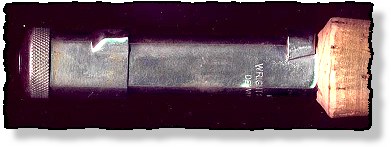
Fig. 1. Patented nickel-silver reel seat used on the majority of Granger
rods found today. Earlier rods will bear the name of the original Goodwin Granger
Company, whereas later ones will be stamped with the name of the Wright & McGill.
Both companies stamped the reel seats with the Apr. 12, 1938 patent date, although
Goodwin Granger actually began to use them several years earlier.
Somewhat harder to find are the chrome plated uplocking reel seats (fig. 2) that were sold
just before the start of WWII and continued to be used later on only the Registered model.
These plated reel seats were probably very nice looking when new, but cheapen the appearance
of the rod after the plating starts to wear off with use.
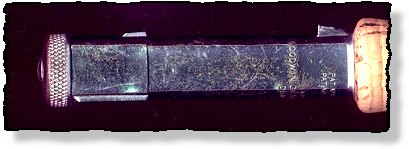
Fig. 2. Chrome-plated metal reel seat found on rods made just prior to WWII.
These seats were also used later on the Registered model only.
Their first generation rods, with a relatively plain nickel-silver sliding band reel seat are
very hard to find, but are not considered to have as sweet an action as their later rods.
Second generation rods having a full nickel-silver sliding band reel seat with the model
name stamped between two knurled bands (fig. 3) can still be found, and are still
somewhat affordable in the 8 ½'and 9' lengths. Indeed, these rods seem like a
bargain compared to the price of a new Orvis or Loomis graphite rod.
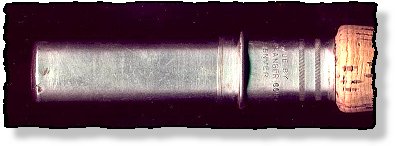
Fig. 3. Nickel-silver sliding band seat used on middle era Goodwin Granger rods from
the mid-1920's to the late 1920's. This seat was retained on the Champion model right
through the time Wright and McGill dropped the model from their line.
The Wright and McGill Rod Company began leasing the Goodwin Granger Rod Company
in 1946 and later took over complete ownership of the company*. Wright and McGill's
line of rods was basically the same as that of the Goodwin Granger Rod Company when
they turned over operation of the company. Starting with the most expensive model, their
line included the Registered, Premier, Deluxe, Favorite, Aristocrat, Special, Victory, and
the Champion. In 1947, Wright and McGill replaced the Champion with the Stream and
Lake model*. This bottom-of-the-line model is the most affordable fly rod for the person
wanting to fish a Granger, but still has the same quality bamboo and hardware as their more
expensive models. In fact, with the exception of minor differences in the evenness and
density of the grain of the bamboo, the only major difference between their models was
in the color of the wraps.
Fly fishers and collectors looking for a bargain should keep an eye out for rods marketed
under the name of the Old Faithful Rod Company. I first learned about their rods when I
found one in a group of three rods that I bought from a person I met at a collector's market.
The only marking on the rod was Challenger. The address on the original
tube that came with the rod was 4th & Grant, Denver, Colorado. The cane had a vaguely
familiar rich brown hue that was reminiscent of the Granger rods. I figured that with the
address, I might be able to find out more about the company. After spending a short
amount of time at the library, I was able to obtain an excellent book by Dick Spurr and
Michael Sinclair titled Colorado Classic Cane*. From this reference,
I discovered my rod was actually made by Wright and McGill. These rods were made
from sections that had not passed the stringent quality control used with their regular line.
They were usually fitted with the same high quality nickel-silver ferrules, but less expensive
anodized aluminum down-locking reel seats were used along with cheaper cork grips.
The wraps used on these rods were also plain with no tipping. Three different models
were sold in this line with the names Challenger, True Action (fig. 4) and Thoroughbred.
Although they were not of the same high quality as the name brand Granger rods, they are
still excellent fishing sticks.
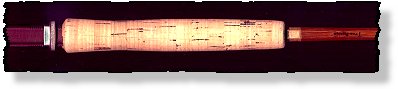
Fig. 4. True Action rod marketed under the name of the Old Faithful Rod Company.
These rods were actually seconds that were produced by Wright & McGill.
One factor that makes Granger rods so popular with collectors and fisherman alike is the
special treatment of their bamboo. Beginning with the Goodwin Granger Company,
ammonia was applied to the bamboo strips, which gave the bamboo a rich dark color.
This process also added great strength and resiliency to the strips. As a result of this, it
is relatively uncommon to find a Granger rod that has taken a set due to normal use.
One exception to this ammonia tempering process occurred between 1926 and 1931.*
During those years, two models with light colored cane were marketed by Goodwin Granger.
These were lower priced models, and were named the Denver Special and the Colorado Special.
These middle era Granger rods are still occasionally available on the used rod market, but
are hard to find in pristine condition.
I have not attempted to completely enumerate all of the lengths and models produced by the
Goodwin Granger and the Wright and McGill Rod Company down through the years, as
readers who want to do more research can seek information from Dick Spurr and Michael
Sinclair's excellent work*. Unfortunately, their book is currently out of print. However,
a second edition is scheduled to be released by Centennial Publications sometime in 2000.
For fans of production cane, this book is a must read.
Regrettably for those who like to fish vintage bamboo rods, the price of Grangers is going
up fast along with the rest of old collectible tackle. Compared to the price of new bamboo
fly rods made by contemporary makers, the old ones are still a bargain. If you are lucky
enough to find one at a price you can afford, don't be afraid to go out and catch a few fish
and reminisce about the "good old days." ~ Tim R. Mullican ~
Reference:
*Spurr, Dick, and Michael Sinclair. 1991. Colorado Classic Cane: A History of the
Colorado Bamboo Rod Makers. Centennial Publications, Grand Junction, Colorado.
166 pp.
© 2000, Tim R. Mullican
|