|
Sounds like the title of a great story. Wish that it
was so, but it is just about an old cane rod I bought
a few days ago. I still am not quite sure why I bought
it. Something just told me that, "Hey, you ought to have
that rod. It's kind of like one you used to have years
and years ago." So I contacted the fellow on our bulletin
board and for a hundred bucks it's mine now. He only had
it a few days having bought it from a traveling 'flea
market' chap down in Texas. Where this rod has been
before that is anyone's guess. But, I have it now.
And I like it.

I had one almost exactly like it back when I was in the
honeymoon stage of fly fishing. Back when everything I
learned was the end to it all. Every time I learned a
new thing I thought I had it figured out only to realize
the next time I was on the stream there was more to it.
Oh for those days again but they can not be regained. One
can never really go back. The days of mystery and delight.
Of learn and reward. Of trying a new fly because someone
said it was a great fly and it would "really get 'em." And
I would pound up a foam over the trout until at least one
took it out of pity or just to get me off the stream and
have me quit pestering him. Many was the time I would make
cast after cast without checking my fly. Only after having
a few hits which produced nothing would I find out that the
last log snag had removed the bend of my hook completely.
It was things like that which gave rise to, "Wow, he
actually broke my hook right off!" Was that yesterday,
or does it only seem so?
Rods were cheap then, during the late forties and early
fifties. A few bucks and you were in business. Oh sure,
there were high priced cane rods, but the average guy
could not begin to afford one. Nope, these production
bamboo rods were the 'work-horses' of the sport. They
were not the 'state-of-the-art,' far from it, but they
were the rods which made fly fishing what it is today.
It was the mass production of cheap but very serviceable
cane rods which allowed the average Joe like me to be on
the stream or lake with a reasonable chance of catching
something on a fly.
The rod would often raise a blister or two. The action
was mostly slow and somewhat wobbly but they would cast
or lob a fly out there and that is all that counted. Not
many realized they were rather poor casting tools. They
were what they were. Bamboo fly rods. What's the big deal.
With nothing to compare them to and a low cost there was
no thought as to how well they performed for most of us.
They cast and that was that. They performed; what more
was there to ask?
Sometimes they got broken, usually a few inches off of
the tip. Many are the rods which had some 'issue' about
three or four inches down from the tip. No problem. Heat
up the tip, slide it off and jam it down on the shortened
tip section. There was usually enough glue left in the
tip to hold it just fine. You might need to whittle the
tip just a tad but maybe not. Probably improved the casting
anyhow. And it was not a big deal or a thing of shame to
have one with that 'modification' either. At least if it
was, I sure didn't know of it and didn't know anyone who
did either.
The war was over and things were booming on all fronts
including recreation. Materials became available again,
new things were developed and on the market, rods were
mass produced at reasonable prices and so it was that
fly fishing made it's biggest jump in the history of the
sport. New fly lines were indicated and that need was the
'mother of invention.' Silk lines gave way to plastic
coated ones with air bubbles which helped them float. The
beginner was off and running. Flies were tied, books were
written, rods and lines and reels were produced as fast as
they could be. It was impossible to screw up a fly fishing
company. Fame and fortune awaited all who ventured forth.
Not so today, but that is how it is with capitalism and
the law of supply and demand. Throw in a few international
conflicts and you are in today's society. Now our gear is
almost bullet-proof, in fact the guarantees are. Not so in
the past. "You buy it; you bought it." Many rods for a few
bucks more came with two tips, they (and you) knew you were
going to bust at least one of them. The main argument of the
day was should you rotate the use of the two tips or not. I
don't think that one was ever solved by the way.
The cane was cheap and the rods worked. Fly fishing was
available to the average man and he took to it with a passion.
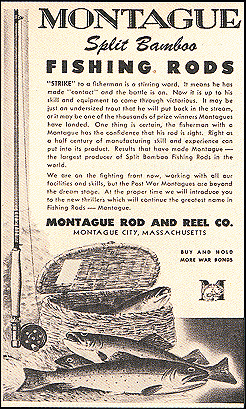
One of the main companies was Montague Rod & Reel of MA. They
made several models and anyone who owned one would refer to
them as, "Oh, it's a Montague Sunbeam" or such.
I am not going to fix it up or fish it. I am not sure
if it would stand the pressure of even one cast any
more. Probably would but I am not interested in even
finding out. It is old and it is retired now. It shows
signs of having served it's masters well and faithfully
for many seasons. The owners who fished, and there may
have been only one, did not abuse the rod but, it shows
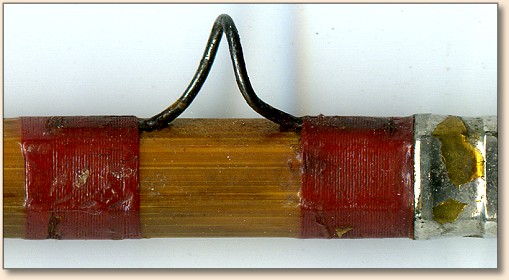
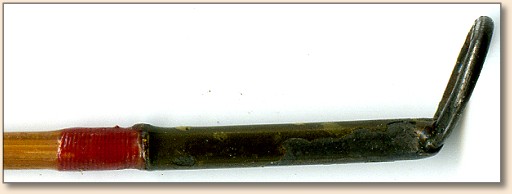
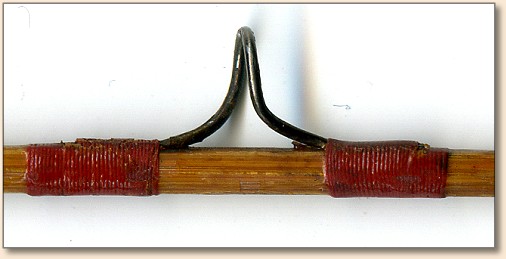
many hours of use astream. The varnish is failing some
but the wraps are not. The decal is flaking off, but
still proudly bears the name of the company. Here are a
few pictures this one.
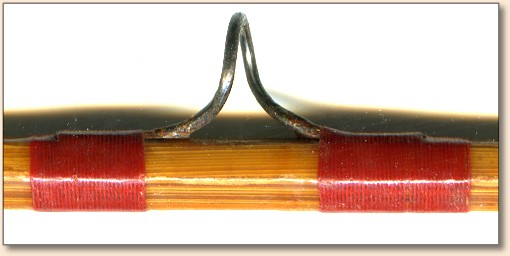
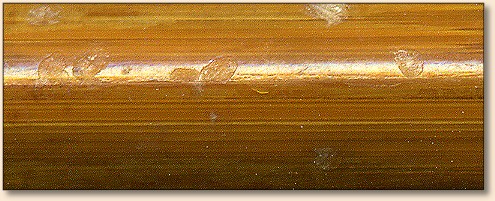
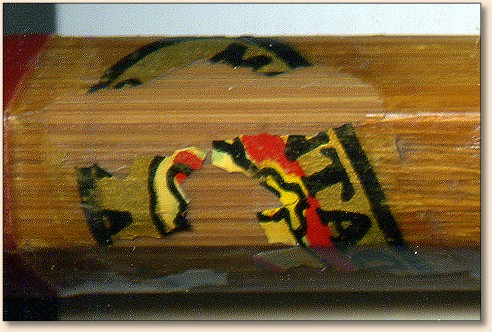
It seems like it might be the 'Clear Lake' model, but
that's not important to me. It's a part of the glorious
past of fly fishing. It started it, lived through it, for
the most part unscathed and lives now over this computer
here in my office. Never more to feel the magic of a line
flowing through it's guides, the urgent pounding of something
alive on it's power fibers, the gentle wipe of a handkerchief
by it's master at the end of a day on the water.
It's job is done. It had a duty to perform and did it
faithfully and well. And now it rests. Just an old rod
now. Fate has brought it home to me. I will care for it
well.

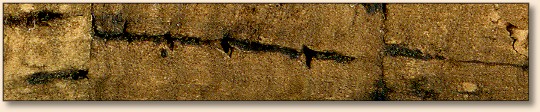
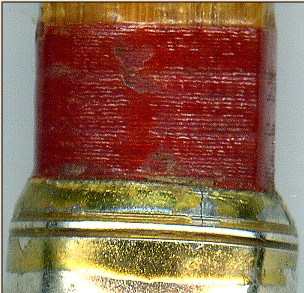
There is no particular relevance to these pictures. They
are what they are. Just pictures of an old rod. I hope you
enjoy them. I am tempted to name the rod. I may. After all,
it was one of it's brothers who got me into all of this
in the first place. ~ JC
|