Rodbuilding Profiles
The Charles H. Demarest Company
 Up until this point in our series we've covered the history of cane rods, the
rodmaker's bamboo (Arundinaria amabilis), as well as a series detailing how
rods are built from beginning to end. But now comes the good part- a series
of columns to introduce you to some of the finest and most talented people in
the rodbuilding business.
Up until this point in our series we've covered the history of cane rods, the
rodmaker's bamboo (Arundinaria amabilis), as well as a series detailing how
rods are built from beginning to end. But now comes the good part- a series
of columns to introduce you to some of the finest and most talented people in
the rodbuilding business.
We are fortunate to participate in a sport that has such a long and colorful
history and emphasis on tradition. For many people flyfishing becomes much
more then a sport or simple pastime, it becomes a way of life and each
person's memories and contributions become a rich part of our angling
heritage.
This next series of columns will feature some folks that I've come to respect
and value for their contributions to cane rodbuilding as well as having been
privileged to meet and talk to over the years. I have found through making
friendships in this community that the best stories are not in the equipment
or the work itself, but the people behind them.
It would be impossible to write a series about cane rodbuilders without first
starting with the folks that have been almost solely responsible for the
importation and promotion of Tonkin cane as a rodbuilding material. I just
spent a very pleasant part of a February Sunday morning talking with Harold
and Eileen Demarest of Charles H. Demarest, Inc. Harold and Eileen told me
about the history of the company that supplied the bamboo used in virtually
every cane rod from the golden age of bamboo rodbuilding to the present. As
we spoke my wife was in the shop, splitting and straightening cane strips
from culms supplied by them and couldn't help but feel that we are all
interconnected in this wonderful craft.
The story begins with Harold's father, Charles H. Demarest. Charles was born
in 1880 and was the youngest of three sons. Upon reaching adulthood he found
that there wasn't a place for him on the family dairy farm in New Jersey and
so went to work for the Daniel Shaw Company in New York. The Shaw Company was
involved in the importation of a variety of natural goods- rattans, Mother of
Pearl shells, Buffalo horns for buttons, palm leaf fans, bamboo, ginger and
some spices, and it was here that he learned the importation business.
Charles acquired the company in 1911 and company records indicate that at the
time he was supplying both 'Tonkin' and Calcutta cane to a veritable
who's-who of the rodbuilding trade: William Mills (a buyer for the Leonard
rodbuilding company), Montague, South Bend, Devine, et al. At this time
Tonkin cane was known as 'Chinese' bamboo and quickly became the favored
species for rodbuilding. See our previous column -
The Rodbuilder's Bamboo
Charles incorporated his business in 1922 and expanded his operations to
include the importation of a number of natural items that were commonly used
in products of his day. These included rattan to be used in furniture making,
cane webbing for chair seats, natural broom and brush fibers, woven matting
and hat bodies, varnish gums, and horns for umbrella handles.
In 1934 Charles made his first Far East trip to meet with his suppliers.
Traveling by ship and land he visited India, Hong Kong, Canton and West
Africa. He didn't have the opportunity to go upcountry to see the Tonkin
growing in its natural state, but did get to meet with his suppliers at the
facilities for sorting the cane at Canton. These long-term relationships
with the people that grow, process and distribute cane were cemented and
strengthened at this time.
Harold joined the family business in 1934 and recounted how upon graduation
from college "on a Friday, started working with his dad on Monday!" During
the time leading up to World War II, Harold traveled all over the eastern US
personally meeting with the company's customers- a tradition that continues
to this day. (Indeed, when I tried to reach the Demarests a month or two ago
and they were off lecturing at a rodbuilding gathering in Arkansas!)
During WWII Harold served his country in the Navy while his father continued
running the business. The war years were lean ones for the company as the men
were away fighting and domestic efforts were focused on wartime concerns. But
the postwar years saw an explosion in the Tonkin cane business. Men
returning from the war were anxious to resume fishing and the tackle trade
flourished. Rodbuilding companies at this time had a policy of carrying 4
years worth of Tonkin in inventory and began rebuilding their stocks. In 1950
Harold took his first trip to China and completed what turned out to be his
last Tonkin transaction prior to the embargo.
All was not well for the cane rodbuilding companies, however. On the horizon
was the coming of the first synthetic rods as well as the 1950 embargo on
trade with China including Tonkin cane. Many manufacturers could not make the
transition to synthetic materials and one by one closed their operations. As
they folded, the Demarest Company would often buy back stocks of cane to help
keep cane available for those in need. Charles continued to work three days
a week at the company until he died in 1957, when Harold took the helm.
 After the embargo ended in 1971, new challenges arose. The growing and
distribution of Tonkin cane was taken over by the Chinese government and new
relationships had to be forged. The synthetics were rapidly replacing cane as
the material of choice. In 1962 Harold met his bride-to-be Eileen while on
(what else?) a business trip and credits her organizational and business
acuity to the continued success of the company. In 1976 they built a 30,000
square foot warehouse in New Jersey to accommodate their operation.
After the embargo ended in 1971, new challenges arose. The growing and
distribution of Tonkin cane was taken over by the Chinese government and new
relationships had to be forged. The synthetics were rapidly replacing cane as
the material of choice. In 1962 Harold met his bride-to-be Eileen while on
(what else?) a business trip and credits her organizational and business
acuity to the continued success of the company. In 1976 they built a 30,000
square foot warehouse in New Jersey to accommodate their operation.
As the demand for cane ebbed with the switch to synthetics, the market for
cane became quite small and mainly limited to home craftsmen and the few
remaining commercial firms that continued to build cane rods. The
publication of the Garrison/Carmichael book in 1977 as well as the Cattanach
book in 1992 helped to spawn a reawakening in the craft and renewed
appreciation for the bamboo and the cane rodbuilding craft. Throughout it
all-from the good times of the Golden Age to the lean years- the Demarest
Company has been there to meet the needs of cane rodbuilders.
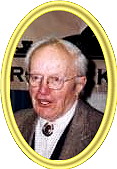
Today, the Demarests continue their active roles in providing the highest
quality cane to rodbuilders worldwide. In the last five years they have
visited China three times; tirelessly searching to improve the quality and
service synonymous with their reputation and good name. They are also well
known and respected visitors at the many rodbuilding gatherings throughout
the United States where they give informative lectures about Tonkin cane. For
those interested in building trying their hand at the craft they offer small
(three culm) quantities of cane, as well as 20 culm bundles for professionals
and serious hobbyists. While the days of shipping railroad cars full of cane
to production facilities are gone, they continue to persevere and endure as
they have since 1880!
~ J.D. Wagner ~
© 2000, J.D. Wagner, Inc.
|